Skip to content
Bali Frontier
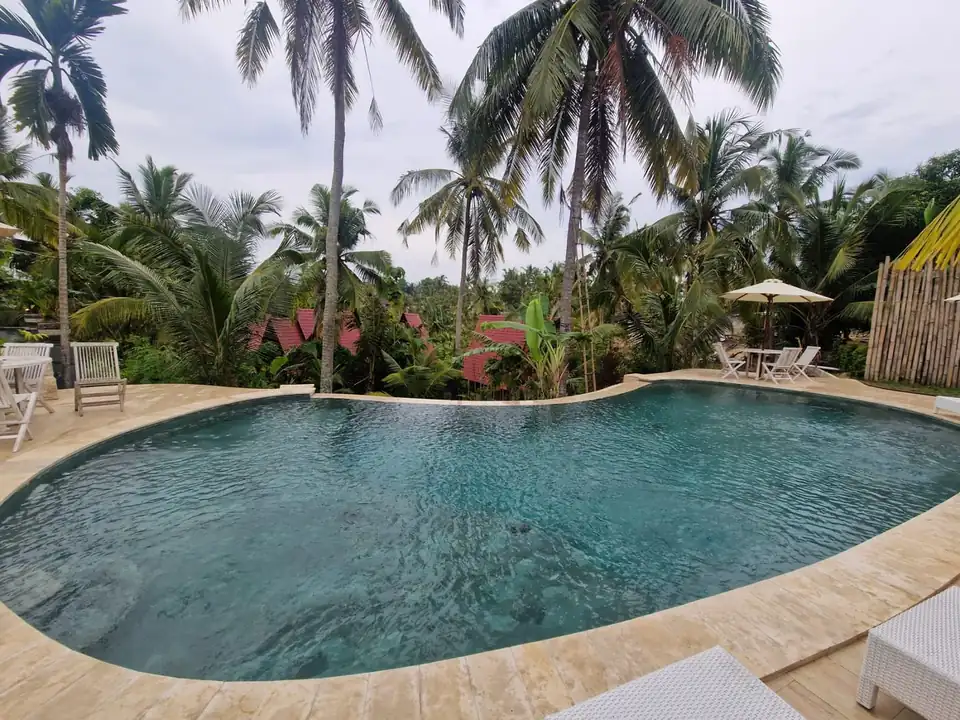
A guesthouse pool ringed by sun loungers, with red-roofed bungalows behind the coconut palms

Planning your trip

Where to stay in Bali

Twelve bases compared by what the airport run really costs, what each one is for, and who it is wrong for.

Bali is not one destination with a choice of hotels. It is a dozen places up to three hours apart, and picking the wrong one is the mistake that quietly spoils a first trip.

Almost every article on this question hands you the same twelve character sketches: Ubud for culture, Seminyak for nightlife, Canggu for cafes. They are not wrong, and they are not enough, because they leave out the number that decides it. Ngurah Rai to a Kuta hotel is a few minutes. Ngurah Rai to Amed is two and a half to three hours and Rp 600,000 to 900,000. That spread, not the character of the neighbourhood, is what shapes how your days actually go.

So this page puts the transfer in the table alongside the character, tells you who each base is wrong for, and says plainly when the answer is to split your stay rather than pick a winner. Every time and fare comes from the area’s own guide, where it was researched. Rupiah first, because that is what you will be quoted.

This page contains affiliate links. If you book through them we may earn a small commission, at no additional cost to you. It helps keep this guide free.

Three questions that settle it

How many nights have you got?

Under five, stay in one place and take day trips. A week or more, use two bases. Every move costs the better part of a day by the time you have checked out, driven and checked in, and Bali’s roads are slower than the distances suggest.

What did you actually come for?

Swimming, surfing, diving, temples and terraces, or a volcano at dawn. These live in different parts of the island and no single base serves them all. If you want to swim in calm water, that alone rules out most of the west coast.

How much road will you accept on arrival?

After a long-haul flight the difference between ten minutes and three hours is not a detail. It is also asymmetric: you can move inland on day two easily enough, but you cannot shorten the drive you face the night you land.

The twelve bases, compared

Ordered by how far they sit from the airport, because that is the order you will feel them in. Fares are for the whole car, not per seat.

Kuta
From DPS
A few minutes; the airport sits at Kuta's southern edge
Car fare
Rp 70,000 to 150,000 (5 to 10 US dollars)
For
The shortest arrival on the island, beginner surf and the cheapest rooms
Not if
You want quiet, or a beach you can swim at without watching the surf
Jimbaran
From DPS
20 to 30 minutes
Car fare
Rp 100,000 to 200,000 (6 to 13 US dollars)
For
Beach seafood and a calm, swimmable bay, twenty minutes from the plane
Not if
You want nightlife, or much within walking distance
Seminyak
From DPS
30 to 45 minutes, 10 km
Car fare
Rp 150,000 to 250,000 (10 to 16 US dollars)
For
The densest run of restaurants, beach clubs, spas and boutiques
Not if
You are watching the budget, or you want to swim rather than watch the surf
Sanur
From DPS
30 to 45 minutes
Car fare
Rp 150,000 to 250,000 (10 to 16 US dollars)
For
Flat, reef-protected water, a long seafront path and the Nusa boats
Not if
You want nightlife or a scene
Canggu
From DPS
45 minutes to over an hour, 13 km
Car fare
Rp 200,000 to 350,000 (13 to 22 US dollars)
For
Cafes, surf and coworking, and the best breakfast on the island
Not if
You need to be somewhere at a fixed time, or you will not ride a scooter
Uluwatu
From DPS
45 minutes to an hour, 20 km
Car fare
Rp 200,000 to 350,000 (13 to 22 US dollars)
For
World-class reef surf, clifftop sunsets and the Kecak at the temple
Not if
You want to walk between places, or you are arriving with heavy bags and small children
Ubud
From DPS
About 1.5 hours, 35 km
Car fare
Rp 350,000 to 450,000 (22 to 29 US dollars)
For
Culture, valley walks, wellness and the widest choice away from the coast
Not if
You came for the beach, or the whole trip is shorter than four days
Nusa Lembongan
From DPS
30 to 45 minutes to Sanur, then 30 to 45 minutes by fast boat
Car fare
Rp 150,000 to 250,000 (10 to 16 US dollars) plus Rp 150,000 to 250,000 each way (10 to 16 US dollars)
For
A small, easygoing island you can cross in a short ride
Not if
You only have one night, or you want a chemist and a cash machine nearby
Nusa Penida
From DPS
30 to 45 minutes to Sanur, then 30 to 45 minutes by fast boat
Car fare
Rp 150,000 to 250,000 (10 to 16 US dollars) plus Rp 150,000 to 250,000 each way (10 to 16 US dollars)
For
The headline cliffs and beaches, reached before the day boats land
Not if
You want smooth roads, easy food, or a long-established hotel
Kintamani
From DPS
2 hours or more, through Ubud or the south
Car fare
Private driver about Rp 600,000 to 900,000 for the day (40 to 60 US dollars)
For
The Batur caldera, the sunrise trek and cool highland air
Not if
You are staying more than a night or two, or you care about dinner
Munduk
From DPS
2 to 2.5 hours, through Ubud or the south
Car fare
Private driver, agreed before you set off
For
Waterfalls, lake walks and plantation country with almost no crowds
Not if
You want a beach, a choice of restaurants, or a ride you can summon
Amed
From DPS
2.5 to 3 hours
Car fare
Rp 600,000 to 900,000 (38 to 57 US dollars)
For
Snorkelling straight off the beach, easy diving and a genuinely slow coast
Not if
You want soft sand, an evening out, or a short transfer

Nusa Penida and Nusa Lembongan are two legs rather than one transfer: a drive to Sanur, then a fast boat that does not run when the sea is rough. Kintamani and Munduk are reached through Ubud or the south, and there is no useful public transport to either. Full route detail is on our Bali airport transfers page.

How tested the rooms are

Bali’s areas have been receiving visitors for very different lengths of time, and it shows in what you are booking. For each of the 39 neighbourhoods on our area pages we hold the three highest-scored places on Agoda carrying at least fifty guest reviews. Below is the median review count across them, by base.

Read it as a track record, not a ranking. It is not a count of hotels, and it is not a price. A high number means the best-reviewed rooms there have been through tens of thousands of stays and are a known quantity. A low one means much of what you book has opened recently, which cuts both ways: newer rooms, less evidence.

The gap is wide: Kuta at 4,493 against Nusa Penida at 90. Agoda’s search caps what it returns and sorts by its own recommendation, so this pool cannot measure how large an area’s market is, only how established its best-reviewed places are.

One base or two

This is the question behind the question. Bali is small on the map and slow on the road: Ubud is 35 km from the airport and takes about an hour and a half, and even the 13 km out of Canggu runs to over an hour once the afternoon sets in. Day-tripping from a single base is fine for a short trip and wasteful for a long one.

Up to five nights, stay put. Pick a coastal base and take one or two long days out. Ubud, the Kintamani caldera and Tanah Lot are all doable as day trips from the south, and a driver for the day is the practical way to string several together.

Seven to ten nights, use two. The standard pairing is three or four nights inland in Ubud and the rest on the coast. Which coast is the real choice: Sanur if you want to swim and to reach the Nusa islands, Seminyak for dining, Canggu for surf and cafes, Uluwatu for the cliffs. Do the inland half first and finish near the airport, so the last morning is not a long drive.

Ten nights or more, a third base earns its place. That is when Amed, Munduk or an overnight on Nusa Penida or Lembongan stops being a rush. Below ten nights, adding a distant third base costs you more in driving than it returns.

Whatever the shape, our Bali itinerary guide works the nights out day by day, and getting around Bali covers drivers, apps and scooters once you have chosen.

The bases, area by area

Still in arrival order, each one on the island so you can see what the drive buys you. The hollow dots are the other eleven bases.

Kuta
1

Kuta

  • A few minutes; the airport sits at Kuta's southern edge
  • Rp 70,000 to 150,000 (5 to 10 US dollars)
  • 4,493 median reviews

Kuta is where Bali's tourism started, and it is still the only base you can reach from the plane in minutes. That single fact carries more weight than most guides give it: it makes Kuta the sensible first night after a long-haul arrival and the sensible last night before an early flight, whatever you do in between. The three stretches differ mostly in volume. Central Kuta is the loudest and cheapest, Legian a shade calmer with better mid-range hotels, and Tuban to the south sits closest to the terminal and gathers the family resorts. All three share the same wide sand and the same forgiving beginner surf. What Kuta does not offer is quiet or polish, and the hawkers on the main beach are persistent.

Book in: Legian, which is Kuta's beach with the volume turned down.

Where to stay in Kuta · Kuta guide

Jimbaran
  • 20 to 30 minutes
  • Rp 100,000 to 200,000 (6 to 13 US dollars)
  • 377 median reviews

Jimbaran wraps around a wide, calm bay on the neck of the Bukit peninsula, close enough to the airport to work as a first or last night and quiet enough not to feel like one. The draw is the beachfront seafood, grilled at tables that fill the sand at sunset. Kedonganan at the northern end has the fish market and the cheaper grills. The central bay holds the main beach and most of the mid-range rooms. The southern clifftops gather the large resorts, which are handsome and entirely car-reliant. The bay is genuinely swimmable, which sets Jimbaran apart from most of the west coast, where the surf and the currents decide. Evenings go quiet once dinner is over.

Book in: Jimbaran Bay, the central stretch with the beach and the grills.

Where to stay in Jimbaran · Jimbaran guide

Seminyak
  • 30 to 45 minutes, 10 km
  • Rp 150,000 to 250,000 (10 to 16 US dollars)
  • 544 median reviews

Seminyak is the polished version of the south-west coast, and what you pay for is density: more good restaurants, spas and shops inside a short walk than anywhere else on the island. Petitenget at the northern end holds the beach clubs and the design hotels. The Oberoi strip is the dining core, and the one part of the south where you can happily do without a scooter. Double Six at the southern end is cheaper and livelier as it blends into Legian. The beach here is for sunsets and for surfing rather than for swimming, because the currents are not gentle. Prices sit above the island average, and the late-afternoon traffic on the main roads is the real cost of being central.

Book in: The Oberoi strip, the easiest part to stay in without a scooter.

Where to stay in Seminyak · Seminyak guide

Sanur
4

Sanur

  • 30 to 45 minutes
  • Rp 150,000 to 250,000 (10 to 16 US dollars)
  • 1,091 median reviews

Sanur is the oldest resort area on Bali and the one that has aged best. A reef takes the force out of the sea, so the water is flat and shallow, and a level boardwalk runs for several kilometres along the front. That combination makes it the easiest base on the island to walk with small children, with luggage, or with a bad knee. It is also the departure point for the fast boats to Nusa Penida and Lembongan, which makes it the obvious place to sleep either side of an island trip. North Sanur is the quietest stretch, the central Tamblingan strip carries the shops and restaurants, and the south sits nearest the harbour. Its reputation for being dull is really a reputation for being calm.

Book in: Central Sanur, for shops and restaurants on foot.

Where to stay in Sanur · Sanur guide

Canggu
5

Canggu

  • 45 minutes to over an hour, 13 km
  • Rp 200,000 to 350,000 (13 to 22 US dollars)
  • 187 median reviews

Canggu is a run of coast rather than a town, and it has turned from rice fields into the island's cafe and surf capital in about a decade. Batu Bolong is the walkable core and the only part where the scooter can stay parked. Berawa leans towards the large beach clubs and the newer villas. Echo Beach and Pererenan to the west are calmer and closer to the fields. The shortcut lanes between them are narrow and congested, which is why the drive from the airport can take over an hour to cover 13 km. That matters more than it sounds: leave early for a flight, and do not plan a tight connection out of Canggu. The shore is dark sand and often rocky, better for surfing than for swimming.

Book in: Batu Bolong, the one part you can walk around.

Where to stay in Canggu · Canggu guide

Uluwatu
  • 45 minutes to an hour, 20 km
  • Rp 200,000 to 350,000 (13 to 22 US dollars)
  • 221 median reviews

Uluwatu is the limestone tip of the Bukit, and it is a set of separate cliff and beach pockets rather than a place with a centre. Bingin puts you at the top of the steps above a famous reef break. Padang Padang has the easiest beach access on the peninsula and the widest range of budget rooms. Pecatu holds the clifftop resorts, the beach clubs and the temple where the Kecak is danced at sunset. Balangan to the north is the calmest beach and the closest of the four to the airport. Almost nothing here is walkable between areas, the routes down to the sand are steep stairways, and the roads are winding enough that a scooter is for confident riders only.

Book in: Padang Padang, which has the easiest beach access on the peninsula.

Where to stay in Uluwatu · Uluwatu guide

Ubud
7

Ubud

  • About 1.5 hours, 35 km
  • Rp 350,000 to 450,000 (22 to 29 US dollars)
  • 787 median reviews

Ubud is the island's inland centre, and the one base whose appeal has nothing to do with the sea. Central Ubud puts the market, the palace and the largest concentration of restaurants within walking distance, which counts for a great deal in a town where traffic moves at walking pace anyway. Penestanan sits on the rise just west, fifteen to twenty minutes from the centre by the steps, and trades full-service hotels for quiet and rice-field villas. Nyuh Kuning behind the Monkey Forest is a working village with good-value guesthouses. Sanggingan gathers the large valley-view resorts along the Campuhan. The catch is the airport run: about an hour and a half for 35 km, Rp 350,000 to 450,000 (22 to 29 US dollars), and slower again in the afternoon.

Book in: Penestanan, quiet and green but still walkable into town.

Where to stay in Ubud · Ubud guide

Nusa Lembongan
  • 30 to 45 minutes to Sanur, then 30 to 45 minutes by fast boat
  • Rp 150,000 to 250,000 (10 to 16 US dollars) plus Rp 150,000 to 250,000 each way (10 to 16 US dollars)
  • 236 median reviews

Lembongan is the smallest and most developed of the three Nusa islands, joined to Ceningan by the narrow yellow bridge, and it is the one that rewards sleeping over rather than day-tripping. Jungutbatu is the main village and the boat landing, with most of the rooms, the food and the dive shops; its beach doubles as a working harbour, which is worth picturing before you book a sea view. Mushroom Bay is a quieter cove with clearer water and the beachfront resorts. The Ceningan side is the most rustic and needs a scooter. Getting here is two legs rather than one transfer: a drive to Sanur, then a fast boat of 30 to 45 minutes, which does not run when the sea is rough.

Book in: Jungutbatu, the main village and the boat landing.

Where to stay in Nusa Lembongan · Nusa Lembongan guide

Nusa Penida
  • 30 to 45 minutes to Sanur, then 30 to 45 minutes by fast boat
  • Rp 150,000 to 250,000 (10 to 16 US dollars) plus Rp 150,000 to 250,000 each way (10 to 16 US dollars)
  • 90 median reviews

Penida is the big, rough one, and where you sleep on it decides how much of your day disappears into broken roads. The north coast around Toyapakeh and Ped holds the harbours and most of the food and dive shops. The west near Crystal Bay is closest to the snorkelling and the manta sites. The east coast puts you first at Diamond and Atuh in the morning, ahead of the day boats, at the cost of the worst roads on the island and almost no shops. That is the whole case for staying over: beating the crowds to the viewpoints. If you are not going to get up early to do it, a day trip from Sanur achieves the same thing and sleeps you somewhere easier.

Book in: Toyapakeh and Ped on the north coast, nearest the harbours and the food.

Where to stay in Nusa Penida · Nusa Penida guide

Kintamani
  • 2 hours or more, through Ubud or the south
  • Private driver about Rp 600,000 to 900,000 for the day (40 to 60 US dollars)
  • 94 median reviews

Kintamani sits around the Batur caldera in the north-eastern highlands, and nearly everyone who sleeps here does so for one thing: the sunrise walk up the volcano. Penelokan on the rim has the long views over the crater and the lake, and the restaurants built to face them. Toya Bungkah down by the water is closer to the trailheads and the hot springs, cheaper and more basic. The air is cool enough to want a jumper, mist can take the view away for an entire morning, and there is no useful public transport up here at all. Reckon on an hour to an hour and a half by car from Ubud, two hours or more from the beaches, plus a small road contribution collected by the roadside at Penelokan.

Book in: Penelokan on the crater rim for the view, or Toya Bungkah by the lake if you are trekking.

Where to stay in Kintamani · Kintamani guide

Munduk
11

Munduk

  • 2 to 2.5 hours, through Ubud or the south
  • Private driver, agreed before you set off
  • 144 median reviews

Munduk is a mountain village above the twin lakes of Buyan and Tamblingan, set among coffee and clove plantations, and it is the quietest base on this list by a wide margin. The village itself puts the waterfalls and the walking trails within reach on foot and holds the cafes. The Wanagiri ridge above the lakes has the long views, on the mornings the cloud allows them. The lakeside near Ulun Danu Beratan pairs the temple with the botanic garden and takes the day-trip traffic. It is two to two and a half hours from Ubud or from the south on winding roads, Grab and Gojek barely operate this far up, and cash machines are scarce, so arrange the driving in advance and carry rupiah.

Book in: Munduk village, with the waterfalls and the trails on foot.

Where to stay in Munduk · Munduk guide

Amed
12

Amed

  • 2.5 to 3 hours
  • Rp 600,000 to 900,000 (38 to 57 US dollars)
  • 145 median reviews

Amed is a string of fishing villages along the north-east coast below Mount Agung, and it is where people go when they want the sea and very little else. Jemeluk has the main bay, a coral garden you can swim out to from the beach, and most of the dive shops. Lipah is a smaller, sandier cove with a shore-accessible wreck. Bunutan spreads east into quiet clifftop coves that have the views and the infinity pools and almost no shops. The Liberty wreck at Tulamben is a short drive up the coast. The beaches are black sand and pebbly underfoot, evenings are very quiet, and it is two and a half to three hours from the airport at Rp 600,000 to 900,000 (38 to 57 US dollars), the longest transfer of any base here.

Book in: Jemeluk, the main bay with the coral garden and the dive shops.

Where to stay in Amed · Amed guide

Where not to base yourself

Four of the twelve are wonderful places to spend two nights and poor places to spend seven. Kintamani and Munduk are highland stops built around one thing each, the sunrise trek and the waterfalls; the dining is limited, ride-hailing barely reaches them, and nothing else you want is nearby. Amed is three hours from the airport and rewards you only if you are in the water. Nusa Penida is worth a night if you will be at Diamond Beach at dawn and is otherwise a rough-road day trip from Sanur.

Two more traps are worth naming. Do not book a first Bali trip into Uluwatu expecting to walk anywhere: the areas are separate cliff pockets, the beaches are down stairways, and you will be riding or driving for everything. And do not choose a west-coast base because you want to swim. Seminyak, Canggu and Kuta have the sunsets and the surf, but the currents are serious. For water you can swim in without reading it first, that means Sanur or Jimbaran.

If you are torn between two, read them against each other rather than in isolation. Our area guides cover all twelve, when to visit matters more on the coast than inland, and what Bali costs sets the rest of the numbers around your room.

Where to stay in Bali: common questions

Where should you stay in Bali for a first trip?+

For most first trips, two bases beat one: somewhere on the south coast for the sea, and Ubud for everything inland. If you would rather not move at all, Sanur is the easiest single base on the island, because the water is calm enough to swim in, the seafront is flat and walkable, and the boats to the Nusa islands leave from there. Seminyak suits you better if you want restaurants and beach clubs on the doorstep, and Canggu if you want cafes and surf. What decides it is what you came for, not which area is fashionable.

What is the best place to stay in Bali?+

There is no single answer, because the island's bases are up to three hours apart and they are built for different holidays. Sanur is the easiest for calm swimming and families, Seminyak for dining and beach clubs, Canggu for cafes and surf, Ubud for culture and walks, Uluwatu for reef surf and clifftop sunsets, Amed for snorkelling, and Kintamani or Munduk for the highlands. The table above sets each of them against what the transfer from the airport actually costs, which is the part that usually settles it.

Should you stay in one place in Bali or move around?+

Up to about five nights, stay put and take day trips; the driving eats too much of a short trip otherwise. From a week upwards, two bases work better than one, and the usual pairing is a coastal base in the south with three or four nights in Ubud. Only go to three bases if you are adding somewhere genuinely distant, such as Amed or Munduk, and only if you have ten nights or more. Every move costs the better part of a day once you count checking out, the drive and checking in.

Is Ubud or the beach better for a first visit to Bali?+

Both, if the trip is a week or longer, and that is the honest answer rather than a hedge. Ubud is the island's cultural centre and its landscape is what most people picture, but it has no coast; the airport run is about an hour and a half for 35 km, at Rp 350,000 to 450,000 (22 to 29 US dollars). If the trip is shorter than four days, pick one, and pick the coast if this is your only visit, because the sea is harder to add later than a day trip inland is.

Where should you stay in Bali with children?+

Sanur and Jimbaran are the two easiest. Both have water calm enough for young children to swim in, which most of the west coast does not, and Jimbaran is 20 to 30 minutes from the airport while Sanur is 30 to 45. Sanur adds a level seafront path several kilometres long, which is the single most useful thing on the island if you are pushing a buggy. Tuban at the southern end of Kuta is the other option, with family resorts and the water park close by, and it is the shortest transfer of all.

Where should you stay on your last night before an early flight?+

Kuta, Tuban or Jimbaran. The airport sits at Kuta's southern edge, so a room there is minutes from the terminal at Rp 70,000 to 150,000 (5 to 10 US dollars) in a taxi, and Jimbaran is 20 to 30 minutes. The mistake worth avoiding is booking the last night in Ubud, Canggu or anywhere further out and trusting the road: the drive from Canggu can take over an hour to cover 13 km, and the afternoon peak in the south catches out anybody travelling to a fixed time.

Is Canggu or Seminyak better?+

Seminyak is the more comfortable base and Canggu is the more interesting one. Seminyak gives you the widest choice of restaurants, spas and shops inside a short walk, so it works without a scooter. Canggu is spread along the coast and the shortcut lanes between its villages are congested, so it works properly only if you will ride, but it has the surf, the cafes and the coworking. Neither has water you can casually swim in. Seminyak is 30 to 45 minutes from the airport and Canggu 45 minutes to over an hour.

Is it worth sleeping on Nusa Penida rather than day-tripping?+

Only if you will get up early. The single argument for staying over is reaching Kelingking, Diamond Beach and Atuh before the day boats land, and if you are not going to do that, a day trip from Sanur sees the same places and sleeps you somewhere with better roads and more food. If you do stay, the north coast around Toyapakeh and Ped has the harbours and most of the services, and the east coast puts you closest to the sunrise cliffs at the cost of the roughest roads on the island.