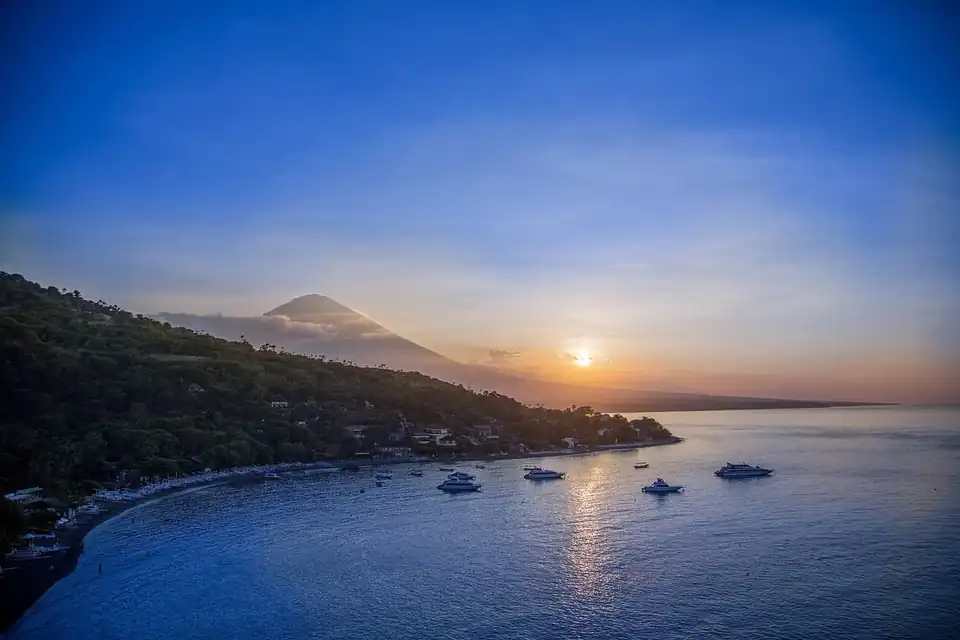
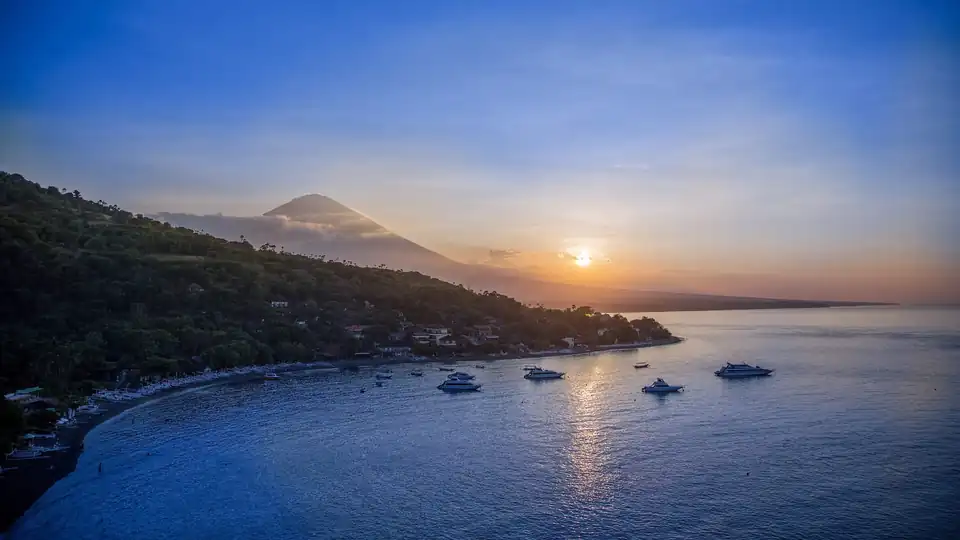
Amed is the quiet east of Bali, a string of fishing villages and black-sand coves beneath the towering cone of Mount Agung. Far from the crowds of the south, it built its reputation underwater. Coral reefs sit within reach of the beach, a famous shallow shipwreck lies just up the coast, and the calm, clear water makes this one of the island’s best places to dive, snorkel or freedive. Above the surface the pace slows right down, a coast of jukung boats drawn up on the sand and the sun coming up over the sea.
Out in the far east, part of the island province of Bali in Indonesia, Amed lies a couple of hours and a world away from the airport and the beach resorts. There is no single town, rather a series of small settlements linked by a winding coastal road, each with its own cove. Remoteness keeps it quiet and low-key, the focus firmly on the sea and the volcano at its back. For divers and anyone after calm water, it ranks among Bali’s most rewarding corners.
Why visit Amed
People come to Amed for the sea and the quiet, not for crowds and shopping. The draw is underwater: coral reefs close to shore, plentiful marine life, and one of the world’s most accessible wreck dives just up the coast. Above the water the pace is slow, the villages small, the scenery framed by Mount Agung, which lends the coast an elemental feel.
This is a place for divers, snorkellers and anyone content to make their own entertainment by the water. Nightlife is minimal and organised attractions few, which is precisely why the regulars keep coming back. Come as a contrast to the busy south, or fold it into a wider loop through eastern and northern Bali.
Costs run lower than in the resort south, part of why budget travellers and long-stay divers gravitate here. Simple guesthouses start from around Rp 250,000 a night (about 16 US dollars), a plate of nasi campur at a village warung runs Rp 30,000 to Rp 50,000 (roughly 2 to 3 US dollars), and dive packages are among the best value on the island. Bring cash. ATMs are few and scattered between the villages, and plenty of small warungs and dive lodges take nothing else, so arrive with enough rupiah for a few days.
Diving and the reefs
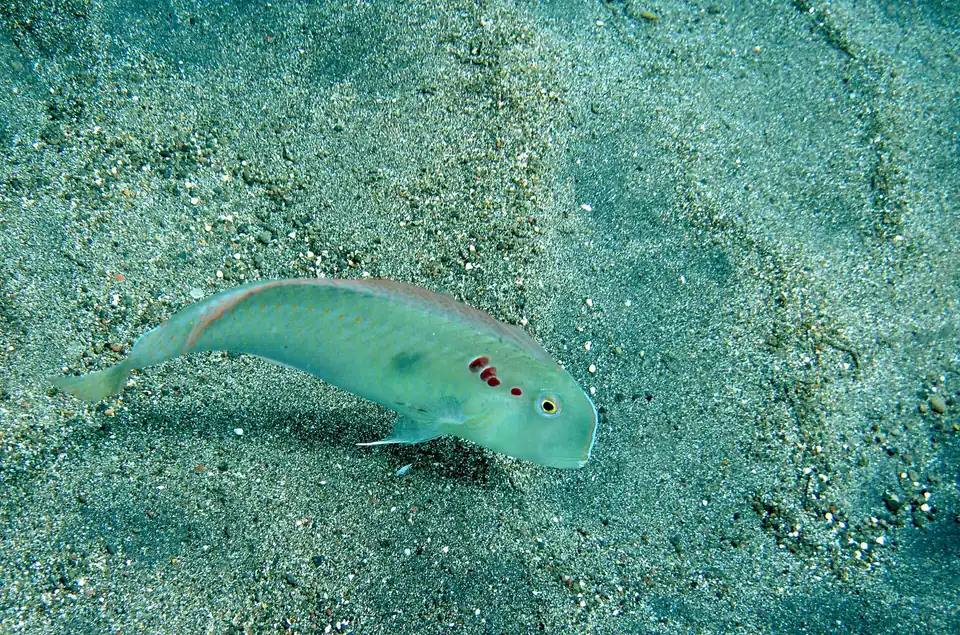
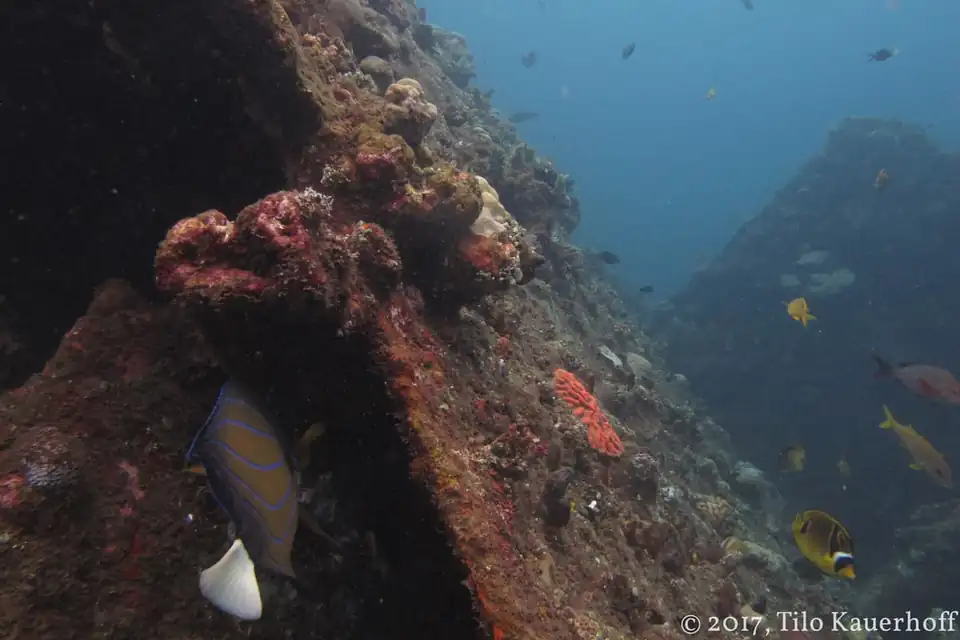
Diving is what put Amed on the map. Healthy coral reefs lie within a short swim of the black-sand beaches, and the sheltered coves give gentle entry from the shore. Jemeluk Bay is the favourite, its coral garden and shallow underwater feature drawing snorkellers and divers alike, no boat needed.
The calm, clear water suits beginners as much as old hands, and several dive schools run courses and guided dives at an unhurried pace. Freedivers come too, for the sheltered bays and the visibility. Reputable operators know the sites and the conditions, and mornings bring the calmest water and the best light below.
The range of sites keeps divers busy for days. Beyond Jemeluk Bay there is a Japanese wreck at Banyuning, a coral-covered pyramid at the Amed Wall, and a run of drop-offs and coral gardens reachable straight from the shore. A single fun dive with guide and gear typically costs Rp 500,000 to Rp 700,000 (about 32 to 45 US dollars), and a four-day PADI Open Water course runs from roughly Rp 5,000,000 (around 320 US dollars). Snorkellers can rent a mask, snorkel and fins for a few tens of thousands of rupiah and swim out over the reefs unaided. Freediving schools have multiplied, using the deep, clear water off Jemeluk to train. Whatever you are doing, get in early: it beats both the afternoon wind and the small day-boat groups up from the south.
The USS Liberty wreck
Just along the coast at Tulamben lies the USS Liberty wreck, one of the world’s most popular dives. The American cargo ship was torpedoed in the Second World War, then pushed into the sea by the 1963 eruption of Mount Agung, settling in shallow water just off the beach. Coral has since encrusted it and fish swarm it, and it sits close enough to shore that snorkellers can glimpse its shallowest parts while divers of many levels work its length.
Reached from the beach rather than by boat, and lying at friendly depths, the Liberty draws divers all year. Early mornings are quietest, before the day-trip groups roll in from further afield. For many it is the single reason to base themselves in Amed, and it rarely disappoints. Amed is also the shortest hop to the Gili Islands, about an hour by fast boat, which makes it the natural place to leave Bali from if Lombok is on your route.
Tulamben sits about twenty to thirty minutes up the coast road from central Amed, so many divers stay put and drive over for dawn, when the site is calm and the resident bumphead parrotfish are often about. The wreck runs from around five metres at the bow to thirty at the stern: shallower sections for snorkellers and newly qualified divers, the deeper hull for those with more under their belt. Local porters carry tanks down over the loose cobble beach, and water shoes ease the entry underfoot. A guided dive here costs much the same as other sites along the coast, and most operators run it as a two-dive morning paired with a nearby coral garden or the Tulamben drop-off.
The beaches and fishing villages
Amed’s beaches are black volcanic sand and pebbles, set in a run of sheltered coves rather than one long strand. Amed beach and the smaller bays are calm and good for swimming and snorkelling, though water shoes help on the stonier shores. Jukung outrigger boats line the sand, and in places salt is still made by hand along this coast.
Life here moves to the rhythm of fishing and the tide. Small, quiet villages, warungs and dive lodges instead of resorts and clubs, nothing hurried about any of it. This is the kind of coast where the day’s plan rarely stretches beyond the water, a meal, and the light shifting over the sea and the volcano.
Amed is not one place but a chain of hamlets, among them Amed proper, Jemeluk, Bunutan, Lipah and Aas, spread along roughly ten kilometres of coast. Each cove has its own small beach, cluster of jukung boats and handful of guesthouses, so where you stay shapes your days. The villages near Jemeluk put you closest to the best snorkelling; those further east are quieter still. Balinese Hinduism runs through daily life, canang sari offerings laid out each morning by the shrines and boats. Salt-making survives on parts of this shore, families evaporating seawater in hollowed palm trunks and drying it in the sun, and some producers welcome visitors who ask politely.
Sunrise and Mount Agung
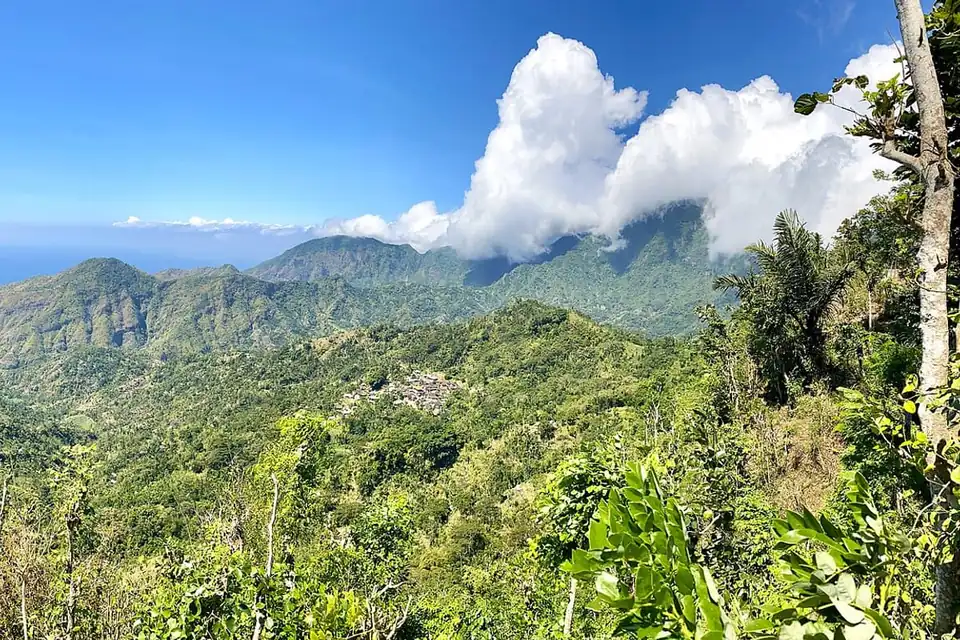
Facing east, Amed is a sunrise coast. On clear mornings the sun comes up over the sea while the great cone of Mount Agung, Bali’s highest and holiest mountain, rises behind the villages. Viewpoints along the coast make the most of it, and Lahangan Sweet in the hills above looks out over the ridges towards the volcano.
Mount Agung shapes the whole area, in its backdrop, in the black volcanic sand, in the very story of the Liberty wreck. On clear days it dominates the skyline; on cloudy ones it vanishes completely. Either way, the play of sea, coast and volcano gives Amed a depth that rewards anyone who looks up from the water.
Reaching Lahangan Sweet means a drive up into the hills on narrow, steep lanes, best left to a driver or a confident hand on a scooter, with a small entry donation of around Rp 25,000 (about 2 US dollars). Go at first light. The ridge often clears early, before the volcano wraps itself in mist by mid-morning. Mount Agung stands at just over three thousand metres, Bali’s holiest mountain, home to the mother temple of Besakih on its southern slopes, and the pre-dawn summit treks set off from that side rather than from Amed. Along the coast itself, simple bamboo platforms and headland warungs offer an easier way to catch the same sunrise over the sea.
Getting around and combining trips
Amed strings out along a winding coastal road. A scooter suits confident riders hopping between coves, while a private driver is the comfortable choice for the long journey out here and for exploring the wider east. Public transport is thin, and distances take longer than the map suggests.
Getting to Amed is the main hurdle, since Bali has no trains and the coast lies two and a half to three hours from the airport and the south. A private transfer for that run usually costs Rp 600,000 to Rp 900,000 (roughly 38 to 57 US dollars), and booking a driver ahead beats hunting for a ride-hailing car this far east, where Grab and Gojek coverage thins out. Once here, scooter hire is cheap at around Rp 70,000 a day (about 5 US dollars), though the hilly, winding coast road demands care and a helmet is required by law. Where petrol stations run out, fuel is sold from roadside stalls in bottles.
Amed combines well with the rest of eastern and northern Bali, sparing you a return to the south. The volcanic highlands of Kintamani lie inland to the west, and the lakes and waterfalls around Munduk fall on a longer northern loop. Many people also pair Amed with a couple of days in Ubud, balancing the quiet dive coast against the island’s cultural heart.