In the space of half a century Bali went from an impoverished island recovering from war and disaster to one of the most visited destinations on earth. Tourism brought money, roads, jobs and global fame, and it also brought traffic, pollution and pressure on the land and water that Balinese farming depends on. Through all of it, the island’s Hindu culture has proved unexpectedly durable, still setting the calendar and stopping the whole island for a day each year.
From the surfers and travellers of the early 1970s the thread leads through the boom, the terrible bombings of 2002 and 2005 and the recovery that followed, to the wellness and digital-nomad wave of recent years and the strains of development. It ends where it began, with the living Hindu culture that has carried through every upheaval in these histories.
The surf and the travellers
The modern remaking of Bali began in the early 1970s, when the island emerged from the poverty and trauma of the 1960s recounted in our history of war and independence. The first wave of the new tourism was young and informal: surfers who came for the long left-hand waves off Kuta and Uluwatu, and backpackers travelling the overland trails across Asia who found cheap lodging and a warm welcome on the south coast.
Kuta grew from a fishing and farming village into a travellers’ hub of guesthouses, cafes and surf shops. The atmosphere of these years, relaxed and cheap, spread Bali’s reputation by word of mouth among a generation of independent travellers. It was a modest beginning, but it established the south of the island as the centre of a tourist economy and set the direction for everything that followed.
The boom
Through the 1970s and 1980s the trickle became a flood. The Indonesian government promoted Bali as the nation’s flagship destination, an expanded international airport made the island easy to reach, and international hotel chains built resorts along the southern beaches at Nusa Dua, Sanur and beyond. Package tourism arrived on a large scale, and the number of annual visitors climbed from thousands into the millions.
Tourism reshaped the island’s economy. Farming, once the mainstay of Balinese life, gave ground to hospitality, construction and services, and the south around Denpasar, Kuta and later Seminyak and Canggu grew into a dense tourist and residential zone. Money flowed in, living standards rose, and Bali became one of the best-known holiday names in the world. That very success also concentrated risk, tying the island’s fortunes to the willingness of foreigners to keep coming.
The bombings and the recovery
That risk was made brutally clear on 12 October 2002, when the militant group Jemaah Islamiyah detonated bombs in the crowded nightlife district of Kuta. The attack killed 202 people, most of them foreign tourists, and was the deadliest act of terrorism in Indonesian history. A second set of bombings in October 2005, at Jimbaran and Kuta, killed around twenty more people. Both struck directly at the tourism on which the island had come to depend.
The immediate effect was severe. Visitor numbers fell sharply, hotels emptied and many Balinese who worked in tourism lost their livelihoods. Yet the recovery proved strong and relatively swift. Security was tightened, those responsible were tried, and a memorial was raised in Kuta to the victims of 2002. Within a few years arrivals had rebounded, and by the 2010s they were climbing to new records well beyond anything seen before the attacks.
Wellness, nomads and the new economy
The most recent chapter of Bali’s tourism has a different character. From the 2010s the island drew a growing wave of wellness travellers, remote workers and entrepreneurs, drawn by a warm climate, low costs, fast internet and an established scene of yoga, retreats and healthy food. Ubud, long the cultural and artistic centre of the highlands, became a hub for yoga and wellness, while Canggu on the south-west coast grew into a base for surfers and digital nomads.
This community has left a deep mark. Cafes, co-working spaces and villas have multiplied, foreign-run businesses have proliferated, and property prices have risen steeply as farmland is bought up for development. The influx has brought income and energy, but it has also fed tensions over land, over the character of once-quiet villages, and over who benefits most from the island’s popularity.
The pressures of success
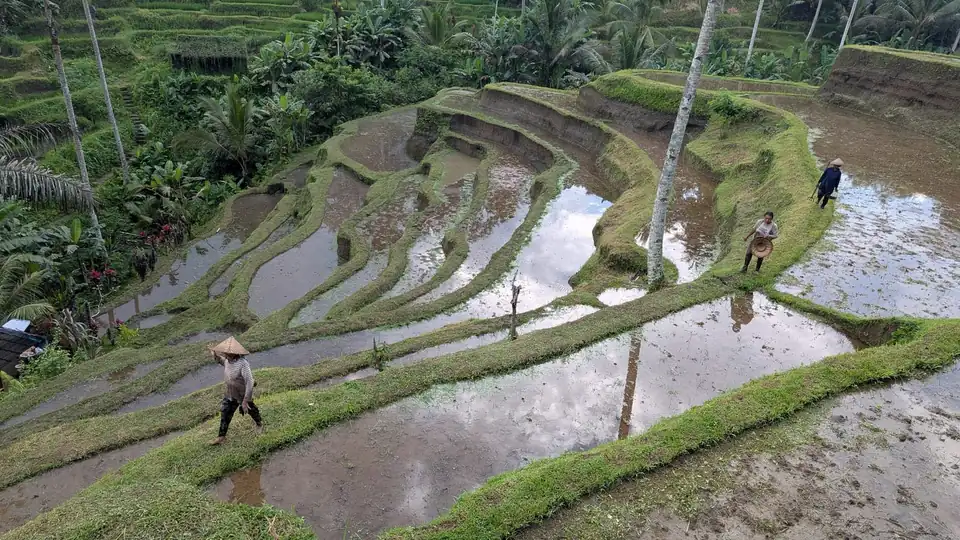
Rapid growth has come at a cost that is now hard to ignore. The roads of the south are choked with traffic, and journeys that once took minutes can take hours. Water is a growing worry, as hotels, villas and swimming pools draw on supplies that Balinese rice farmers need for their fields and their subak canals. Waste and plastic pollution strain the island’s capacity, and the conversion of terraced land to construction eats into the farming landscape recognised by UNESCO in 2012.
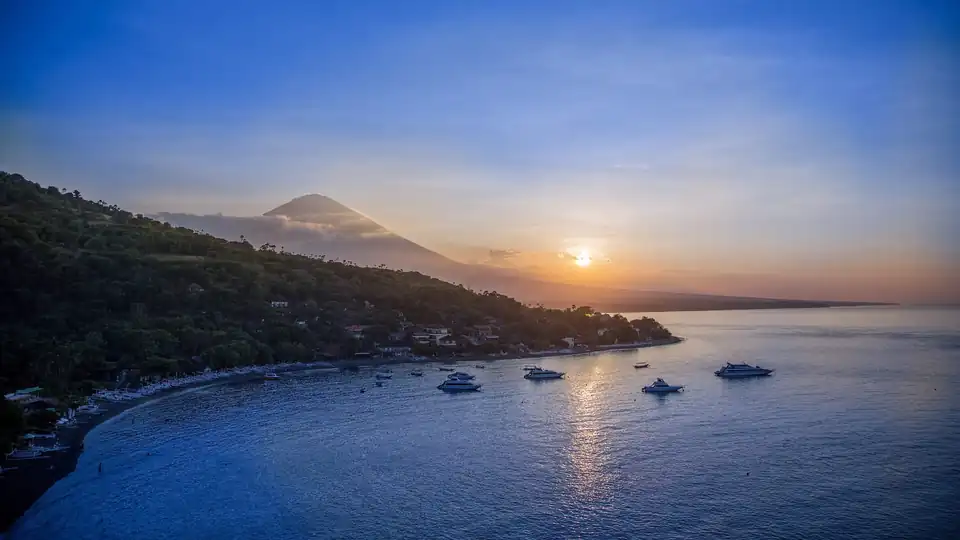
Balancing the wealth that tourism brings against these environmental and social costs is the central dilemma of Bali today. The island’s leaders and communities debate limits on development, better management of water and waste, and ways to spread the benefits beyond the crowded south to quieter regions such as Amed, Munduk and the highlands around Kintamani. How that balance is struck will shape the island for the next generation.
A culture that endures
Through the boom, the bombings and the arrival of the wider world, the Hindu culture of Bali has kept its hold on daily life. The island remains a province of Indonesia of roughly 4.3 million people, overwhelmingly Hindu in a country that is mostly Muslim, a direct legacy of its history as the refuge of Hindu-Javanese civilisation described in our history of Hindu Bali and the Majapahit refuge. That inheritance is not a museum piece but a working faith.
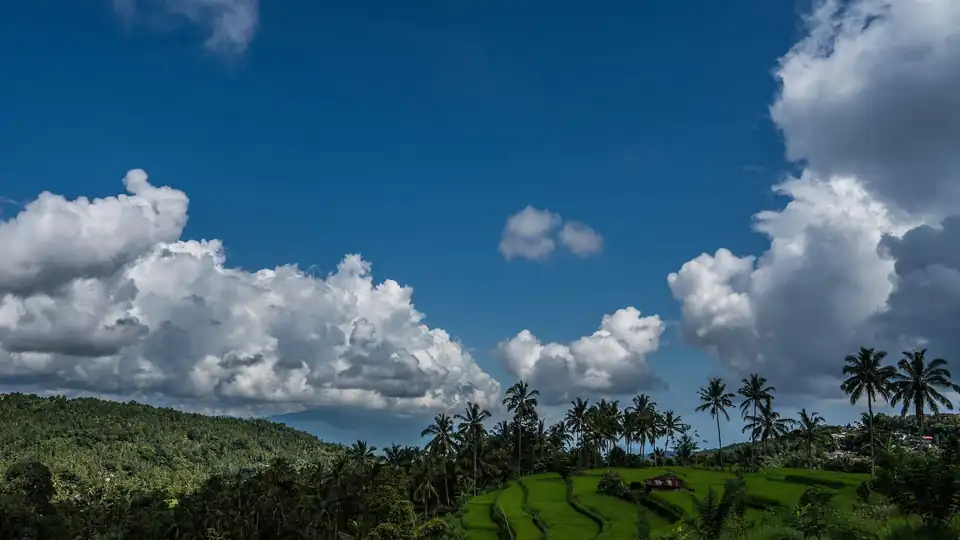
Its strength is visible everywhere. Small palm-leaf offerings appear on doorsteps and shrines each morning, temple festivals fill the ritual calendar, the water temples still govern the flow of irrigation, and once a year the entire island falls silent for Nyepi, the Hindu new year, when even the airport closes. The deeper story of that faith is told in our overview of Balinese religion. More than anything else, it is this living culture, carried unbroken from the deep past traced in our history of early Bali, that gives modern Bali its enduring character.