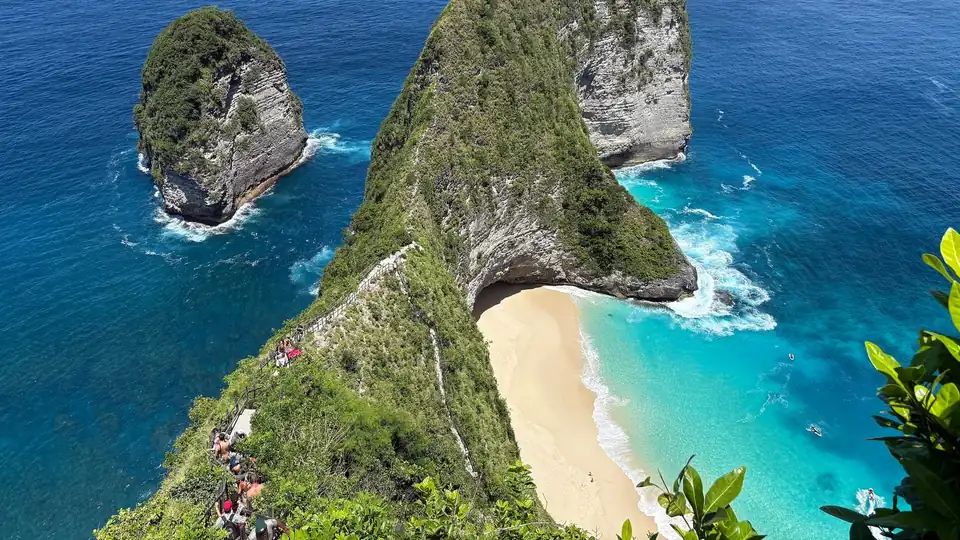
Nusa Penida is the wild card of the Bali islands, a rugged limestone island off the south-east coast known for towering cliffs, white-sand coves and some of the best marine life in Indonesia. Where the mainland is green and developed, Penida is dry, dramatic and comparatively raw, its coastline carved into headlands and arches that fall sheer into a bright blue sea. In a few short years it has gone from a little-visited backwater to one of Bali’s most photographed destinations, though its rough roads and remote feel keep it a step apart.
Reached by fast boat across the Badung Strait, Nusa Penida forms part of the island province of Bali in Indonesia, together with its smaller neighbours Lembongan and Ceningan. The crossing from Sanur takes well under an hour, but arriving feels like a change of world, from resort comforts to a place where the scenery does the talking. Manta rays cruise its waters, staircases plunge to hidden beaches, and clifftop viewpoints reward the effort of reaching them.
Why visit Nusa Penida
Nusa Penida is for travellers who want scenery on a grand scale and do not mind working for it. Its cliffs, coves and viewpoints are the stuff of the island’s fame, and the sea around it teems with manta rays and colourful reef life. This is adventure territory, better suited to active visitors than to those seeking an easy resort day.
The island’s growing popularity has brought more guesthouses, cafes and tours, yet the infrastructure still lags behind the mainland. Rough roads, steep paths and limited services are part of the deal. For many, that slight roughness is precisely the appeal, offering a wilder counterpoint to the polish of south Bali.
Practical planning matters more here than on the mainland. The island runs largely on cash, with limited and sometimes unreliable ATMs concentrated around Toya Pakeh, so draw out rupiah before you cross. Fuel is often sold from roadside stalls in glass bottles, medical facilities are basic, and mobile signal drops out along the wilder stretches of coast. None of this should put anyone off, but it rewards a little preparation, from downloading offline maps to arranging a driver in advance rather than relying on finding one at the harbour on arrival.
The famous viewpoints
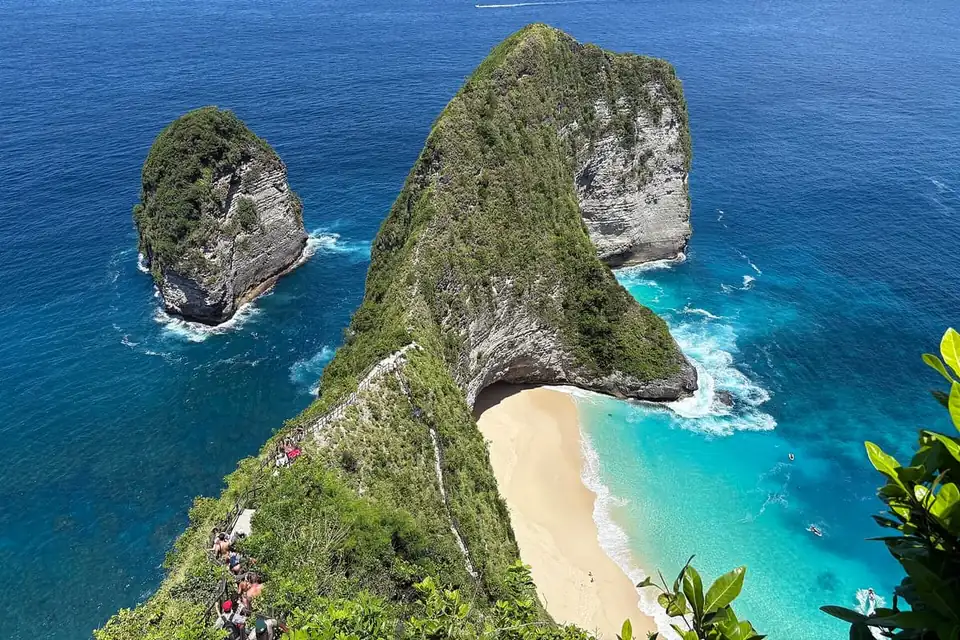
Penida’s cliffs have made it a destination in their own right. Kelingking Beach is the headline sight, a curving white beach far below a dinosaur-shaped headland, seen from a clifftop viewpoint that ranks among Bali’s most striking. The descent to the sand is a steep, demanding scramble, and many visitors are content with the view from the top.
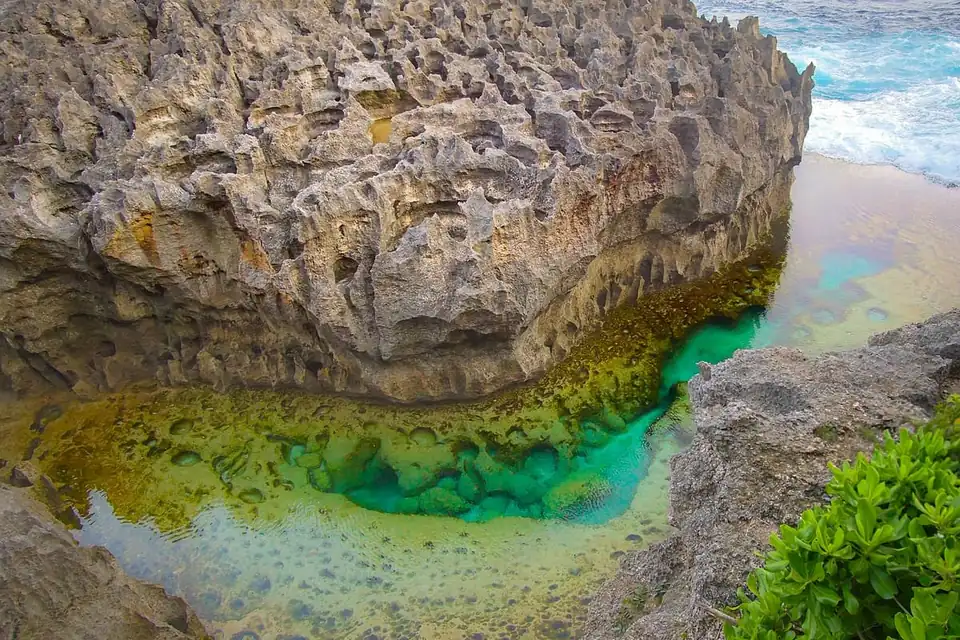
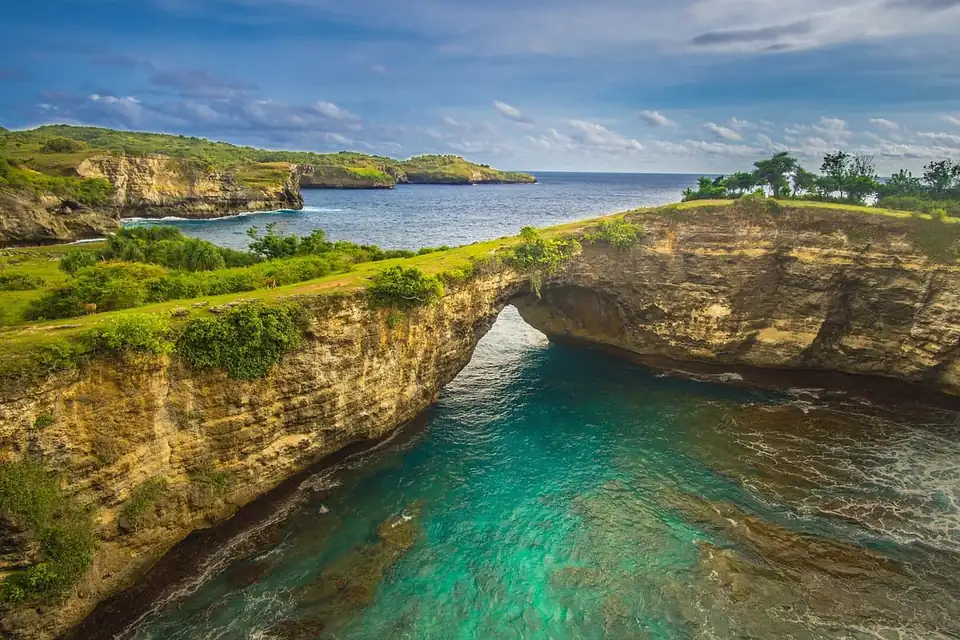
Along the coast, Broken Beach and Angels Billabong sit side by side, the first a natural arch enclosing a circular cove, the second a clear tidal pool at the cliff’s edge. Both are best at low tide and demand caution near the exposed rims, where the swell can surge without warning.
Timing shapes any visit to these clifftops. Tour boats begin landing from mid-morning, and by around 11am the car parks and narrow access paths at Kelingking fill with visitors. Setting out soon after sunrise, or leaving the busiest sights until late afternoon, buys quieter photographs and safer footing on the steep steps. A small parking fee of roughly Rp 5,000 to Rp 10,000 applies at most viewpoints, and local guardians often collect a modest entrance donation of a similar amount. Sturdy footwear counts for more than any camera here, as the ground is loose, the handrails are improvised and the drops are real.
Beaches and coves
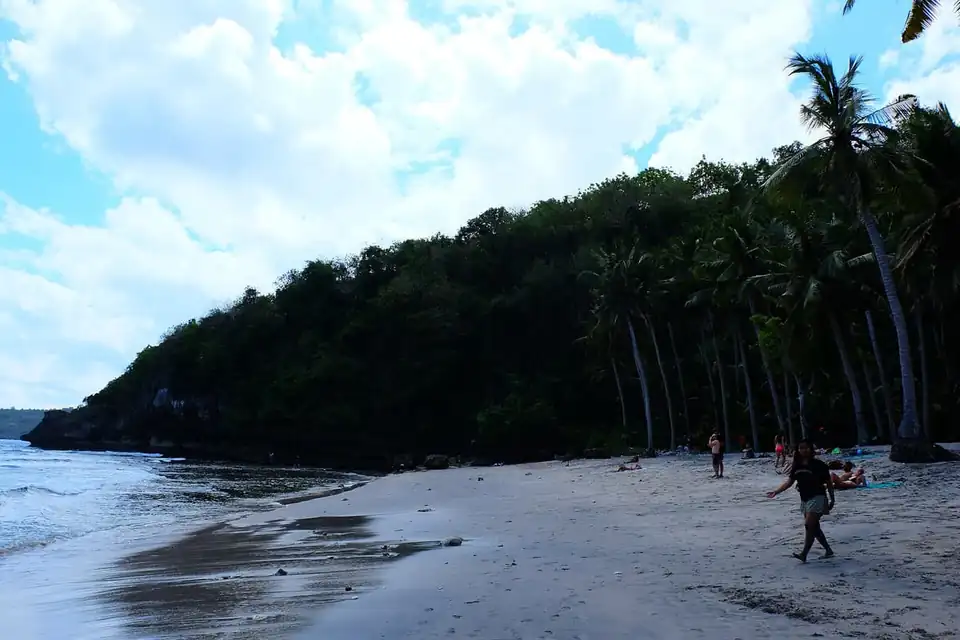
Beyond the viewpoints, Penida hides some genuinely beautiful beaches. Crystal Bay on the west coast is the most accessible, a sheltered bay with clear water that is popular for swimming and snorkelling and a favourite dive site for manta and sunfish encounters. It is one of the easier places to simply enjoy the sea.
On the eastern side, Diamond Beach is a picture of white sand, rock pinnacles and turquoise water, reached by a steep carved staircase down the cliff. The climb is strenuous and the swimming can be tricky, so treat the sea with respect, but the setting ranks among the finest on the island. Come early, before the day-trip crowds arrive.
Tides govern how these coves feel. At Crystal Bay the water is calmest and clearest around a rising tide in the morning, before the afternoon wind ruffles the surface, while the reef edges turn sharp and shallow at low water. Diamond Beach and its neighbour Atuh sit on the opposite side of the island, close to an hour of driving from the west-coast sights, so most itineraries treat the two coasts as separate half-days. Shade is scarce on the sand, and warungs thin out once you leave the top of the cliffs, so carrying water and snacks makes the long descents a good deal more comfortable.
Diving and snorkelling
The waters around Nusa Penida are the island’s other great draw. Manta rays gather year-round at cleaning stations such as Manta Point, gliding close to snorkellers and divers, while the cooler middle months bring the chance of seeing the huge oceanic sunfish, the mola mola. Crystal Bay is a well-known site for both, with clear water and rich reef life.
Currents here can be strong and cold, so trips are best arranged through reputable operators who know the sites and conditions. Snorkelling tours typically string together several spots by boat, and manta encounters in particular stay with people long after they leave. For divers, Penida ranks among the best of Bali’s underwater experiences.
Trips run to a familiar handful of sites. Manta Point on the exposed south-west coast can be choppy and is sometimes cancelled in poor conditions, while Crystal Bay, Gamat Bay and the shallow reefs off Toya Pakeh give calmer alternatives. A shared snorkelling boat of three or four stops costs roughly Rp 100,000 to Rp 200,000 per person, about 6 to 13 US dollars, with private charters higher. Water temperatures can drop sharply where cold currents rise around the sunfish season, so a wetsuit is worth requesting even in warm weather. Booking through operators based on Penida or nearby Nusa Lembongan is generally simpler than arranging trips from the mainland.
Getting around the island
Nusa Penida is bigger and slower to travel than its size suggests, with rough, narrow and steep roads linking the sights. Journeys take longer than the map implies, and traffic builds at popular spots around midday. Scooter hire suits only confident, experienced riders given the terrain, so many visitors book a private driver or a guided tour instead.
Because of these distances, trying to see everything in a single rushed day trip leaves little time to enjoy any one place. Staying a night or two on the island lets you reach the famous viewpoints early or late, away from the crowds, and take the driving at a calmer pace. Accommodation clusters near the northern harbours around Toya Pakeh.
The going rates are worth knowing before you set off. A private driver with a car for a full day runs around Rp 600,000 to Rp 900,000, roughly 40 to 60 US dollars, and splits well between several people. Scooter hire is cheaper at about Rp 75,000 to Rp 100,000 a day, but the steep concrete tracks to the west-coast beaches have caused many accidents, and hire insurance rarely means much. Petrol, parking fees at some sites and a driver’s lunch are usually extra. Agreeing the route and the price before setting off avoids confusion, since a full loop of the main sights involves several hours behind the wheel on demanding roads.
Planning your visit
The dry season from May to October gives the calmest crossings, the clearest water and the most reliable weather for the exposed viewpoints, though it is also the busiest time. Bring plenty of water, sun protection and sturdy shoes for the steep paths, and carry cash in rupiah, since card acceptance and ATMs are limited.
A two-night stay changes the character of a trip. It allows one day for the western viewpoints and beaches and another for the quieter east coast and a snorkelling boat, with early starts to reach Kelingking Beach or Diamond Beach before the day boats arrive. Rooms range from simple guesthouses under Rp 300,000 a night to a small number of smarter clifftop villas, and good rooms sell out in high season. Motion-sickness remedies help on both the crossing and the winding roads, and a dry bag protects valuables on the boats.
Nusa Penida pairs naturally with its quieter sibling, Nusa Lembongan, which sits just across a narrow strait and connects by short boat. Both are reached by fast boat from Sanur on the mainland, making that laid-back beach town a logical staging point. Many visitors combine a few days on the islands with time on the south coast or in the hills around Ubud for a fuller picture of Bali.