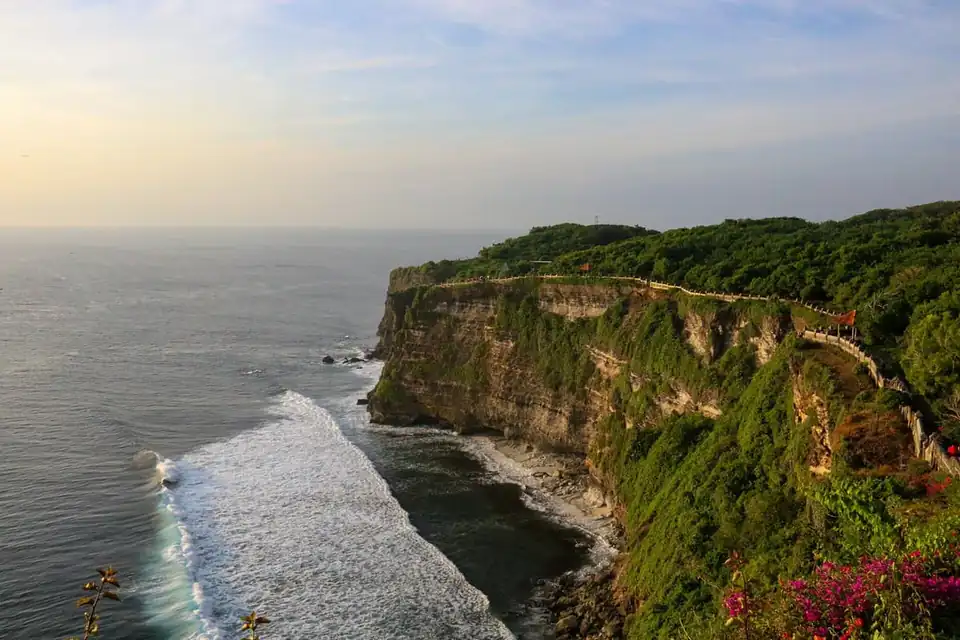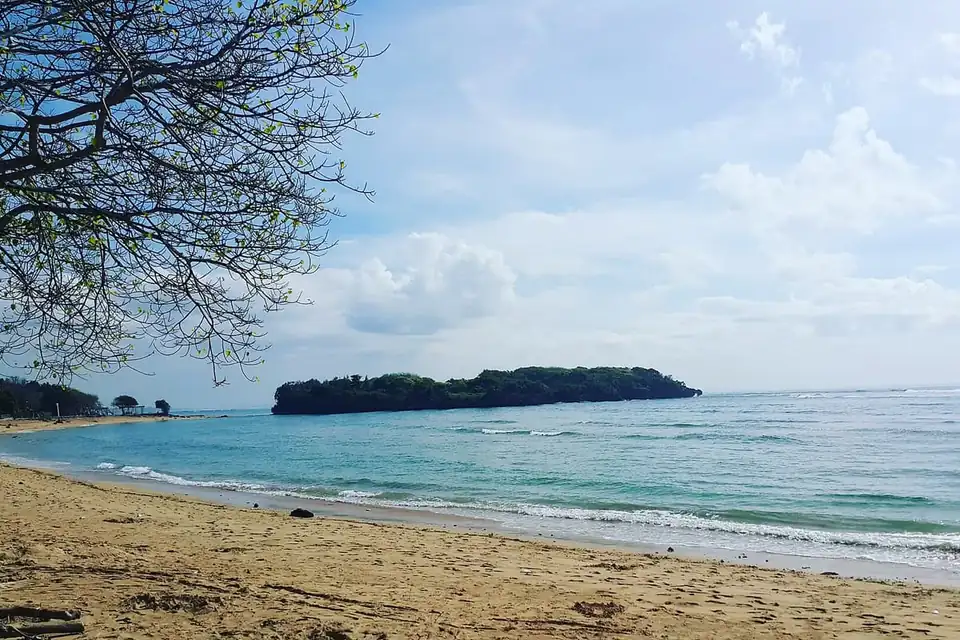
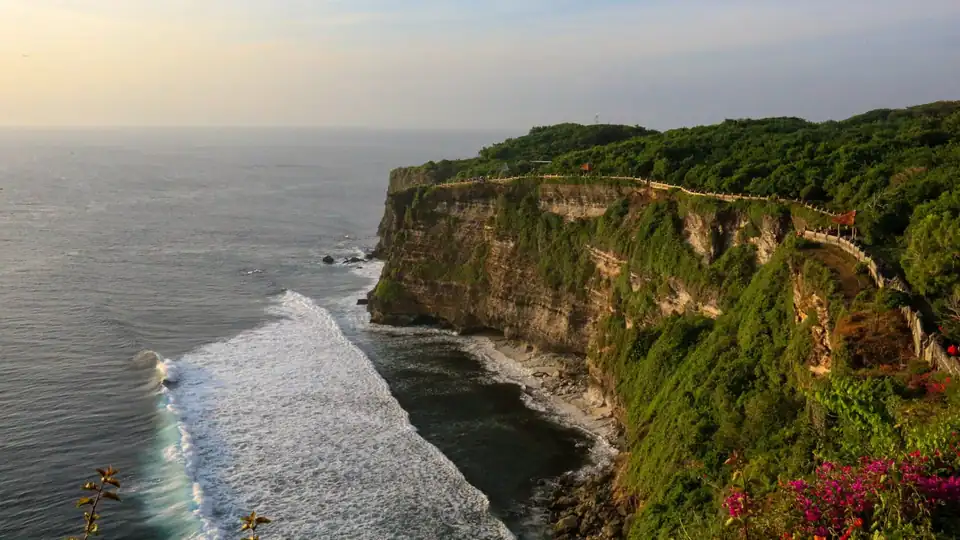
Uluwatu crowns the far south of Bali, where the Bukit Peninsula runs out of land in tall limestone cliffs above the Indian Ocean. This is the island’s surfing heartland. The coast throws up powerful reef breaks, white-sand coves reached by steep staircases, and a clifftop sea temple that pulls a crowd every sunset. Drier and more dramatic than the green interior, it is all sun-bleached rock and turquoise water, and what was once a surfers’ secret now ranks among Bali’s most sought-after corners.
Part of the island province of Indonesia, the Bukit Peninsula hangs below the airport at Bali’s southern tip, joined to the rest of the island by a narrow neck of land. Its scale catches people out. Beaches, temple and clifftop bars are strung along hilly roads that eat more time than the distances suggest. What holds it together is the meeting of cliff and sea, watched from a surf lineup, a quiet beach or the temple wall as the sun goes down.
Why Uluwatu stands apart
Uluwatu offers a different Bali from the resorts to the north. The draw is the drama of the coast: sheer cliffs, deep blue water and surf that ranks with the best in the world. For surfers it is a pilgrimage. For everyone else it means clifftop views, long sunsets and pocket-sized beaches that feel like discoveries even when they are busy.
The peninsula has also grown into a base for travellers who want scenery and surf ahead of shopping and nightlife. Clifftop cafes and design hotels keep multiplying, yet the landscape holds the upper hand, and standing at the edge of the island stays the main event. The trade is convenience for setting.
Arriving takes a little planning. From Ngurah Rai airport the drive is only about 20 kilometres, but it climbs across the hilly Bukit in 45 minutes to an hour and costs roughly Rp 200,000 to Rp 350,000 (about 13 to 22 US dollars) by car. No public transport is worth relying on, so once you land it is a private driver, a ride-hailing app or a scooter. The roads wind and dip rather than run straight, which stretches every hop between the beaches, the temple and the clifftop bars. Pack sun protection and water for the exposed, sun-struck terrain, and a light layer for the breezier clifftops after dark.
The surf
Uluwatu is spoken of in the same breath as the world’s great waves. The reef breaks below the cliffs are fast, powerful and unforgiving, firing over shallow coral that demands experience and respect. Catch the right swell and the lineup fills with skilled surfers, while spectators watch from the clifftop warungs above, drinks in hand.
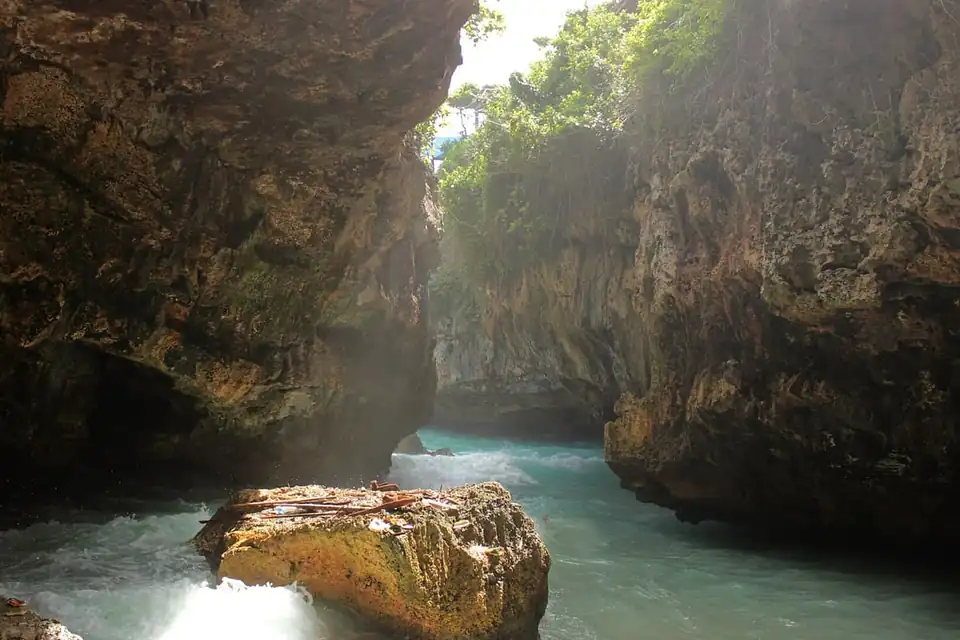
Beginners are better served elsewhere, though the wider Bukit softens on smaller days. Nearby Padang Padang beach and Bingin beach can be manageable with a guide, and Suluban beach, threaded through a cave-like gully below Uluwatu, sits right under the main break. Whatever the day, take local advice on tides and reef before you paddle out.
Reading the tide is a real safety skill here. The reef breaks work best on a mid to high tide that covers the sharpest coral; drop to a low tide and the shallows turn dangerous and the paddle-out exposed. Booties save the feet over urchins and rock, and a reef-safe leash and spare fin save a wasted session. Board hire at the clifftop shops runs around Rp 50,000 an hour or Rp 150,000 for the day (about 3 to 10 US dollars), and experienced guides will read the lineup and the currents for you. Even strong surfers treat the Bukit with respect, since the nearest help is a cliff climb away. For anyone not paddling out, a warung above the break with a drink in hand makes a fine morning of its own.
Cove beaches below the cliffs
The Bukit’s beaches are its quiet reward, reached down long staircases cut into the limestone. Each has its own character. Padang Padang is a short, pretty strand made famous on film; Bingin, a surfers’ beach backed by cliffside warungs and rooms; Suluban, a thread of rock passages leading to the surf. All pay back the climb with white sand and clear water, though high tide shrinks a few of them to a sliver.
Sitting at the foot of steep cliffs and often fronting reef, these coves suit sunbathing, surfing and photographs more than easy swimming. Time your visit with the tide, put on sturdy shoes for the stairs, and carry water for the climb back up in the heat. Early or late in the day buys the best light and the thinnest crowds.
Each cove asks a small effort and sometimes a small fee. Padang Padang beach charges around Rp 15,000 (about 1 US dollar) at the top of the staircase, while Bingin beach and Suluban beach cost nothing but drop down longer, steeper flights with barely room to pass. A quick tide check before you set out is worth the trouble, since high water swallows the sand at Padang Padang and cuts off parts of Suluban altogether. Cliffside warungs at Bingin sell cold drinks and simple meals for a few dollars, and some rent basic rooms to travellers who want to wake beside the surf. Parking at the head of each path runs a few thousand rupiah, paid to the attendant. Lock valuables away; the crowded stairs and sand make it easy to lose track of a bag.
Uluwatu Temple and the Kecak dance
Perched on the cliff edge some 70 metres above the sea, Uluwatu Temple is one of Bali’s six great sea temples, sacred and centuries old. Wrapped in the sarong handed out at the gate, visitors walk the clifftop paths for sweeping ocean views and glimpses of the shrines, while the inner sanctum stays closed to all but worshippers. With waves breaking far below, the setting ranks among the most striking on the island.
Late afternoon is the time to come, when a Kecak fire dance plays out in a clifftop amphitheatre as the sun drops. Dozens of chanting men carry the hypnotic soundtrack to a tale from Hindu epic, all against sea and sky. Keep a firm hold on your things throughout; the temple’s resident macaques are practised thieves.
A few practicalities smooth the visit to Uluwatu Temple. Entry is around Rp 50,000 for adults and less for children (roughly 3 US dollars), sarong and sash lent at the gate, and the site stays open through the day into the evening. The Kecak dance is a separate ticket of about Rp 150,000 (around 10 US dollars); the tiered seating fills fast, so turn up thirty to forty minutes early for a clear view west. Cover shoulders and knees, as at any Balinese temple, and expect the inner shrines to stay closed to non-worshippers. The macaques go for sunglasses, hats, phones and drink bottles, so bury anything loose deep in a zipped bag before you walk the clifftop. Staff can sometimes coax a stolen item back for fruit, but the simpler move is to give the troop no opening at all. Sunset lands around 6.15 in the evening, and the light on the cliff face in that final half hour is why many build a whole day around it.
Clifftop bars and sunsets
Uluwatu has turned its cliffs into a stage for the sunset. A string of bars and beach clubs cling to the rock, laying on pools, day beds and drinks with a straight view west over the ocean. They fill through the late afternoon as people gather for the light, and run from simple surf warungs to glamorous, premium-priced venues.
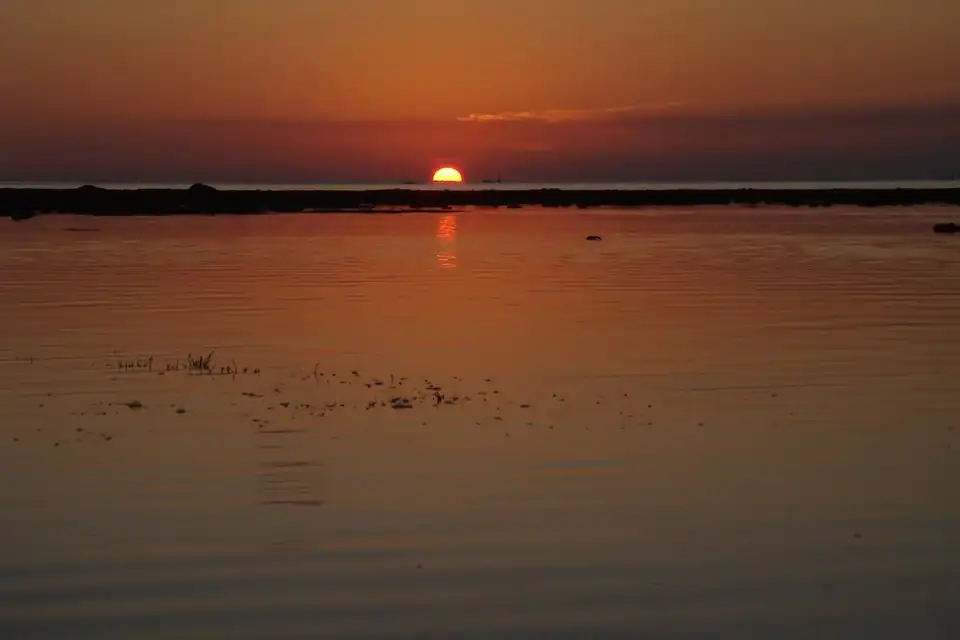
The sunset here needs no embellishment. The sun drops into the Indian Ocean beyond the surf and throws the cliffs into silhouette. Watched from a bar, a beach or the temple wall, it is the day’s highlight, reason enough that people plan their afternoon around ending up somewhere with a view.
Prices swing wildly. A cold drink at a surf warung above Suluban costs a few dollars, while the headline cliff-edge clubs run a minimum spend that can reach several hundred thousand rupiah a head and expect a booking for the sunset window. Cards work at the polished venues, but small warungs and beach vendors deal in cash, so carry rupiah in small notes. Many clubs turn smart-casual after dark and add a service charge and tax of roughly 15 to 21 per cent. Getting there well before the sun drops secures both a table and the walk in, before the access roads clog with sunset traffic. For a quieter option, the informal warungs over the breaks give the same horizon at a fraction of the price, a plastic chair in place of a day bed.
Getting around and nearby
Distances on the Bukit deceive, with the beaches, temple and bars strung along hilly roads. A scooter gives confident riders the most freedom; a private driver by the half or full day is the comfortable way to hop between sights. Ride-hailing apps work but turn patchy in the remoter corners, so build a little extra time into every trip.
Uluwatu sits within easy reach of the rest of south Bali. The seafood grills of Jimbaran lie just north, then the beaches of Kuta, the resort comforts of Seminyak and the surf-cafe sprawl of Canggu beyond. Many people pair a few nights on the Bukit with time further north, matching its cliffs and surf against the shopping and dining of the beach towns.
Scooter hire runs roughly Rp 70,000 to Rp 100,000 a day (about 4 to 6 US dollars) and makes light work of hopping between coves for confident riders, though the steep, winding roads and blind bends demand respect. A private driver by the half or full day, around Rp 500,000 to Rp 700,000 (about 32 to 44 US dollars), takes away the parking scramble at the temple and beaches and keeps a group together. Grab and Gojek reach the Bukit but thin out in the remoter corners, so a booked return saves a long wait after the sunset dance. No railway runs anywhere on Bali, so every trip goes by road, and the Nusa islands, a common add-on, leave by fast boat from Sanur rather than the peninsula. Leave extra time for the hilly, single-lane stretches, above all on the run back towards the airport.