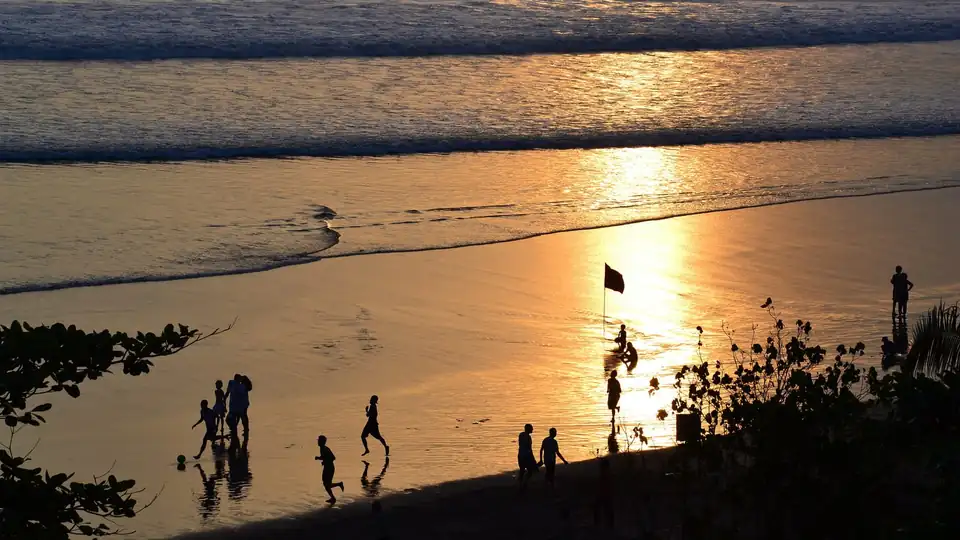
Seminyak is the polished face of Bali’s south coast, a resort town of design boutiques, beach clubs and long sunset sands just north of Kuta. Where its neighbour trades on budget energy, Seminyak went upmarket, lining its lanes with smart restaurants, spas and shops for a well-heeled crowd. What you get is one of the island’s most comfortable first bases, close to the airport yet a clear step above the backpacker strip.
Facing straight out over the Indian Ocean, part of the island province of Indonesia, Seminyak owes its sunsets to that western aspect. Headline sights are thin on the ground, which is rather the point. People come here to slow down, to eat well, shop, take a spa afternoon and see out the day with a drink on the sand as the sky turns.
Why choose Seminyak
Seminyak suits travellers who want the beach with a side of comfort and style. The appeal is the everyday pleasures done well: strong coffee in the morning, a long lunch, an afternoon by a pool, a dinner that could hold its own in any city. Temples and rice terraces on your doorstep are not the offer here. A relaxed coastal base with the airport half an hour away is.
For a first-time visitor, the town also makes a gentle way in. English is spoken everywhere in the tourist trade, the dining is varied and familiar, and the logistics look after themselves. Many people spend their opening or closing nights here before or after they venture to the hills, islands or quieter coasts.
The position pays off in convenience. Ngurah Rai airport sits about 10 kilometres south, a transfer of 30 to 45 minutes that costs roughly Rp 150,000 to Rp 250,000 (about 10 to 16 US dollars) by metered taxi or booked car. That short hop makes Seminyak a natural place to shake off a long flight or spend a final night near the terminal. Balinese Hinduism still sets the daily rhythm behind the resort front, and the small canang sari offerings of flowers and incense you step around on the pavements each morning are laid to keep the peace between seen and unseen worlds. Stepping over rather than on them is the small courtesy locals notice.
The beach and sunsets
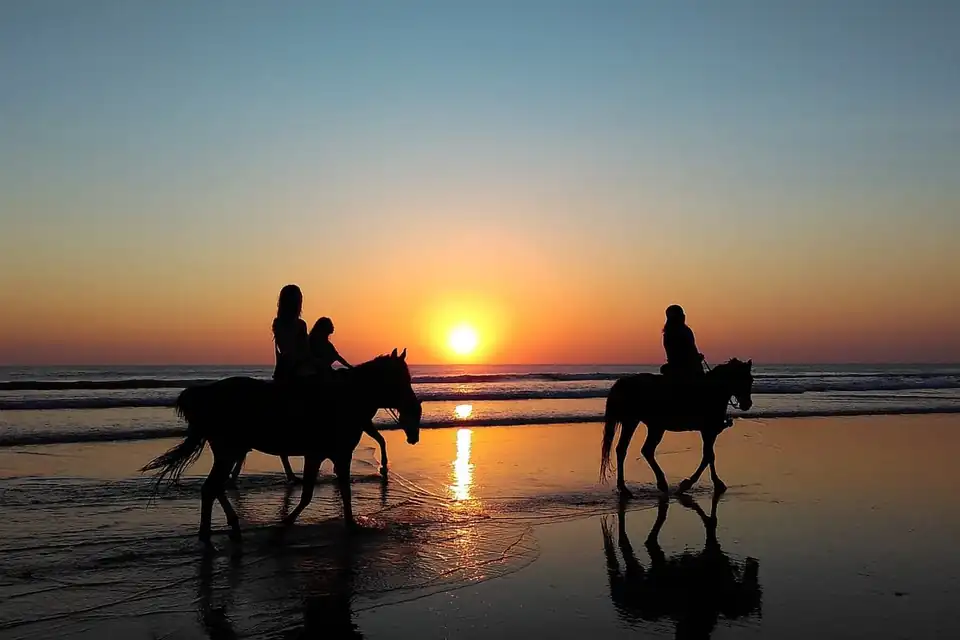
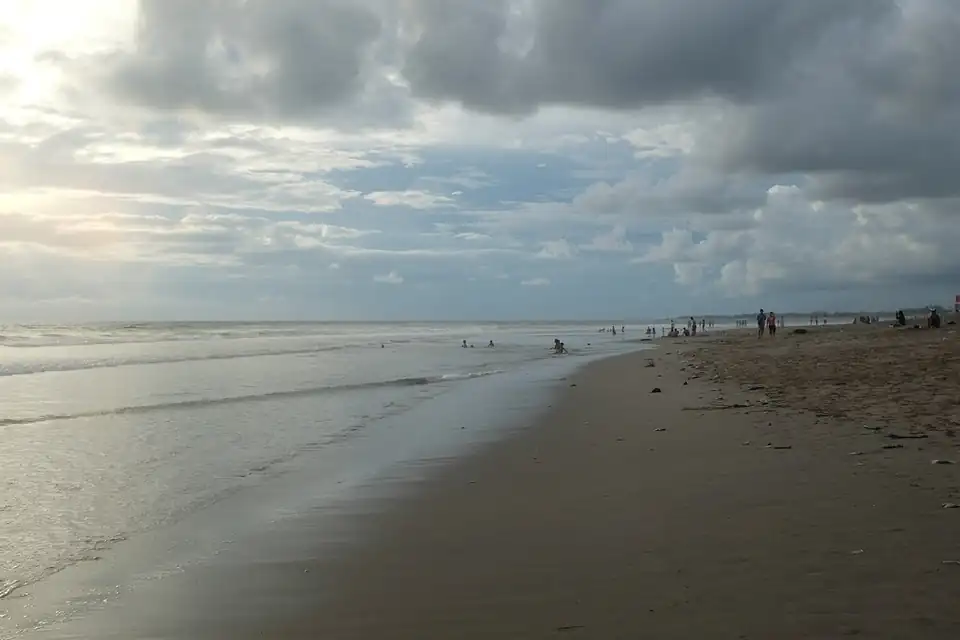
Seminyak beach is a wide band of grey-gold sand that runs for kilometres, merging with Legian and Kuta to the south. Sunset is the main event, watched each evening from the beach clubs and the informal bars that set cushions and low tables straight onto the sand. Seminyak beach and the neighbouring Double Six beach pull the biggest evening crowds; Batu Belig beach at the northern end stays calmer.
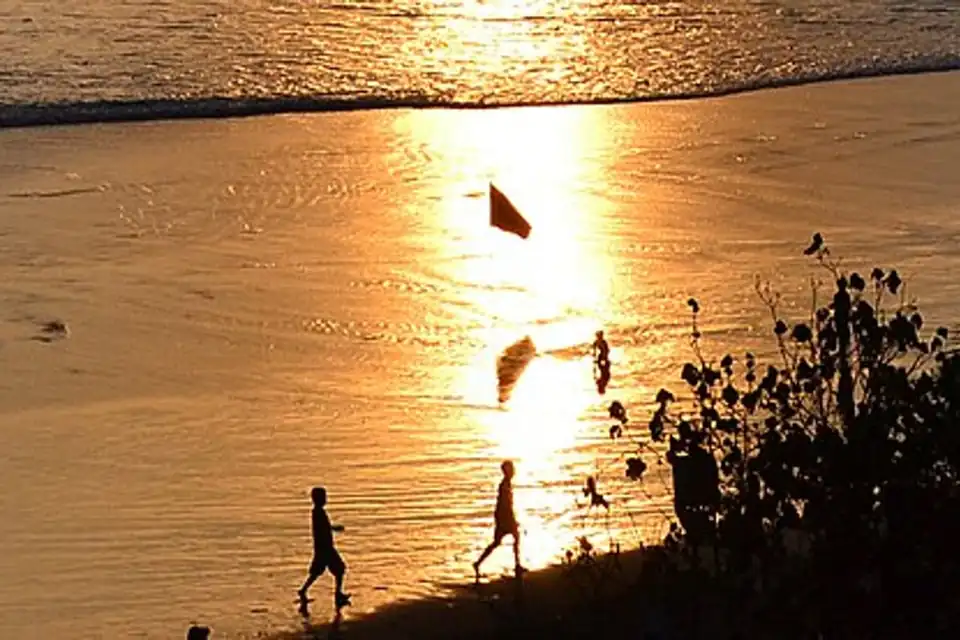
Swimming needs respect. The same Indian Ocean swell that draws surfers further out throws up strong currents and rip tides along this coast, so stay between the lifeguard flags and heed the colour warnings. Many visitors treat the sea as somewhere to paddle and watch the light, and do their real swimming in hotel and beach club pools.
Tides shape the day on the sand. At low water the beach broadens into a firm strip good for a walk or a game; a high tide can push the sea up to the sea walls and leave little dry ground in front of the busiest bars. Sunset falls somewhere between about 6 and 6.30 in the evening across the year, since Bali sits near the equator and the light barely shifts by season. Turn up thirty to forty minutes ahead to claim a good spot as the crowd builds. Vendors work the sand with cold drinks, sarongs and loose beer, and a polite refusal is enough if you would rather not buy. That grey-gold colour is volcanic, common along Bali’s south and west coasts.
Beach clubs and nightlife
The beach club is Seminyak’s signature. These are day-to-night venues with pools, day beds, food and cocktails all set to face the sunset, filling from mid-afternoon on. Most run on a minimum spend rather than a fixed entry fee, and in high season a day bed at the popular ones is worth booking ahead. Cocktails start from around Rp 150,000 (about 10 US dollars), well above local prices but part of the experience.
After dark, the nightlife leans towards stylish bars and long dinners more than the raucous clubs of Kuta. The mood stays lively but fairly grown-up, with rooftop bars and restaurants busy into the evening. Anyone after a bigger party scene tends to head north to Canggu or south to Kuta.
A few habits keep a beach club day smooth. Weekends and the July to August peak fill the best day beds by early afternoon, so reserve ahead or arrive before the sunset rush. Minimum spends vary widely, from around Rp 250,000 per person at simpler venues to several times that at the headline clubs, and the sum usually goes on food and drink rather than a separate door charge. Bills carry a service charge and government tax together of roughly 15 to 21 per cent, worth counting in before you order. The larger venues take cards, though some rupiah smooths tips and the walk home. Down at the southern edge, Double Six beach keeps a looser strip of sunset bars for anyone who prefers a cushion on the sand to a booked lounger.
Dining and shopping
Seminyak has a fair claim to Bali’s best dining. Jalan Kayu Aya, widely called Eat Street, and the roads around it run from humble warungs serving Balinese plates for a few dollars to fine-dining rooms with tasting menus. The range is broad enough that you could eat somewhere different every night for a week and never repeat a cuisine.
Shopping is the other main pursuit. Along Jalan Kayu Aya and Jalan Basangkasa the boutiques sell fashion, homeware, leather and jewellery from Balinese and international designers, with concept stores and surf brands mixed in. This is the kind of shopping that fills a suitcase with things you never planned to buy, and a pleasant way to pass the hotter middle of the day.
Prices tell two stories. A full plate at a warung might run Rp 30,000 to Rp 60,000 (roughly 2 to 4 US dollars), while a tasting menu at a smart room can cost more than a night’s budget accommodation. In high season it pays to book a table at the better-known restaurants, and many open for dinner only. The fixed-price boutiques do not haggle, but the smaller stalls and markets expect a friendly back and forth, and opening a little below what you will pay usually lands on a fair figure. Late morning and early afternoon are the calmest hours to browse, before the heat peaks and the shops fill with people sheltering from it. Carry a reusable bag, since Bali has curbed single-use plastic and many shops no longer hand them out.
Culture and calm corners
For all its resort polish, Seminyak keeps a thread of Balinese life. The seaside temple of Petitenget stands right on the beachfront in the middle of the resort, an old and important temple where ceremonies still take place against a backdrop of sand and sea. It is a reminder that this coast held spiritual meaning long before the beach clubs arrived.
Away from the busy centre, the northern fringe towards Batu Belig is quieter and more residential, with villas tucked down lanes and a slower feel. Spas and yoga studios offer a pause from the beach and the shops, and are easy to book at short notice. These calmer corners make it possible to enjoy Seminyak’s comforts without living inside its busiest streets.
Petitenget temple deserves a proper look rather than a passing glance. Ceremonies here can fill the surrounding lane with worshippers in white, and visitors are welcome to watch from a respectful distance, dressed modestly and with a sarong if entering the grounds. The temple takes its name from a legendary chest said to have been left on this shore, and it remains an active site of worship rather than a museum piece. A short walk north brings you to Batu Belig beach, where a footbridge over the river links Seminyak to the Berawa end of Canggu, a pleasant late-afternoon stroll that ends at a string of laid-back beach bars. Between temple visits and spa afternoons, it is easy to build a slower day that never touches the shopping streets at all.
Getting around and moving on
Seminyak’s core is walkable in short stretches, though patchy pavements and heat make a scooter or a ride-hailing app the easier choice for longer trips. Traffic on the main roads is often slow, so plan a little extra time for journeys, especially towards the airport in the late afternoon.
As a base, Seminyak connects well to the rest of the south. The surf beaches and clifftop temple of Uluwatu lie about an hour to the south, the seafood grills of Jimbaran a little closer, and the surf-and-cafe scene of Canggu just to the north. Inland, cultural Ubud is around ninety minutes away, an easy day trip or the next stop on a wider loop of the island.
For getting about, scooter hire runs to roughly Rp 70,000 to Rp 100,000 a day (about 4 to 6 US dollars) and gives the most freedom, though the narrow one-way lanes and constant traffic reward caution. Ride-hailing through Grab or Gojek is cheap and reliable, and often quicker to summon than a street taxi, but a few pockets near the beach clubs restrict app pickups, so a short walk to a main road can save a wait. There are no trains anywhere on Bali, so every onward journey means the road. The Nusa islands are reached by fast boat from Sanur, about an hour east by car, which makes a two- or three-night side trip simple to bolt onto a Seminyak stay. Building in extra time for the late-afternoon crawl towards the airport spares a stressful finish to any trip.