
Bali is generally a safe and welcoming place to travel, and serious crime against visitors is uncommon. The risks that actually injure and inconvenience travellers are everyday, practical ones: the traffic, especially on scooters, the sea, petty theft, monkey bites at the temples, and stomach upsets. Most of these are avoidable with sensible habits, and understanding them is far more useful than worrying about rare, dramatic dangers.
Set out plainly, those risks are easy to manage, and the precautions that handle them are mostly common sense. The island’s natural hazards, its earthquakes and volcanoes, belong in the picture too, but in proportion. None of it should put you off: millions visit Bali safely every year. Take out good travel insurance, check your own government’s current travel advisory before you go, and read on for the practical detail.
Traffic and the sea
The single biggest risk to visitors is the road, and above all the scooter. Roads can be busy and chaotic, surfaces poor, and traffic unpredictable, and scooter accidents injure many travellers each year, sometimes seriously. If you ride, hold the correct licence, wear a proper helmet, check your insurance covers you, and ride within your ability; if you are not a confident rider, use a driver instead. Even as a passenger or pedestrian, stay alert around the traffic. Our getting around page covers this in full.
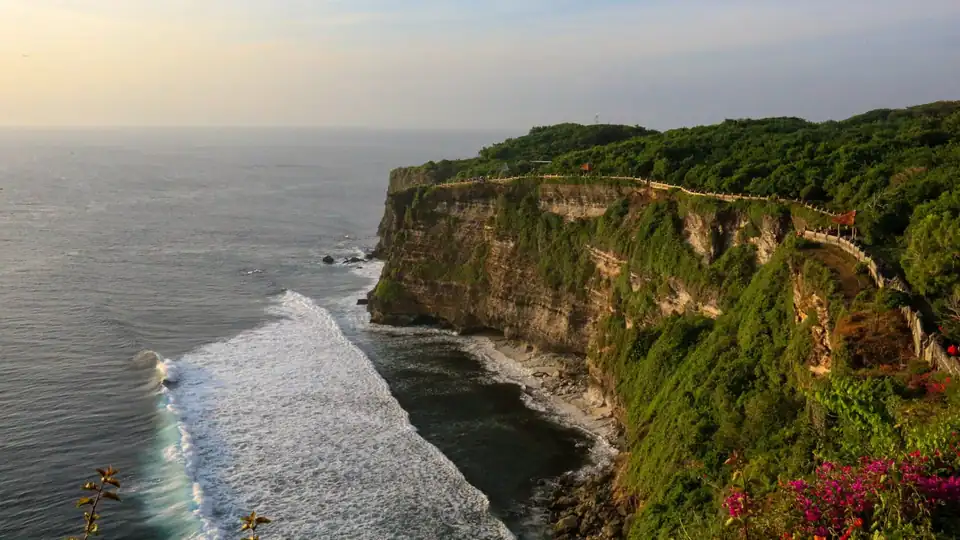
The sea is the other major hazard. Some of Bali’s southern beaches have strong rip currents and powerful surf, and drownings do happen. Swim only where it is clearly safe, obey warning flags, and favour beaches with lifeguards. The clifftop breaks around Uluwatu are for experienced surfers, not casual swimmers. Calmer water is found on the east coast and in sheltered bays. If unsure, ask a lifeguard or local, and never swim beyond your ability or after drinking.
Petty theft and scams
Crime that affects visitors is mostly petty rather than violent. Bag-snatching, sometimes by a passing scooter, pickpocketing in crowds, and theft of unattended belongings from beaches, bars and rooms are the usual problems. ATM card skimming also occurs. The defences are simple: keep bags on the side away from the road, do not flaunt valuables, use hotel safes, watch your belongings on the beach, and stay aware in busy places.
A few scams are worth knowing. Unofficial taxis that refuse the meter or quote inflated fares, money-changer sleight of hand when counting notes, and pushy touts are the common ones. Use the trusted Bluebird taxis or ride-hailing apps, change money only at reputable licensed changers and count carefully, and be firm but polite with touts. Being alert to these keeps the small stuff small. Our money page covers ATM and cash safety in more detail.

Health: Bali belly, monkeys and mosquitoes
The most common health complaint is Bali belly, the traveller’s stomach upset caused by unfamiliar bacteria in food or water. Reduce the risk by drinking only bottled or properly filtered water, avoiding tap water even for brushing teeth if you are sensitive, being cautious with ice and raw items at the most informal stalls, and eating at busy, high-turnover places. Wash or sanitise your hands before eating. Most cases pass within a few days, but stay hydrated and see a doctor if it is severe or persistent.
Two other health points matter. The temple monkeys at Ubud and Uluwatu are wild and will bite or scratch to get food, and any bite that breaks the skin should be cleaned immediately and assessed by a doctor, because Indonesia carries a rabies risk. And, as in much of the tropics, mosquitoes can transmit diseases such as dengue, so use repellent and cover up, particularly during the day, when the mosquitoes that spread dengue mainly bite. Consider travel-health advice on vaccinations before you go. What the CDC and UK TravelHealthPro say about vaccines, rabies, dengue and malaria is set out on vaccinations for Bali.
Natural hazards and staying informed
Bali sits in a seismically active region and has active volcanoes, chiefly Mount Agung, which has erupted in the past. Earthquakes can occur, and volcanic activity occasionally prompts warnings and exclusion zones. Serious events are infrequent, and the authorities monitor the volcanoes and issue guidance when needed. Follow that guidance, stay out of restricted zones around active volcanoes, and take note of your accommodation’s basic safety information. For most visitors these are background risks, not daily concerns.
Finally, respectful behaviour keeps you safe socially as well as physically. Dress modestly at temples, wear the required sarong, follow local customs, and be mindful that Indonesia has strict laws, including very severe penalties for drugs. Keep an eye on your own government’s travel advisory before and during your trip for any current warnings. With these ordinary precautions, the vast majority of visitors have a safe and happy time. Our religion page covers temple etiquette.