

Bali’s weather is easy to summarise: it is warm all year. Sitting just 8 degrees south of the equator, the island has a tropical climate without the hot and cold seasons of higher latitudes. Instead, its year is divided into a dry season and a wet season by the monsoon, and the main variation a visitor feels is between the sticky humidity of the coast and the fresher air of the highlands. Daytime temperatures at the coast sit around 30 degrees for most of the year.
For planning, three facts do most of the work: you will be warm wherever and whenever you go, the sun bites harder than it feels, and altitude decides how cool a place is far more than the calendar does. Hold those in mind and the details, temperatures, the two monsoon seasons, the humidity, the gap between hot south and cool mountains, slot in around them. For choosing dates around crowds and surf, see our best time to visit page, and for every month with its measured rainfall, Bali month by month.
Warm all year, near the equator
Because Bali lies so close to the equator, the length of day and the strength of the sun barely change through the year, and neither does the temperature very much. At the coast and in the lowlands, daytime highs are typically around 30 to 32 degrees Celsius, falling to the mid-twenties at night. There is no cold season, and it rarely gets dramatically hotter than this either; the tropical warmth is remarkably steady.
What does change is not the heat but the rain and humidity, driven by the monsoon. This is why the local seasons are named for wet and dry rather than hot and cold. The equatorial sun also means daylight is fairly constant, with the sun rising and setting early and quickly, and little of the long summer evenings found further from the equator. Sunset comes around six in the evening throughout the year.
The two seasons and the humidity
Bali’s year splits into a dry season, May to October with April as the changeover, and a wet season, roughly November to March, both shaped by the shifting monsoon winds. The dry season brings lower humidity and mostly sunny days; the wet season brings higher humidity and heavier rain. The change between them is gradual, not abrupt, and the exact timing shifts a little from year to year.
Humidity is the factor visitors most often underestimate. Bali is humid all year and more so in the wet season, which makes the heat feel stronger and can be tiring until you adjust. Light, breathable clothing, plenty of water, and breaks in the shade or air conditioning all help you cope. The humidity is one reason many travellers head up into the hills for part of their trip, where the air feels noticeably fresher.
Heat and humidity, measured month by month
The figures below are measured, not modelled. Temperatures are the daily readings from the weather station at Ngurah Rai airport in Denpasar, 2016 to 2025, from the NOAA global daily record (station IDM00097230). Humidity is the hourly record from the same station over the same years, via Meteostat. The airport is on the coast in the south, so the highlands run several degrees cooler.
| Month | Avg high | Avg low | Humidity |
|---|---|---|---|
| January | 30.9 C | 25.1 C | 81% |
| February | 30.9 C | 25.0 C | 81% |
| March | 31.4 C | 25.2 C | 81% |
| April | 31.3 C | 25.1 C | 80% |
| May | 30.7 C | 25.3 C | 80% |
| June | 29.9 C | 24.7 C | 79% |
| July | 29.2 C | 24.3 C | 78% |
| August | 29.2 C | 24.1 C | 78% |
| September | 30.1 C | 24.3 C | 79% |
| October | 31.1 C | 24.7 C | 79% |
| November | 31.5 C | 25.2 C | 81% |
| December | 30.9 C | 25.2 C | 81% |
The hottest months are March and November, tied within a tenth of a degree, and they sit either side of the dry season rather than in it. The dry season’s middle, July and August, is the coolest part of the year. Even so, the warmest month is only 2.3 degrees hotter than the coolest, and nights stay at about 24 to 25 C all year.
Humidity barely moves with the seasons but moves a lot within a day. The monthly average stays between 78 and 81 percent all year. Within a day it swings by about fifteen points: the air is most humid overnight, peaking at about 87 percent around five in the morning, and driest from noon to three in the afternoon, at about 72 percent. It is back above 80 percent by eight in the evening.
We checked the humidity against a second, independent source, NASA’s POWER dataset for the same corner of the island. It reads a few points higher, 80 to 86 percent, as models do where a grid cell takes in open sea, but it agrees on the two points that matter: humidity is around 80 percent or more in every month, and it is a little higher in the wet season. We do not publish a count of rainy days, because the station’s rainfall record is too patchy to count them and the models disagree with it; the month by month pages give rainfall where two sources agree.
Cooler in the highlands
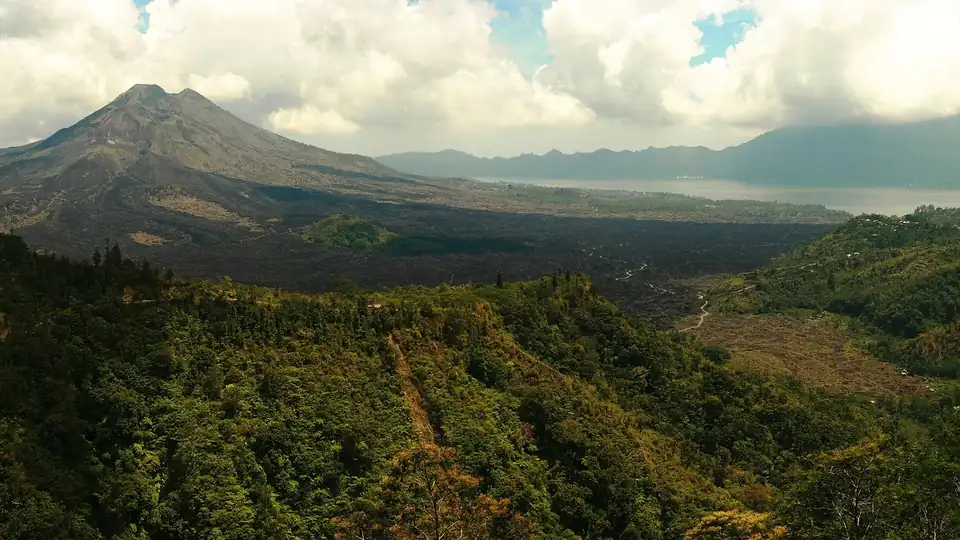
Altitude is the biggest control on how cool a place in Bali feels. The south, where most visitors stay, is low, hot and, in the dry season, relatively dry. As you climb inland to Ubud, the air grows a little fresher, and higher still, around Munduk, Bedugul and Kintamani, temperatures fall by several degrees. Mountain evenings can feel genuinely cool, and a light layer is worth packing if you head up.
The highlands are cooler as well as wetter and greener, because the mountains catch far more rain and cloud than the lowlands. Mist is common there, especially in the mornings and in the wet season, and it lends the hills their atmosphere. This contrast is exactly why so many itineraries pair a hot beach base with a few days inland: you get the warm sea and the cool mountain air within a short drive of each other.
Sea temperatures and south versus north
The sea around Bali stays warm all year, generally in the high twenties Celsius, so swimming, snorkelling and diving are comfortable without heavy gear, though some divers wear a thin wetsuit or rash guard. The water around the Nusa Islands can feel cooler at times, stirred by the currents that also bring the sunfish. Warm water is one of the reliable constants of the climate, even as surf and sea conditions change with the seasons.
Geography also splits the weather across the island. The south is hotter and sunnier, the mountainous interior cooler and wetter, and parts of the north coast, sheltered beyond the mountains, have their own drier feel. In practice this means you can expect beaches to be warm and bright and the highlands to be cool and often misty on the same day. Planning a route that mixes the two gives variety without ever being cold. Our getting around page covers how to move between these zones.