
Bali has one answer for everyone arriving from a country with different sockets: bring a plug adapter. Whether you also need a voltage converter depends on where you live and what you are carrying. This page covers the plug type, what Australian, UK and US visitors need to pack, where to buy a spare on the island, and the two local quirks that catch people out, unstable voltage and Nyepi.
The plug and the supply in Bali
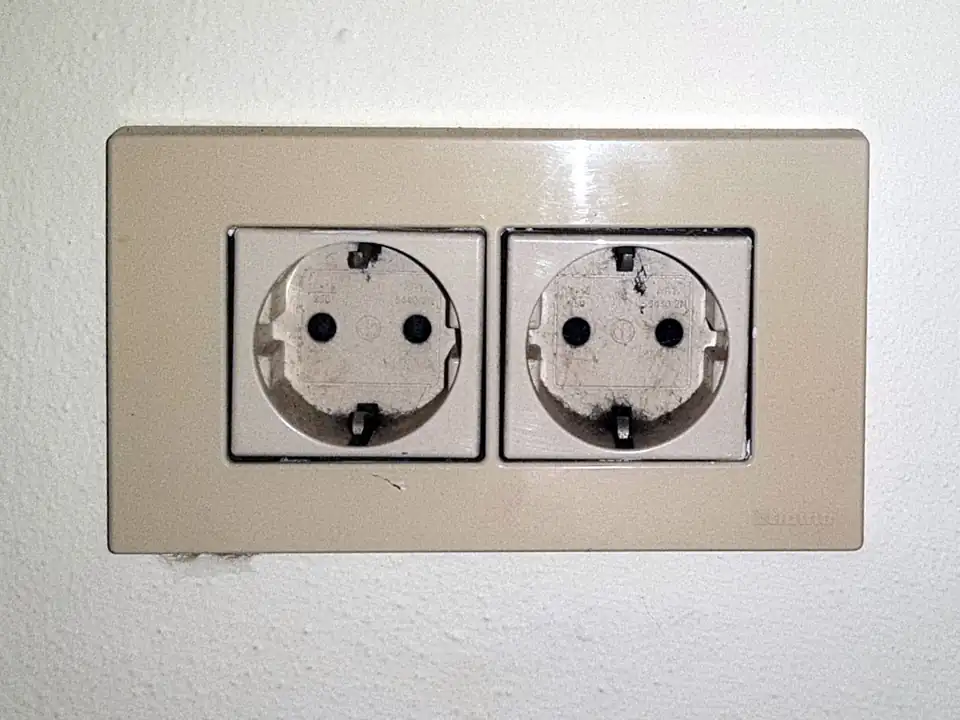
Bali is part of Indonesia, which uses Type C and Type F sockets with two round pins. The supply is 230 V at 50 Hz, according to both Bali.com and Wikipedia’s table of mains electricity by country. Type C has two plain round pins, while Type F, the German-style Schuko plug, adds two earthing clips on the side. A Type C plug fits either socket, which is why a standard European-style adapter works across the island.
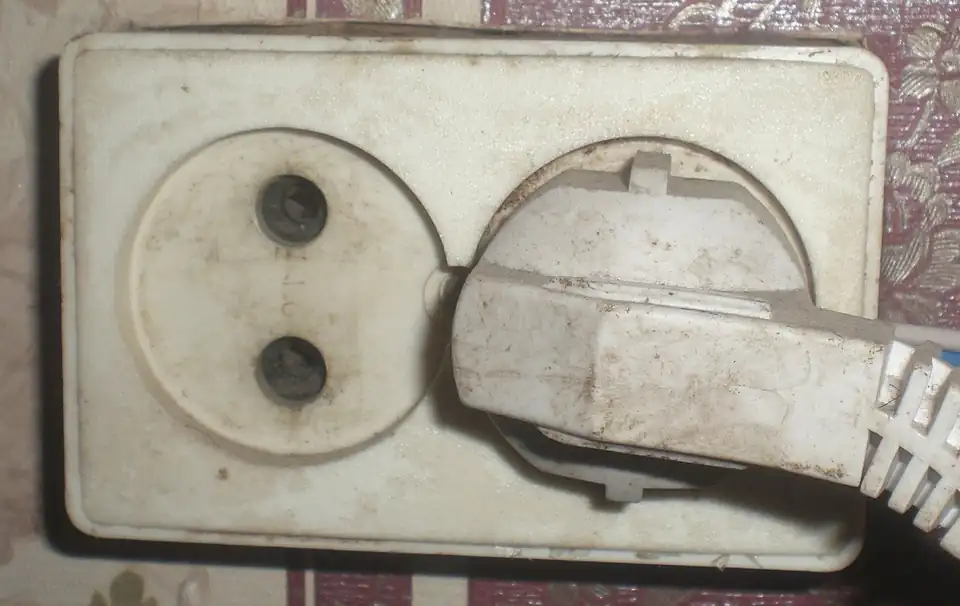
Two practical details trip people up. First, the sockets are usually recessed into the wall, so a bulky adapter with a square body may not seat properly. Bali.com warns that some adapters have square plugs which would not fit, so choose one with a slim round-pin end. Second, the pins are round, not flat or rectangular, so adapters sold for flat-pin countries will not do.
We could not open the IEC World Plugs page for Indonesia from our systems, so the plug types and supply above come from two 2026 travel guides that agree with each other. If you want to check the primary source, the IEC lists plug types by country at iec.ch/world-plugs.
Adapters for Australian, UK and US visitors
Australia, the UK and the US all use different plugs from Bali, so every one of these visitors needs an adapter. The voltage question differs by country.
Australia and New Zealand. Australia uses Type I plugs, which do not fit Bali’s Type C and Type F sockets. Bali.com says Australia and New Zealand both use 230 to 240 V, so voltage conversion is not needed and only a plug adapter is required. Most Australian visitors therefore need a plain adapter for each device or a multi-socket one.
United Kingdom. UK Type G plugs do not fit in Bali’s sockets. UK voltage is in the same range as Bali’s, so an adapter is all you need. A simple Type G to Type C adapter works, and an extension lead with a UK plug and an adapter at the end lets you charge several devices from one socket.
United States and Canada. US plugs are Type A or B, with flat pins. Bali.com says US electronics typically run on 110 V, while Bali uses 230 V, and that a device which is not dual voltage will need a voltage converter. In practice the answer sits in the next section.
Visitors from continental Europe, and from some other countries that already use Type C or Type F, do not need an adapter at all.
Do you need a voltage converter?
Look at the label on each charger. If it says “INPUT: 100-240V, 50/60 Hz”, it can be used in any country, according to Bali.com, which notes this is most often seen on chargers for tablets, laptops, cameras, phones and shavers. For these you need only a plug adapter.
The risk is single-voltage heating and motor devices. Bali Holiday Secrets, in a guide updated in September 2026, says strictly 110 V items such as some electric shavers, hair dryers or curling irons need a voltage converter as well as a plug adapter to avoid damaging them. Bali.com puts the same point for hair dryers and straighteners: if yours is dual voltage (110-240V), a plug adapter is enough, and otherwise a converter is needed.
For most people the cheaper choice is to leave a single-voltage hair tool at home and buy or borrow one locally. Converters for heating elements are heavy, and a hair dryer is usually the most power-hungry thing in a bag. Apple, Android and laptop chargers are the easy case, and you can check each one in a few seconds.
Frequency is a separate matter. Bali.com advises against running an appliance if your country’s frequency differs from Indonesia’s 50 Hz, and warns about moving, spinning or time-related gadgets such as clocks. This mostly affects visitors from North America, where mains is 60 Hz.
USB charging and where to buy adapters in Bali
Many phones, earbuds and cameras charge over USB, so a small USB wall charger that takes 100-240 V, plus an adapter for it, covers most needs. Bali Holiday Secrets notes that many modern hotels and cafes in Bali now have USB charging ports, which makes a bulky adapter less necessary. Bali.com suggests a USB charger connected to a laptop as the safest way to charge an electric toothbrush.
If you forget an adapter, you can buy one on the island. Bali.com lists supermarkets in Seminyak, Canggu and Ubud, hardware stores such as AZKO (formerly Ace Hardware) and Mitra10, convenience stores like Indomaret, Cocomart and Circle K, large malls such as Beachwalk in Kuta and Icon Bali Mall in Sanur, and local electrical shops called toko listrik. Airport shops carry them but at inflated prices. Smaller convenience stores are less likely to have them. Bali Holiday Secrets says to expect to pay between IDR 30,000 and IDR 150,000 for a decent adapter. It also warns that cheap adapters can be poorly made and unsafe, so spend a little more for a recognised brand.
Many hotels and villas will lend you an adapter if you ask, so check at reception before you buy one. If you are still planning the rest of your pack, our Bali airport page covers what you do on arrival, and the budget page gives a sense of what things cost once you are there.
Power cuts, surges and Nyepi
Bali.com says power outages can occur occasionally but are not overly common anymore, and that most hotels have a backup generator. If construction work nearby is the cause, it says restoring power could take 2-3 hours. A portable power bank for your phone is the sensible precaution.
The bigger risk to electronics is the supply itself. Bali.com says voltage can fluctuate quite a bit depending on where you stay, and that some hotels have load balancers to soften the swings, which can damage very sensitive equipment. Its FAQ recommends a surge protector, and we agree if you are bringing a laptop, a camera battery charger or a drone. Choose a surge-protected adapter board and charge unattended devices on a safe surface away from storms.
What to pack
A short list covers nearly everyone. One Type C and Type F compatible adapter with a slim round-pin end, or two if you travel with a partner. A dual-voltage multi-USB charger. A power bank. For North Americans, a check that every heating or motor device lists 230 V on its label, and a plan to leave the rest at home. If you carry expensive electronics, add a surge-protected adapter board.
With those in your bag you will not need to hunt for a shop on the first night, and the only plug question left is which socket by the bed is free.