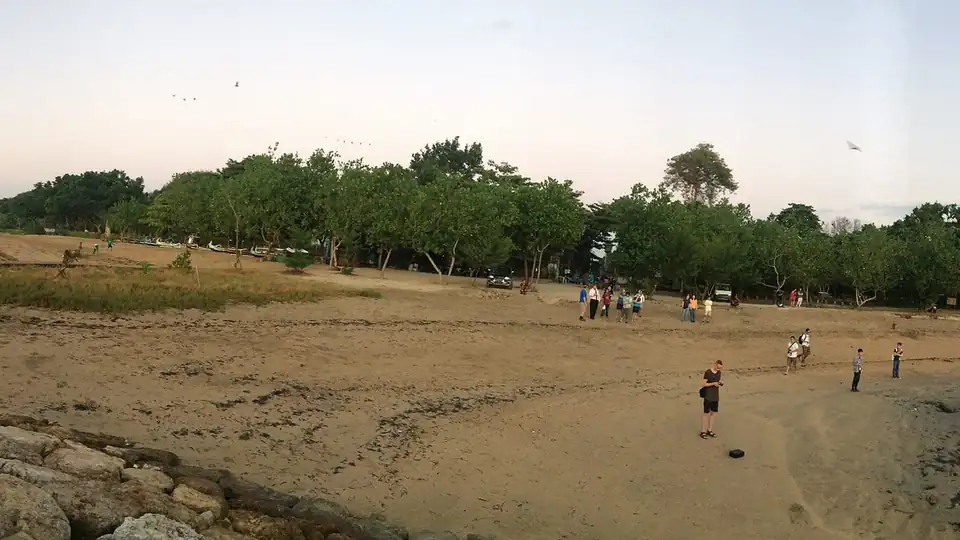
Sanur is Bali’s calm alternative, an easygoing seaside town on the south-east coast where the sea stays gentle and the days stay slow. An offshore reef shelters the beach, which faces east across the water towards the Nusa islands, so the water is flat and swimmable and the sunrises rank among the island’s best. Families and older travellers have long favoured it. Sanur trades nightlife and surf for a seafront boardwalk, low-rise resorts and an unhurried, village-like character that has outlasted decades of tourism.
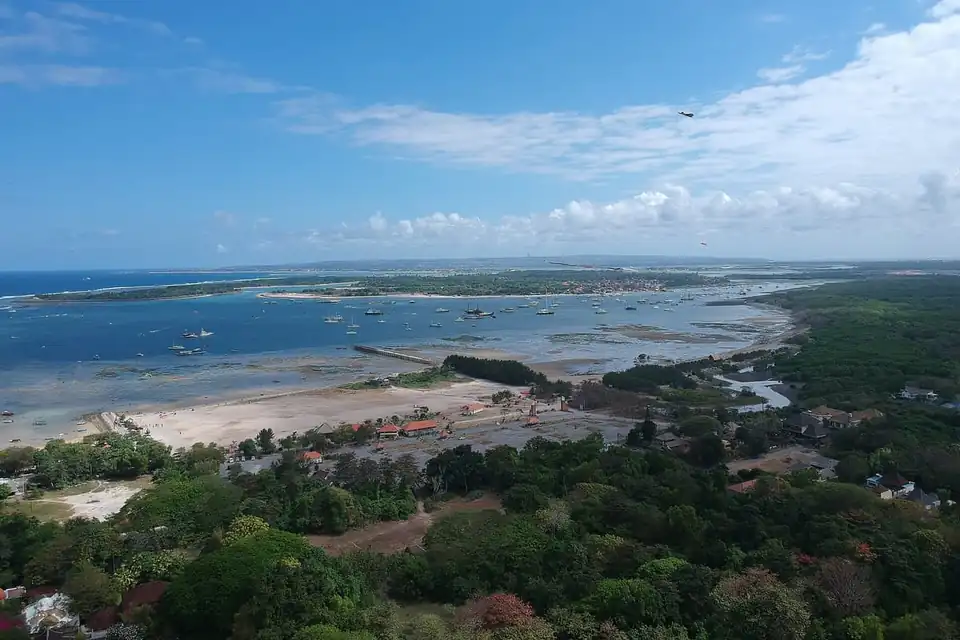
Just east of the capital, Denpasar, and part of the island province of Bali in Indonesia, Sanur sits a short drive from the airport yet a world away in mood from the crowded west coast. One of the first places on the island to welcome visitors, it has aged gracefully, keeping its small temples, its fishing boats on the sand and its name as the coast’s quietest resort town. It is also the main departure point for the Nusa islands, which lends it a steady flow of travellers passing through.
Why choose Sanur
Come to Sanur for the beach without the crowds and the noise. Its calm, shallow sea and flat seafront path make it especially easy for families and less confident swimmers, while its relaxed restaurants and spas suit those after rest rather than revelry. This is a place to slow right down, and its regulars return year after year for exactly that.
The town also makes a sensible practical base. It is close to the airport and Denpasar, the departure point for the Nusa islands, and within easy day-trip reach of Ubud and the temples of the south and east. For visitors who value calm and convenience over a party scene, Sanur is one of the island’s most comfortable choices. If the other option on your list is the resort coast to the south, Sanur vs Nusa Dua sets the two calm-water bases side by side.
A longer, gentler stay pays off here. Distances are small, most hotels sit within a short walk or cycle of the beach, and the flat streets make it one of the easier bases to explore on foot. A private driver by the day, at around Rp 600,000 to Rp 800,000, roughly 40 to 53 US dollars, opens up temples, rice terraces and the highlands without changing hotels. Accommodation spans budget guesthouses set back from the shore to established beachfront resorts, and prices tend to sit below the west-coast towns for comparable comfort. Regular visitors value knowing exactly what they will get.
The beach and calm sea
Sanur’s defining feature is its gentle water. An offshore reef breaks the ocean swell, leaving Sanur beach calm and shallow along much of its length, a rarity on an island known for surf. At high tide the swimming is easy and safe; at low tide the water can retreat far over the reef flat, so it helps to check the timing.
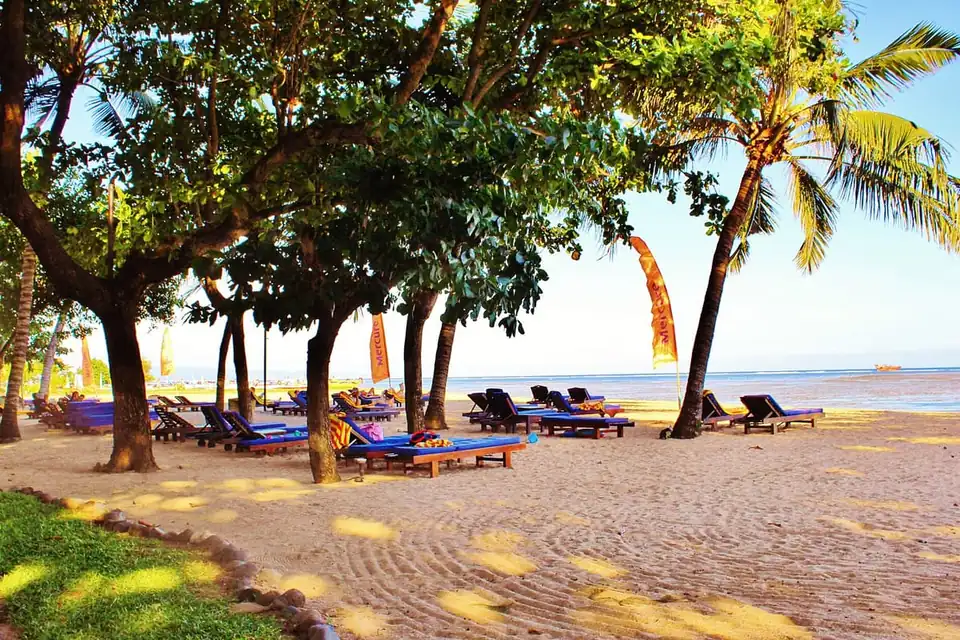
The sand is backed by resorts, cafes and small temples rather than bars and clubs, keeping the atmosphere quiet. Towards the southern end, Mertasari beach is a little more open and popular with kitesurfers when the wind is up. Throughout, the calm sea and shaded loungers make for an easy, restful day by the water.
Reading the tide turns a good beach day into an easy one. High tide floats the reef flat and brings the water close to the sand, best for swimming, while low tide can expose seagrass and pull the shoreline back by many metres, leaving the shallows warm but thin. Tide times shift through the month and are worth checking the night before. Loungers and umbrellas along the front rent for a small fee or come with a cafe order, and the shaded warungs behind the sand make long, slow days simple. Kayaks and stand-up paddleboards suit the flat water well, and the sheltered conditions let children paddle with less worry than the surf beaches of the west.
The seafront boardwalk
Running for several kilometres along the shore, the Sanur boardwalk is one of the coast’s great simple pleasures. The flat, paved path links the town’s hotels, beach cafes and small shrines, open to walkers and cyclists and shaded in parts by palms. It is the spine of Sanur life, busiest at dawn and dusk when the air is cool.
Cycling the boardwalk is a favourite way to explore, with bike hire easy to arrange and the route almost entirely flat. Early morning brings joggers, walkers and the sunrise crowd, while beach cafes along the way tempt you to stop for coffee or a swim.
Hiring a bicycle is the natural way to cover the full length. Guesthouses and roadside stands rent basic bikes for around Rp 30,000 to Rp 50,000 a day, about 2 to 3 US dollars, and the level path runs several kilometres from the north end near the Le Mayeur Museum down towards Mertasari beach in the south. Mornings before about nine are coolest and quietest, filled with joggers and swimmers, while the middle of the day grows hot and exposed in the open stretches. Cafes and small temples spaced along the route give constant reasons to pause, and the flat surface suits riders of any age or ability.
Sunrise and local culture
Facing east across the Badung Strait, Sanur is a sunrise destination, and early risers gather on the beach and boardwalk to watch the sun come up over the sea and the silhouette of Nusa Penida. Traditional jukung outrigger boats drawn up on the sand complete the scene, a reminder that this was, and in part remains, a fishing community.
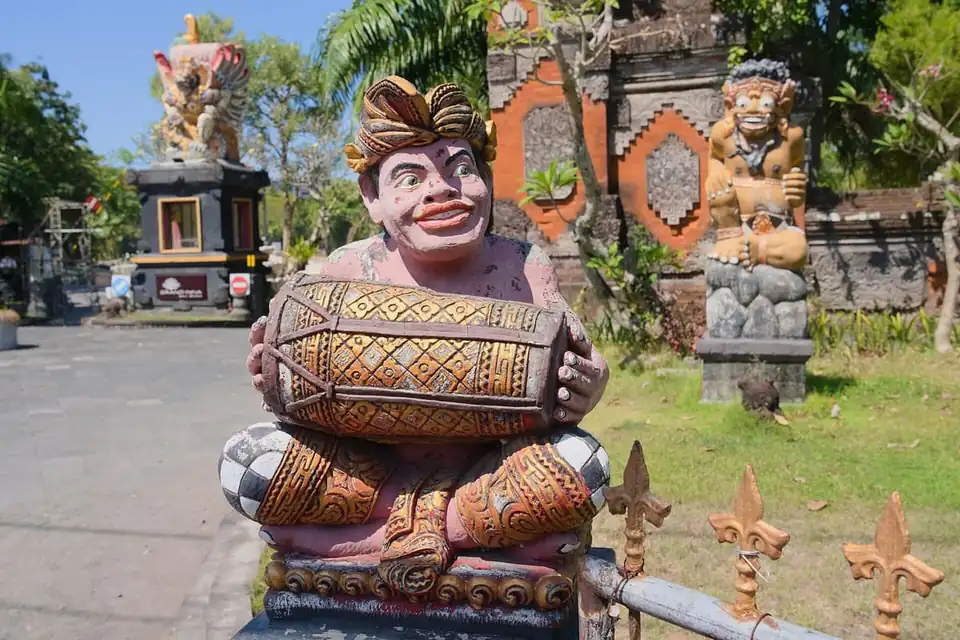
The town keeps a thread of local culture alongside its tourism. The Le Mayeur Museum, the former beachfront home of a Belgian painter who settled here, preserves his art and Balinese-style house near the north end of the beach. Small temples along the shore still hold ceremonies, and the general feel is of a real Balinese town that happens to welcome visitors.
Ceremony remains part of daily life along this shore. Small offerings of canang sari, woven palm trays of flowers and incense, appear each morning on temple steps and boat prows, and visitors are welcome to watch respectfully at the shrines so long as they dress modestly and keep clear of praying worshippers. Sanur also holds one of Bali’s larger kite festivals in the dry-season winds, when huge traditional kites climb over the coast to the beat of village gamelan. The fishing community still launches jukung boats at first light, and the blend of working village and quiet resort is a large part of the town’s character.
Food, spas and slow days
Sanur’s dining is relaxed and varied without the scene-driven edge of the west coast. Beachfront cafes, warungs and restaurants line the boardwalk and the main road, serving everything from Balinese plates for a few dollars to international menus at the resorts. Spas are plentiful and inexpensive, fitting the town’s restful character.
Days in Sanur tend to unfold slowly: a swim, a cycle along the boardwalk, a long lunch, a spa treatment and an early night. That gentle rhythm is the whole point, and it is why the town draws people who want a holiday of genuine rest rather than constant activity. Nightlife is low-key, and most places wind down early.
Prices reflect the relaxed mood rather than a scene. A plate of nasi campur or mie goreng at a warung costs a few dollars, fresh seafood grills sit a little higher, and the resort restaurants along the front charge international rates for the setting. Massages and spa treatments are plentiful and inexpensive, often from around Rp 100,000 to Rp 200,000 for an hour, roughly 6 to 13 US dollars. Coffee shops and bakeries have multiplied in recent years without changing the town’s pace. Evenings stay quiet, with early dinners and the occasional live acoustic set rather than the clubs of the west coast.
Departure point for the Nusa islands
Sanur’s beach and modern harbour form the main hub for fast boats to the Nusa islands, giving the town a steady traffic of travellers heading out to explore. Crossings to Nusa Penida and Nusa Lembongan take well under an hour, and the frequent dry-season departures make day trips and longer stays alike straightforward.
The modern harbour has made crossings far simpler than the old beach launches. Boats leave through the day in the dry season, tickets run about Rp 150,000 to Rp 250,000 each way, roughly 10 to 16 US dollars, and booking the return leg avoids a scramble for an afternoon seat. Arriving early helps, as morning departures to Nusa Penida fill quickly with day trippers. Because the boats and the calm base sit side by side, many visitors spend a night in Sanur on each side of an island trip, resting before and after the rougher pace of Penida.
That role as a gateway, combined with its calm and its location, makes Sanur a natural base for a varied Bali trip. From here it is easy to reach cultural Ubud inland, the beaches and temples of the south around Kuta, and the eastern coast, all while returning each night to one of the island’s quietest and most comfortable seaside towns.