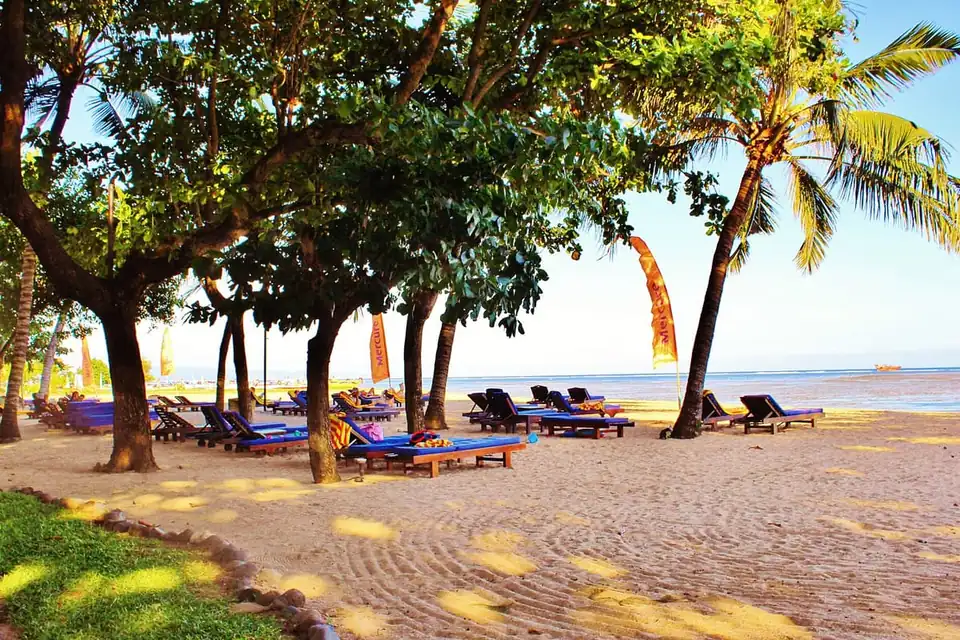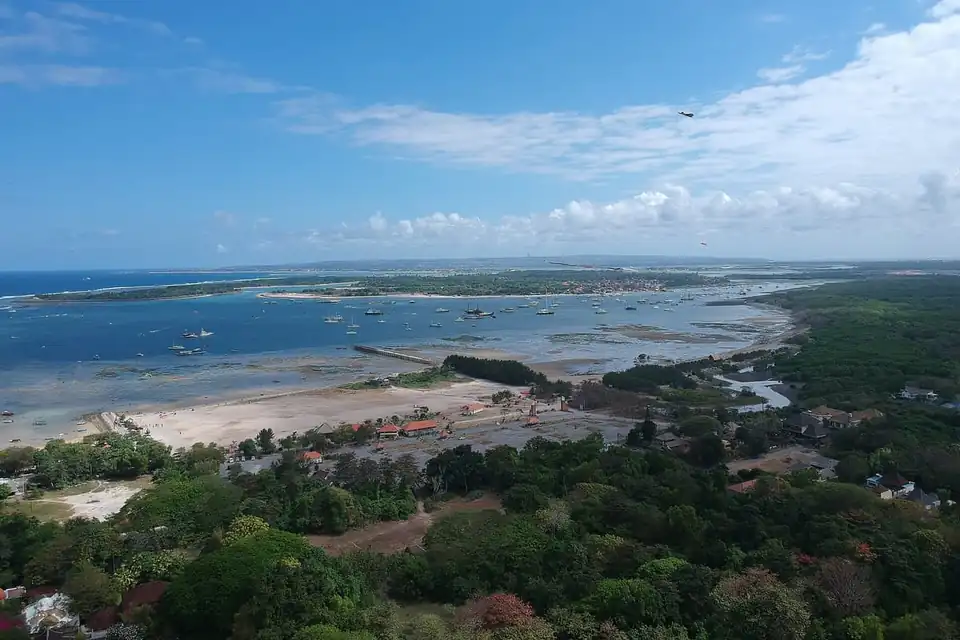
Le Mayeur Museum preserves the former home and studio of Belgian painter Adrien-Jean Le Mayeur de Merpres, who lived and worked in Sanur from the 1930s. The low garden house sits a few steps back from the sand at the northern end of Sanur Beach. Inside hang his paintings, alongside the carved panels, furniture and decorative screens he gathered over his years on the island. Curious about Sanur’s past as an early haven for artists? This is a quiet, personal way in.
The painter and his muse
Le Mayeur arrived in Bali after travelling widely and chose Sanur as the place to settle. Here he married Ni Pollok, a celebrated Balinese dancer who became the central figure in much of his art. Her likeness runs across many of the canvases on display, often set among flowers, temple offerings and the shifting light of the coast. The paintings record a vision of Balinese life in the mid twentieth century, filtered through a European eye and a deep affection for his adopted home.
Inside the garden house
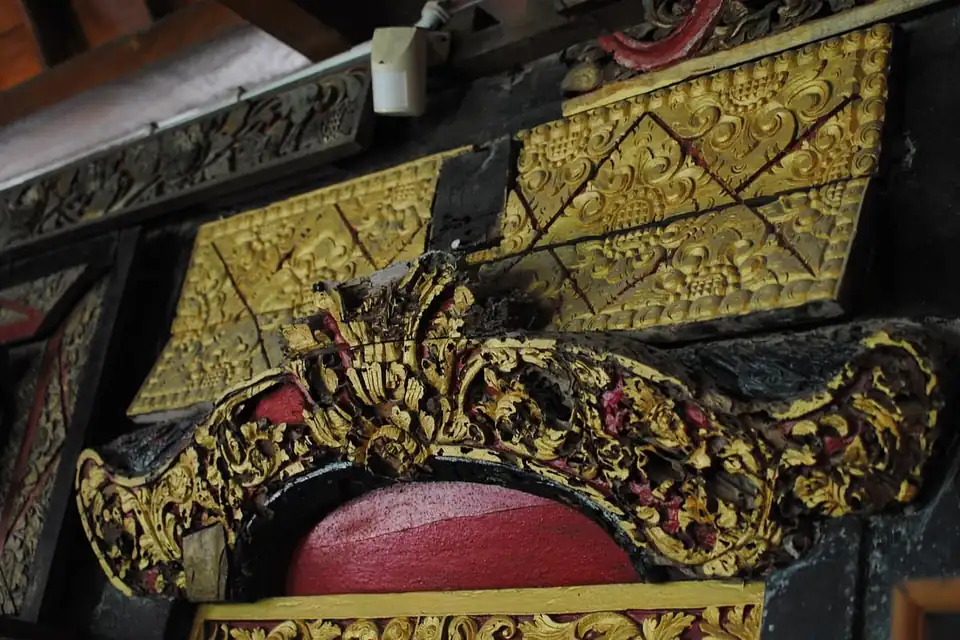
The building itself is part of the experience. Le Mayeur decorated the rooms with intricately carved wood, painted doors and antique pieces, so the house reads almost as one of his compositions. Works hang in dim, cool interiors that shield the ageing oils from the tropical sun. Outside lies a small garden, planted with the frangipani and hibiscus that recur throughout his paintings. The collection is compact, and an unhurried walk through the rooms feels complete rather than rushed.
Practical notes
Entry costs around Rp 50,000, paid in cash at the door, and the museum keeps morning hours that suit an early visit. Come at 8am and you get the soft light with few other people about. Interior light is kept deliberately low to preserve the artwork, so photography rules can be restrictive. Dress is casual, though modest clothing is appreciated as a courtesy at any cultural site. The collection sits close to the shore, and salt air and humidity have taken a gentle toll on the older frames, which only adds to the sense of stepping into a preserved moment.
How to visit
The museum sits at the quiet northern edge of the main beach, so the easiest approach is a short walk along the sand from the central beachfront. Combine it with a sunrise on Sanur Beach and a slow breakfast nearby to make a relaxed half-day. For orientation, transport tips and other places to see in the area, start with the Sanur destination guide, and browse the full list of ideas on the Sanur things to do page before you set out.