Canggu is Bali’s surf, cafe and coworking coast, a spreading run of black-sand beaches and rice fields north of Seminyak that has become a magnet for a young, international crowd. What was farmland with a handful of surf breaks a decade ago is now one of the island’s fastest-growing areas, with beach bars, brunch cafes and coworking spaces filling the lanes between the paddy fields. The atmosphere is relaxed and outdoorsy, shaped by surfing by day and easy socialising after dark.
Sitting on the south-west coast of Bali, part of the island province of Indonesia, Canggu is really a cluster of neighbourhoods rather than a single town. Berawa, Batu Bolong, Echo Beach and Pererenan each have their own feel, strung along a coast where surfers paddle out at dawn and crowds gather for the sunset. Rapid development has brought traffic and higher prices along with a density of good food, surf and community that keeps drawing people back and keeps many of them staying for months.
The pull of Canggu
Canggu’s appeal is a lifestyle as much as a place. Days revolve around the surf, the beach and the cafes, with the freedom to work, exercise and socialise in a warm climate at a fraction of the cost of most Western cities. That combination has made it Bali’s unofficial capital for digital nomads and long-stay travellers, and given it a distinct energy that is younger and scruffier than smart Seminyak next door.
Shorter-stay visitors find plenty to enjoy too. The surf is among the most accessible on the island, the food scene is deep and health-conscious, and the sunsets over the black sand are a nightly event. Canggu suits people who want an active, informal beach base rather than temples and sightseeing, and who do not mind a bit of dust and traffic with their coffee.
Choosing where to stay matters more here than in a tighter town. Berawa sits closest to the beach clubs and the smart end of the dining scene, Batu Bolong gathers the surf schools and cafes, Echo Beach draws the sunset crowd, and Pererenan keeps a slower, more residential feel at the northern edge. Confirm which neighbourhood your accommodation is in before booking a transfer, since a wrong turn in Canggu’s traffic can add half an hour. From Ngurah Rai airport the drive covers about 13 kilometres but takes 45 minutes to well over an hour, costing roughly Rp 200,000 to Rp 350,000 (about 13 to 22 US dollars). English is the working language of the cafes and surf shops, though a few words of Indonesian go a long way with the warung owners and drivers who keep the place running.
Surfing and the beaches
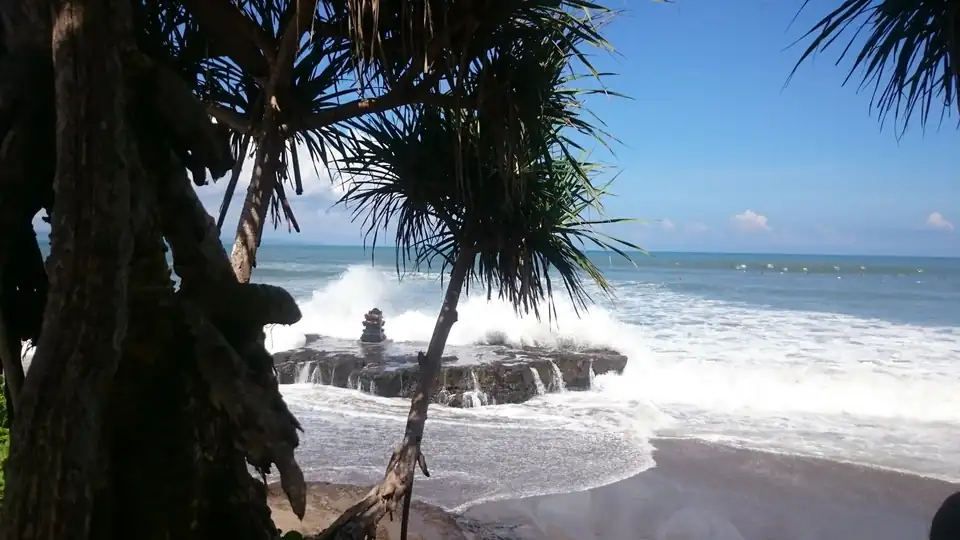
Surfing is the heart of Canggu. Batu Bolong temple gives its name to the most famous beach break, a forgiving wave ringed by surf schools and board hire that makes it a favourite for beginners and improvers. Echo Beach and Pererenan offer more challenging reef and beach breaks for confident surfers, while lessons and rentals are easy to arrange all along the coast.
The beaches themselves are black volcanic sand, backed by bars and loungers rather than manicured resorts. They are best for surfing, sunbathing and sunset drinks rather than gentle swimming, since the Indian Ocean here carries strong currents. Swim between the flags where lifeguards patrol, and keep a close eye on children in the water.
Surf lessons and hire are easy to arrange and reasonably priced. A group lesson at Batu Bolong temple beach, board and rash vest included, tends to run around Rp 350,000 to Rp 500,000 (about 22 to 32 US dollars), while a board on its own costs roughly Rp 50,000 an hour. Tides govern the surf as much as the swell: a mid to high tide softens the inside sections that beginners want, while low tide exposes more reef offshore and turns the waves faster. Most schools time their lessons to suit and will advise on the day. The black sand grows hot underfoot by midday, so sandals help on the walk to the water, and a locked bag or a friend to watch your things saves worry while you paddle out. Sunset here lands around 6.15 in the evening, the cue for the beach bars to fill.
Cafes, food and coworking
Few places in Bali take breakfast as seriously as Canggu. The cafes here built their reputation on smoothie bowls, specialty coffee and all-day brunch, and the density of good, health-focused food is a big part of the draw. Prices at the trendiest spots match those back home, but local warungs a street away still serve generous Balinese plates for a couple of dollars, so it is easy to mix budgets.
Coworking spaces and reliable wifi underpin the nomad scene, giving remote workers somewhere to base themselves between surf sessions. Cafes double as offices by day, then fill with a social crowd by evening. It is a place built, almost by accident, for people who want to stay a while.
Costs sit at both ends of the scale. A smoothie bowl or a specialty coffee at a trendy cafe can match London or Sydney prices, yet a full nasi campur plate at the warung next door still comes in at Rp 25,000 to Rp 50,000 (about 1.50 to 3 US dollars). Coworking passes usually cost around Rp 150,000 to Rp 250,000 a day (about 10 to 16 US dollars), with cheaper weekly and monthly rates for those settling in. Cash remains essential at the warungs, roadside stalls and many drivers, while the cafes and coworking spaces take cards without fuss. Bills at the smarter venues add a service charge and tax of roughly 15 to 21 per cent. Power cuts occasionally interrupt the wifi, so anyone working to a deadline is wise to keep a phone data plan as backup, and a local SIM is cheap to arrange on arrival.
Rice fields and quieter corners
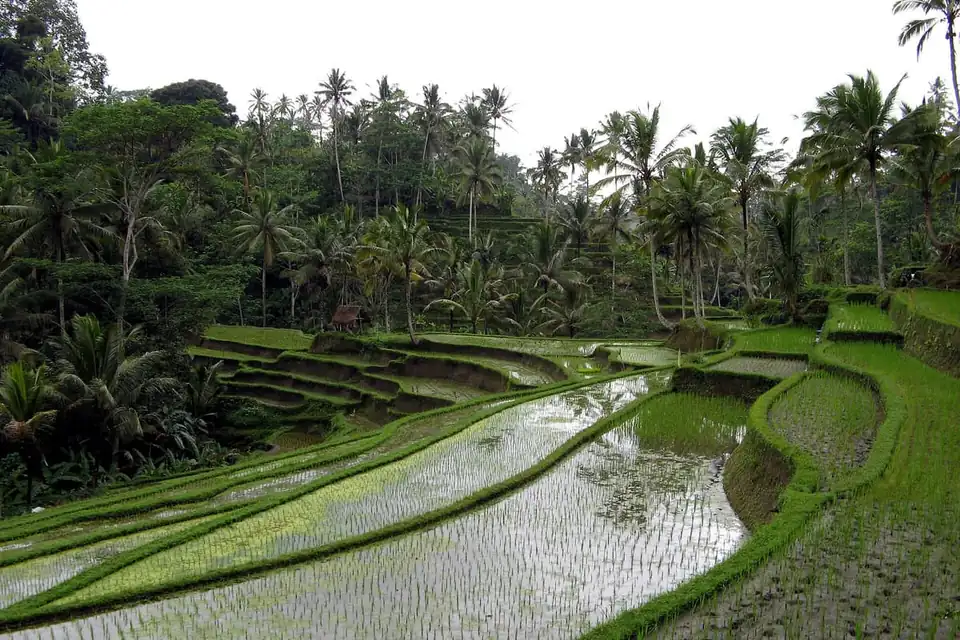
For all the development, patches of the old landscape survive between the neighbourhoods. The Canggu rice fields still thread through the area, and a walk or cycle along their paths at dawn or dusk offers a calmer counterpoint to the busy lanes. They are a reminder of what the whole coast looked like not long ago.
Towards the northern end, Pererenan and Nyanyi feel more spacious and less frantic, with a slower pace and fewer crowds. These pockets suit visitors who want Canggu’s surf and cafes without living in its busiest, dustiest streets, and they are where much of the newer, quieter development is spreading.
A dawn or dusk walk through the Canggu rice fields is free and needs no guide, though a small donation to the farmer whose bunds you cross is a fair courtesy. The paths link Batu Bolong and Berawa on foot in fifteen to twenty minutes, a shortcut that avoids the worst of the road traffic and passes ducks, shrines and the odd working buffalo along the way. Balinese Hinduism keeps its hold even here, and you will pass small temples and see canang sari offerings set out on the field edges each morning. The greenest weeks fall during and just after the wet season of November to March, when the young rice is bright and the light softest. Closed shoes and insect repellent make the walk more comfortable once the sun drops.
A famous day trip: Tanah Lot
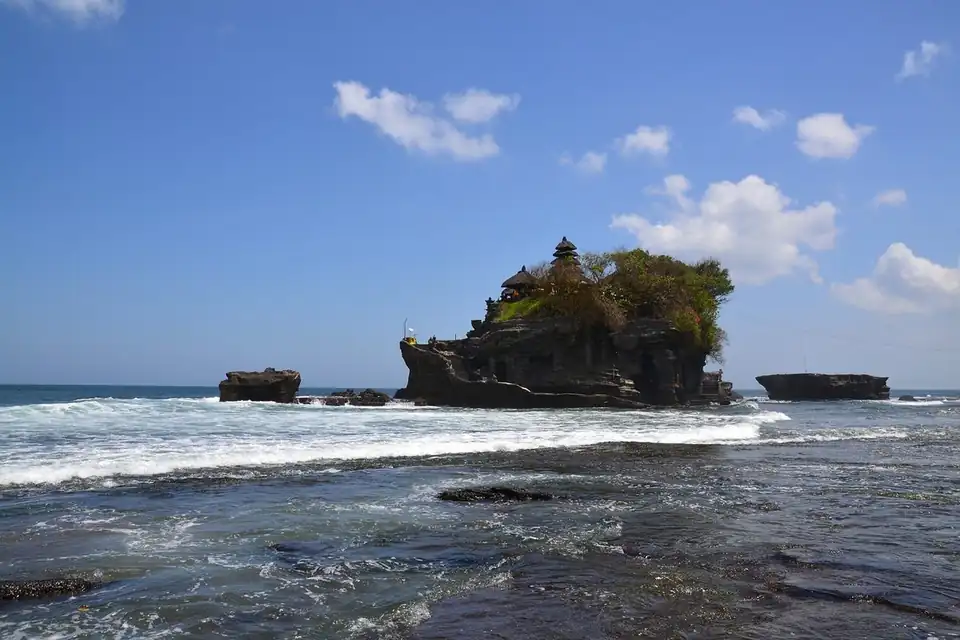
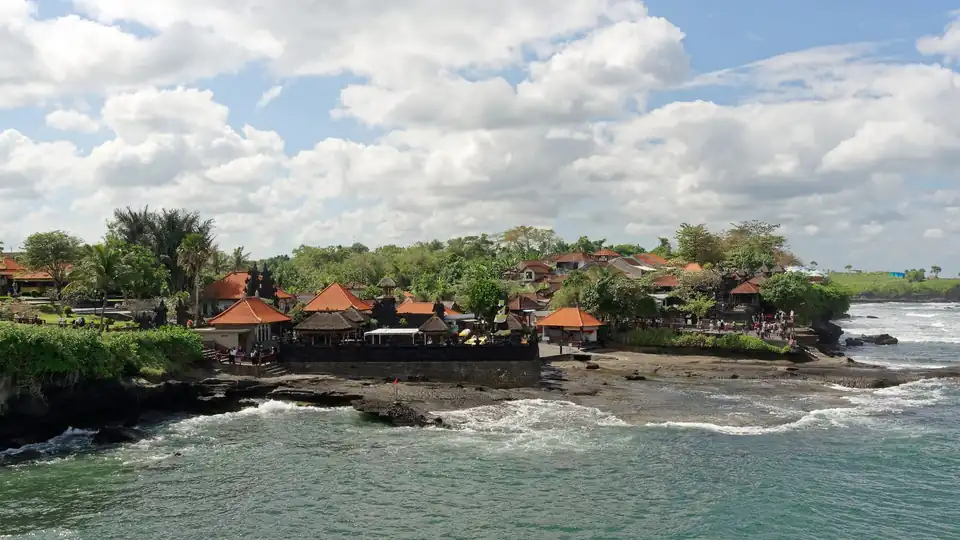
Just up the coast from Canggu stands Tanah Lot, one of Bali’s most photographed sea temples, perched on a rocky islet that the tide cuts off at high water. It is among the island’s most important temples and a classic sunset destination, drawing large crowds each evening for the sight of the shrine silhouetted against the sky. An early visit avoids the worst of the coaches.
The temple lies a short drive north of Canggu, close enough to fold into an afternoon and easy to reach by scooter or driver. Combined with a Canggu beach and a sunset, it makes a natural half day that mixes the area’s surf-town character with a proper piece of Balinese heritage.
Practical details reward a little forethought at Tanah Lot. Entry costs around Rp 60,000 for adults and less for children (roughly 4 US dollars), with parking charged separately, and the site opens through the day until after sunset. The causeway to the rock is only walkable at low tide, so checking the tide before setting out decides whether the base is reachable on foot or must be admired from the shore. Modest dress is expected, and the inner shrine stays closed to non-worshippers, though the clifftop paths and the smaller Batu Bolong shrine nearby are open to all. Late afternoon draws the biggest coach crowds, so arriving an hour or more before sunset secures a foothold, while an early visit trades the golden light for near-empty paths. A driver for the return trip runs to about Rp 250,000 to Rp 400,000 (about 16 to 25 US dollars).
Getting around and moving on
Canggu is spread out and its lanes are narrow, which makes traffic a genuine frustration, especially in the late afternoon. Most visitors get around by scooter, since cars crawl on the busiest roads, though the traffic and dust demand care. Ride-hailing apps such as Grab and Gojek work here if you would rather not ride, and short walks cover each neighbourhood.
As a base, Canggu connects easily to the rest of south Bali. Stylish Seminyak is just to the south, with the party strip of Kuta and the seafood grills of Jimbaran beyond it, and the surf and clifftop temple of Uluwatu about ninety minutes away. Inland, cultural Ubud makes a good change of scene roughly an hour and a half to the north-east.
Scooter hire dominates because it works. A machine costs roughly Rp 70,000 to Rp 100,000 a day (about 4 to 6 US dollars), and on Canggu’s gridlocked lanes it moves when cars simply do not. A helmet, an international driving permit and a careful eye on the potholed shortcuts all matter, since the mix of dust, trucks and inexperienced riders makes this a place to ride within your limits. Those who would rather not ride can lean on Grab and Gojek, cheap and plentiful, though pickups near the beach can take longer at sunset. With no railway anywhere on the island, the road is the only way on, and the Nusa islands are reached by fast boat from Sanur rather than from Canggu. Leaving early for the airport or for Ubud avoids the afternoon crawl that catches out anyone travelling to a fixed time.