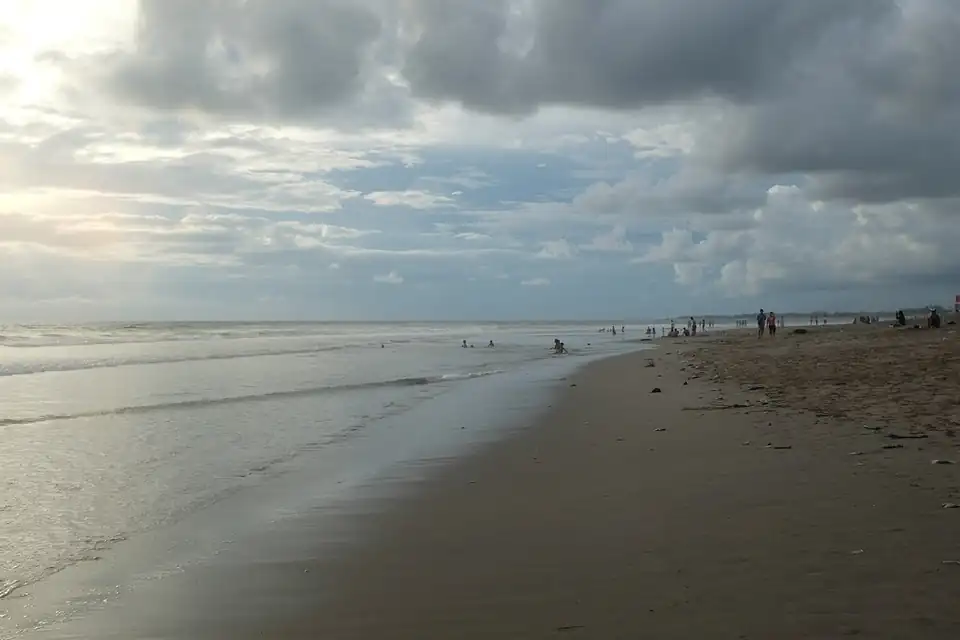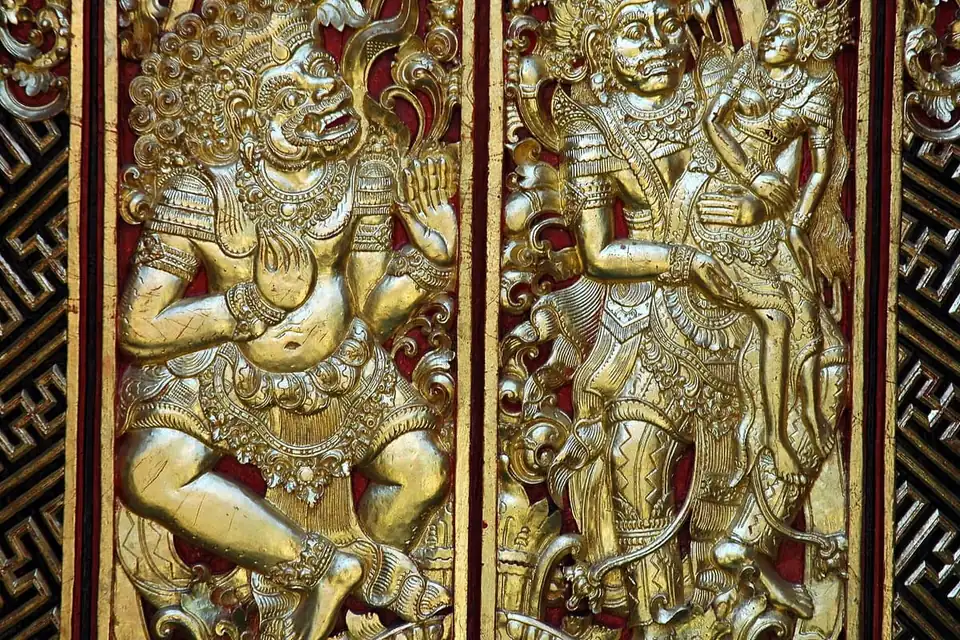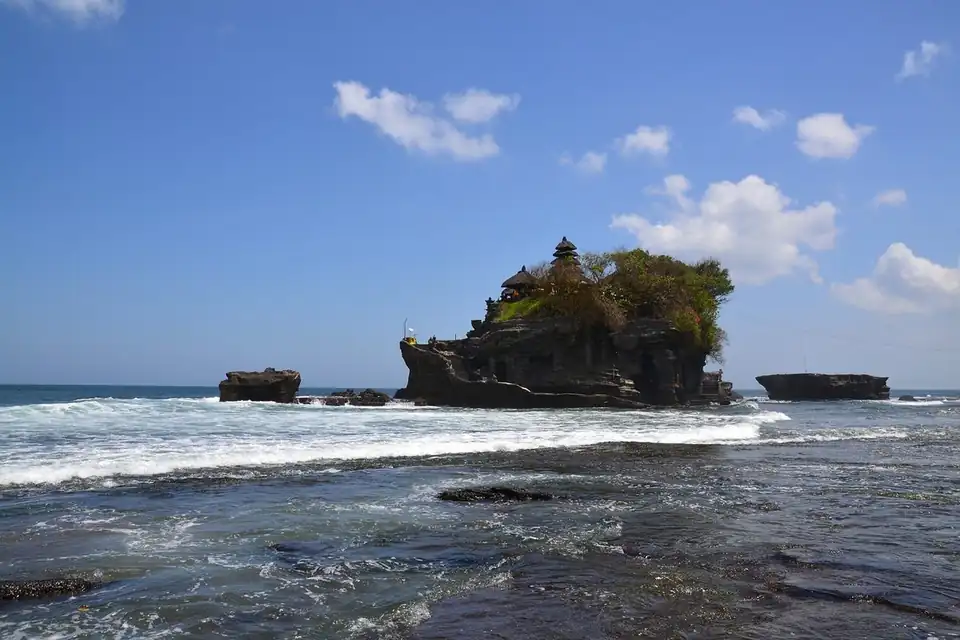
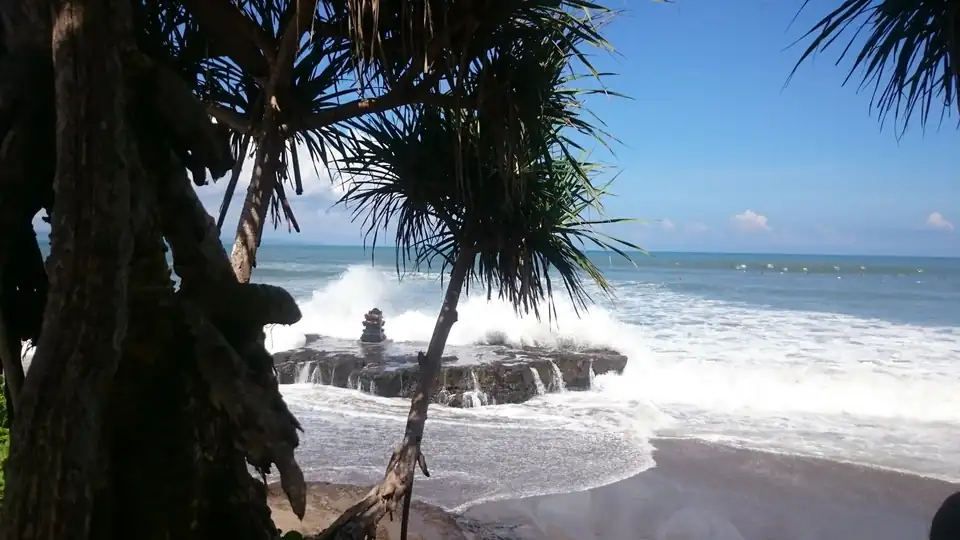
Pura Batu Bolong stands at the sea end of Canggu’s busiest beach, in Desa Canggu in the North Kuta district of Badung. It is about 18 km from Denpasar and roughly 45 minutes from Ngurah Rai airport. To most visitors it is the backdrop to surf lessons and sunset drinks. To Balinese Hindus it is a Kahyangan Jagat, a temple for the whole island, dedicated to Ida Batara Segara, the god of the sea, and worshippers come every day to pray.
Why temples across Bali come here
The temple’s main role is purification. The sacred objects of other temples, the pratima and their regalia, are carried here to be cleansed, and the ceremonies of Melasti, Pekelem, Purnama Kapat and the temple’s own piodalan are all held here. The Melasti processions before Nyepi, the Balinese day of silence, are the time you are most likely to see it full.
The reach is wide. Before its piodalan, the deity of Pura Pucak Sari in Apuan, Tabanan, is brought here to be purified, and Pura Pucak Padang Dawa in Baturiti does the same before major island-wide ceremonies. Even Ida Batara Dewi Danuh, the goddess of Lake Batur, is carried to Batu Bolong for rites such as Panca Bali Krama. Local tradition holds that Batu Bolong is where water from Lake Batur reaches the sea.
The holed rock and its spring
Batu means rock and bolong means hole, so the name means holed rock. Local oral history traces it to welahan sila, a water channel in a split rock, which over time became Watubelah, Watusigar, Watubolong and finally Batubolong. The holed rock still sits in the sea, and fresh water comes out of it. People in Canggu call this water tirtha pakuluh and believe it cleanses impurity and wrongdoing; it is the holy water used at the piodalan.
The piodalan falls on Buda Umanis Prangbakat, and like other temple anniversaries it comes round every 210 days.
History, as far as it is known
No one knows exactly when the temple was founded. No inscription or dedicated text about its building has been found. The English Wikipedia article on Canggu lists it, with Pura Batu Mejan at Echo Beach, as one of two beach temples hundreds of years old, built on the initiative of the 16th-century priest Dang Hyang Nirartha. Balinese sources are more cautious. The Babad Mengwi records that the king of Mengwi, I Gusti Agung Sakti, known as Cokorda Sakti Blambangan, repaired Watubolong together with temples including Sakenan, Uluwatu and Watumejan.
The temple faces south, sits about 50 metres from the shoreline, and covers roughly 50 are, about half a hectare. Like other Kahyangan Jagat temples, it is laid out in three courtyards, the outer jaba sisi, the middle courtyard and the inner jeroan.
Visiting the temple and the beach
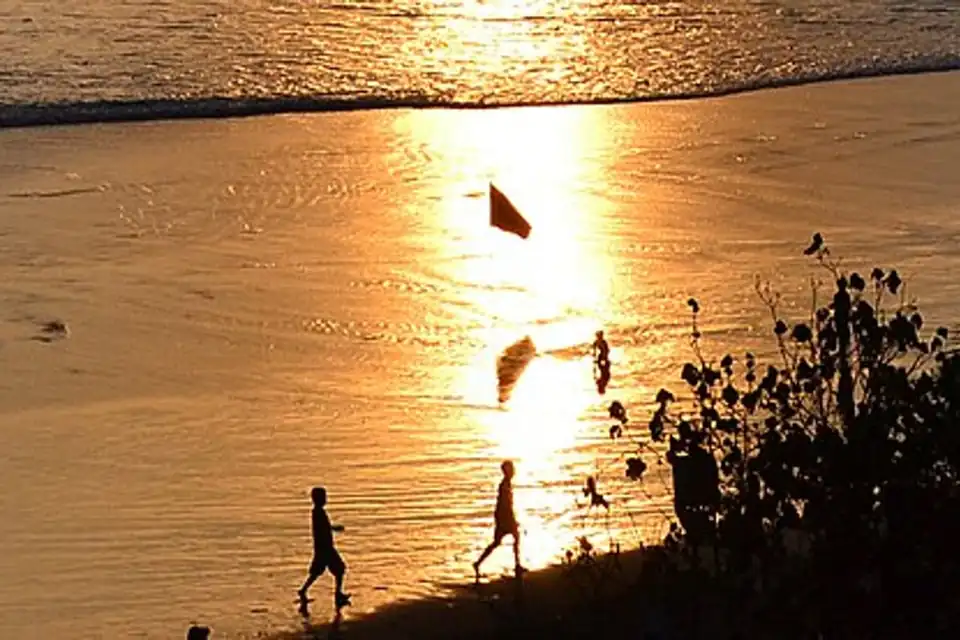
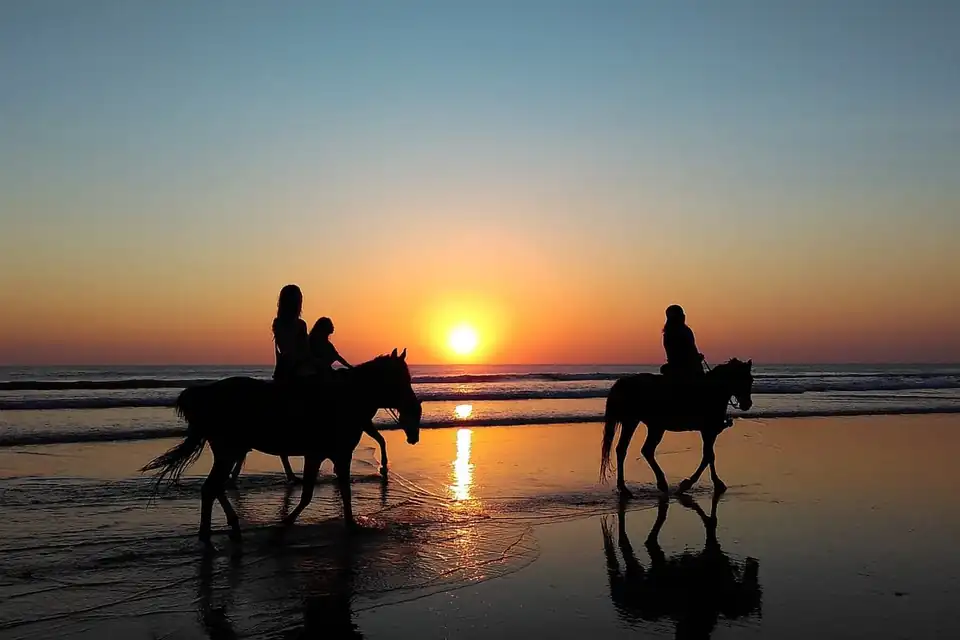
There is no ticket for the beach and it is open around the clock; you pay only for parking, which a June 2024 report gave as Rp 5,000 for a motorbike and Rp 10,000 for a car. Temple dress is required in the grounds, so bring a sarong and sash or rent one. The beach in front is Canggu’s best-known spot for beginner surfers, with board hire and surf schools along the sand, and it fills up in the late afternoon for sunset, when the beach bars put out beanbags on the sand. A September 2025 roundup by detikBali still ranked it the most popular beach in Canggu.
Two mix-ups are common. Tanah Lot, 13 km up the coast, has its own Pura Batu Bolong on a natural arch, and Lombok has another at Senggigi. A different temple, Pura Luhur Bhujangga Waisnawa, stands on Jalan Pantai Batu Bolong itself, and tourists are not allowed inside it.
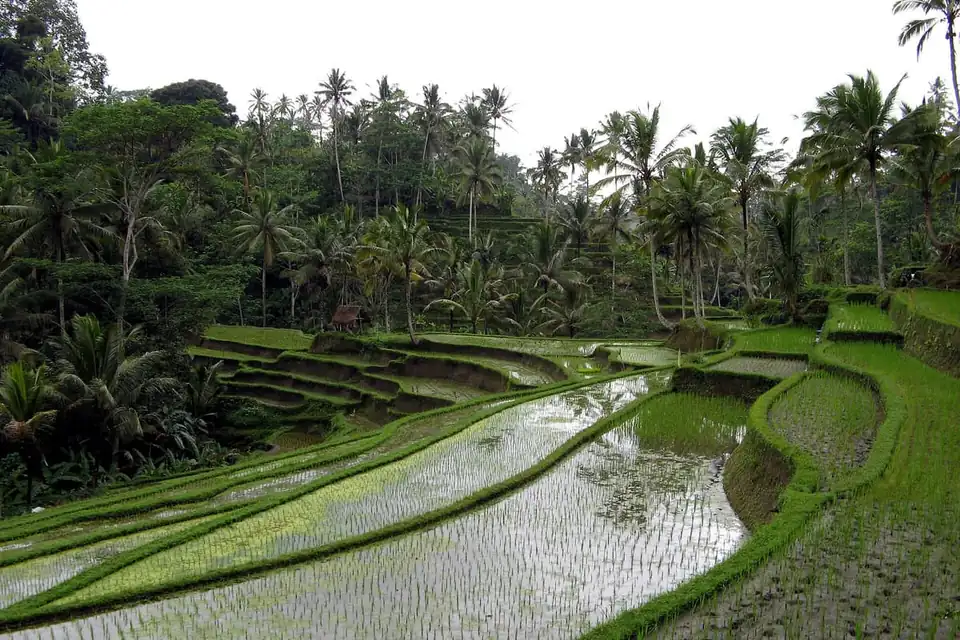
For the bigger sea temple, see Tanah Lot, and for green space inland, the Canggu rice fields. Our guide to Canggu, the list of things to do in Canggu and where to stay in Canggu cover the rest of the area.