
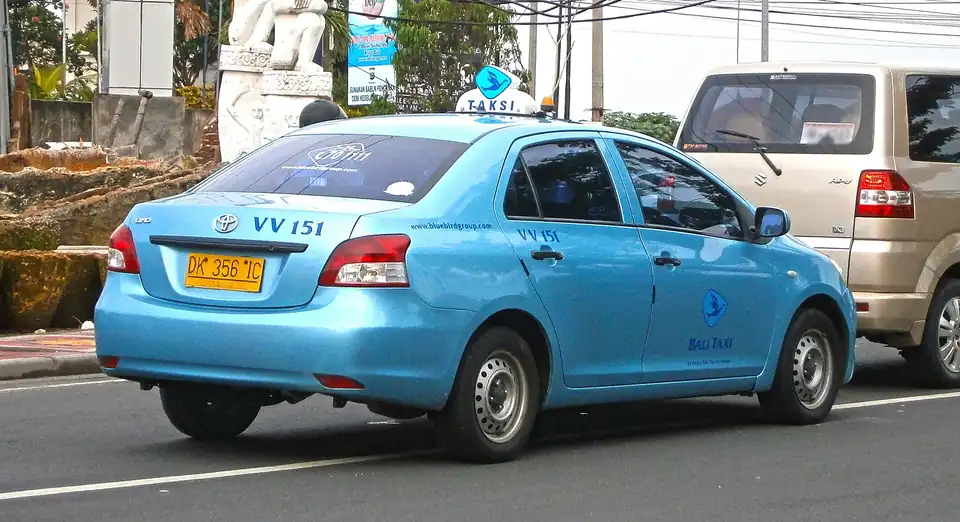
Bali has no Uber, so most visitors use Grab and Gojek for short trips, Bluebird for metered taxis, and a driver for longer days. The system works well in the south, with a few catches: local transport groups block app pickups in some places, and the rules have shifted over the past two years. This page sets out which apps work, what the rides cost according to recent guides, and where you may have to walk to be collected. For the full picture of moving around the island, see our getting around Bali page.
Which apps work in Bali
Two ride-hailing apps dominate: Grab and Gojek. Both have cars and motorbike rides. A March 2026 GoAsia guide lists GrabCar and GoCar for cars, and GrabBike and GoRide for motorbikes, and says you enter a destination, see the price up front and a driver comes to you.
Uber does not operate. The Jakarta Post reported on 26 March 2018 that Uber agreed to sell its Southeast Asian operations to Grab, and Reuters, carried by the Daily FT on 27 March 2018, said that covered Indonesia. A Flight Centre guide published 31 July 2025 still says: “Bali doesn’t have Uber, but it does have two equivalent services: Grab and Gojek.” So searches for “uber bali” lead nowhere. Install Grab and Gojek instead.
Maxim and inDrive are not covered here, because we did not find a dated 2025 or 2026 source describing them in Bali.
Car or motorbike, and what it costs
A motorbike ride is the cheapest and often the fastest in traffic. The March 2026 GoAsia guide says a motorbike ride across Seminyak might cost around $1 to $2, and puts the typical range at $1 to $3 per ride on a bike. For cars it gives $2 to $18 per ride depending on distance, and says a car from Seminyak to Ubud typically runs $10 to $18 depending on traffic and demand.
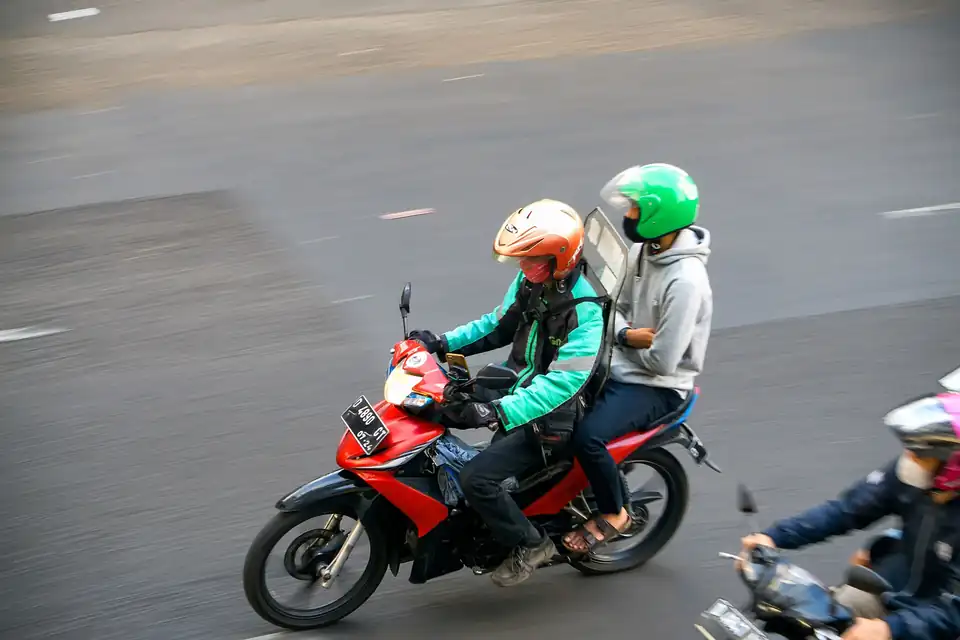
Flight Centre’s July 2025 guide notes that scooter drivers tend to be more common, so you may wait a few minutes longer for a GrabCar or GoCar. It adds that your motorbike driver should always give you a helmet, and that you should never get on a scooter without one.
Fares may be creeping up. What’s New Indonesia reported on 7 February 2025 that new rules introduce a standardised fare system, so the price gap between online and conventional taxis is expected to narrow. Treat any fare you read, including the ones above, as a guide and check the figure in the app before you book.
Cash, cards and getting signed up
Both apps need working mobile data, because you book and follow the driver on the map. Flight Centre’s July 2025 guide says relying on free wifi will not cut it, and suggests international roaming or an e-sim. Our eSIM and SIM card guide sets out the options. Our airport guide covers SIM and eSIM options on arrival.
On payment, the sources differ slightly in emphasis. The March 2026 GoAsia guide says payment can be made in cash or through the app’s e-wallet. Flight Centre says paying through the app is easier, because drivers tend not to carry much change. Either way, keep some small notes, since the driver may ask you to cover road tolls or parking. We found no source saying a local phone number is required to sign up, so we do not claim that.
Where app pickups are restricted
This is the part that surprises first-time visitors. Flight Centre’s July 2025 guide says that due to local taxi politics, Grab and Gojek drivers do not pick up from some popular tourist spots, and that in some instances these bans also apply to Bluebird. It also says you can often walk a couple of hundred metres down the road and hail an app driver again.

The restrictions are about pickups, not drop offs. You can nearly always be taken to these places, and the trouble comes when you want to leave.
Tanah Lot. Our Tanah Lot page says Grab and Gojek can drop you at Tanah Lot but generally cannot collect you, because the area is covered by a local transport cooperative agreement. Have a driver wait for you, and expect the return to Seminyak or Kuta to take one to two hours.
Ubud. The March 2026 GoAsia guide says the central market area and some surrounding streets are controlled by local transport cooperatives, and drivers may ask you to walk to a pickup point outside the restricted zone. The same guide says that in Ubud and parts of the Bukit Peninsula, local cooperatives also block outside taxis, Bluebird included.
Uluwatu and the southern Bukit. The same March 2026 guide lists Uluwatu and some southern Bukit areas as restricted for certain beaches and temples.
Canggu and Nusa Dua. We did not find a dated 2025 or 2026 source we could quote for either, so we make no claim about them. If a pickup is cancelled in any area, walk a few hundred metres and try again.
What’s New Indonesia said on 7 February 2025 that visitors may find fewer restrictions in future. That was a forecast, and the 2026 guides still list restricted zones, so plan for them.
The airport pickup
Older guides say app pickups at the terminal are not allowed. The March 2026 GoAsia guide states that Grab and Gojek pickups are not allowed from the terminal, and that you must use the official airport taxi or a pre-booked transfer. A newer source says the app cars can be found at designated points.
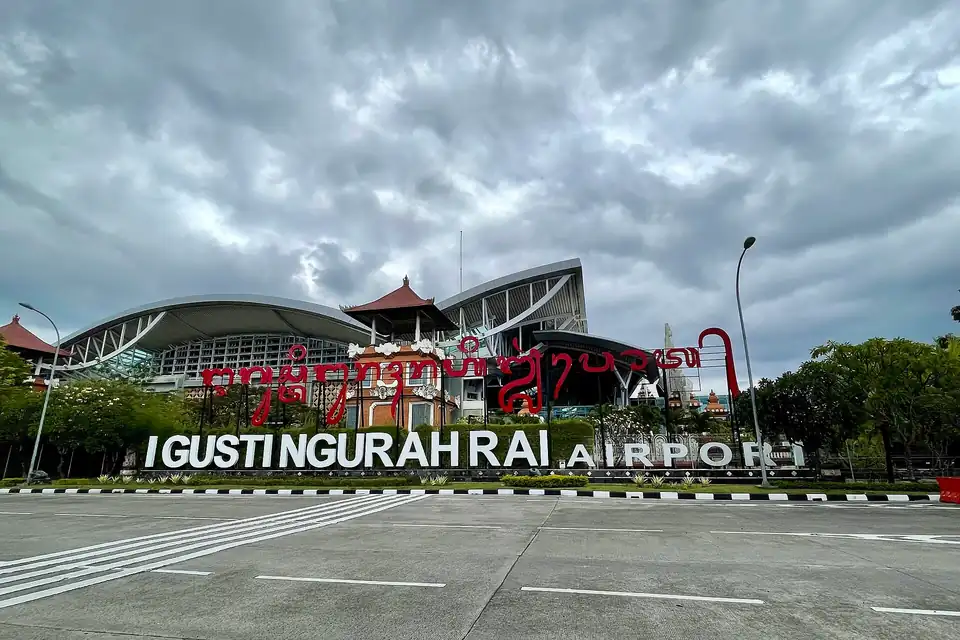
Wego’s guide, last updated 14 July 2026, says Grab directs international arrivals to its GrabCar Lounge, reached from baggage claim via the money changer area, and that Gojek’s GoCar works from an Instant Point shown in its app. It also says the only taxis permitted to pick up directly from the arrivals kerb are run by Koptax Ngurah Rai Bali, the airport’s official taxi cooperative, which uses a fixed zone fare counter. Because the two sources differ, trust the newer one and follow the in-app directions to the pickup point rather than the kerb. Our Bali airport page describes what is outside the terminal.
For fares from the terminal, Wego says transfer operators publish one way estimates of roughly IDR 450,000 to 650,000 to Ubud and IDR 350,000 to 500,000 to Canggu, and that you should confirm the fare before the trip begins. Our Bali airport transfers page has drive times and prices for every area.
Bluebird and metered taxis
Bluebird is the name to know. Flight Centre’s July 2025 guide calls it renowned for reliability and metered pricing, and says to book through the MyBluebird app, which gives a price estimate that you pay to the driver. Its checklist for a real ride is short: make sure the driver has the meter switched on and that a base fare of about Rp7,000 is visible. It puts local fares at very roughly Rp7,000 per kilometre, higher at night and in rush hour, and says to look for “Bluebird” written on the car, because some other blue cars overcharge drastically.
GoAsia’s March 2026 guide says Bluebird metered taxis are typically $2 to $5 per ride and cheapest for short hops in the south.
At the airport, Wego reports that since July 2026 Koptax has partnered with Blue Bird Group under a programme called Kawan Bluebird, adding an initial fleet of 75 electric Blue Bird standard taxis.
When a driver for the day is better
Apps are good for a short hop to dinner. They are poor for a day of sightseeing, where you stop at places such as Tanah Lot that you cannot easily leave by app. GoAsia puts a full day private driver at $35 to $55, and Flight Centre suggests pre-booked tours or private drivers for some parts of your stay precisely to avoid the no pickup areas. Our private driver guide explains how to hire one and what to agree first.
A simple rule works: use Grab or Gojek for short trips in the south, Bluebird when you want a meter and a fixed standard, and a driver for temples, waterfalls and long cross island days. The getting around Bali page shows how the options fit together.