
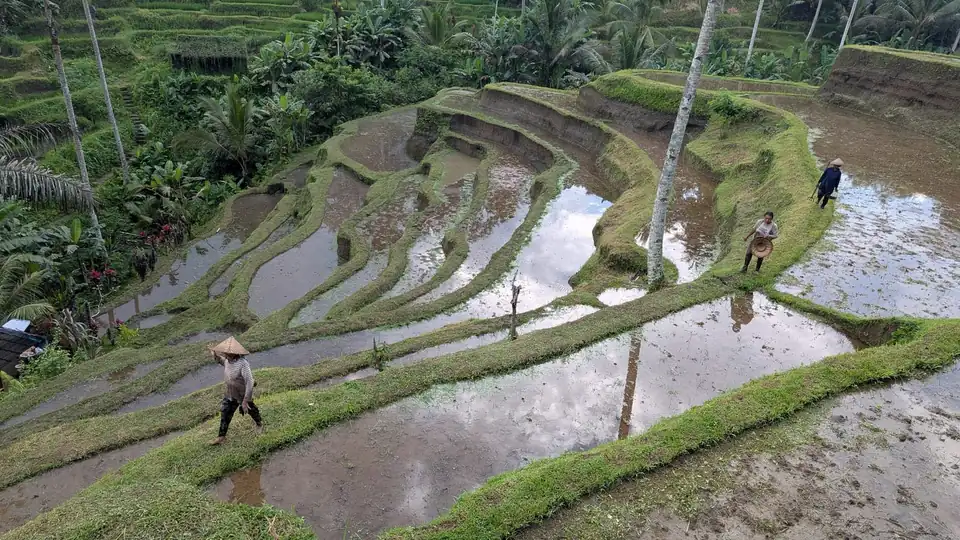
Religion is not a separate compartment of life in Bali; it runs through the whole of it. The island is overwhelmingly Hindu, following a distinct tradition called Balinese Hinduism, and this faith shapes the temples on every corner, the offerings on every doorstep, the festivals that fill the calendar and the artistic life for which Bali is famous. This is what makes the island so different from the rest of Indonesia, which is mostly Muslim, and it is the first thing many visitors notice.
A little grasp of the faith explains a great deal for a visitor: why trays of flowers appear on the pavement each morning, why a procession suddenly blocks the road, why so much of the art is sacred, and why the whole island falls silent for one day a year. Once you can read the daily offerings, the temples, the festival calendar and the plain rules of temple etiquette, very little of it looks strange.
A Hindu island in a Muslim country
Around nine in ten Balinese follow Balinese Hinduism, known formally as Agama Hindu Dharma. This sets the island apart in Indonesia, the country with the largest Muslim population in the world. Bali became a Hindu stronghold centuries ago, when Hindu courts, priests and artists moved east from Java as Islam spread there, and the island preserved and reshaped that inheritance into a form all its own.
Balinese Hinduism is not identical to the Hinduism of India. It blends Hindu gods and ideas with much older local beliefs, animism and ancestor worship, and it places great weight on maintaining balance between opposing forces, the good and the harmful, the sacred and the profane, the mountain and the sea. Much of daily religious practice is aimed at keeping this balance through offerings and ritual.
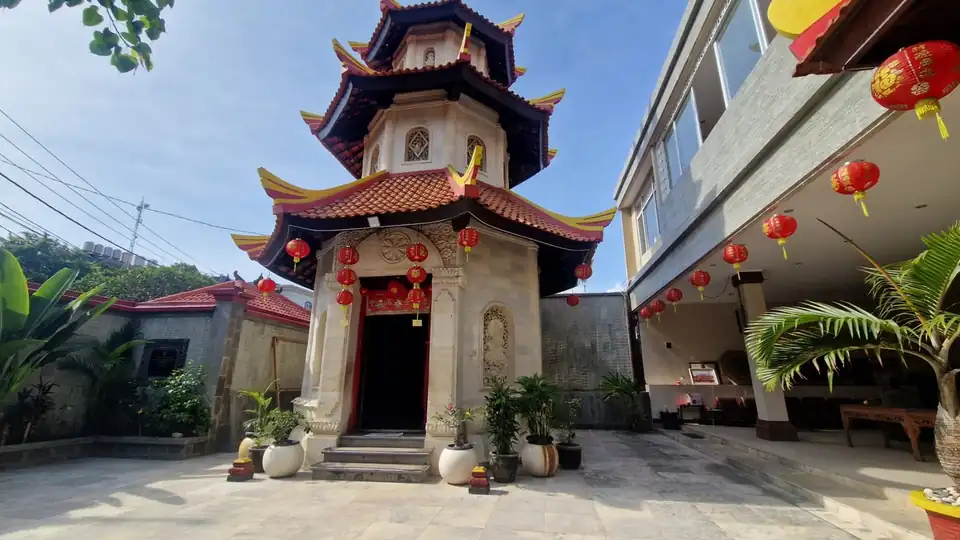
The remaining tenth of the population is Muslim, Christian and Buddhist, concentrated in the towns, the fishing villages of the north and west, and the trading quarters of Denpasar and the old ports. Chinese-Balinese families have traded here for centuries, and their temples, hung with red lanterns and standing a street or two from a Hindu shrine, are part of the ordinary fabric of the island rather than an exception to it.
Daily offerings and the temple system
The most visible sign of the faith is the canang sari, the small palm-leaf tray of flowers, rice and incense laid out fresh each day at shrines, doorways, shopfronts and even on the dashboards of cars. These daily offerings are gestures of thanks and part of the constant work of keeping spirits in balance. You will step around dozens of them, and it is important never to tread on one.
Temples, or pura, are everywhere, from tiny household shrines to vast complexes. Every traditional village has at least three main temples serving different purposes and directions. Above the village temples stand the great directional and mountain temples that serve the whole island, chief among them Besakih, the mother temple high on the slopes of Mount Agung. Sea temples guard the coast, and water temples are woven into the rice irrigation system. Together they map the sacred geography of the island.
Festivals: Galungan, Kuningan and the calendar
The Balinese follow a 210-day ritual calendar as well as the Western one, and its cycle sets the dates of the great festivals, which therefore move against the ordinary calendar from year to year. The most important is Galungan, which celebrates the victory of good over evil and marks the time when the spirits of ancestors return to visit their families. Streets fill with tall, gracefully curved bamboo poles called penjor, hung with offerings.
Galungan opens a ten-day period that closes with Kuningan, when the ancestral spirits depart again. Beyond these, the calendar is thick with temple anniversaries, called odalan, family rites and other ceremonies, so that on almost any day something is being celebrated somewhere. This is why visitors so often encounter processions of villagers in temple dress carrying offerings on their heads, one of the enduring images of Bali.
Nyepi and temple etiquette
Once a year the island observes Nyepi, the Balinese New Year and a day of total silence. For 24 hours no one goes out, lights are kept low, shops close and even the airport shuts; visitors must remain inside their hotels. The day is for reflection and, by tradition, for persuading any evil spirits that the island is deserted so they will pass it by. The night before, communities parade huge, fearsome papier-mache figures called ogoh-ogoh and then burn them.
When visiting temples yourself, a few rules of respect matter. You must wear a sarong and usually a sash around the waist to cover your legs, and cover your shoulders; many temples provide these at the entrance. Keep quiet, do not walk in front of people at prayer, do not touch offerings, and follow any signs about restricted inner areas. Our page on whether Bali is safe touches on respectful behaviour too, and the pages on the people and Ubud give more context on the culture the faith has shaped.