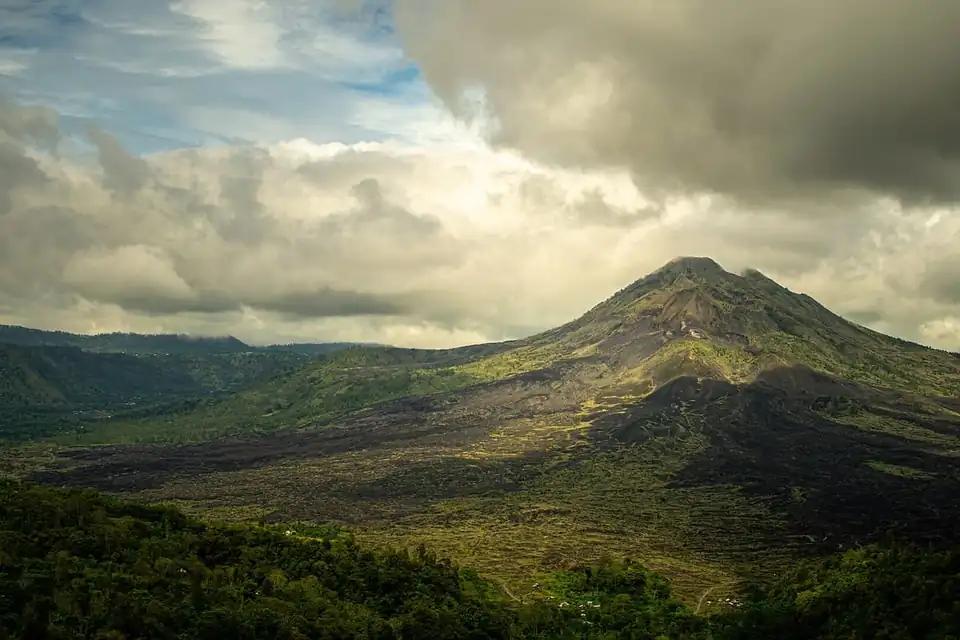
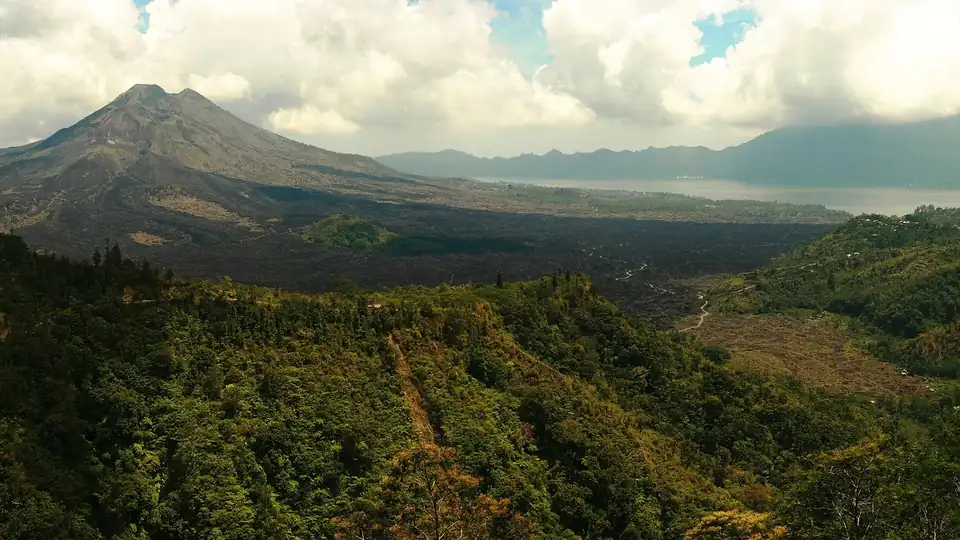
Kintamani is Bali’s volcano country, a cool highland district built around one of the island’s great natural sights: the vast caldera holding Mount Batur and its crescent lake. Up here the air is fresh and often misty, the temperature drops away from coastal heat, and the land is shaped by fire and water. Visitors come chiefly for the sunrise trek up the active volcano, but the caldera rewards a slower look too, with hot springs, viewpoints, a sacred lakeside temple and long lunches over one of Bali’s most dramatic panoramas.
Up in the north-east highlands, part of the island province of Bali in Indonesia, Kintamani lies roughly an hour and a half above Ubud along winding mountain roads. The caldera itself is enormous, a bowl left by ancient eruptions, with the younger cone of Mount Batur rising from its floor beside Lake Batur. The scale of it takes people by surprise, and the shift in climate and scenery from the coast makes the highlands feel like a different island entirely.
Why visit Kintamani
Kintamani offers the side of Bali that has nothing to do with beaches. The draw is the volcanic landscape: a giant caldera, an active peak, a mountain lake and the cool, clear air of the highlands. For many travellers the pre-dawn climb of Mount Batur is a trip highlight, but even those who never lace up their boots come for the crater views and the change of climate.
The district makes an easy addition to time in Ubud, an hour or so below. A day here mixes big scenery with gentle pursuits: a viewpoint, a hot spring, a temple and a meal above the lake. It suits travellers who want to see beyond the coast and feel the elemental, volcanic character of the island.
Reaching the district takes longer than the map suggests. The road climbs steadily from Ubud through villages and terraces over an hour to ninety minutes, and there is no useful public transport, so most visitors come by private driver at around Rp 600,000 to Rp 900,000 for the day, roughly 40 to 60 US dollars, or on an organised tour. A long-standing local practice adds a road contribution of about Rp 10,000 to Rp 50,000 for vehicles entering the Penelokan area, collected at the roadside. Confident riders sometimes tackle the winding route by scooter, though morning mist and fast trucks make it less forgiving than the southern lanes.
Mount Batur and the sunrise trek
The centrepiece is Mount Batur, an active volcano of around 1,717 metres rising from the caldera floor. Its most famous experience is the sunrise trek, which starts in darkness around three or four in the morning and reaches the summit in time for the sun to break over the caldera, the lake and distant Mount Agung. The climb takes roughly two hours over loose volcanic ground and rewards the effort with one of Bali’s finest views.
Local rules require a licensed guide, arranged through operators or your accommodation, and treks usually include pick-up, a torch and a simple breakfast at the top. Bring warm layers, since the summit is cold before dawn, and sturdy shoes for the rocky trail. A reasonable level of fitness is enough; this is a hike rather than a technical climb.
Costs and logistics are worth settling in advance. A guided sunrise trek usually runs from about Rp 400,000 to Rp 700,000 per person, roughly 27 to 47 US dollars, covering hotel pick-up in the small hours, the licensed guide, a head torch and a simple breakfast cooked in the summit steam. Pick-ups from Ubud come around two in the morning, and from the southern beaches earlier still, which is why some visitors stay a night nearer the mountain. The trail grows busy in high season, so groups climb in a steady line of head torches. Booking a day or two ahead through your accommodation or a reputable operator secures a place and a fair price, and it is worth confirming that the guide is properly licensed.
Lake Batur and the caldera
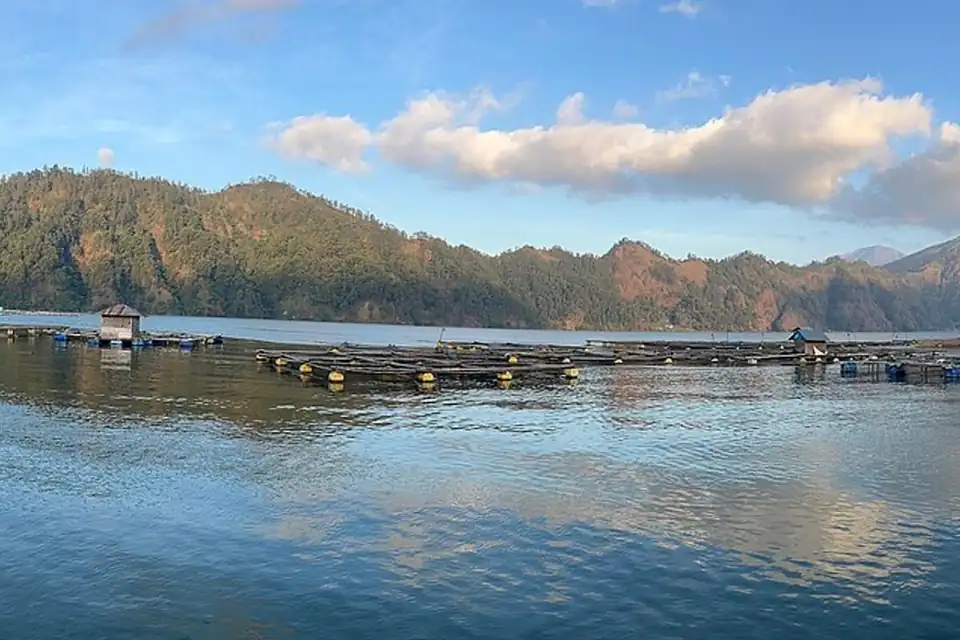
Cradled within the caldera, Lake Batur is the largest lake on Bali and a crescent of deep water at the foot of the volcano. Its shores hold farming villages, hot springs and fish farms, and the whole basin is a striking sight from the rim above. The lake and mountain together are recognised as a UNESCO Global Geopark for their volcanic landscape.
Down at the water’s edge, natural hot springs fed by the volcano’s heat have been developed into bathing complexes with pools facing the lake. Soaking in warm water with the caldera in view is a relaxing counterpoint to the cool air, and especially welcome after an early Batur trek. Boat trips and lakeside walks fill out a slower day by the water.
The basin holds a working landscape as much as a scenic one. Villages along the shore farm the fertile volcanic soil and tend fish cages on the water, and the settlement of Trunyan on the eastern side is known for its unusual Bali Aga burial customs, reached by boat across the lake. Entry to the developed hot springs at Lake Batur typically costs around Rp 200,000 to Rp 350,000, about 13 to 23 US dollars, with pools graded by temperature and views over the water. The lake sits noticeably lower and warmer than the caldera rim, so the drive down and back adds time to any visit, but the soak rewards the effort after an early climb.
Crater viewpoints
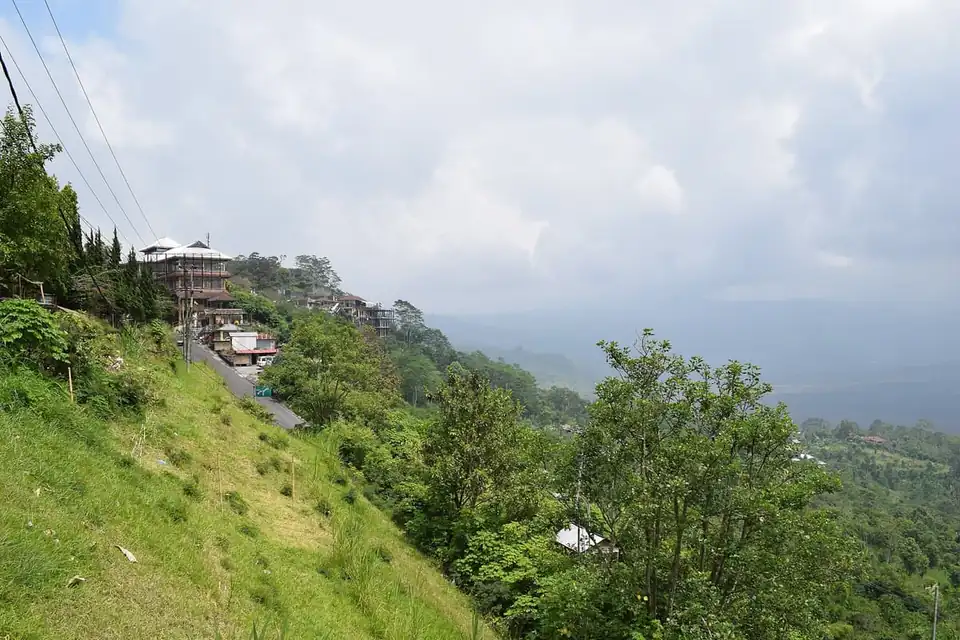
You do not have to climb to appreciate the caldera. Penelokan viewpoint, whose name means “place to look”, lines the rim with restaurants and terraces that gaze straight across to Mount Batur and the lake. It is the classic spot for a lunch with a view, and an easy stop on any day trip up from Ubud.
The light changes through the day, and mornings are usually clearest before cloud gathers over the peak in the afternoon. The viewpoints let families and less energetic visitors enjoy the same grand scenery that draws the sunrise climbers, without the early start or the effort of the trail. On a clear day the panorama is reason enough to make the journey.
The rim road strings together several places to take in the scene. Penelokan viewpoint has the best-known terraces and restaurants, many working as buffet stops for tour groups at lunchtime, while quieter cafes further along the rim trade a smaller menu for a calmer view. Prices at the buffet restaurants run higher than the lowland norm and reflect the outlook rather than the cooking, so travellers after better food often choose a smaller warung or a coffee stop instead. Clear mornings show Mount Batur and the lake in full, but cloud usually gathers over the peak by early afternoon, so arriving before midday is the safer bet.
Temples and mountain villages
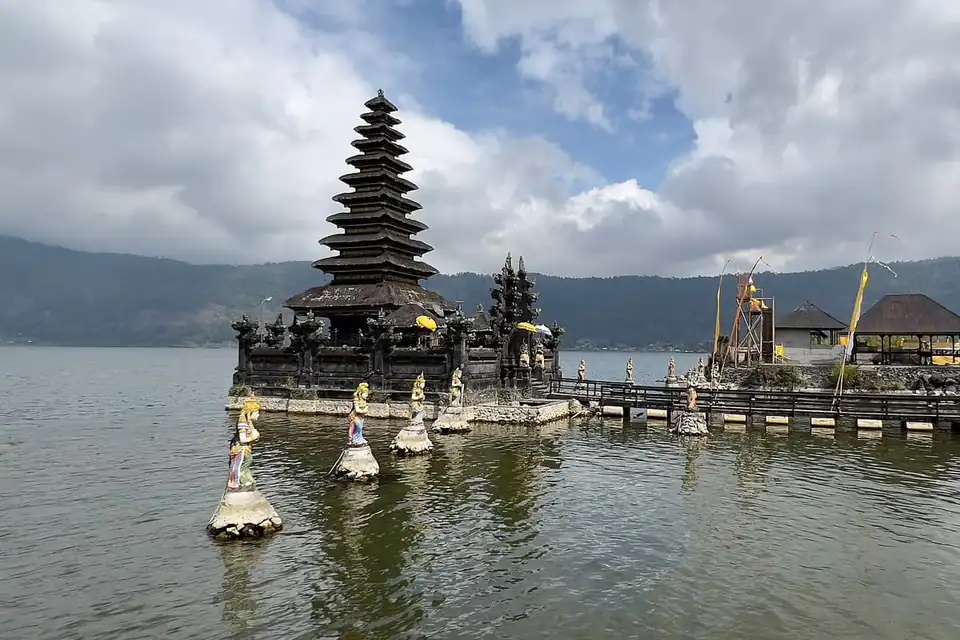
Kintamani holds spiritual importance as well as scenic drama. Pura Ulun Danu Batur is one of Bali’s most important temples, dedicated to the goddess of the lake and second in significance only to the mother temple of Besakih. Set on the caldera rim, its towering multi-tiered shrines and misty setting make it a memorable stop, and it plays a central role in the island’s water-management traditions.
The surrounding highlands are farming country, cooler and greener than the coast, where villages grow vegetables, coffee and citrus in the volcanic soil. Coffee plantations welcome visitors for tastings, and the mountain roads and downhill cycling routes pass through a landscape of small farms and terraces. It is a quieter, more rural Bali than most travellers expect.
Visiting the temple calls for the usual courtesies. A sarong and sash are required to enter Pura Ulun Danu Batur, usually available to borrow or hire at the gate with a small donation, and modest dress and quiet behaviour are expected around the shrines. The temple’s role reaches beyond ritual, as its priests have long helped coordinate the subak system that shares irrigation water between the rice-growing communities downstream. Around the highlands, coffee plantations offer tastings that include the well-known civet coffee, and downhill cycling tours freewheel from the rim through farms and villages, a gentle way to see the rural country between the main sights.
Planning your visit
The dry season from May to October gives the clearest crater views and the most reliable trekking weather, with cloud and rain more likely in the afternoons and through the wet months. Whatever the season, pack a warm layer, as the highlands are cool and the pre-dawn summit is genuinely cold. Mornings are best for clear views before cloud builds over the peak.
A little preparation makes the highland climate comfortable. Even in the dry season the pre-dawn summit can sit near single figures in Celsius, so a warm layer, gloves and a windproof jacket are worth carrying for the Mount Batur trek, along with sturdy shoes and a torch if one is not provided. Cash is useful for the road contributions, temple donations, guides and hot-spring entry, as card acceptance is patchy away from the larger restaurants. Those short on time can pair the caldera with a coffee plantation and a temple in a single day, while allowing extra hours for the winding roads.
Most people visit Kintamani as a day trip from Ubud, which sits an hour or so below, or stay a night nearer the mountain to make the sunrise trek easier. From the highlands it is possible to continue to the lakes and waterfalls around Munduk to the west, or to descend towards the dive coast of Amed in the east, linking Bali’s mountain and coastal landscapes on a longer loop.