Ubud is the cultural centre of Bali, set among rice terraces and river gorges in the hills above the crowded south coast. While the beach towns trade on sun and surf, Ubud made its name on temples, dance, painting and craft, on green valleys that have drawn artists and writers for a century. The town itself is compact. Beyond it spreads a web of villages where woodcarvers, silversmiths and painters still work, their mornings marked by the small canang sari offerings left on doorsteps and shrines.
Inland from Denpasar and the airport, part of the island of Bali in Indonesia, Ubud sits an hour’s drive up from the coast, and that climb changes both altitude and mood. The air runs cooler and greener, the pace slows, and life answers to temple festivals and the rice-growing calendar rather than to nightlife. It makes a sound first base for getting to grips with Balinese Hinduism, and a launch point for the highlands, waterfalls and volcanic country to the north.
Why visit Ubud
Ubud rewards travellers who want more than a beach. The draw is a rare mix of living culture and green countryside, packed close enough to cover in a few days. A morning might begin on the Campuhan Ridge Walk, an easy grassy trail between two rivers that opens onto valley views before the day heats up, then end with galleries, a craft workshop or a cooking class built around produce from the market.
This is also Bali’s wellness capital, where yoga studios, meditation retreats and spas cluster in and around the centre and draw people who stay for weeks rather than days. That pull towards slow, restorative travel sets Ubud apart from the surf and party towns of the coast, and goes a long way to explaining why so many visitors come back.
Getting here is no trouble. A private car from Ngurah Rai airport takes about ninety minutes and costs roughly Rp 350,000 to Rp 450,000 (about 22 to 29 US dollars); a driver hired for the day, at around Rp 600,000 to Rp 800,000 (about 38 to 51 US dollars), covers terraces, temples and a waterfall in a single loop. Much of the centre is walkable once you arrive, and the early hours are the ones to use, before the coach parties reach the main sights and while the air stays cool. Balinese Hindu festivals run on a 210-day calendar rather than fixed dates, so a temple ceremony or roadside procession may cross your path at any time of year. Stopping to watch is welcome, so long as you keep a respectful distance and photograph discreetly.
Rice terraces and green landscapes
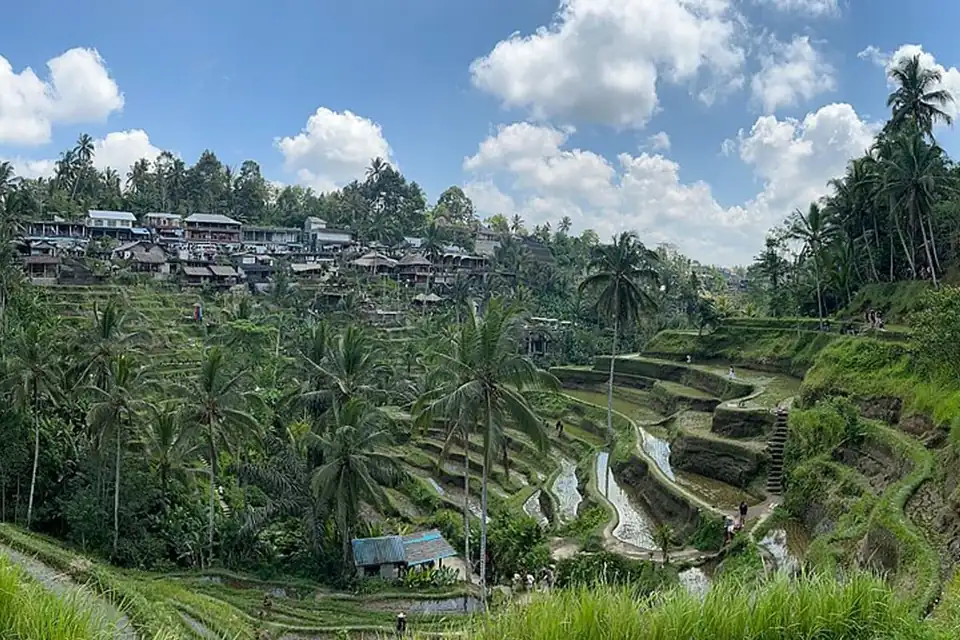
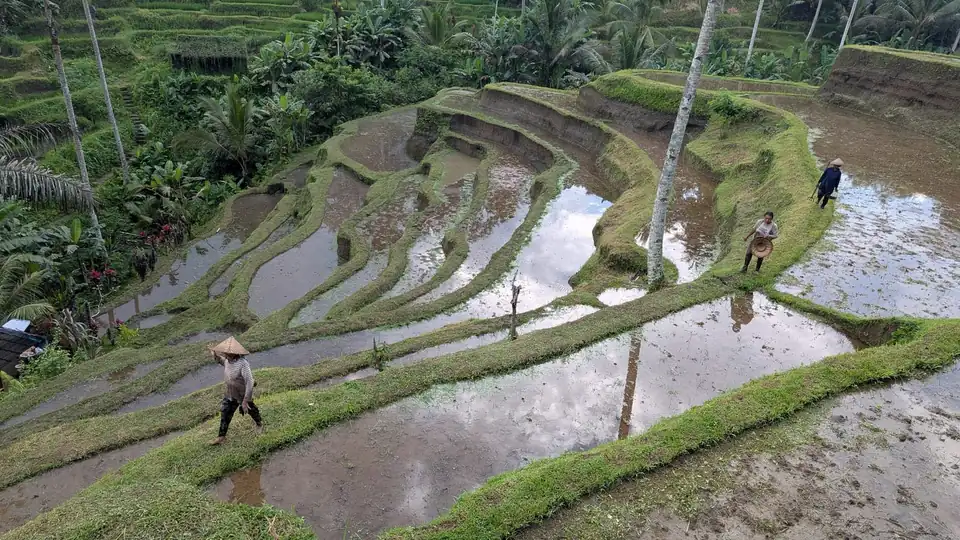
Stepped rice fields, glowing green in the morning light, are Ubud’s signature. The best known are the Tegallalang rice terraces, a short drive north, where the land falls away in curved tiers fed by the traditional subak irrigation system that UNESCO recognises as part of Bali’s cultural heritage. Go early, before the tour groups and the midday heat.
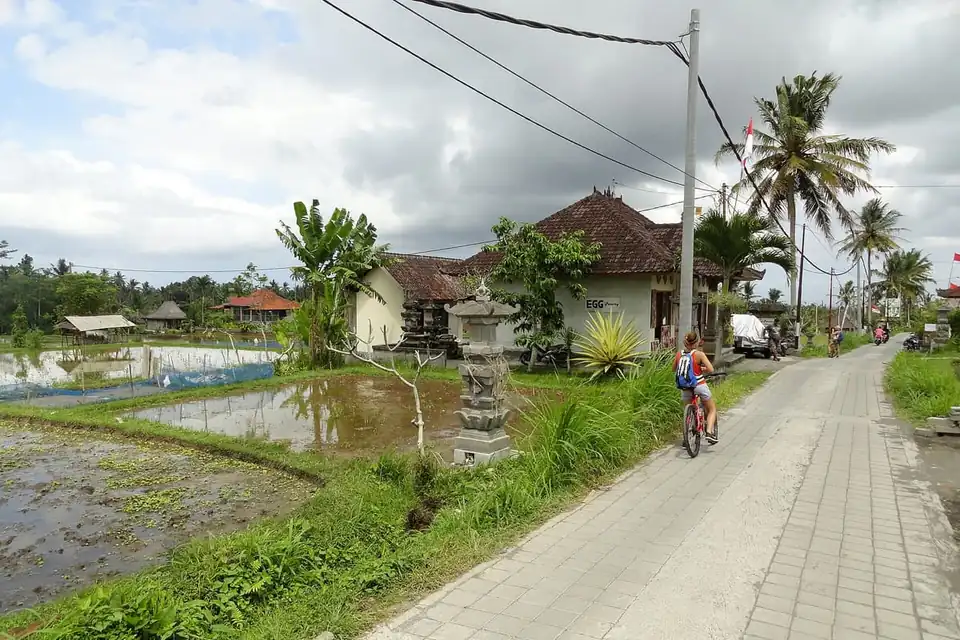
Closer in, quiet lanes lead past working farms, small shrines and family compounds within minutes of the main street, an easy walk or scooter ride from the centre. If time is short, a hired driver can string several terraces together with a temple or waterfall, and that is the least tiring way to cover the ground.
The busier viewpoints carry small charges. Entry to the Tegallalang rice terraces runs to a few thousand rupiah, and several of the swings and photo platforms along the ridge ask a separate fee, typically Rp 50,000 to Rp 150,000 (about 3 to 10 US dollars), with Alas Harum the largest of the parks built into the terraces. Farmers who tend the fields collect informal donations from walkers who stray onto the narrow bunds, so carry small notes. After rain the clay paths turn slippery, and closed shoes with grip beat sandals. Later in the growing cycle the terraces shade from bright green to gold before the harvest, a slower spectacle that rewards anyone who asks their driver which fields are ripening.
Temples and Balinese Hinduism
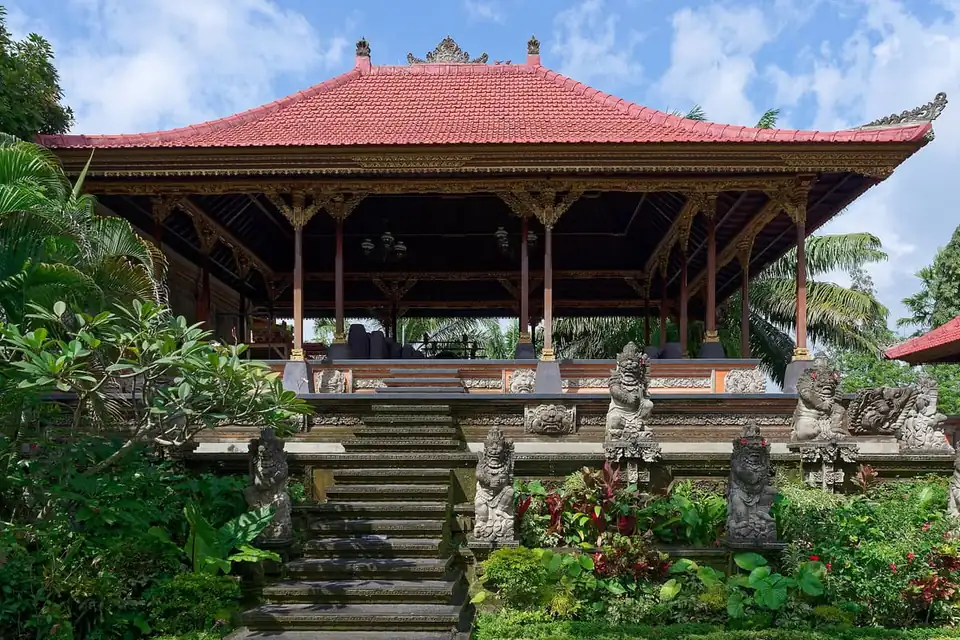
Balinese Hinduism shapes almost every part of island life, and Ubud is a good place to start making sense of it. In the centre, Ubud Palace shows off the ornate architecture of the local royal family and stages evening dance in its courtyard, an approachable way into Balinese arts. The carved gateways, split gates and shrines on display there repeat, in humbler form, across the region.
A short drive away lies Tirta Empul, one of Bali’s most important water temples, where spring-fed pools have served purification rituals for more than a thousand years. With a proper sarong and the guidance of temple staff, visitors can join the bathing ritual, called melukat. Give the ceremony the same respect the local worshippers do, and take their lead on where to stand and when to move.
A few points of etiquette smooth a temple visit. Sarong and sash are required, usually lent free with the ticket, and shoulders stay covered. Worshippers move clockwise and take the highest steps, so leave those clear. At Tirta Empul the bathing ritual runs in order, one spout to the next, and skips the two fonts reserved for funeral rites, which staff will point out. Photography is welcome in the outer courtyards but not always at the shrines, and a quiet manner counts for more than any written rule. Entrance fees are small, generally Rp 30,000 to Rp 75,000 (about 2 to 5 US dollars), and go towards each site’s upkeep. Women are asked not to enter temple grounds while menstruating, a custom respected across the island.
The Sacred Monkey Forest and nature close to town
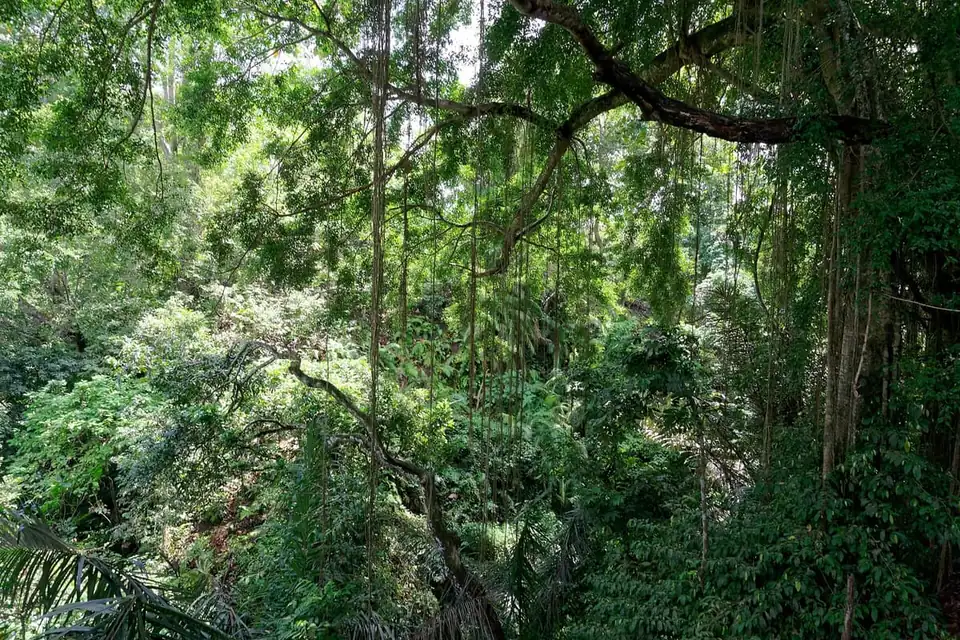
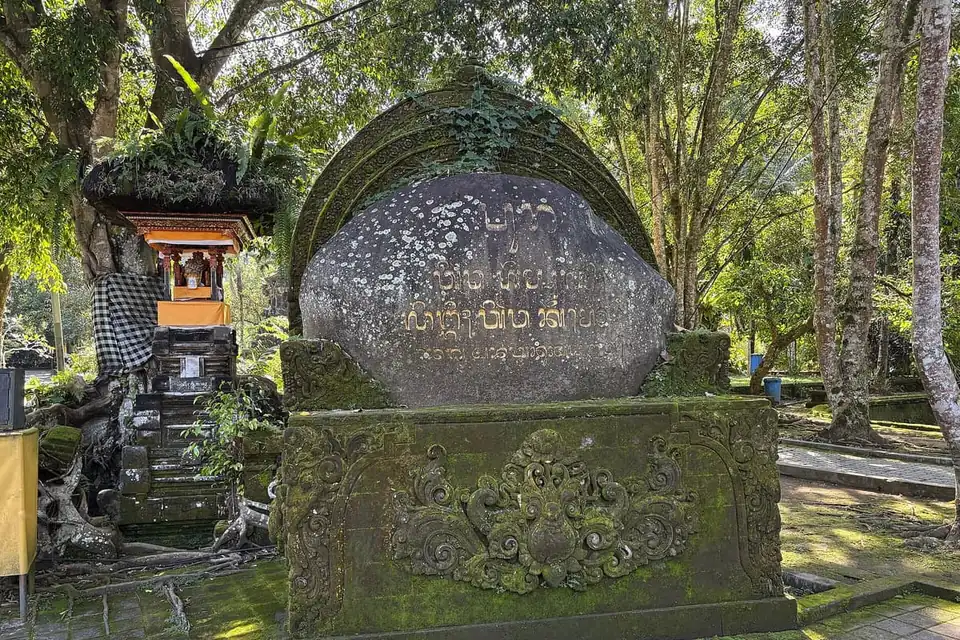
Right in the centre, the Sacred Monkey Forest is nature reserve and temple complex at once, home to several hundred long-tailed macaques among moss-covered statues and old banyan trees. Three temples here still serve the surrounding village, so this is a working religious site as much as a sightseeing stop. Keep a firm hold on sunglasses, water bottles and loose bags, because the monkeys are quick and curious.
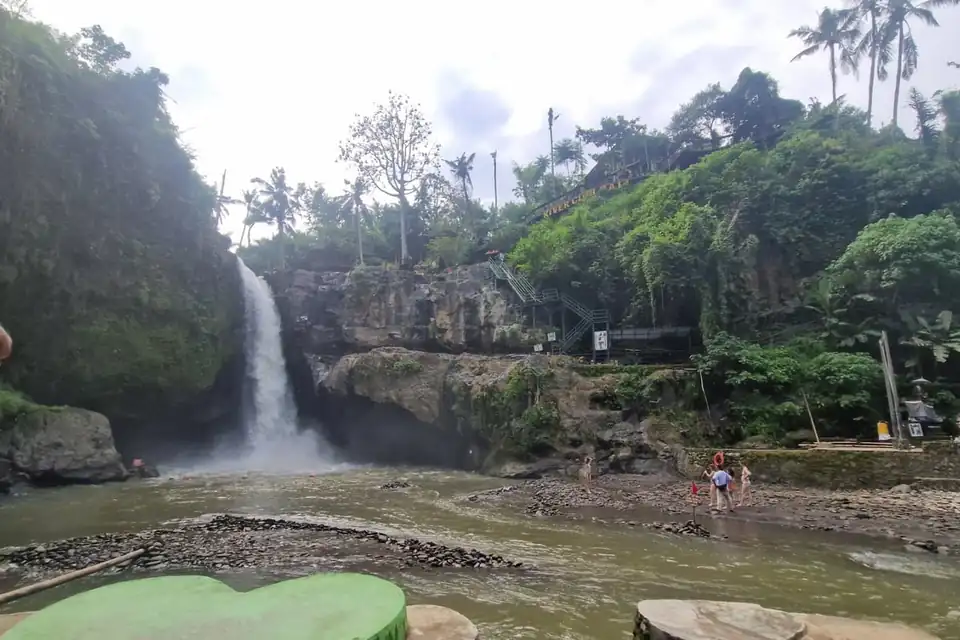
Waterfalls and river valleys lie within easy reach beyond the forest. Several cascades north and east of Ubud make good half-day trips, often paired with a terrace or temple, and the greenery is at its brightest during and just after the wet season, when the rivers run full.
Entry to the Sacred Monkey Forest costs around Rp 80,000 for adults and less for children (roughly 5 US dollars), and the reserve opens from mid-morning until late afternoon. Feeding the macaques is discouraged, and staff sell approved bananas only in set spots, so bringing your own fruit in just invites trouble. Anyone uneasy around the animals can stick to the wide central paths, where the troop is used to people. Popular cascades charge modest fees and involve a flight of steps down to the water: Tegenungan, half an hour south, is the widest and the easiest to reach, and Tibumana is the quieter alternative. Early starts bring the smallest crowds, and the flow is strongest during and just after the wet season, so wear footwear you do not mind soaking and expect the climb back up to be a workout in the heat.
Food, markets and crafts
Ubud takes its food seriously, from the smoky flavours of a warung plate to the inventive vegetarian and raw menus that follow the town’s wellness leanings. A meal at a local warung might run Rp 30,000 to Rp 60,000 (roughly 2 to 4 US dollars); the cafes lining Jalan Raya and the lanes around it charge more for coffee, brunch and international dishes. Cooking classes are popular, and most start with a walk through the morning market to pick ingredients.
Craft runs deep here. The villages around Ubud each favour a different trade, from woodcarving and stone sculpture to painting and silver jewellery, and many workshops welcome visitors who want to watch or learn. At the central Ubud Art Market, selling textiles, baskets and carvings, polite bargaining is part of the exchange.
Timing helps at the market. Traders in produce and offerings work from before dawn, and by mid-morning the stalls closest to Ubud Palace have turned over to souvenirs aimed at visitors. Cooking classes tend to run a single morning or afternoon session and cost around Rp 350,000 to Rp 550,000 (about 22 to 35 US dollars), a market walk and a shared meal included. When buying crafts, a calm exchange and a smile carry the bargaining further than a hard line, and settling somewhere below the first asking price is normal. Cash is still the rule in the smaller warungs and market stalls, so keep a supply of small notes, though the larger cafes and galleries take cards. The smarter places may add a service charge and tax together, often around 15 to 21 per cent, so check before you decide a total looks steep.
Using Ubud as a base
Ubud makes a natural first stop on a wider Bali itinerary. The volcanic highlands are within reach from here, including the crater views and hot springs of Kintamani to the north and the cool lakes and waterfalls of Munduk deeper into the mountains. Further out, the dive coast of Amed in the east is a longer but rewarding drive for a two-centre trip.
Plenty of visitors pair Ubud with time on the coast, trading the hills for the surf and sunsets of the south. Seminyak, Canggu and the clifftop breaks of Uluwatu all sit around an hour to ninety minutes away by car. Split a week between inland Ubud and one coastal base and you see both sides of Bali, temple mornings and sunset evenings by the sea.
A longer loop takes a little planning. A driver for a full day north into the highlands runs to around Rp 700,000 to Rp 900,000 (about 44 to 57 US dollars) and comfortably links a crater viewpoint, a temple and a waterfall; the earliest start buys the clearest mountain air before cloud builds after noon. The Nusa islands, off the south-east coast, sail from Sanur rather than from Ubud, so most people fold them into a coastal leg instead. Wherever you head next, no railway backs up the roads, and afternoon traffic through the southern suburbs can add an hour, so a morning departure serves you best. Ubud as the cultural half of a split week, a beach town as the other, is the arrangement most first-time visitors settle on.