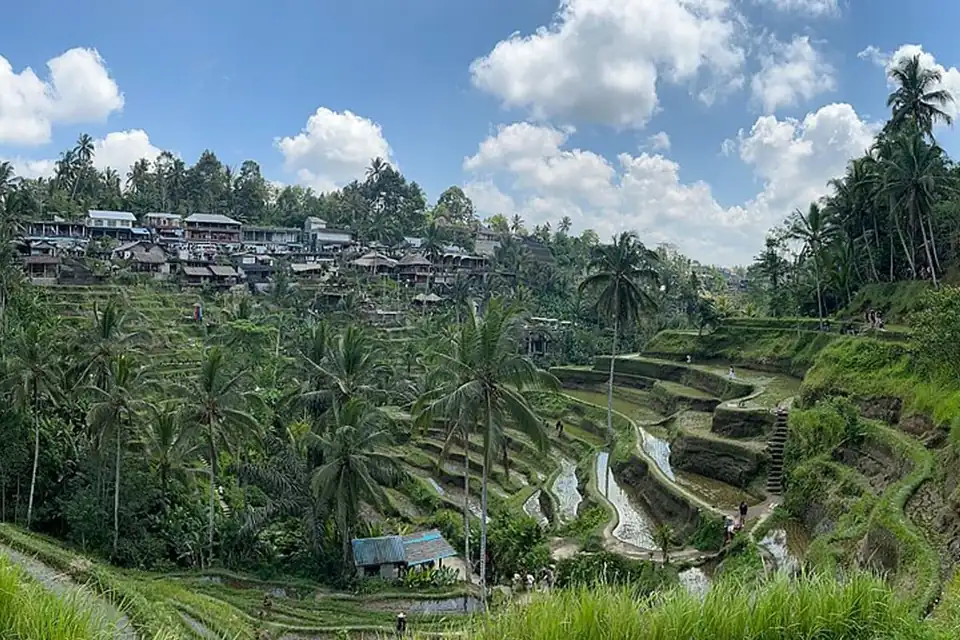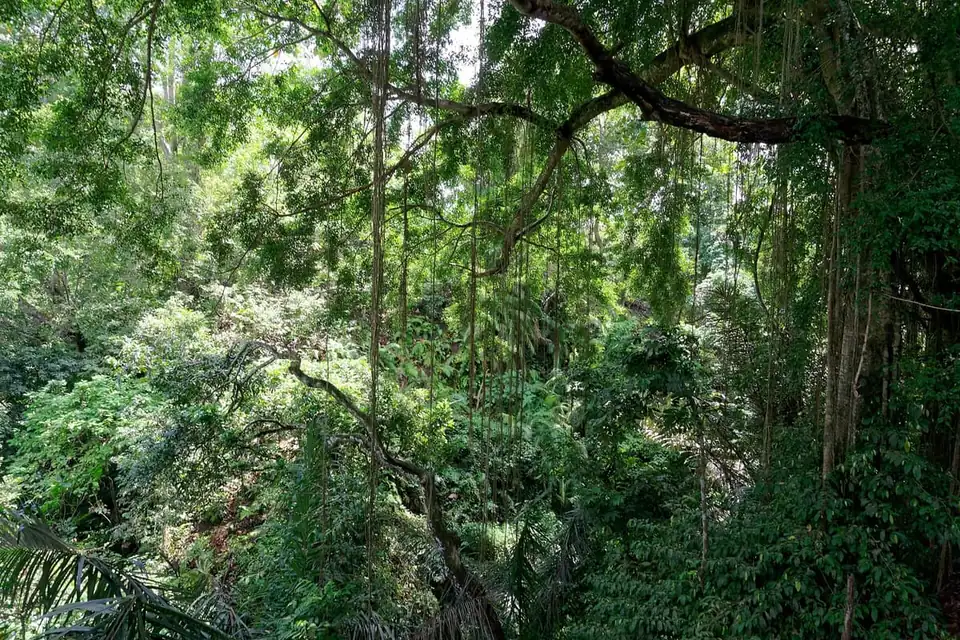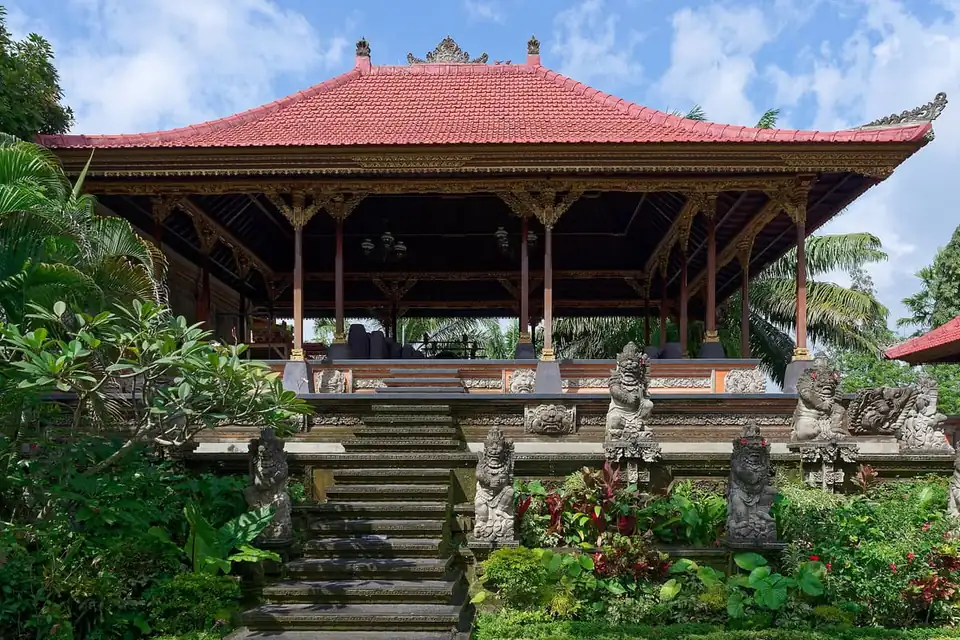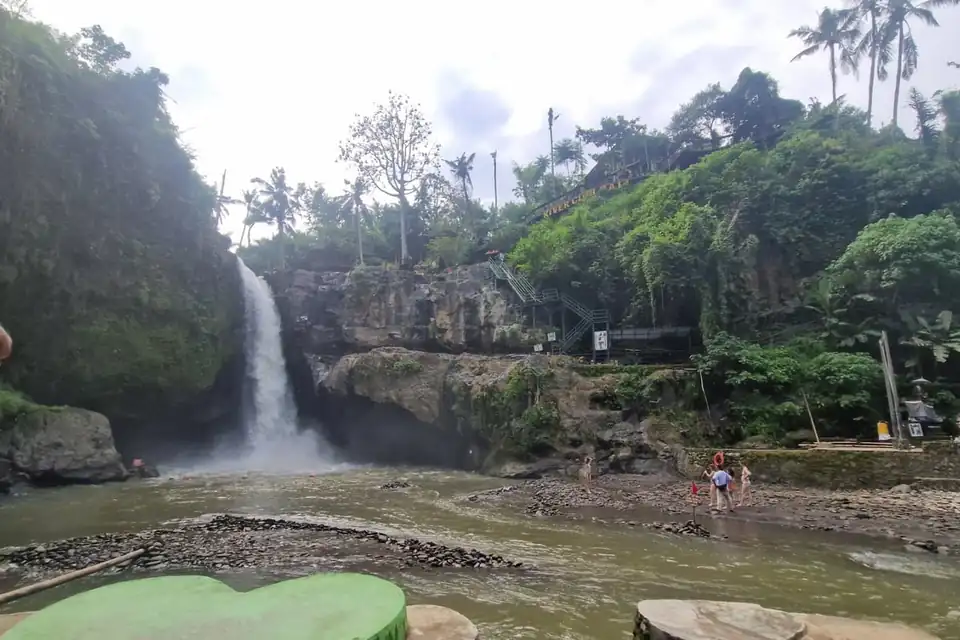
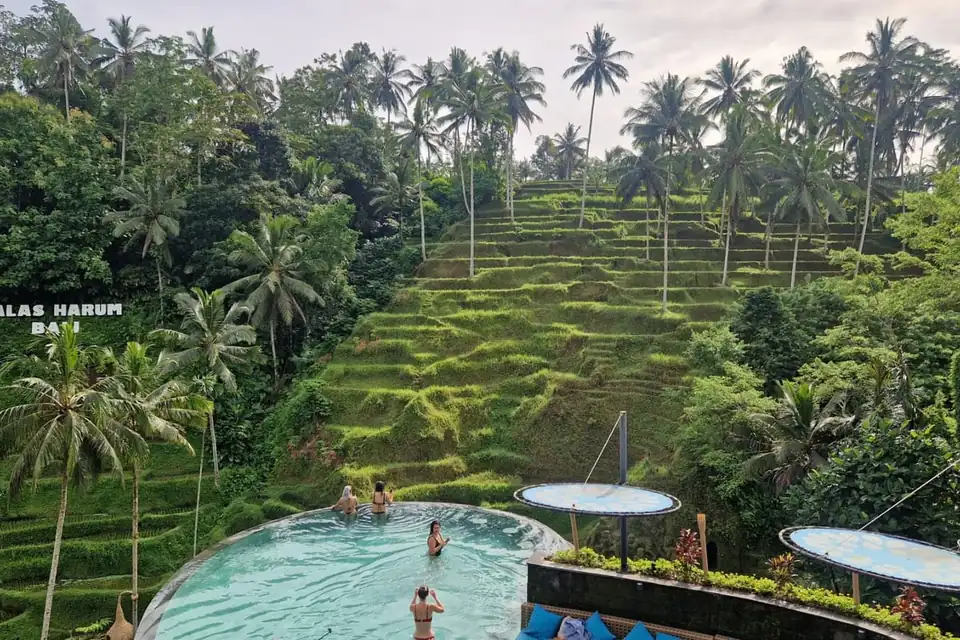
Alas Harum is a business, and it is upfront about it. It started in 2014 as a coffee plantation on the Tegallalang road, about 20 minutes north of central Ubud, and has grown into a paid park on the terraced slope: jungle swings, sky bikes, a zip line, photo platforms, a giant statue and a coffee tour, plus a separate day club with an infinity pool. The rice terraces are the setting; you are paying for the things built over them.
That makes it a different outing from the Tegallalang Rice Terraces viewpoint along the same road. Come here for the rides, not for the farming.
What each ticket buys
The gate ticket is Rp 70,000 for a day in the park. It covers the walk around the grounds and the photo spots: a glass floor, a dancing bridge, a gorilla cave, bird nests, the Kailash Fairy Garden and an 18 metre Ganesha statue woven from artificial bamboo by 126 artisans. The park also claims the largest luwak statue in Indonesia.
Every ride costs extra. On the official list a single swing 15 metres up is Rp 263,813, the 25 metre Super Extreme Swing Rp 293,125, a couple swing Rp 410,375, the London Sky Bike Rp 293,125 and the 300 metre single flying fox Rp 410,375. The website often shows these 25% lower as a limited offer. A swing is one ride of 15 pushes.
From 7am to 10am only the swings run; everything else opens at 10am and runs until 6pm, although the park itself stays open until 7pm. Outside food and drink are not allowed in, and flying a drone costs Rp 100,000.
Rules on the rides
Alas Harum says insurance is included and full safety equipment is compulsory. Limits are posted for every ride: 35 to 150kg for a single swing, a minimum height of 165cm and 90kg maximum for the single sky bike, 150cm for the flying fox. Pregnant women, children under seven and anyone with heart disease or a congenital condition may not go on the extreme rides.
Take those limits seriously. Swings over the Tegallalang valley are not new and they are not risk free: in July 2018 a French visitor died at another swing in the area when the rope carried him into a 15 metre ravine, and Gianyar regency suspended swing tours until operators had permits.
The coffee tour and the luwak question
The coffee tour walks through how kopi luwak is made, ending at a tasting. The Sips & Sights package bundles entry, the tour and one cup of luwak coffee.
Kopi luwak is coffee made from cherries that palm civets have eaten and passed. Traditionally the beans were collected in the wild. As demand grew, producers moved to farms where civets are kept in battery cages and force-fed, and investigations by PETA and the BBC found caged coffee being sold as wild. Even the coffee trader credited with bringing it to the West now campaigns against it. Ask to see how the animals are kept, and if the answer is vague, drink the ordinary coffee.
Cretya and the rest of the complex
Cretya Ubud, the day club in the same complex, is the place famous for the three-tiered infinity pool. It is open from 7am to 9pm. The restaurants are open to all ages, but the pool, the Bima lounge and the bar are for over-18s with ID, and swimwear is required in the water. The Rp 220,000 First Drink Charge is credited against your first drink and includes access to the Alas Harum grounds. A floating breakfast package costs Rp 400,000 per person.
Pair the park with Tirta Empul further north, and see our list of things to do in Ubud for the rest of the day.