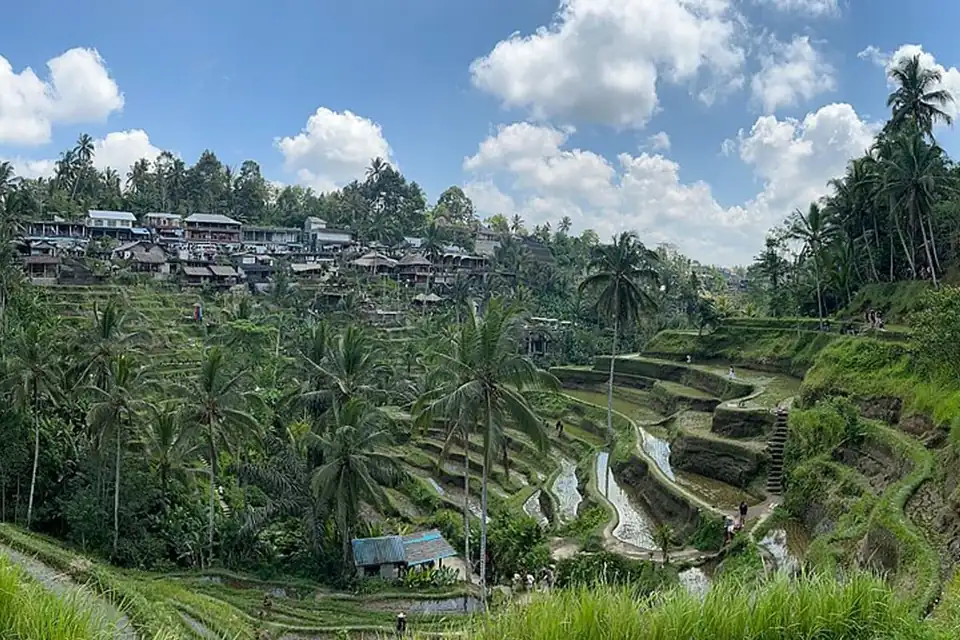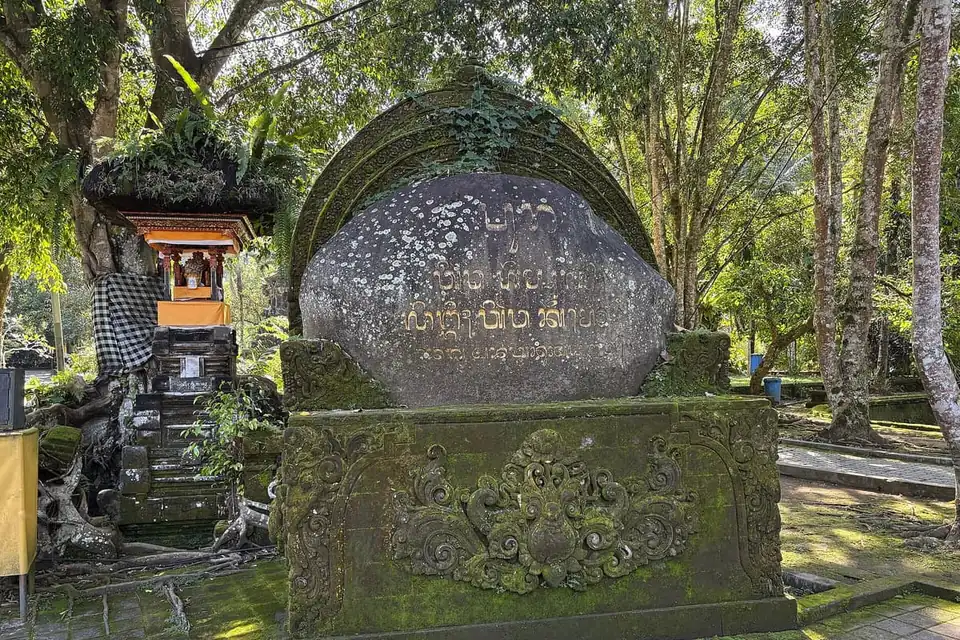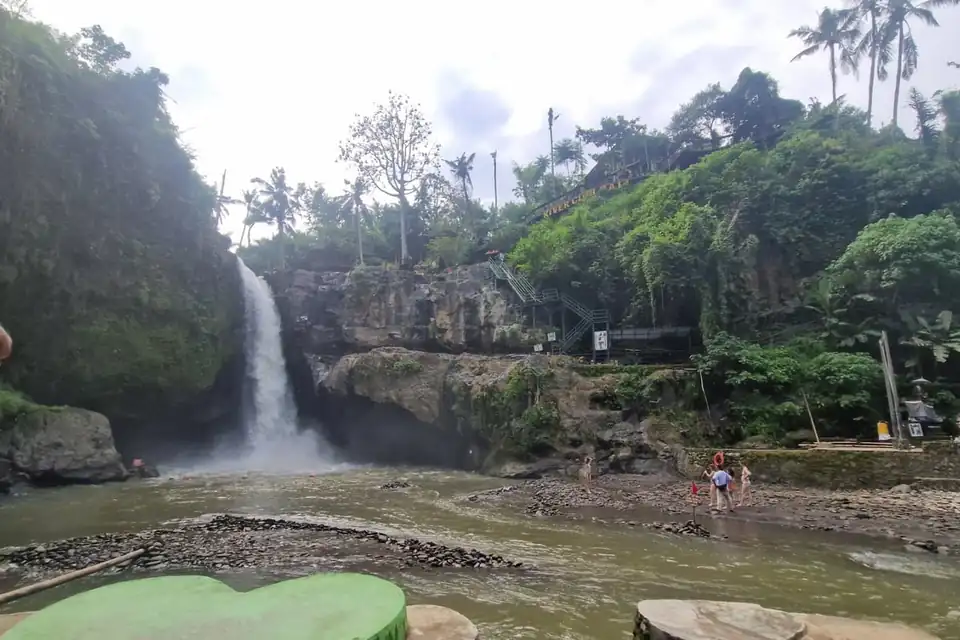
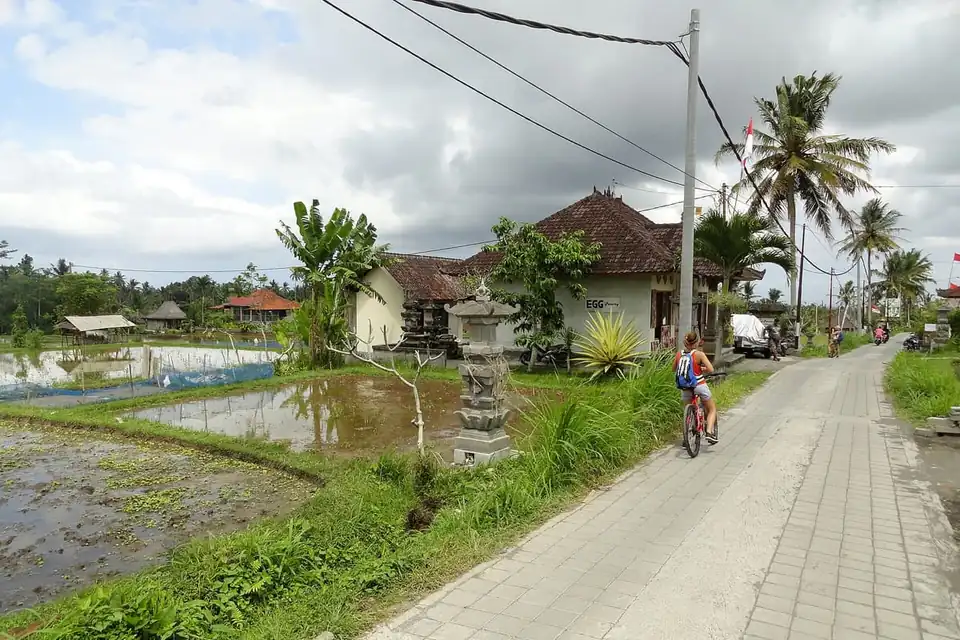
The Campuhan Ridge Walk is the easiest way out of Ubud on foot: a paved path about a metre wide that climbs gently for roughly 2km along a grassy ridge, with a river valley dropping away on each side. It starts at a temple on the western edge of town and ends in the village of Bangkiang Sidem. It is free, open at all hours, and needs nothing more than water and a hat.
It is also no longer the open countryside of older photographs, which is worth knowing before you set your expectations.
Where two rivers meet
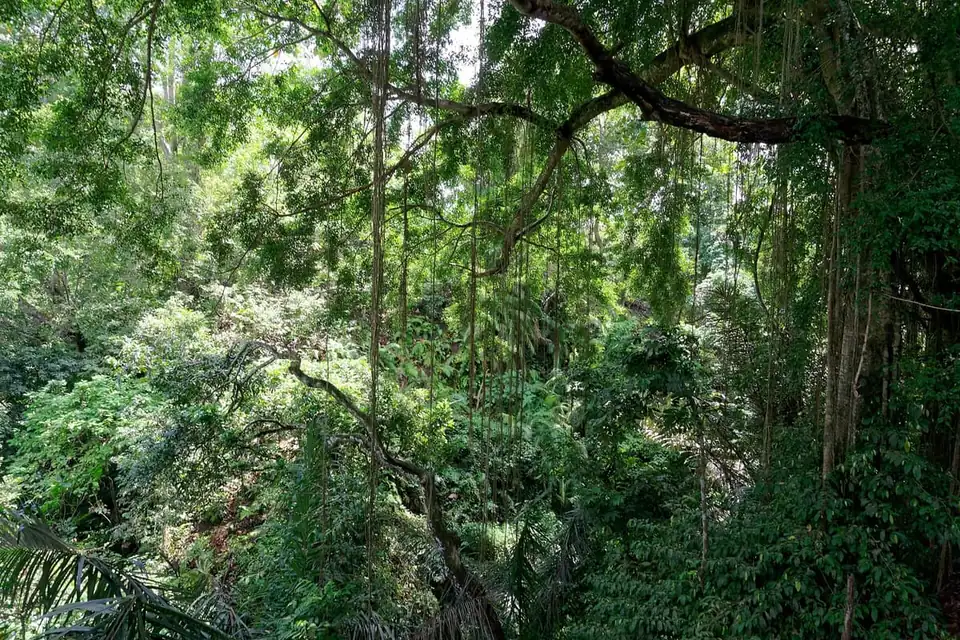
Below the start of the walk, the Tukad Yeh Wos Kiwa and the Tukad Yeh Wos Tengen join, and the ridge you walk up is the tongue of land between them.
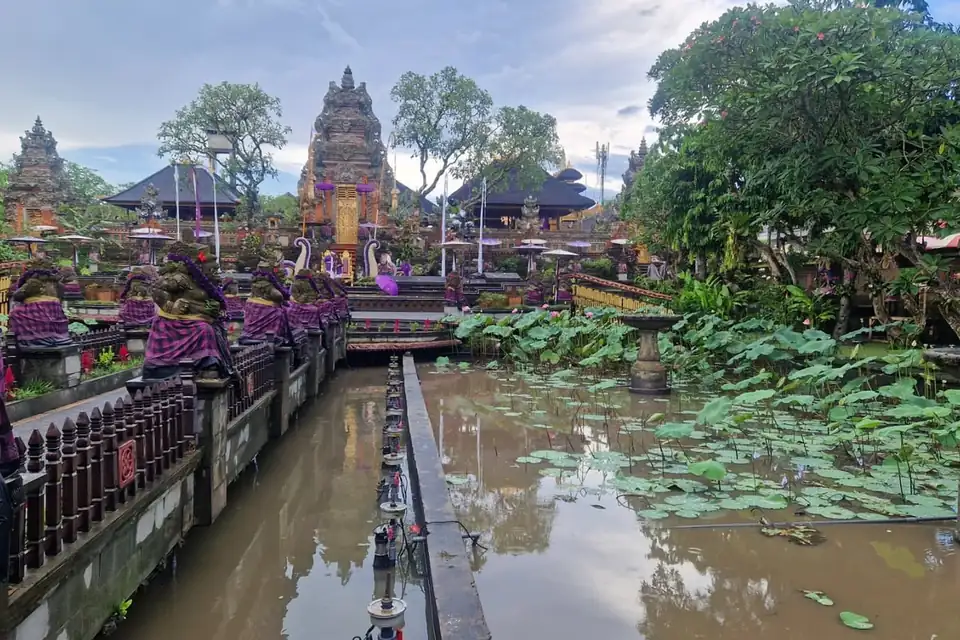
The confluence is why the place matters to the Balinese. Legend has it that in the 8th century a Javanese priest, Rsi Markandya, meditated here and founded Pura Gunung Lebah on the valley floor. Generations of Hindu pilgrims have come since to meditate, bathe and collect holy water for temple ceremonies. The same tradition links the name of Ubud itself to ubad, meaning medicine, for the healing plants that grew here.
The temple still stands beside the Campuhan bridge, and the path to the ridge begins next to it. Dress respectfully if you look into the temple.
The confluence also drew the German painter Walter Spies, who moved to Ubud in 1927, lived for nine years at the meeting of the two rivers before moving on to Iseh.
Two kilometres along the spine
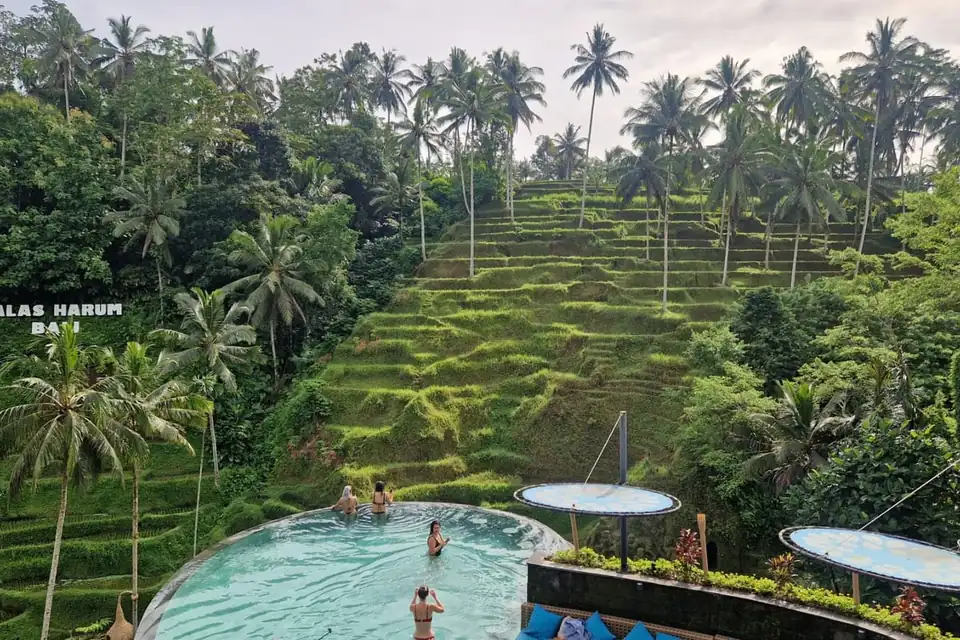
From the temple, steps lead up onto the ridge and the path then runs along its spine, rising and dipping. The view is of trees, the two valleys and, increasingly, the hotels and villas built on the cliffs opposite. Wikivoyage’s 2026 update is blunt that development has spoilt the views it used to recommend, while still calling it a nice enough walk. That is fair.
People jog and cycle the path, especially in the cooler hours, and there are swing operators along the way charging for a ride over the slope. At the top is Bangkiang Sidem, with a few cafes before you turn back.
There is almost no shade on the ridge, so go at dawn or in the late afternoon. The top of the hill is a popular place to watch the sunset.
Down from Bangkiang Sidem, not up
That restriction suggests the smartest way to do the walk: take a car to Bangkiang Sidem and walk the 2km back downhill into Ubud, ending at the temple and the bridge. Otherwise, start at the temple and return the same way.
Parking at the bottom was reported at Rp 2,000 for a scooter and Rp 5,000 for a car. The trailhead is a short walk west of the centre: Campuhan is the village immediately west of central Ubud.
Art around the bridge
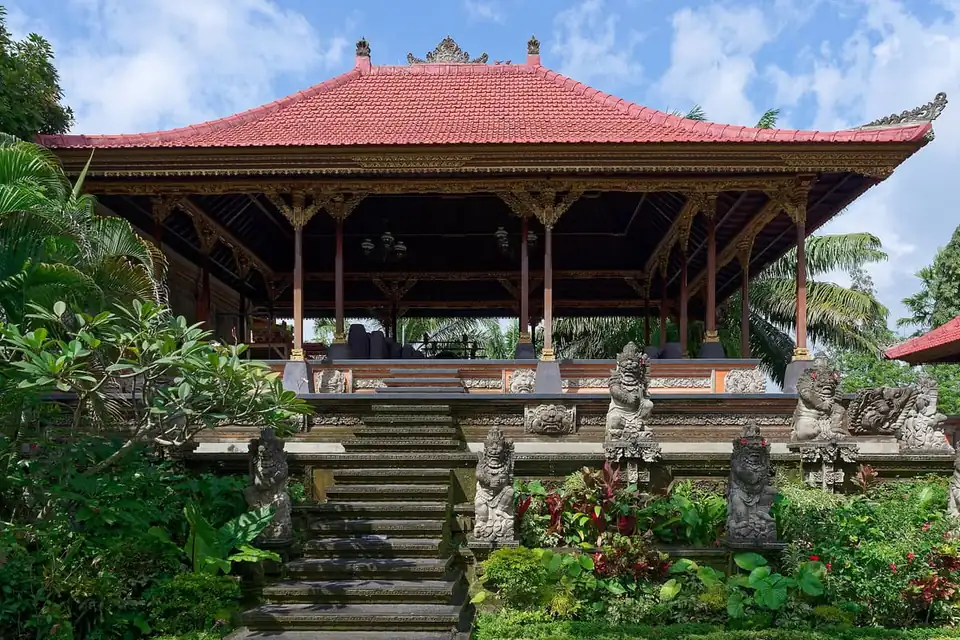
The main road through Campuhan, Jalan Raya Campuhan, carries two of Ubud’s art museums, which makes a good pairing with an early walk. The Blanco Renaissance Museum, the former home of the Spanish artist Antonio Blanco, who died in 1999, opens daily from 9am to 6pm. Further along in Kedewatan, the Neka Art Museum holds what Wikivoyage calls perhaps the most important art collection in Bali, with rooms dedicated to Arie Smit and to I Gusti Nyoman Lempad. Murni’s Warung, by the bridge, has been feeding people since 1974.
If the ridge disappoints, two rice field walks just north of the centre are quieter. The Kajeng walk starts near Jalan Kajeng, by Pura Taman Saraswati, and the Sweet Orange walk runs through the fields just north of the centre. Pair either with Ubud Palace, and see our list of things to do in Ubud.