
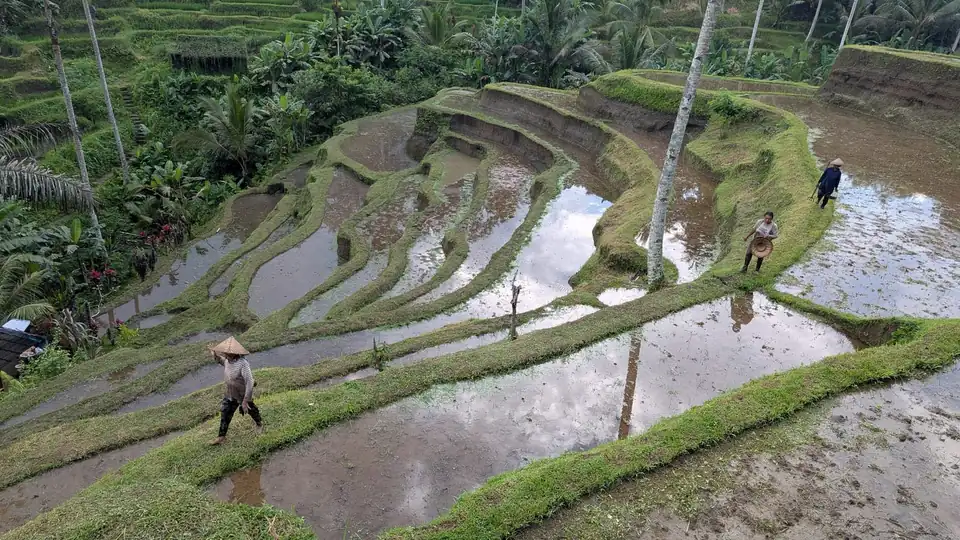
Ubud · Ubud, cultural heart of Bali
Things to do in
Ubud
Rice terraces, water temples, a royal palace and a forest of monkeys in the hills of central Bali.
- Ideal stay
- Three full days covers the town sights, the northern terraces and temple, and the waterfall.
- Best time
- Go early in the day: the Monkey Forest opens at 9am, and Tegallalang fills up from about 9am. From April to October the water at Tegenungan is clearer and calmer.
- Getting around
- Central Ubud is walkable. North of town, keep your driver: ride-hailing pickups are thin around Tirta Empul.
- Good to know
- Temple dress is required, and the inner courtyards are for worshippers. Entry prices have changed in the last two years, so check the figures on each sight's page.
Ubud packs Bali's temples, dance and rice-field scenery into one walkable upland town, with the bigger sights a short drive north.
Ubud sits in the central hills, built around its royal palace, a market and a cluster of temples. The centre is compact: the palace, the market and the road down to the Sacred Monkey Forest are all within walking distance, and the Campuhan ridge path starts on the western edge of town. The terraces, the water temple and the adventure park lie north along the Tegallalang road, and the lowland waterfall is south at Kemenuh. Several of the best-known places are busy and some are commercial, so this page says which, and when to go.
Before you go, read up on money and the rupiah, getting around by ferry, bus and car, the best time to visit and staying safe and healthy.
-
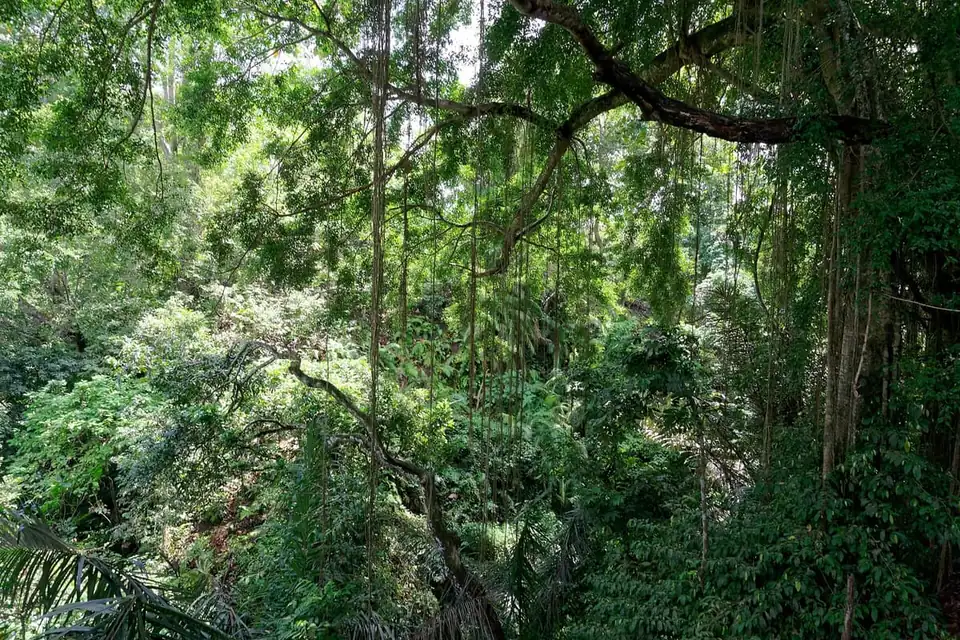 01 Sacred forest
Sacred Monkey Forest Sanctuary
A 12.5 hectare temple forest owned by the village of Padangtegal, at the south end of Jalan Monkey Forest. About 1,054 long-tailed macaques live in seven troops, and the three temples, dated to around the middle of the 14th century, are for prayer only, so you see their gates, guardians and moss from the paths. The monkeys have lost their fear of people and will open bags, so this is a visit with rules rather than a quiet stroll.
Cost: Rp 130,000 adults, Rp 100,000 children (official rate, 2026). Time: About 1 to 1.5 hours
Tip. No food, drinks or plastic bags go in; use the lockers in the lobby. If you are bitten, go straight to the clinic in the forest, then to a doctor about rabies shots.
Full guide to Sacred Monkey Forest Sanctuary -
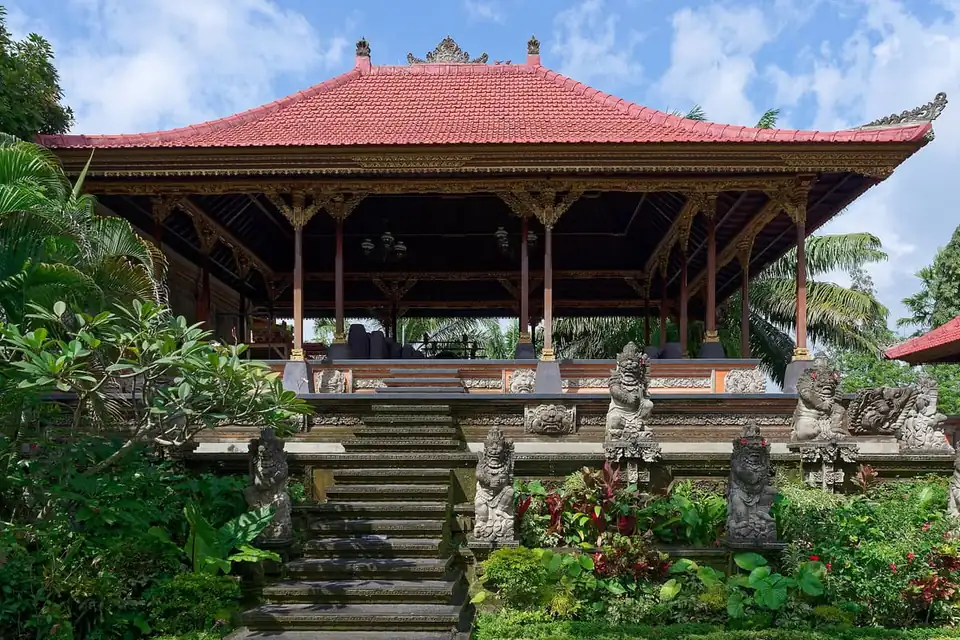 02 Royal town
Ubud Palace and the evening dance
Puri Saren Agung sits at the crossroads of Jalan Raya Ubud and Jalan Monkey Forest, and the royal family still lives in parts of it. The outer courtyards are free by day and take little time. After dark the main courtyard stages a different dance programme each night, from Legong to Barong, with a gamelan orchestra. A short walk away on Jalan Kajeng, the lotus pond and red-brick gates of Pura Taman Saraswati, designed by the same sculptor, I Gusti Nyoman Lempad, are worth a look from the causeway.
Cost: Free by day; dance tickets Rp 100,000, sold at the palace. Time: 30 to 45 minutes by day; 1.5 hours for an evening show
Tip. The courtyard seats about 200, so buy tickets at the palace and arrive early for a seat near the front.
Full guide to Ubud Palace - Shopping
Ubud Market and the craft villages
Ubud Market, opposite the palace, is a two-storey warren of wood carvings, batik and sarongs aimed at visitors. Traders can ask many times the going price, so check prices in a shop first and bargain. Upstairs is often cheaper than downstairs. For cheaper craft shopping, Sukawati Art Market south of town is where many shop owners buy wholesale. The craft villages on the road to Sanur each specialise: Celuk in silver, Mas in wood carving, Batuan in paintings.
Free to enter; at the corner of Jalan Monkey Forest and Jalan Raya Ubud, opposite Ubud Palace.
Tip. Tour buses arrive in force from 11:00 to 14:00, so shop before or after.
-
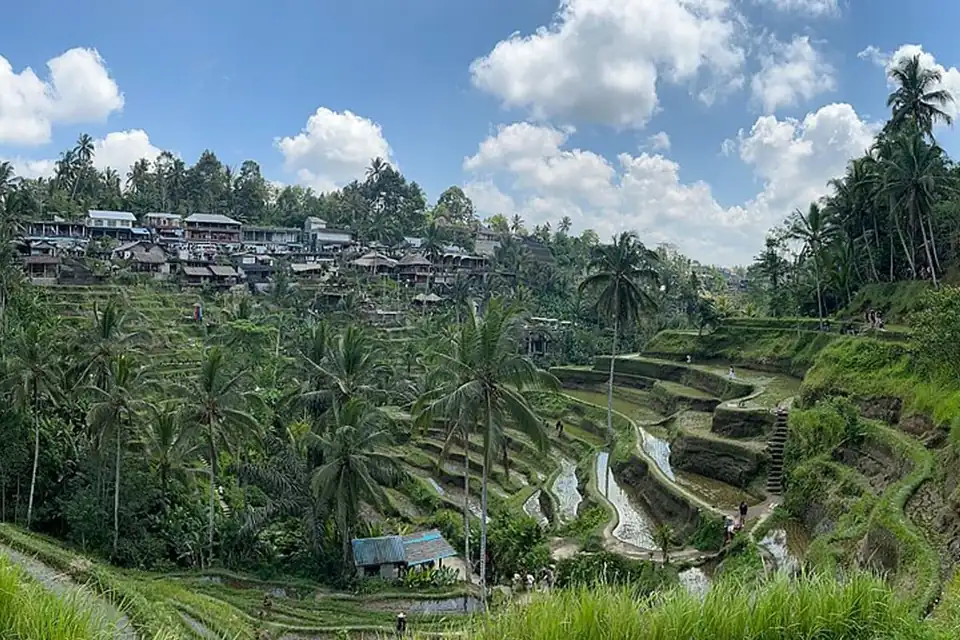 04 Rice terraces
Tegallalang Rice Terraces
Tegallalang means one spot on the main road: the Ceking viewpoint, about 10km north of Ubud. The terraces in the photographs are across the stream, farmed by seven farmers from the next village, while you stand on a west rim of cafes, art shops and swings. It is worth seeing, but expect trinket sellers and donation boxes on the paths. Banjar Tangkub and Banjar Kebon, on the far slope, are a quieter way to see the same terraces.
Cost: Rp 25,000 entry; farmers along the paths may ask for small donations; swings priced separately. Time: 1.5 to 2.5 hours
Tip. Go before 9am, when the cafes open and the crowds arrive. Use a swing only with a harness and staff on the rope; a visitor died on one here in 2018.
Full guide to Tegallalang Rice Terraces -
 05 Water temple
Tirta Empul purification temple
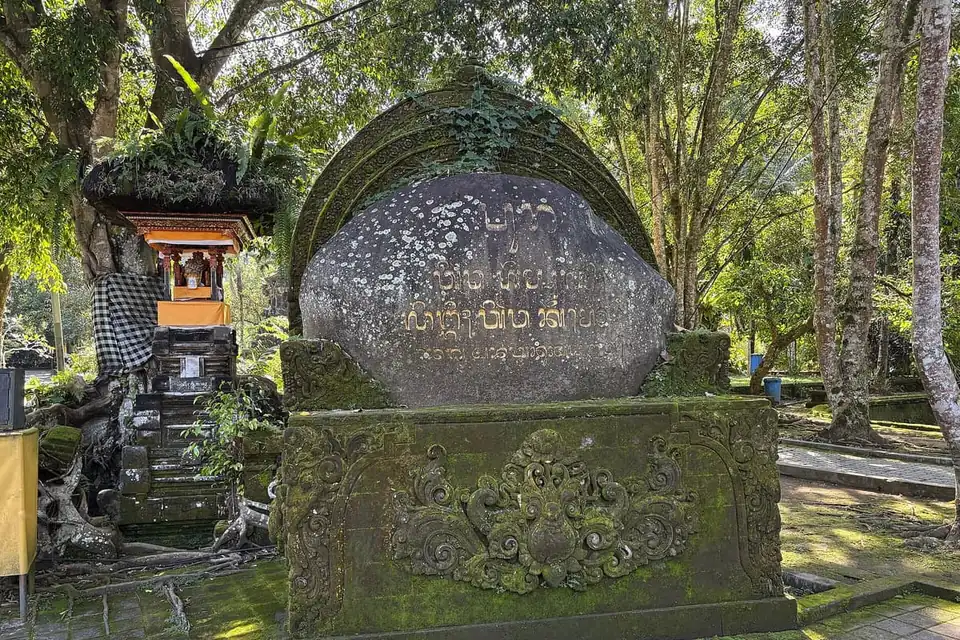
Tirta Empul is a working water temple at Tampaksiring, founded around a spring in 962 AD and dedicated to Vishnu. The bathing is in the middle courtyard, which has two pools and 30 spouts. Visitors may join the queue in a sarong, which comes with the ticket, and put their heads under the spouts in turn. Watch for a few minutes first, and be wary of anyone selling a separate melukat package at a premium.
Cost: Rp 75,000 adults, Rp 50,000 children aged 5 to 11 (foreign visitors); sarong included. Time: 1.5 to 2 hours, longer if you bathe
Tip. Bring a change of clothes and keep your driver: ride-hailing is thin up here and a car back can be hard to find.
Full guide to Tirta Empul Temple -
 06 Ridge walk
Campuhan Ridge Walk
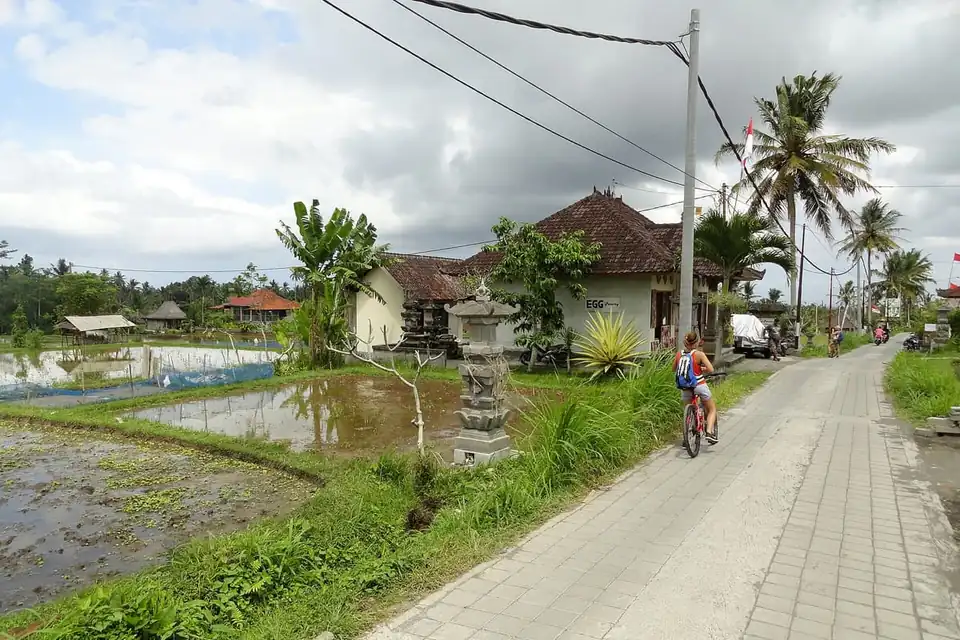
A paved path about a metre wide climbs roughly 2km along a grassy ridge between two branches of the Wos river, from the temple of Pura Gunung Lebah to the village of Bangkiang Sidem. It is free and open at all hours. Hotels and villas now crowd the valley walls, so treat it as a pleasant early walk rather than open countryside, and there is almost no shade once the sun is up.
Cost: Free; parking Rp 2,000 for a scooter, Rp 5,000 for a car. Time: 1 to 2 hours return
Tip. Take a car up to Bangkiang Sidem and walk back down: a local taxi group stops ride-hailing cars collecting passengers at the top.
Full guide to Campuhan Ridge Walk -
 07 Waterfall
Tegenungan Waterfall
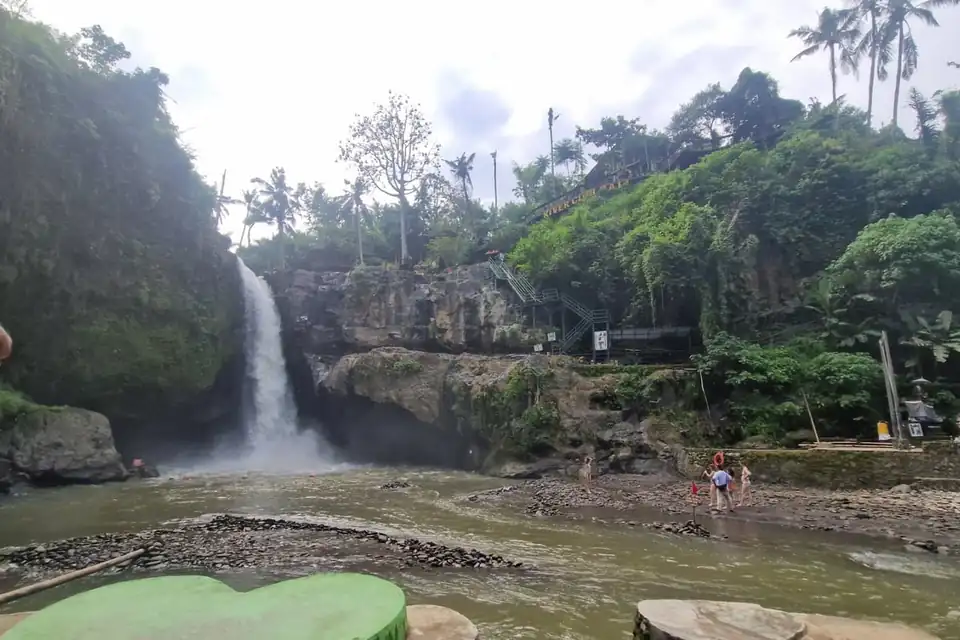
A 15 metre fall on the Petanu river at Kemenuh, south of Ubud, and one of the few Bali waterfalls that is not in the mountains. A long staircase leads down to it, and a viewpoint at the entrance shows the whole fall without the climb. The flow is strong: two people drowned under the fall within four months in 2017. The water is clearer from April to October and heavy and brown in the wet season.
Cost: Rp 20,000 per person, parking Rp 5,000 (2023). Time: 1 to 1.5 hours, including the steps down and the climb back
Tip. Paddle at the edges only and stay out entirely after rain. Go around 7am, before the heat.
Full guide to Tegenungan Waterfall -
 08 Adventure park
Alas Harum swings and Cretya pool
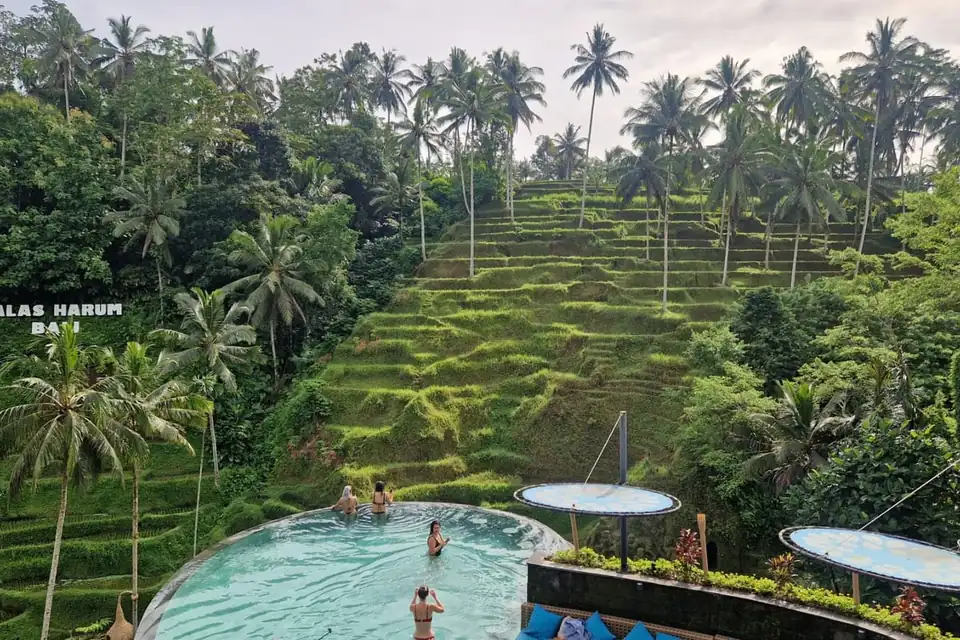
Alas Harum is a paid park on the Tegallalang road with swings, sky bikes, a zip line and a coffee tour. Each ride costs extra on top of the gate ticket. The infinity pool in the photographs belongs to Cretya Ubud, a separate adults-only day club with its own charge, so the park ticket does not get you a swim. The coffee tour features kopi luwak, which is often made from caged civets; the ordinary coffee is the safer choice.
Cost: Rp 70,000 entry; each swing, sky bike or zip line roughly Rp 200,000 to Rp 500,000 on top, plus 17.25% tax and service. Time: 2 to 3 hours if you take a swing and stay for coffee
Tip. Only the swings run before 10am, so book any other ride for later in the day.
Full guide to Alas Harum
Top-rated Ubud tours
The best-reviewed guided experiences on Viator, with free cancellation on most. Prices were correct when this page was last built.
 Free cancellation
Popular
Free cancellation
Popular
Ubud Private Tour Rice Terraces Temples Waterfalls.
 Free cancellation
Best of Ubud Full-Day Tour with Jungle Swing
 Free cancellation
Ubud: Monkey Forest, Jungle Swing, Rice Terrace and Water Temple
 Free cancellation
Private 1-Day Ubud Highlights Tour
A first-timer's three days
A relaxed way to fold the essentials into a long weekend, keeping the busiest sights for the cooler ends of the day.
Town, forest and dance
- Walk the Campuhan ridge at first light
- Be at the Sacred Monkey Forest for the 9am opening
- Look round Ubud Palace and the market, then watch the dance from 7.30pm
Terraces and water temple
- Reach Tegallalang before 9am
- Visit Alas Harum if you want a swing, or skip to Tirta Empul
- Join the bathing queue at Tirta Empul and keep your driver for the return
Waterfall and a slow afternoon
- Take the steps down to Tegenungan at about 7am
- See the lotus pond at Pura Taman Saraswati
- Finish with a Balinese cooking class
Insider tips
A few things that make Ubud smoother, and keep the trip easy.
Start early
The Monkey Forest opens at 9am, Tegallalang fills up from about 9am and the ridge has almost no shade later in the day.
Dress for the temples
Temple dress is required in the grounds. At Tirta Empul the sarong you must wear comes with the ticket.
Keep your driver in the north
Ride-hailing is thin around Tirta Empul and cars are blocked from pickups at the top of the ridge walk, so hire a driver for the northern loop.
Check the swing and the pool
Swings over the Tegallalang valley have killed a visitor, so use only one with a harness and staff on the rope. The Cretya pool is a separate adults-only club, not part of the Alas Harum ticket.
Ubud things to do: FAQ
How many days do I need in Ubud?
Three full days covers the town sights, the terraces and Tirta Empul to the north, and Tegenungan waterfall, as laid out in the itinerary above.
Is Ubud Monkey Forest worth it, and is it safe?
It is a forest of about 12.5 hectares with around 1,054 macaques and three 14th-century temples. No food or plastic bags may go in, and any bite means a visit to the on-site clinic and a doctor about rabies shots. The official adult ticket is Rp 130,000.
Are the Tegallalang rice terraces worth visiting?
Yes, but know what you are visiting. The viewpoint is a row of cafes, shops and swings on the west rim, facing paddies farmed by seven farmers. Go before 9am, carry small notes for donation boxes, or try the quieter view from Banjar Tangkub or Kebon.
Can I see a dance at Ubud Palace?
Yes. The palace is free by day, and dance performances run in its main courtyard every night from 7.30pm to 9pm. Tickets cost Rp 100,000 and are bought at the palace.
Does the Alas Harum ticket include the Cretya pool?
No. Alas Harum charges Rp 70,000 entry with each ride extra, while Cretya Ubud is a separate adults-only day club with a Rp 220,000 First Drink Charge, which does include access to the Alas Harum grounds.