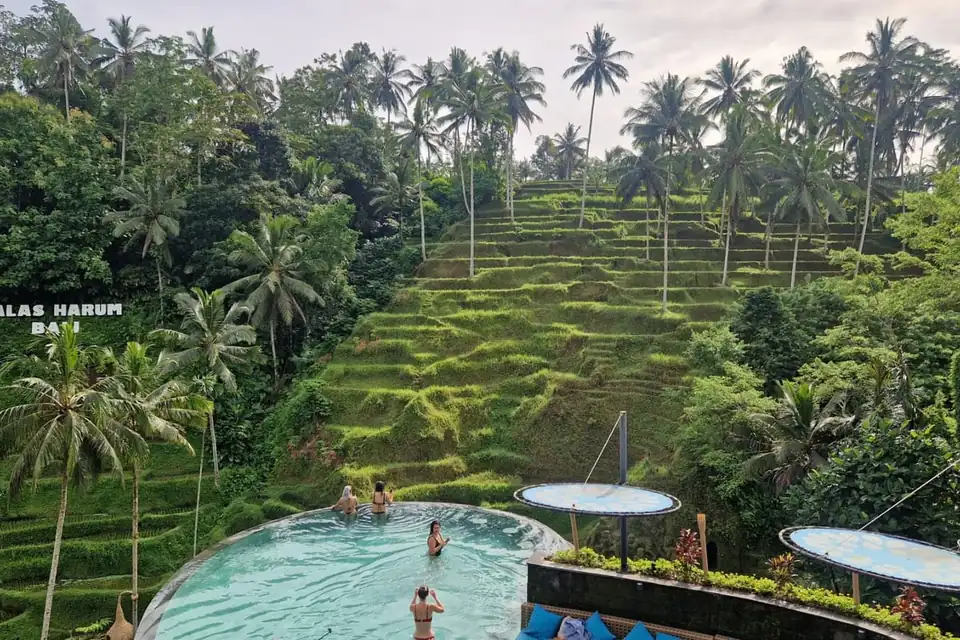
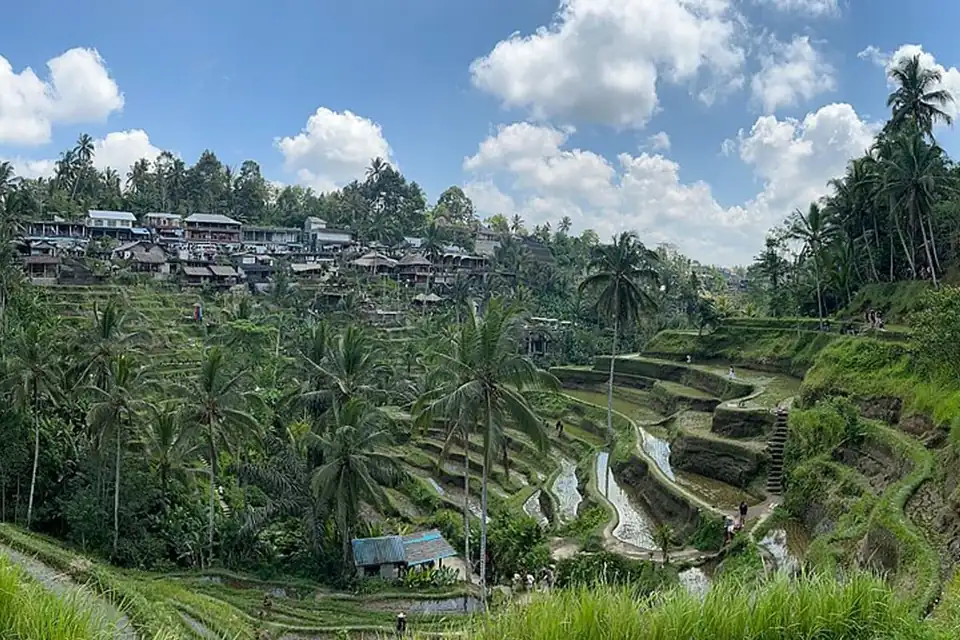
Tegallalang is a district about 10km north of Ubud, and when people say Tegallalang Rice Terraces they mean one spot on the main road through it: Ceking, a steep little valley where a stream separates two very different slopes. The terraces in every photograph are on the east side. The west side, where you stand, is a row of restaurants, art shops, warungs and selfie spots.
It is worth seeing, and it is also, as Wikivoyage puts it, somewhat a tourist trap. Go knowing how it works.
Who owns the view
Since 10 March 2012 the site has been run by the customary village of Tegallalang, which charges the entry fee and manages the parking and the shops. The fields you came to see are not theirs. They are seven plots belonging to seven farmers from Kedisan, the next village, two from Banjar Kebon and the rest from Banjar Tangkub, and the village rents each view for Rp 4.5 million a month to keep them planted. Years ago the rent was Rp 100,000.
Keeping a postcard view costs real money. One owner told Mongabay in 2020 that he pays farm workers Rp 100,000 to Rp 120,000 a day and buys his own seed and fertiliser. The rice is a variety called mansur, around six months from planting to harvest. The same owners say they have no subak, the cooperative irrigation system Bali is famous for; they rely on water coming down from upstream.
That relationship breaks down from time to time. In 2020, with the rent unpaid during the pandemic, owners set up mirrors on their side to glare at the restaurants, and the bridge across the stream had been cut because the donation system on the far side was against the rules.
The west rim and the money on the paths
The opposite slope was paddy too. According to the village head who manages Ceking, it is zoned as green open space, yet it is now covered in restaurants and multi-storey buildings that block parts of the view, and the village says it cannot force private owners to cut them back.
The village manager has said takings fell sharply as the view became harder to see, with daily visitors dropping from about 2,000 to about 1,000, and that rival rice terrace attractions are opening along the same road.
Entry is Rp 25,000. Beyond that, expect donation boxes at photo spots and on the paths down into the paddies, a practice the managers admit puts visitors off but say they cannot stop because the land is private. Carry small notes and decide beforehand what you are willing to give.
Wikivoyage’s other warning stands: there are a lot of trinket sellers between the road and the view.
Swings on the rim
Swings over the valley are now the main paid attraction on the rim, along with dress hire and a photographer. They are priced separately from the entry ticket and the price varies between operators, so compare a couple first.
A quieter way to see the same terraces
The owners of the east slope have made a point of inviting people to come round to their side instead. Banjar Tangkub and Banjar Kebon in Kedisan are about ten minutes’ drive from Ceking, and one of them has said visitors are welcome to come straight to his hamlet for the view.
Whichever side you choose, go early: the cafes open and the crowds arrive from around 9am. Tegallalang sits on the road north towards Kintamani, so it pairs with Alas Harum a few minutes away, Tirta Empul further on, and the volcano at Mount Batur. See the full list of things to do in Ubud for more.