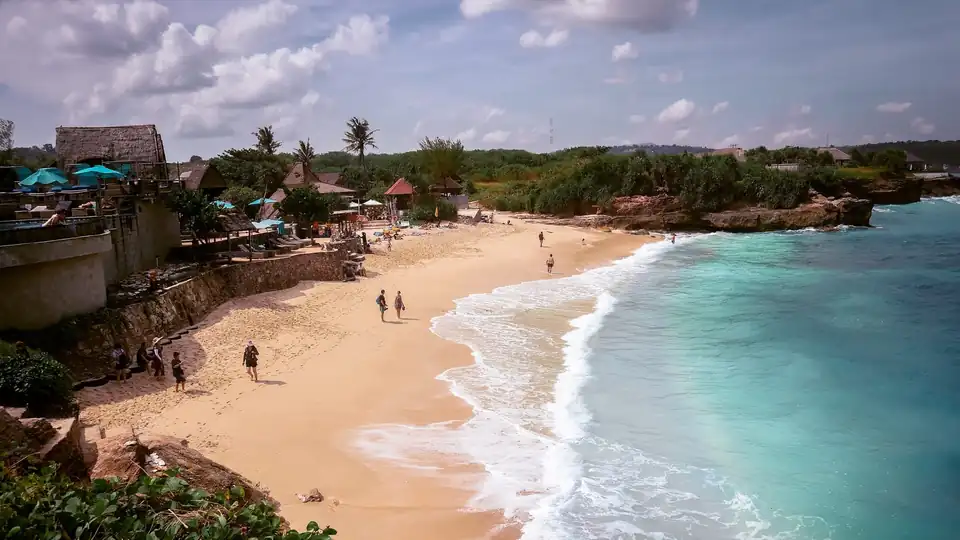
Nusa Lembongan is the easygoing island escape off Bali’s south-east coast, a small, low-lying place of clear water, quiet beaches and a pace so slow it feels a decade removed from the mainland. Where its larger neighbour Nusa Penida trades on rugged drama, Lembongan offers calm: reef breaks for surfers, bright water for snorkellers, and beaches and bays where the main activity is doing very little. There is almost no traffic, the days revolve around the sea, and the whole island can be explored in a relaxed day or two.
Out in the Badung Strait, part of the island province of Bali in Indonesia, Nusa Lembongan sits alongside Penida and the tiny island of Ceningan, to which it is joined by a narrow bridge. The fast boat from Sanur takes well under an hour, but arriving feels like a proper departure from the bustle of the south. Seaweed farming still shapes parts of the shore, boats bob in turquoise bays, and the mood is unhurried and friendly. For travellers wanting an island break within easy reach of Bali, it is one of the best choices going.
Why choose Nusa Lembongan
An island escape without the long journey or the rough logistics is Lembongan’s whole pitch. The appeal is calm: clear, warm water for snorkelling and surfing, quiet beaches, and an absence of the traffic and crowds that define the mainland south. It is smaller and gentler than Nusa Penida, and many people find it the more restful base of the two.
The island rewards a slower stay. Days here fill with snorkelling trips, a surf, a scooter loop, a swim and a sunset, with little pressure to do more. Its compact size and lack of traffic make it easy and safe to explore, and the friendly, low-key atmosphere keeps visitors coming back. As a standalone break or a gentle counterpoint to busier parts of Bali, it fits either bill.
Accommodation spans the range, from backpacker guesthouses at around Rp 250,000 a night (about 16 US dollars) to villas with infinity pools looking across the strait towards Mount Agung on the mainland. Most stays cluster around Jungutbatu, the main village and boat landing, and quieter Mushroom Bay to the south. Prices are a little higher than on the mainland because most supplies arrive by boat, and cash is worth carrying, since ATMs are limited and can run empty, while many smaller warungs and homestays do not take cards. A meal at a beachside warung typically costs Rp 40,000 to Rp 80,000 (roughly 3 to 5 US dollars), keeping day-to-day spending modest once you are here.
The beaches and bays
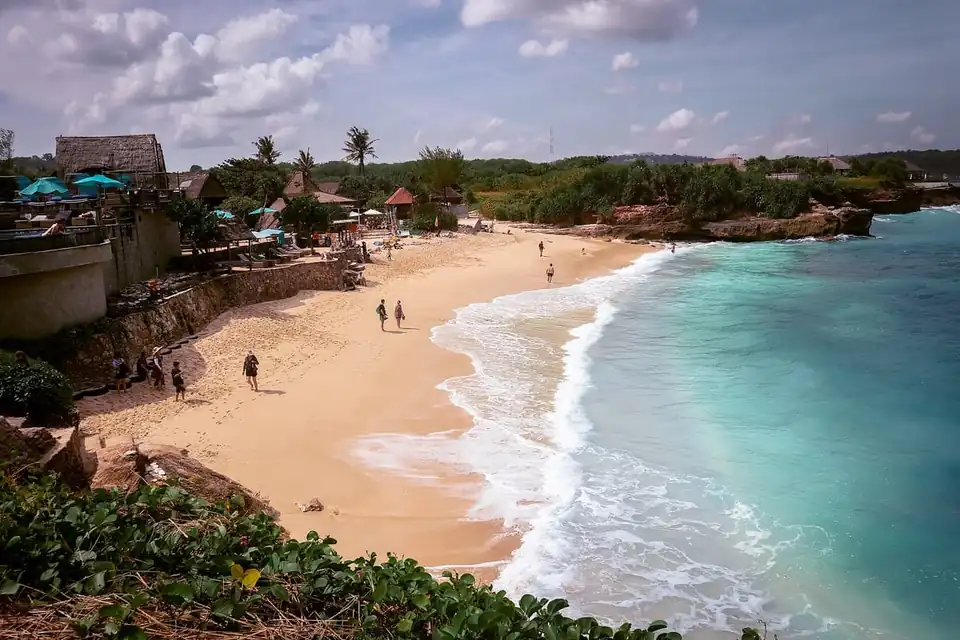
Lembongan’s coast is a string of small beaches and bays, several with the clear turquoise water the island is known for. Mushroom Bay is a pretty, sheltered cove popular for swimming and lounging, its calm water ideal for an easy dip. Dream Beach on the south coast is a stretch of white sand backed by cliffs, more exposed to the swell and dramatic when the surf is up.
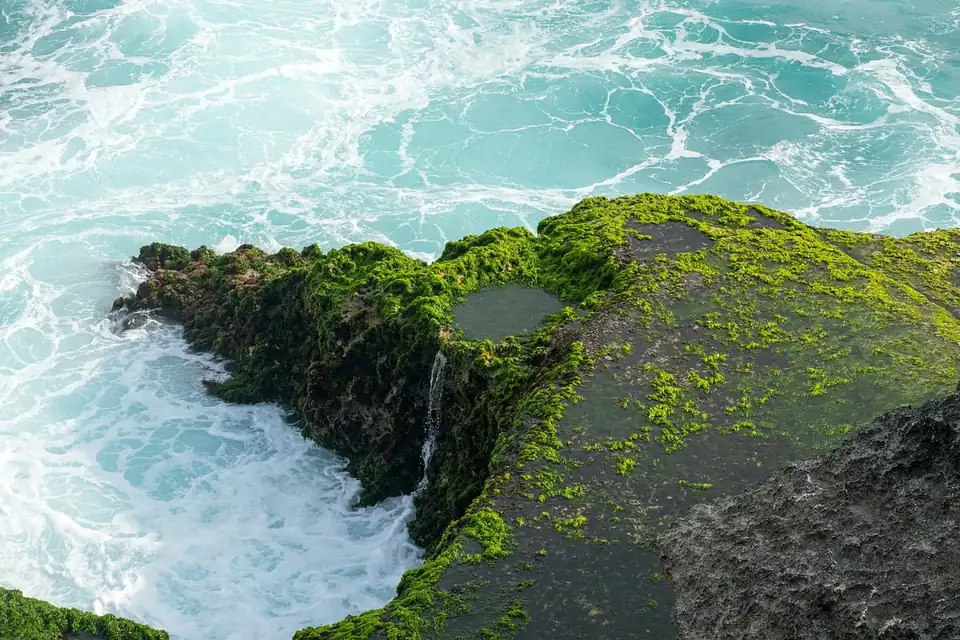
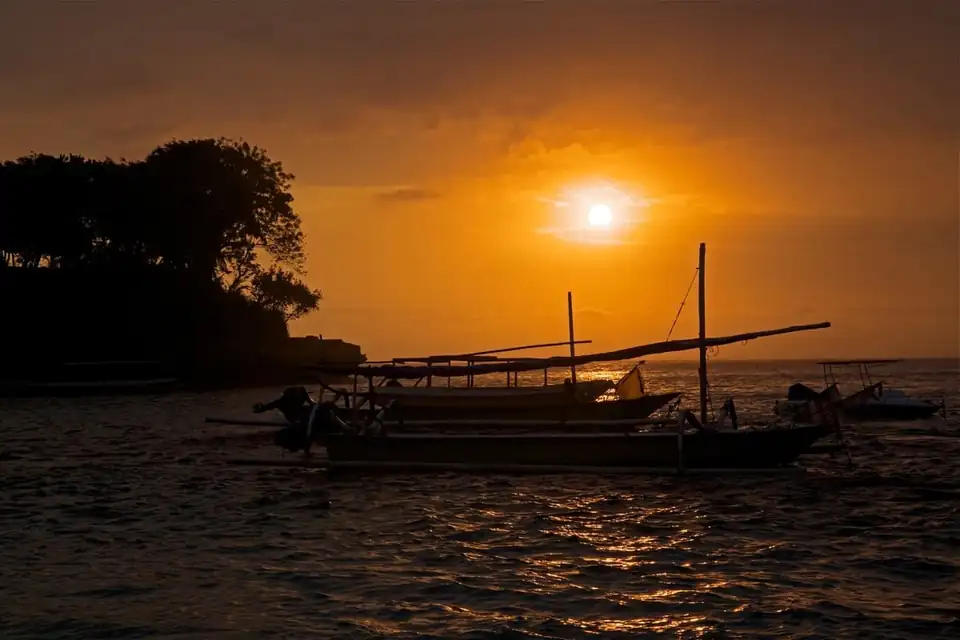
Nearby, Devil’s Tear is a rocky point where the ocean surges into the cliffs and throws up spray, a favourite spot to watch the power of the sea, especially near sunset. Take care on the exposed rocks, as the swell can be unpredictable. Between them, these beaches and bays cover the island’s range, from calm swimming water to wild, wave-battered coast.
Tides make a real difference to how these spots feel. Devil’s Tear puts on its biggest show around high tide when a strong swell is running, sending plumes of spray over the rocks, while Dream Beach is safest for a paddle at lower water when the shorebreak eases. The channel that separates them from the sea can produce sudden surges even on calm days, so keep well back from the edge and watch children closely. Sunset draws a crowd to the western cliffs, and arriving a little early secures a good spot on the rocks above Dream Beach before the light fades. A short scooter ride links most of the bays, and the roads down to the southern beaches are steep in places, so ride down carefully or park at the top and walk.
Snorkelling and diving
The water around Nusa Lembongan is a major draw, clear and warm with healthy reefs a short boat ride from the beaches. Half-day snorkelling trips visit sites in the channel towards Nusa Penida, where colourful fish, coral and, at the right sites and season, manta rays can be seen. The trips are easy to arrange and a highlight for many visitors.
Diving is good here too, with sites shared across the Nusa islands offering rich marine life and the chance of manta and, in cooler months, the oceanic sunfish. Currents can be strong at some sites, so trips are best done with reputable operators who know the conditions. Whether snorkelling from a boat or diving deeper, the underwater world is one of Lembongan’s chief pleasures.
A half-day snorkelling tour taking in three or four sites, among them Manta Point off Nusa Penida and the coral gardens near Gamat Bay, usually costs around Rp 150,000 to Rp 350,000 (about 10 to 22 US dollars) with gear included, depending on the group and the boat. The mola-mola, or oceanic sunfish, tends to appear in the cooler waters from roughly July to October when it rises from the depths, a prized sighting for divers though it demands cold-water tolerance and some experience. Manta rays cruise the cleaning stations year-round, and seeing one glide beneath a snorkelling boat is a common highlight. Currents around the Nusa islands can be sharp and unpredictable, which is why guided trips and a decent level of comfort in open water matter more here than at calmer sites.
Surfing
Off the north-west coast, Nusa Lembongan has a cluster of reef breaks that draw intermediate and advanced surfers. Waves with names like Shipwrecks, Lacerations and Playgrounds break over reef in clear water, reached by a short paddle or a boat, and the relaxed lineup is a welcome change from the crowds of the mainland breaks.
Because the waves break over reef, they suit experienced surfers rather than beginners, and it pays to check conditions and reef with local surfers before going out. For surfers, the combination of quality waves, clear water and an unhurried island setting is hard to beat.
The breaks work best on a mid to high tide, which puts more water over the sharp coral and softens the drop, and the dry-season months from May to October bring the cleanest, most consistent swell. A board can be hired on the island for around Rp 50,000 to Rp 100,000 a day (roughly 3 to 6 US dollars), and boat operators will run surfers out to the reef and wait for a fee, saving a long paddle against the current. Reef booties and a basic first-aid kit are sensible, as coral cuts are the usual hazard here rather than crowds. Even for non-surfers, the cluster of warungs and simple bars looking out over Shipwrecks makes a fine place to watch the sets roll in over an afternoon drink.
Exploring the island and Ceningan
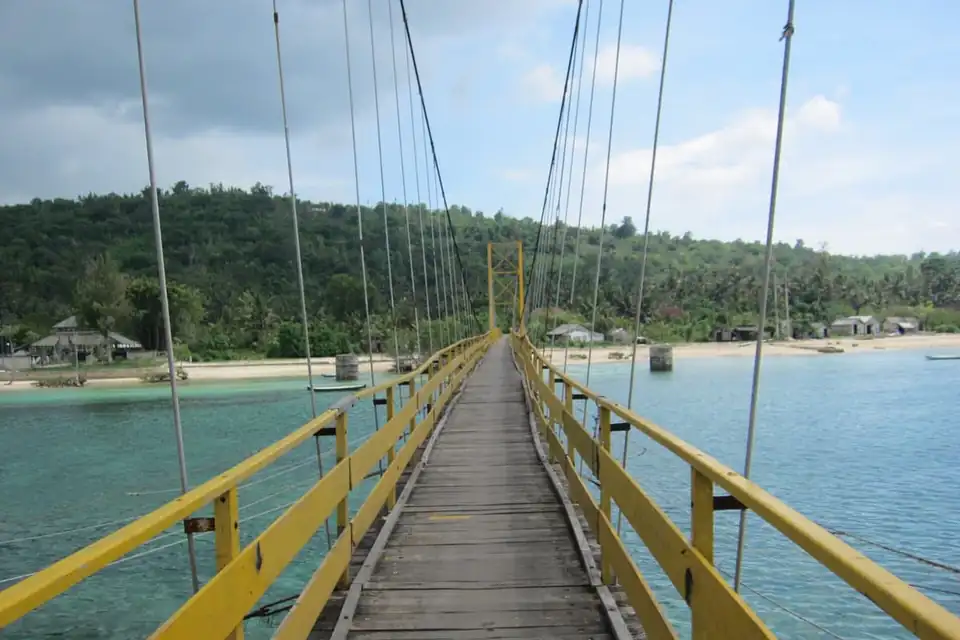
Lembongan is small and almost traffic-free, so exploring by scooter, on foot or by short boat is easy and relaxed. The famous Yellow Bridge links the island to tiny Nusa Ceningan across a shallow channel, carrying walkers, cyclists and scooters. Ceningan is quieter still, with viewpoints, cliff jumps and a couple of small beaches worth a half-day of wandering.
A loop of Lembongan takes in seaweed-farming villages, mangroves, viewpoints and the beaches of the south coast, all at a gentle pace. The lack of cars and the island’s compact size make it a place you can genuinely relax into, covering the highlights without rushing. Crossing to Ceningan adds an easy extension for those wanting to see a little more.
The Yellow Bridge is narrow and carries a weight limit, so scooters cross one or two at a time and cars cannot use it at all, keeping the link between the islands quiet. On the Ceningan side, the Blue Lagoon draws thrill-seekers for its cliff jumps, best attempted only with local guidance given the rocks and swell below, while a scattering of viewpoints and beach bars reward a slow wander. Scooter hire on Lembongan runs to about Rp 70,000 to Rp 100,000 a day (roughly 5 to 6 US dollars), and a helmet is both legally required and genuinely useful on the rough, steep lanes. The mangrove forest at the north-east tip can be toured by paddle or by a boatman poling through the channels, an easy, shaded half-hour away from the sun.
Planning and combining trips
The dry season from May to October brings the calmest crossings, clearest water and most reliable weather, and the island rarely feels crowded once the day boats have gone. Bring cash in rupiah, as card acceptance is limited, along with sun protection, water shoes for the reef and a dry bag for boat trips.
The fast boat from Sanur takes about 30 to 45 minutes and costs roughly Rp 150,000 to Rp 250,000 (about 10 to 16 US dollars) each way, with several operators running through the day in the dry season. Booking the return leg in advance is wise, as the afternoon boats back to the mainland fill quickly, and the crossing can be lively when the swell is up, so those prone to seasickness may want to sit towards the stern and take something before boarding. Boats land on the beach rather than at a jetty, which means wading the last few metres, so pack in a waterproof bag and wear sandals you can slip off. Sanur has no train link to the airport or the rest of Bali, so allow time for road traffic when connecting to a flight, particularly through the busy south.
Nusa Lembongan pairs perfectly with its larger neighbour, Nusa Penida, a short boat ride away, letting you combine Lembongan’s calm with Penida’s dramatic viewpoints. Both are reached by fast boat from Sanur on the mainland, which makes that quiet beach town a natural staging point. Many visitors fold a few days on the islands into a wider Bali trip that also takes in the south coast and the cultural centre of Ubud inland.