Jimbaran is the seafood bay of southern Bali, a long crescent of calm sand where the day ends with grilled fish, sunset and bare feet in the sand. Set on the neck of the Bukit Peninsula between the airport and the cliffs of Uluwatu, it manages to feel calmer than nearby Kuta while staying within easy reach of everything in the south. The bay draws people for two things above all: its famous beachfront seafood restaurants and the gentle, west-facing beach that lights up each evening as the sun goes down.
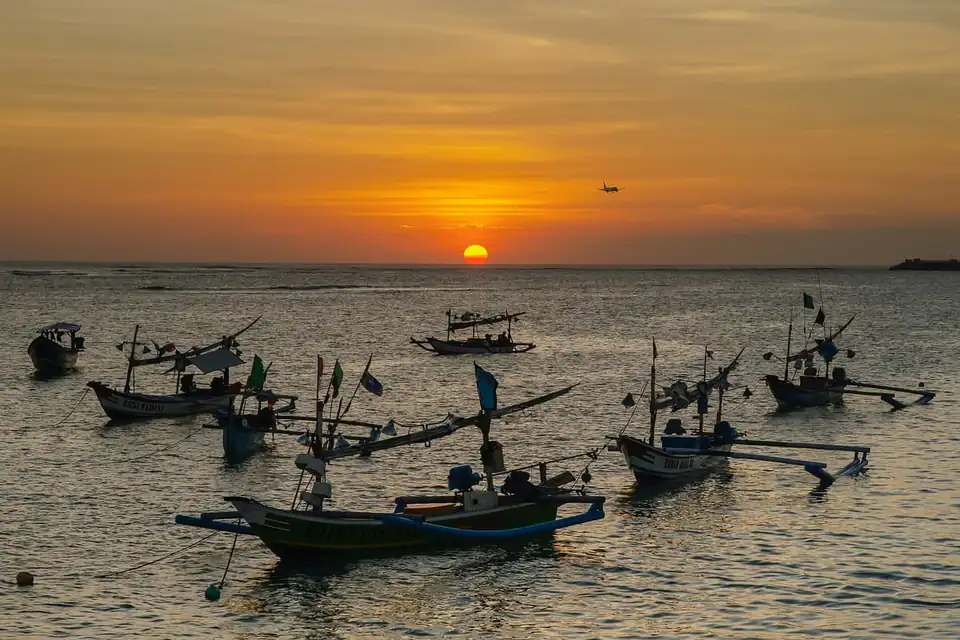
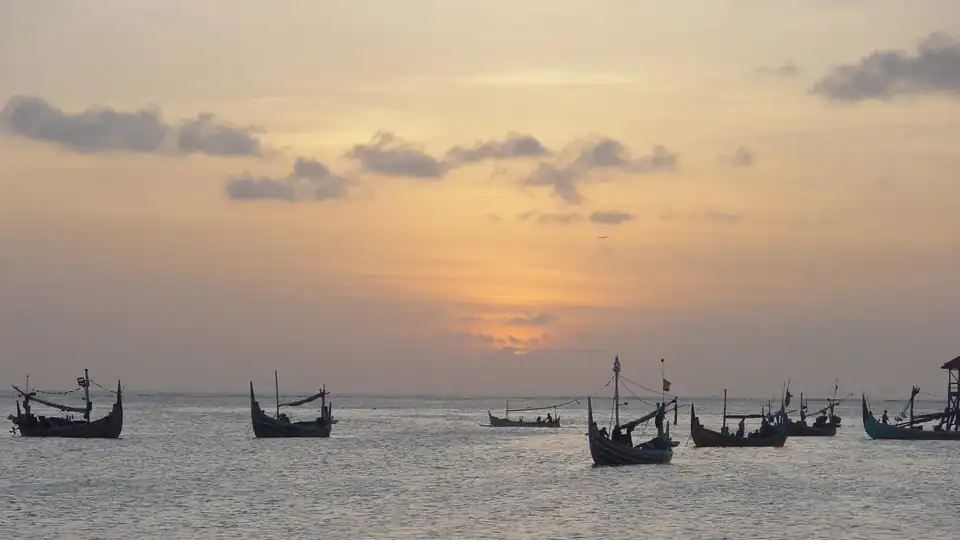
A fishing village before it became a resort, part of the island province of Bali in Indonesia, Jimbaran still runs on that tradition. Boats work the bay, a busy morning fish market supplies the grills, and the beach fills each dusk with tables and the smell of coconut-husk fires. Above the town, a colossal statue watches over the south of the island, adding a cultural landmark to a place best known for its food and its calm water.
Why choose Jimbaran
Jimbaran suits travellers who want a calmer beach and a memorable dinner without straying far from the airport or the sights of the south. The appeal is gentle: a sheltered bay for easy swimming, a string of resorts along the sand and, above all, the beachfront seafood grills that have made its name. It is quieter than Kuta and less polished than Seminyak, occupying a comfortable middle ground.
The town also makes a strategic base. From the neck of the Bukit it is a short hop north to the beaches and nightlife of Kuta and Seminyak, and south to the surf and cliffs of Uluwatu. Couples and families often pick Jimbaran for that balance of calm evenings and easy access to the wider south.
The mix of visitors reflects that range. Honeymooners settle into the luxury resorts along the sand, families take rooms with pools set back from the beach, and budget travellers find guesthouses and warungs in the lanes behind the bay. A simple room can be found from around Rp 350,000 a night (about 22 US dollars), while the premium beachfront resorts run into the millions of rupiah. Because Jimbaran sits so close to Ngurah Rai airport, it also works well for a single night at the start or end of a trip, letting you enjoy one seafood dinner before an early flight without a long transfer in Bali’s slow southern traffic.
The seafood grills
Jimbaran’s beachfront seafood restaurants are the reason many people come. Clusters of grills set their tables directly on the sand and cook fresh fish, prawns, squid and lobster over fires of coconut husk, often letting diners choose their seafood by weight before it is cooked. The result is a simple, memorable meal eaten with the tide a few metres away.
Timing matters: the tables fill in the late afternoon as the sun drops towards the water, and the sunset is part of the experience. Prices range widely, so confirm the cost per kilo before ordering, particularly for lobster and larger fish. A grilled fish platter for two with rice, vegetables and sambal often lands somewhere around Rp 200,000 to Rp 400,000 (roughly 13 to 26 US dollars), while lobster is sold by weight and can push a bill far higher. Ask for the price per kilo in writing and weigh your choice in front of you to avoid surprises when the bill arrives.
The grills cluster in three main areas: Muaya beach in the centre, the strip near Kedonganan to the north, and a few spots at the southern end of the bay. Most set out plastic tables and fairy lights on the sand and cook to a similar formula, so the choice comes down to atmosphere and how busy each looks. Balinese sambal matah, made from raw shallots, lemongrass and chilli, is the classic accompaniment. Booking a table for the hour before sunset is worth doing at weekends and through the July and August peak, when the beach fills quickly with both visitors and Indonesian families down from Denpasar.
The bay and beach
Jimbaran Bay is a long, calm crescent, sheltered enough that the sea here is gentler than the surf beaches of the west coast. The wide sand shelves gradually, suiting paddling and easy swimming at the right tide, and the bay’s curve gives it a sense of enclosure and calm. It is a beach for strolling, sunbathing and sunset rather than surfing.
At the northern end, Kedonganan beach continues the sand and is home to a busy morning fish market that supplies the local grills. The market is worth an early visit to see the day’s catch come in and understand where the evening’s seafood comes from. Along the bay, resorts and warungs alike make the most of the calm water and the long views west.
Tides shape the day here more than most visitors expect. At low tide the sea draws back over the flat sand, leaving wide shallows that are fine for children to paddle in but too shallow for a proper swim, while high tide brings the water close to the restaurant tables. A quick check of a tide chart helps if swimming is the priority, since the difference across the bay can be considerable. Mornings tend to be calm and clear before the afternoon breeze picks up, making them the best time for a walk along the full length of the crescent from Muaya up towards Kedonganan.
Sunset itself is the fixed point of the day. The bay faces west across the sea towards the airport runway, so evenings often end with the silhouettes of departing aircraft climbing over the water as the sky turns. Bring a light layer for after dark, as the sea breeze can feel cool once the sun has gone, and keep an eye on belongings on the busier stretches of sand.
Garuda Wisnu Kencana
On the hills above Jimbaran stands Garuda Wisnu Kencana, a large cultural park built around a colossal statue of the god Vishnu riding the mythical bird Garuda. Completed in 2018 and among the tallest statues in the world, it rises high enough to be seen from across the south of the island, a modern landmark rooted in Hindu tradition.
The park surrounding the statue holds gardens, viewpoints and an amphitheatre where Balinese dance and cultural shows are performed daily. It makes an easy half-day outing from Jimbaran, combining big views over the peninsula with an introduction to the island’s mythology and performing arts. For families and first-time visitors it adds a cultural note to a stay otherwise focused on the beach.
Entry to the park costs around Rp 125,000 for adults (about 8 US dollars), and the site is large, with paved paths and shuttle buggies linking the main plaza, the statue base and the cliffside gardens carved from limestone. Allow two to three hours to see it properly, and check the daily performance schedule on arrival so you can time the Kecak fire dance or a Barong show. The middle of the day can be hot and shadeless on the open plazas, so a morning visit or a late-afternoon one, ending with the sunset Kecak, is more comfortable. The statue stands close to the road between the airport and Uluwatu, which makes it a natural stop on the way south to the cliffs.
Resorts and relaxation
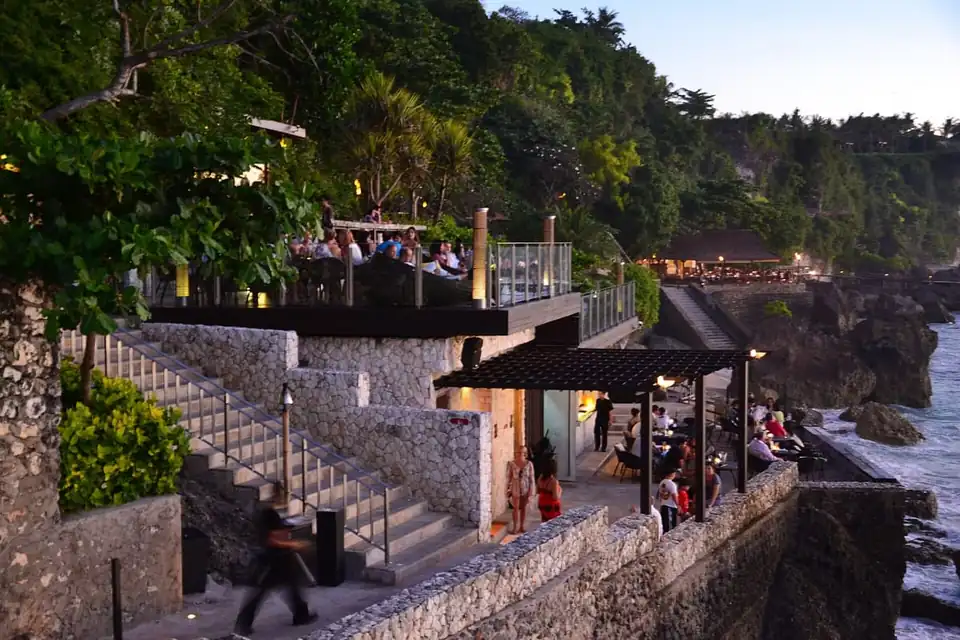
Jimbaran Bay is lined with accommodation, from luxury resorts occupying prime stretches of the sand to simpler hotels and warungs set back from the beach. The calm water and long sunset views make it a favoured spot for a restful, romantic stay, and several of the island’s better-known luxury properties sit along this coast.
Away from the beachfront dinners, days here tend to be quiet: a swim in the sheltered bay, time by a resort pool, a spa treatment and an early seafood supper. The pace is gentler than the resort towns to the north, which is much of the point. Those wanting more activity simply drive a short way to find it.
Balinese Hinduism remains part of daily life along the bay, and small canang sari offerings of flowers and incense appear each morning on doorsteps, shrines and the prows of the fishing boats. Visitors are welcome at temples provided they dress respectfully, covering shoulders and knees and wearing a sarong where one is required. Many resorts arrange spa treatments, cooking classes and yoga sessions, and a traditional Balinese massage locally costs far less than at home, often around Rp 150,000 to Rp 300,000 for an hour (roughly 10 to 19 US dollars). The combination of calm water, an early supper on the sand and an unhurried rhythm is why so many couples treat Jimbaran as a place to slow down rather than to sightsee.
Getting around and nearby
A scooter offers the most freedom for confident riders, while a private driver by the half or full day is the comfortable way to reach the wider Bukit and the beaches of the north without parking hassle. Ride-hailing apps operate here, and the airport is only twenty to thirty minutes away, though traffic on the main roads can slow short journeys.
Bali has no trains, so getting around means the road. Scooter hire runs from about Rp 70,000 a day (roughly 5 US dollars), and a helmet and an international driving permit are legally required. A private driver for a full day of sightseeing across the south typically costs Rp 600,000 to Rp 900,000 (around 38 to 57 US dollars), which is often the easiest option for a family or a group. Grab and Gojek work well for shorter hops and give a fixed fare in the app, though some drivers are reluctant to enter certain resort forecourts. Metered Bluebird taxis are the reliable alternative when the apps are quiet.
Jimbaran’s position makes it a natural pairing with the rest of the south. The clifftop surf and sea temple of Uluwatu lie a short drive south, while the beaches of Kuta, the style of Seminyak and the surf-cafe scene of Canggu spread up the coast to the north. Inland, cultural Ubud makes an easy day trip or the next stop on a wider tour of the island. Quieter Sanur on the east coast, the departure point for boats to the Nusa islands, is also within reach for a day by the calm water or an onward hop to Nusa Lembongan.