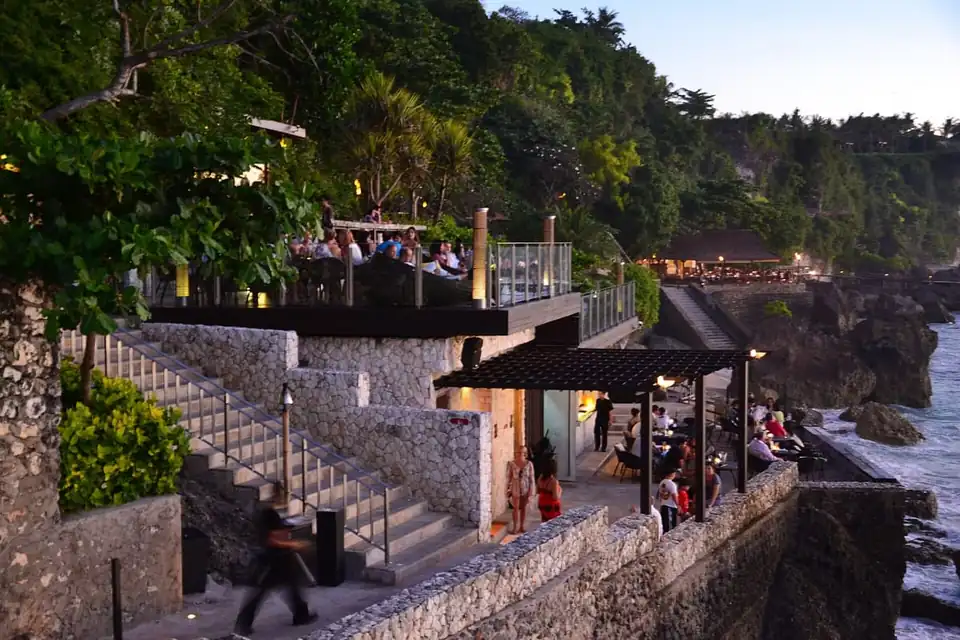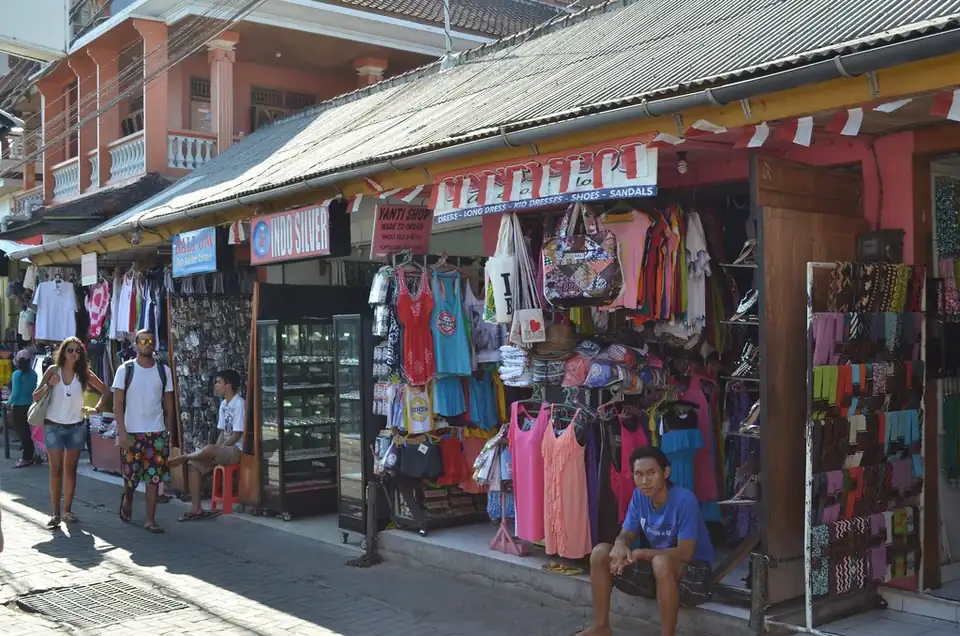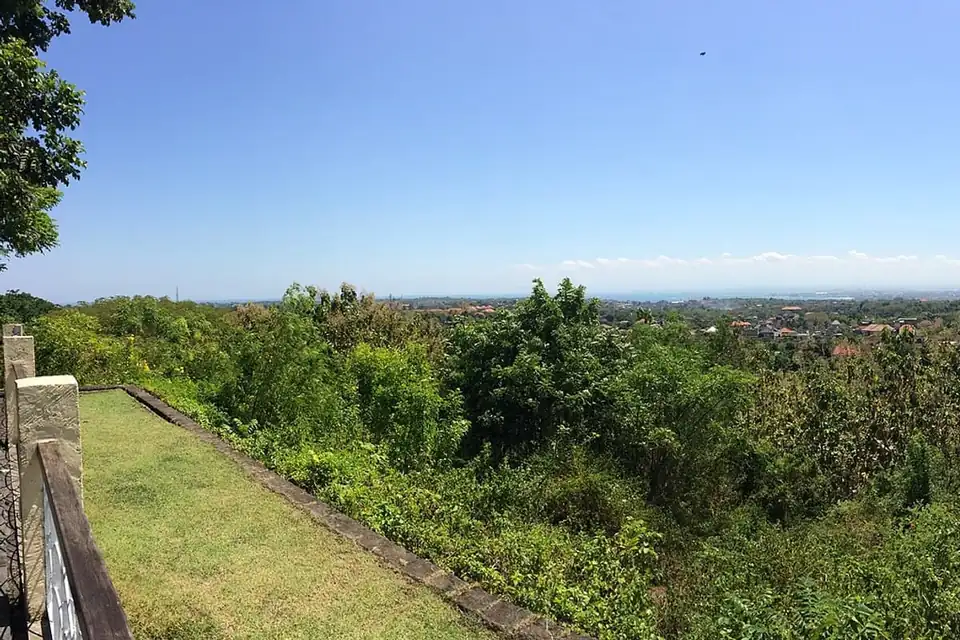
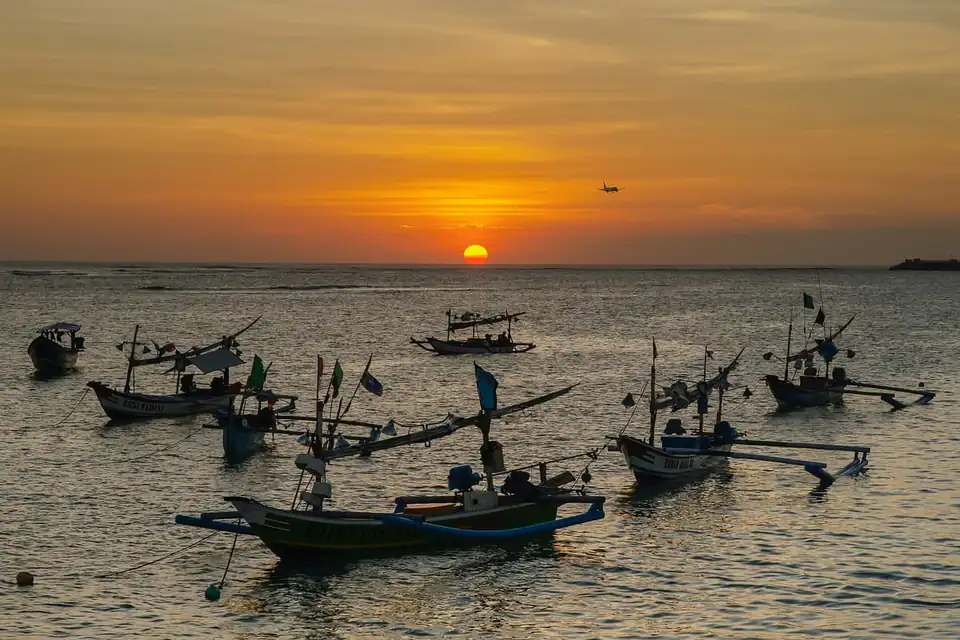
Kedonganan is a fishing village in Kuta district, Badung, on the northern side of Jimbaran Bay. Backpack Moments describes it as the neighbourhood north of Jimbaran and just south of the airport, which is about 15 minutes away by road. Visitors know it for two things: a white sand beach facing the sunset, and a fish market where the catch is sold and then grilled on the sand.
From fishing village to seafood strip
According to Indonesian Wikipedia, the village has long been a centre of fishing in south Bali. Tourism began around 1995, and by 2006 there were about 24 seafood cafes along the beach. That fast growth caused environmental, social and economic problems, and in 2007 the Badung regency and local leaders stepped in to manage the area. Today the beach still has rows of traditional jukung boats at its northern end, and boats come in through the evening.
The fish market
Budaya Bali calls the Kedonganan market the largest fresh fish market on the island. Tuna, snapper, grouper and mackerel are on sale, along with shrimp, crab, clams and lobster. Bali Buddies says the market opens at 7am and closes in the afternoon, and Backpack Moments gives 7am to 7pm. Boats land their catch from about 5am to 5:30am, so the early hours are for traders and the morning for visitors.
Prices are per kilogram, and you do not have to buy a full one. Bali Buddies (March 2026) lists octopus at Rp 75,000, shrimp at Rp 100,000 to 200,000, crab at Rp 160,000, whole fish at Rp 60,000 to 80,000, snapper at Rp 75,000 and lobster at Rp 480,000 per kilo. Backpack Moments (January 2025) has red snapper at Rp 90,000 to 130,000 and tuna at Rp 35,000 to 50,000. Payment at the market is cash only, and vendors quote different prices for the same fish, so it pays to walk the whole market before you buy.
Having it cooked
Take your bag of seafood to one of the warungs by the beach. They weigh it first and charge to grill it, which Bali Buddies and Backpack Moments put at about Rp 15,000 per kilo and Budaya Bali at Rp 20,000. The Budaya Bali interviewee said the price includes white rice and two sambals, terasi and matah. Backpack Moments says the food usually arrives within an hour, and on busy nights it can take longer. Tell the cook how spicy you want it and whether to add garlic.
Bali Buddies recommends allowing at least 3 hours for the whole experience, and mentions roving local bands who play at tables; tip them as you like. If you only want a seated meal, the restaurants on Jimbaran Bay stay open at night, though Bali Buddies warns that these prices are not as low as buying at the market yourself.
Planning the visit
Go in the morning to see the market at its busiest and the afternoon for sunset. Start with the Jimbaran region guide, then compare the larger strip at Jimbaran Bay. If you have time, the hills above have Garuda Wisnu Kencana, and our pages on things to do in Jimbaran and where to stay in Jimbaran cover the rest of the bay.