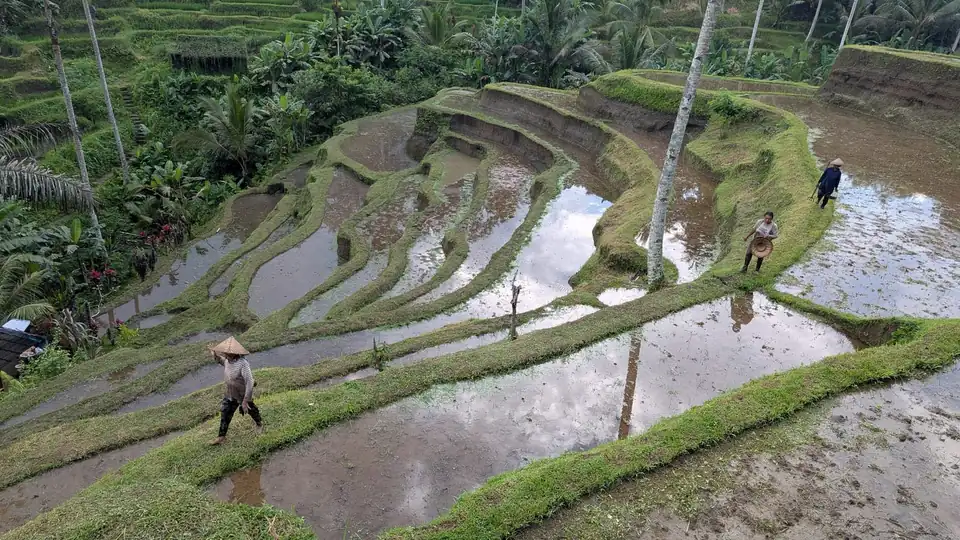
The character of Bali comes from its people. The Balinese are an ethnic group of their own, with a language, an art and a form of Hinduism that set them apart from the rest of Indonesia. There are roughly 4.3 million of them on the island, and their lives are organised around three things above all: the village, the temple and the family. Understanding how these fit together explains much of what a visitor sees, from the daily offerings on the pavement to the processions that stop the traffic.
Balinese society is unusually communal. People belong to a neighbourhood association, share the labour of ceremonies and festivals, and live in extended family compounds rather than separate houses. Around this traditional frame has grown a modern economy that runs, in the south especially, on tourism. The two sit side by side, and the ceremonial life carries on regardless, often just a few streets back from the beach clubs.
A distinct people within Indonesia
Indonesia is home to hundreds of ethnic groups, and the Balinese are one of them, numbering a little over four million. What marks them out most sharply is religion. While Indonesia as a whole is the world’s most populous Muslim-majority country, Bali is overwhelmingly Hindu, and this faith runs through every part of Balinese life. The language, the calendar, the art and the social order all carry its imprint.
Their history helps explain this. When Islam spread through Java several centuries ago, Hindu courts, priests and artists moved east to Bali, and the island became the refuge of a Hindu tradition that had once been widespread. That inheritance, adapted over the centuries into a form all its own, is why Bali feels culturally different the moment you arrive, even though it is fully part of the modern Indonesian state.
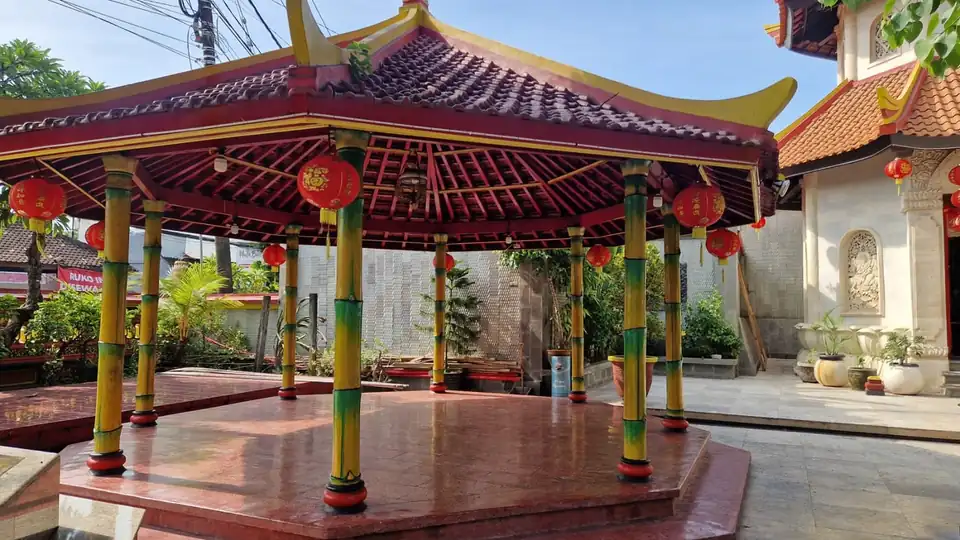
The Balinese are not the whole population. Javanese and Madurese families have come for work in the south, Sasak traders from Lombok run stalls and boats, and Chinese-Balinese communities have been part of the island’s towns for generations. Their mosques and temples sit among the Hindu shrines, and in the busy south you will hear as much Javanese and Sasak on the street as Balinese.
The banjar and village life
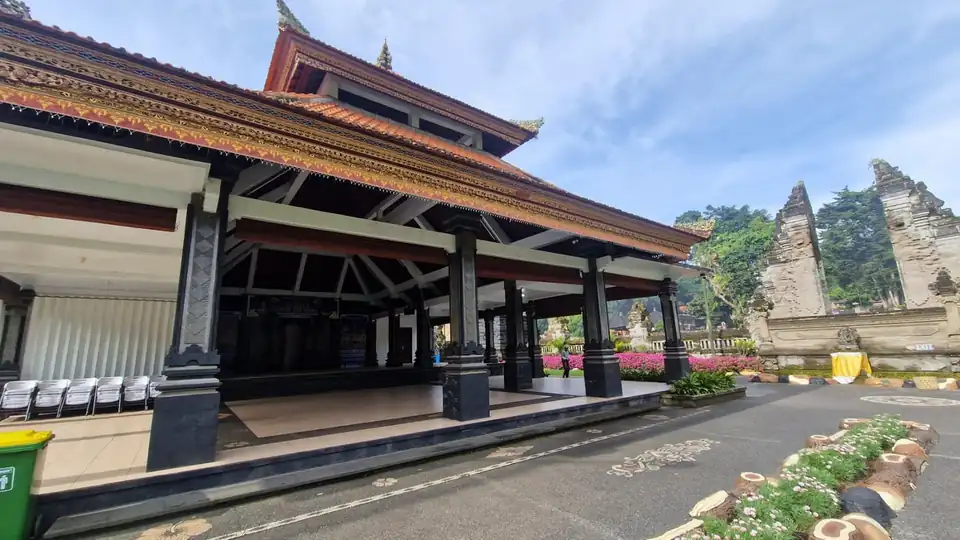
The basic unit of Balinese community is the banjar, the neighbourhood association to which every household belongs. The banjar organises the shared work of village life: temple ceremonies, festivals, weddings and, importantly, cremations, which are large communal events. It meets regularly in its own hall, takes decisions together, and expects its members to give time and labour to collective tasks.
This system means that Balinese villages remain tightly bound, with strong mutual support and strong social obligation. A family can rely on its banjar in times of need, but it is also expected to turn out for the ceremonies and duties of others. Above the banjar sits the wider village, the desa, which manages the village temples and land. For visitors, the banjar is most visible when a ceremony fills a street or a whole neighbourhood turns out in temple dress.
The family compound and caste
Most Balinese families live not in a single house but in a walled compound of small buildings set around courtyards. Separate pavilions serve for sleeping, cooking, receiving guests and holding family ceremonies, and the most sacred corner, towards the mountains, holds the family temple. Extended families often share a compound across generations, and its layout follows religious ideas about sacred and profane directions.
Balinese society also has a system of social groups shaped by Hinduism, often called caste. Most people belong to the commoner majority, with smaller priestly, noble and warrior groups making up the rest. Caste today shows mainly in personal titles and names, in ritual roles, and in the level of politeness used when speaking, since the Balinese language changes according to the status of the person addressed. In ordinary modern life its weight is far lighter than it once was.
Artisans, work and the modern island
The Balinese have long been famous as artists and craftspeople, and much of their art was made for the temples and ceremonies at the centre of life. Villages tend to specialise: some are known for woodcarving, others for stone carving, painting, weaving, or working silver and gold. The area around Ubud is a centre for painting and carving, while nearby Celuk is known for silverwork. A great deal of what visitors buy carries on these living traditions.
Alongside the crafts, the modern economy of the south rests heavily on tourism, which employs Balinese in hotels, transport, restaurants and guiding. Denpasar, the capital, is the commercial hub, while the rural centre and north remain more traditional and agricultural. For most Balinese, the demands of work and the demands of temple and community are woven together rather than separate, and the ceremonial calendar continues to shape the year. To hear how they speak, see our page on language; to understand what they believe, see religion.