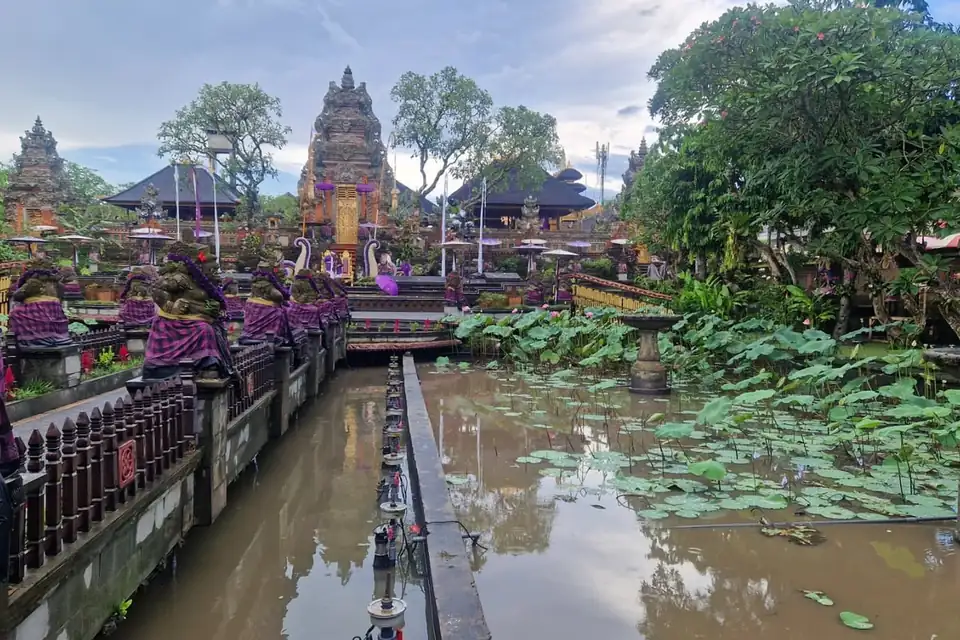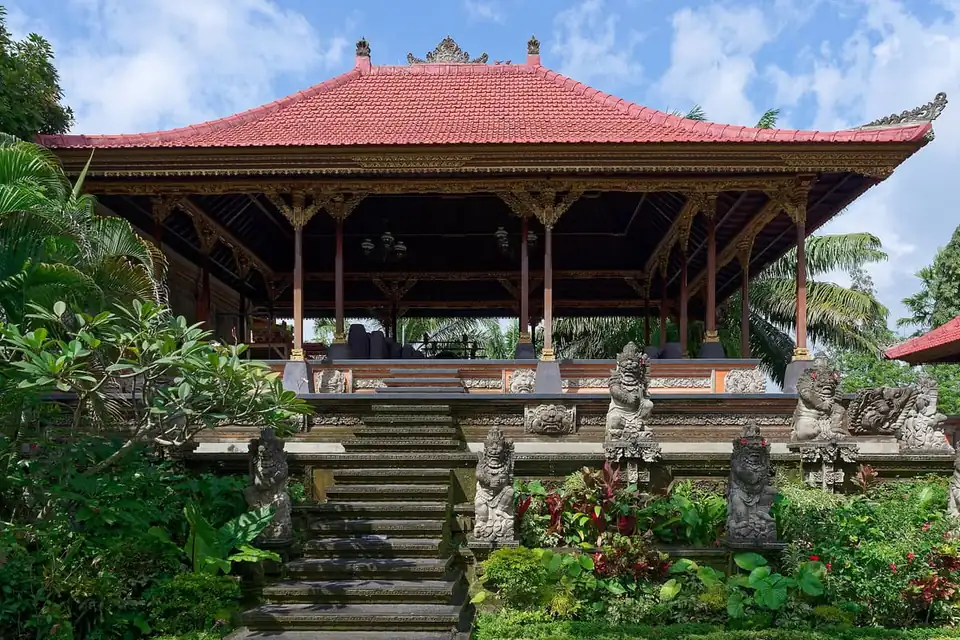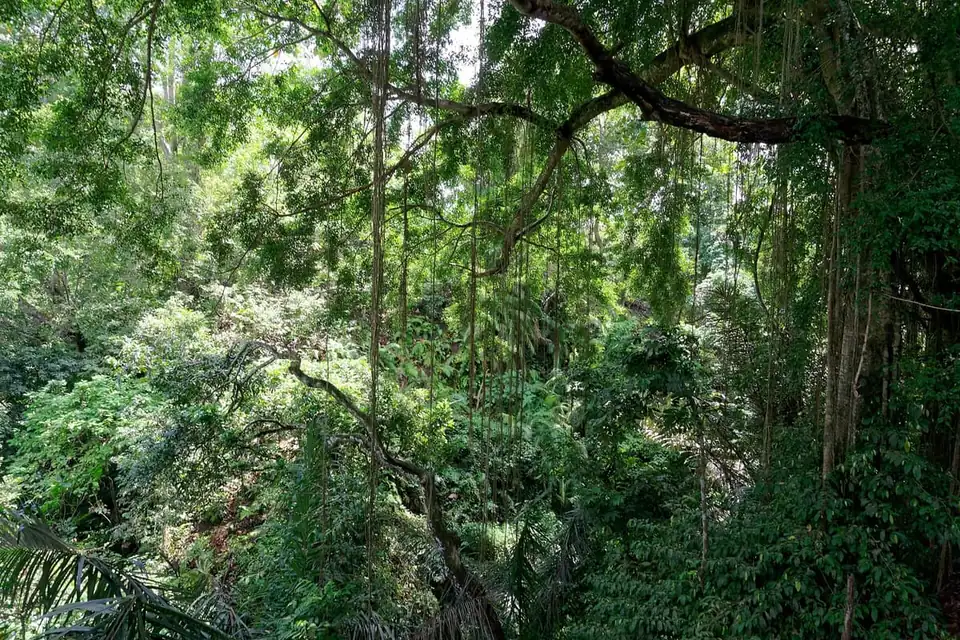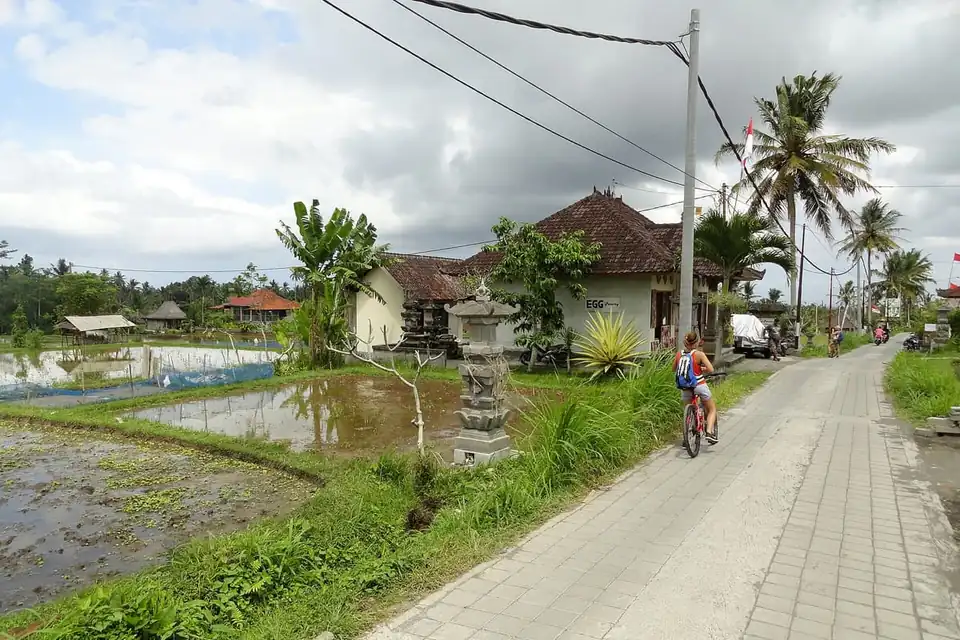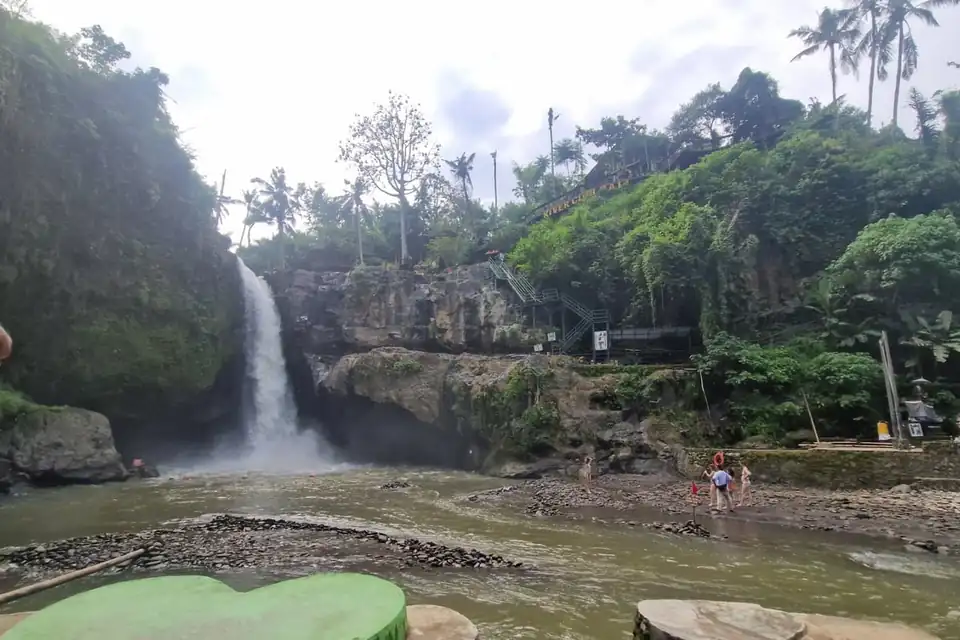
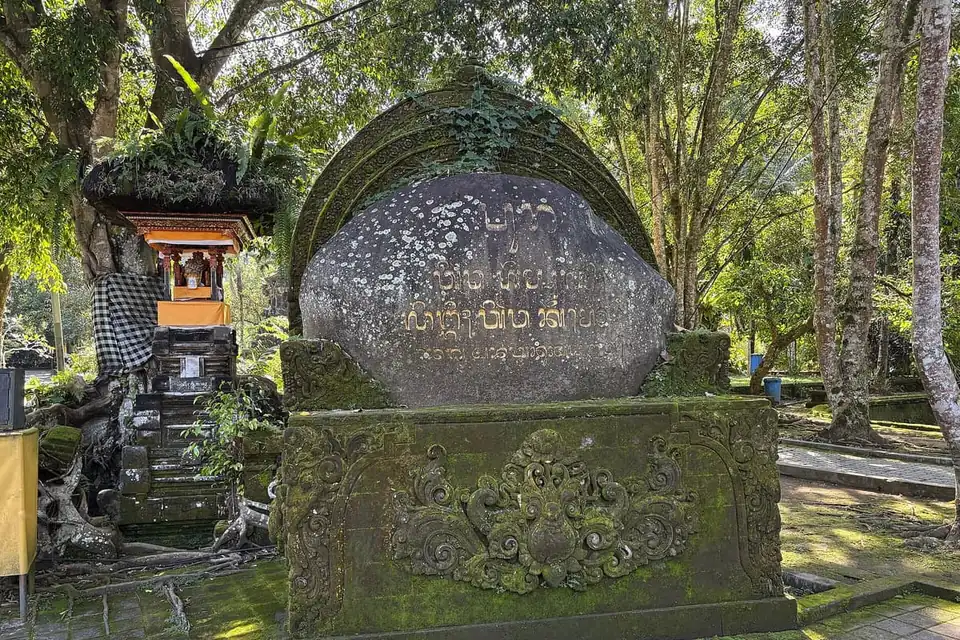
Tirta Empul is a working water temple built around a spring at Tampaksiring, about 15km north of Ubud, and one of the holiest temples on the island. The spring rises in the temple’s own courtyard and is the source of the Pakerisan river. Balinese Hindus have bathed here since the temple was founded in 962 AD, under the Warmadewa dynasty, and they still do, every day.
The temple is dedicated to Vishnu. Wikivoyage notes that most of the present buildings are modern reconstructions; the spring is what is old.
The story behind the spring
The name means, roughly, water that rises from the ground. The local myth explains it with a battle. King Mayadenawa, who had forbidden his people to make offerings to the gods, fled north of Tampaksiring when the god Indra came after him and created a poisoned spring that killed Indra’s soldiers when they drank. Indra drove his spear into the ground, clean water burst out, and it brought his army back to life. That water is Tirta Empul.
It is not only a legend site. The spring feeds the Pakerisan watershed, which UNESCO lists as part of the Cultural Landscape of Bali Province and describes as the oldest known irrigation system on the island. Indonesian sources name Tirta Empul as one of the temples inside that component, alongside Candi Gunung Kawi, also in Tampaksiring.
How the bathing pools work
The temple follows the usual three-courtyard plan: the outer yard, the middle yard and the inner sanctum. The bathing is in the middle courtyard, which has two pools and 30 spouts. The spouts are grouped and named: Pengelukatan, Pebersihan and Sudamala, and the Pancuran Cetik, the poison spout.
Bathers wear a sarong into the water, pray, and work along the line, putting their heads under the spouts in turn. Visitors may take part as long as they are dressed for it and follow the order, and on public holidays domestic and foreign visitors queue together with Balinese worshippers. Watch for a few minutes before you get in. At Galungan the village’s sacred barong masks are bathed here too.
Bring a change of clothes and something to carry wet things in. Wikivoyage’s advice for the temples around Tampaksiring is to find a knowledgeable guide at the site if you go independently, because much of the cultural and spiritual meaning is lost without one. Balinese Hindus who come to pray and bathe do not pay for entry.
What the ticket covers
The Gianyar Tourism Ticketing site lists Rp 75,000 for foreign adults and Rp 50,000 for children aged 5 to 11, with under-fives free. That is up from Rp 50,000 for adults in 2023. The sarong you must wear inside comes with the ticket.
Be wary of anyone selling a separate “melukat package” at a premium. Websites offering guided rituals say the standard ticket does not include the pools; news reports and travel guides describe visitors simply joining the queue in a sarong. Ask at the official ticket counter, not a tout, what you are allowed to do.
The temple keeps a clear rule on menstruation: Bali’s provincial guidance for foreign visitors bars entry to the inner and middle courtyards of temples while menstruating, and the pools are in the middle courtyard. Dress modestly throughout.
The palace on the hill and the trip back
Above the temple stands the Istana Tampaksiring, one of Indonesia’s six presidential palaces, built between 1957 and 1960 at President Sukarno’s initiative and overlooking the temple and Mount Agung. Barack Obama toured the temple on 27 June 2017.
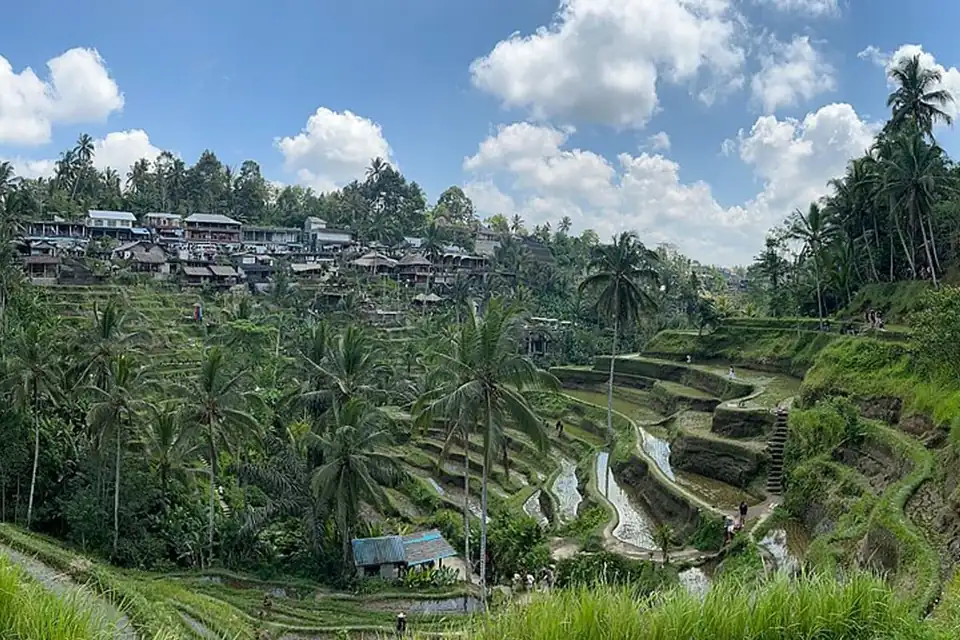
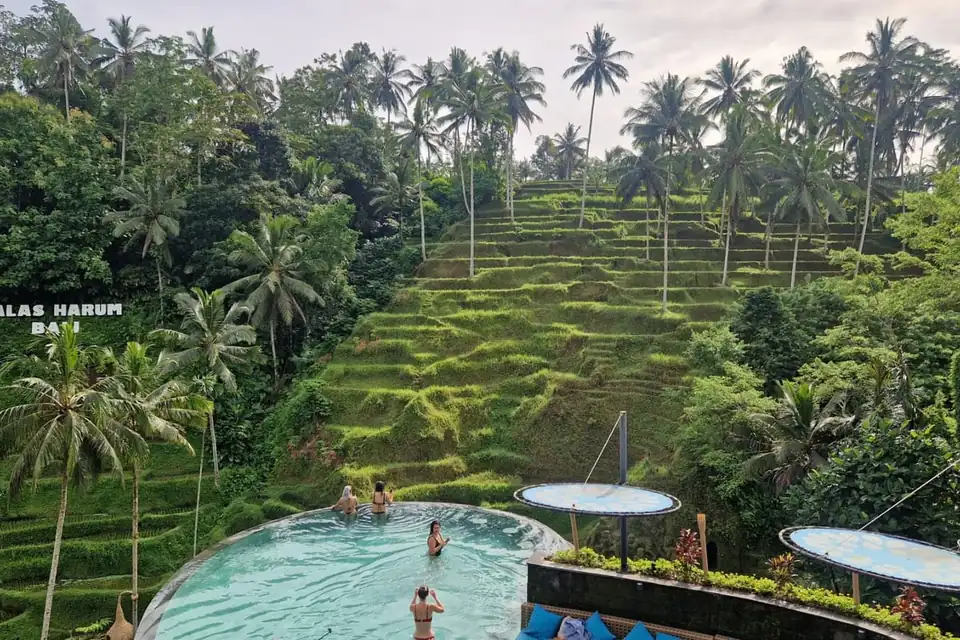
Getting here from Ubud means following the Tegallalang road north for about 8km and then cutting across country for 7km, so it pairs easily with the Tegallalang Rice Terraces and Alas Harum on the way. Online ride-hailing is thin up here and finding a car back can be hard, so keep your driver. For the other end of the island’s water temple network, Pura Ulun Danu Batur on the edge of the Batur crater lake is the supreme water temple. More day trips are in our list of Ubud tours.