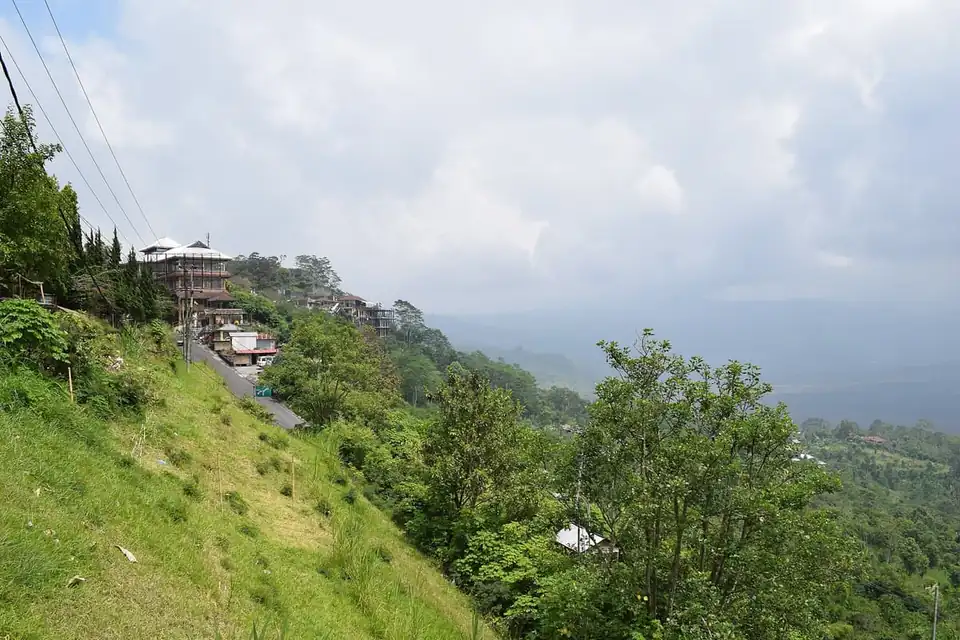
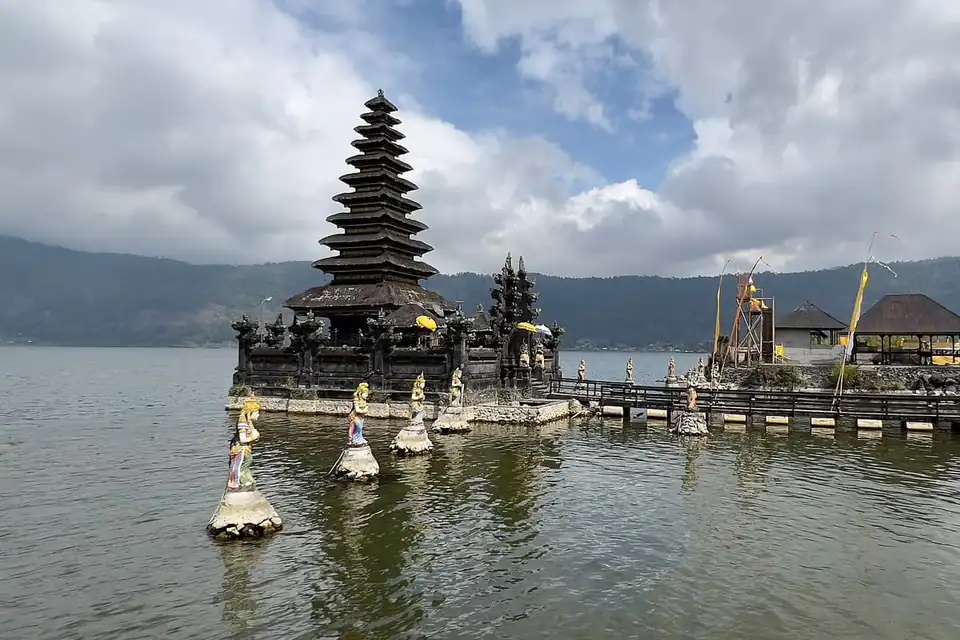
Pura Ulun Danu Batur, also called Pura Batur or Pura Ulun Danu, stands in Batur village on the rim of the Batur caldera, a short drive northwest of the Penelokan viewpoint. It is one of the Kahyangan Jagat, the temples that serve the whole island, and it represents the north. It is dedicated to the god Vishnu and to Dewi Danu, the goddess of Lake Batur. Ulun means head or source and danu means lake, so the name reads as the temple at the source of the lake. Since 2012 it has been one of the four sites that make up the Cultural Landscape of Bali Province on UNESCO’s World Heritage list.
The temple of the water
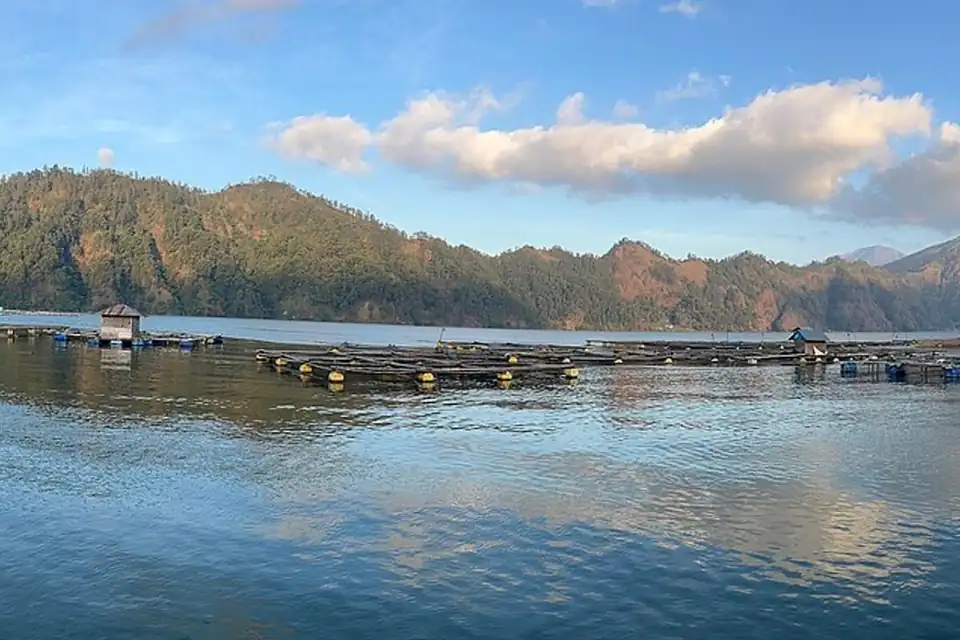
Lake Batur is the main water source for farming in Bali, and that is the root of the temple’s standing: it is the shrine of the water that reaches the island’s rice fields. Underground streams carry the lake’s water to springs elsewhere in Bali, which are held to be holy. Wikivoyage reports that a virgin priestess lives at the temple to represent the goddess, served by 24 priests chosen as young boys who keep the role for life. Old palm-leaf texts name the temple among the sad kahyangan, the six great temples of Bali.
Moved by the volcano
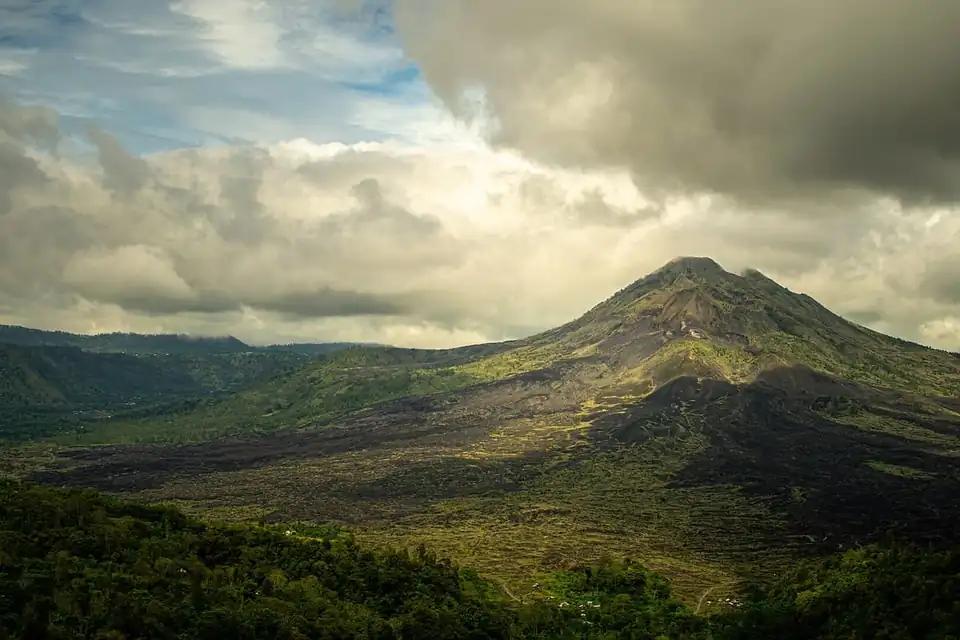
The temple dates back to the 17th century, but it has not always stood here. Until 1926 the temple and the village of Batur, then called Karang Anyar, lay at the south-west foot of Mount Batur. In 1917 a lava flow stopped at the temple gates, which the villagers took as a good omen, and they stayed. The eruption that began on 2 August 1926 and ran until 21 September was different: lava covered almost the whole compound and the village. The 11-tiered main meru survived and was carried uphill, together with the temple’s gamelan and other heirlooms.
The people of Batur sheltered for about two years at Bayung Gede, which also kept the temple’s sacred objects, before settling on the rim where the temple now stands. Villages including Buahan, Sekardadi and Bonyoh helped with the move. In 2026, the centenary of the eruption, known in Batur as the Rarud Batur, the village held its first Batur Village Festival from 2 to 8 August. On 3 August thousands of villagers walked the evacuation route from Batur Let, the site of the old village, through Bayung Gede to Pura Ulun Danu Batur.
Inside the compound
Pura Batur is really nine temples with 285 shrines and pavilions between them, dedicated to the gods of water, farming, holy springs, the arts and crafts. The principal temple, Pura Penataran Agung Batur, has five main courtyards, which fall into three zones: the outer jaba pisan, the middle jaba tengah and the innermost jero. In the jero stands the 11-tiered meru that survived the eruption. Wikipedia says it is dedicated to Shiva and his consort Parvati, while Wikivoyage gives it to the lake goddess. Beside it are three 9-tiered merus for Mount Batur, Mount Abang and Dalem Waturenggong, the deified Gelgel king who ruled from 1460 to 1550. The other eight temples include Penataran Pura Jati, Pura Tirta Bungkah and Pura Tuluk Biyu.
Visiting
Traveloka lists the temple as open to visitors from 8am to 6pm. Entry is paid at the gate, and published figures run from a Rp 10,000 donation (Wikivoyage) to Rp 20,000 (Traveloka) and Rp 35,000 (Bali Travel Hub), so bring small notes. Parking is listed at Rp 5,000 for a car and Rp 2,000 for a motorbike. Foreign visitors also pay the Rp 50,000 Kintamani area levy, collected at points on the roads into the area, one of them south of Desa Adat Batur.
The main festival, the odalan, falls at Purnama Kedasa, the tenth full moon of the Balinese calendar, usually in late March or early April. Do not confuse this temple with Pura Ulun Danu Beratan in Bedugul, or with the two lakeside temples on Lake Batur, the small Pura Segara Ulun Danu Batur and Pura Hulundanu Batur in Songan, which held its once-a-decade Manca Wali Krama ceremony from August to October 2026.
For more, see our guide to Kintamani, things to do in Kintamani and Kintamani tours.