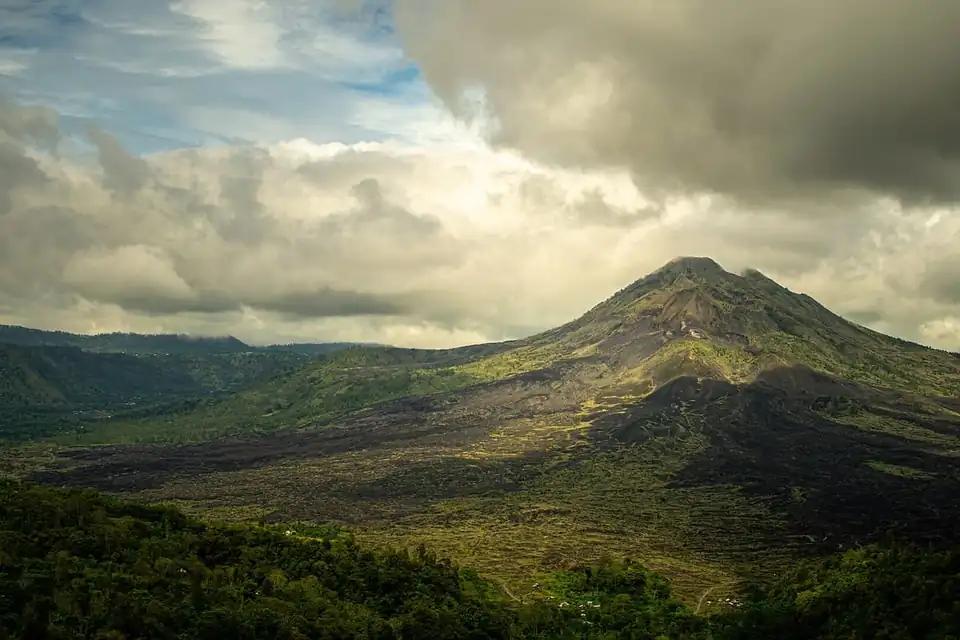
Lake Batur, Danau Batur, is the volcanic lake on the floor of the Batur caldera in Kintamani, Bangli regency, about 30 km northeast of Ubud. It lies southeast of the active cone of Mount Batur and is the largest lake in Bali. In shape it is a crescent about 7.5 km long and up to 2.5 km wide, with a shoreline of about 22 km and an area of about 16 square kilometres. Eight villages border it, among them Kedisan, Buahan, Songan and Terunyan.
A lake that waters Bali
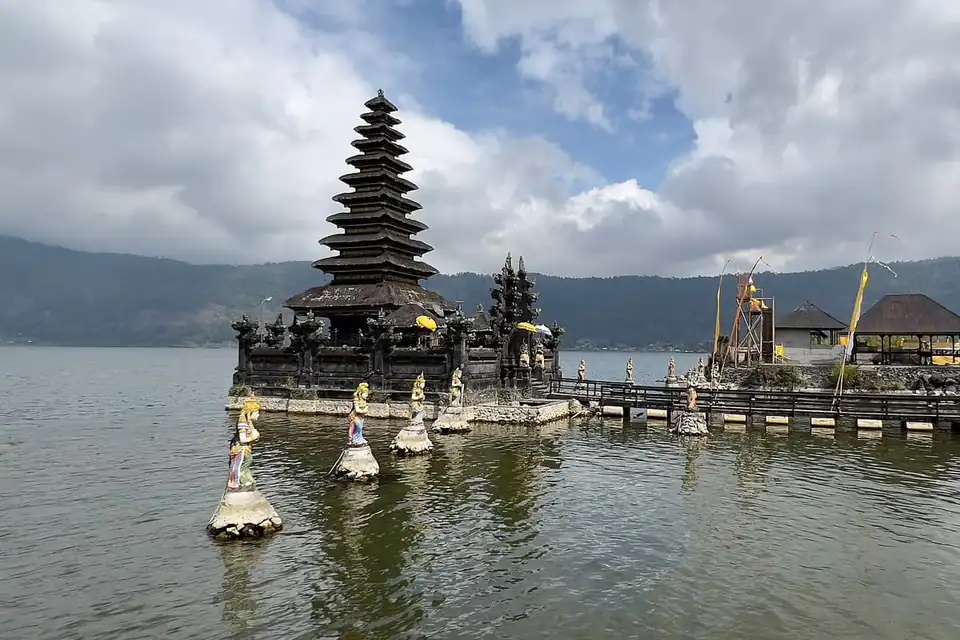
The lake is the main water source for farming on the island, and that is why the great water temple, Pura Ulun Danu Batur, is dedicated to its goddess, Dewi Danu. Water from the lake flows underground and comes up as springs in several parts of Bali, and those springs are treated as holy water, tirta suci.
At Songan, one of the lakeside villages, stands a separate temple, Pura Hulundanu Batur. In 2026 the Songan community held its Tawur Manca Wali Krama there, a ceremony held once every ten years. It ran from 12 August to 7 October, with a Danu Kerthi rite honouring water on 8 September and the high point on 26 September.
Hot springs at Toya Bungkah
At the foot of the volcano, the village of Toya Bungkah has several hot springs linked to Mount Batur’s activity, and their water runs into the lake. The springs have been developed for visitors, and many trekkers stop here after the descent. One complex, Toya Devasya, has nine hot pools and one lake-edge pool open for night bathing from 7pm to 10pm. In July 2024 it charged foreign visitors Rp 300,000 per adult and Rp 200,000 per child; residents with a Bali identity card paid Rp 75,000. Prices change, so check before you go.
Boats to Trunyan
Trunyan, or Terunyan, on the eastern shore, is one of the best-known villages of the Bali Aga. It is known for its cemetery, Sema Wayah, where the dead are not buried or cremated but laid under a large tree, the taru menyan. The usual way there is by boat from Kedisan pier. Fares are fixed by a regulation of the regent of Bangli and are set per boat by the number of passengers. In December 2024 a foreign visitor alone paid Rp 733,000, and a group of seven Rp 1,045,000, including entry to the village sights.
Traffic is light most of the year, about 70 boats a month in August and September 2026, and busier over the Christmas holidays. You can also drive the narrow road along the south shore through Kedisan and Buahan to Abang, where it ends, and walk on to Trunyan, about 4 km, on steep paths.
A lake under pressure
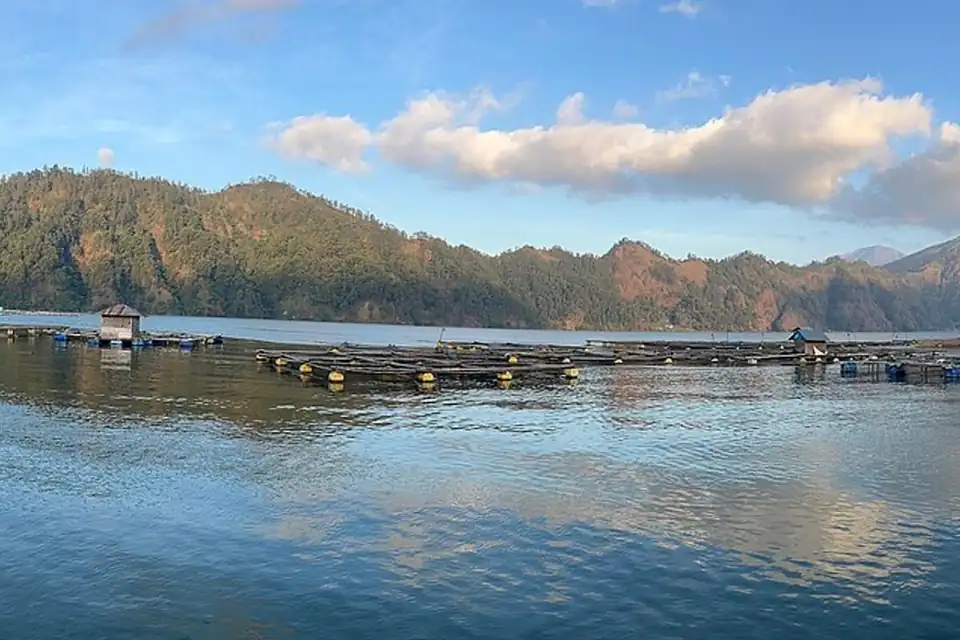
The caldera is an important farming area, and irrigation water pumped from the lake flows back into it with fertiliser. Tilapia, ikan mujair, are raised in floating cages. Every year between July and September, in bad weather, sulphur-laden water rises from the bottom and strips the oxygen from the surface, a process known as upwelling. On 20 and 21 July 2026 the water off Abang Dukuh, Buahan and Kedisan turned cloudy, and at least 25 tonnes of farmed tilapia died. A similar die-off in June 2011 stretched from Toya Bungkah to Buahan.
At a seminar in Kintamani in August 2026, Professor Ni Luh Kartini of Udayana University said the lake was now only about 64 to 80 metres deep. Two reports of her talk give the original depth as 120 and 150 metres. She said the water has dropped from drinking quality to Class 3, fit only for farming and fish, and that the red devil, a predatory fish, now makes up about 80 per cent of the fish in the lake, crowding out local species. In March 2026 more than 5,000 people took part in a clean-up at four points on the shore, from Songan to Trunyan, and 10,000 tilapia fry were released.
Getting there
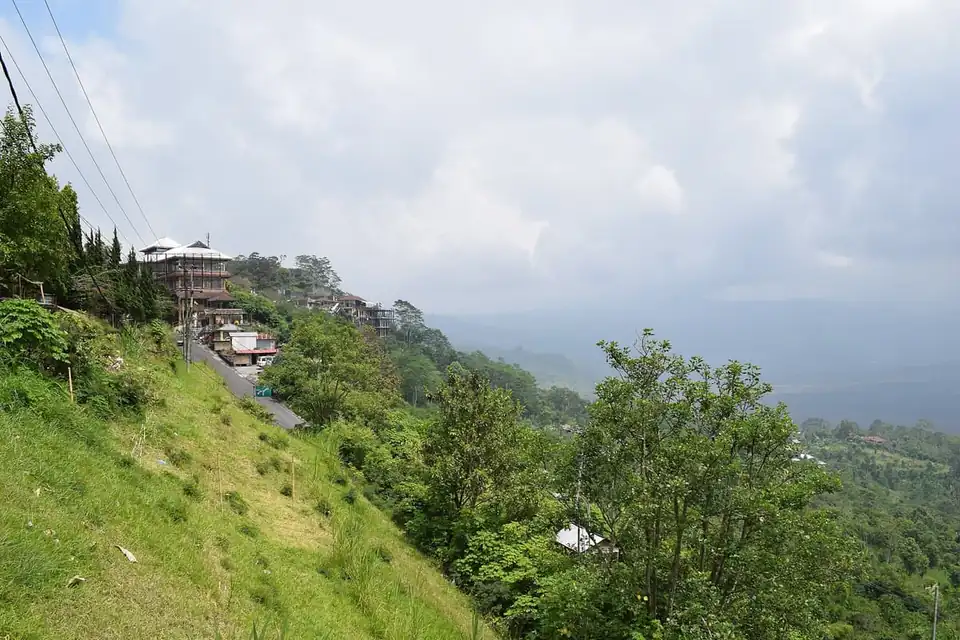
From the Penelokan viewpoint on the caldera rim a steep, winding road drops down to Kedisan. The rim is noticeably cooler than the coast, so bring a layer. Visitors in private vehicles pay the Kintamani area levy on the way in, Rp 50,000 for foreign visitors. For the wider area, see our guide to Kintamani, things to do in Kintamani and where to stay in Kintamani. Most visitors who stay overnight for the trek sleep down by the lake at Toya Bungkah or Kedisan.