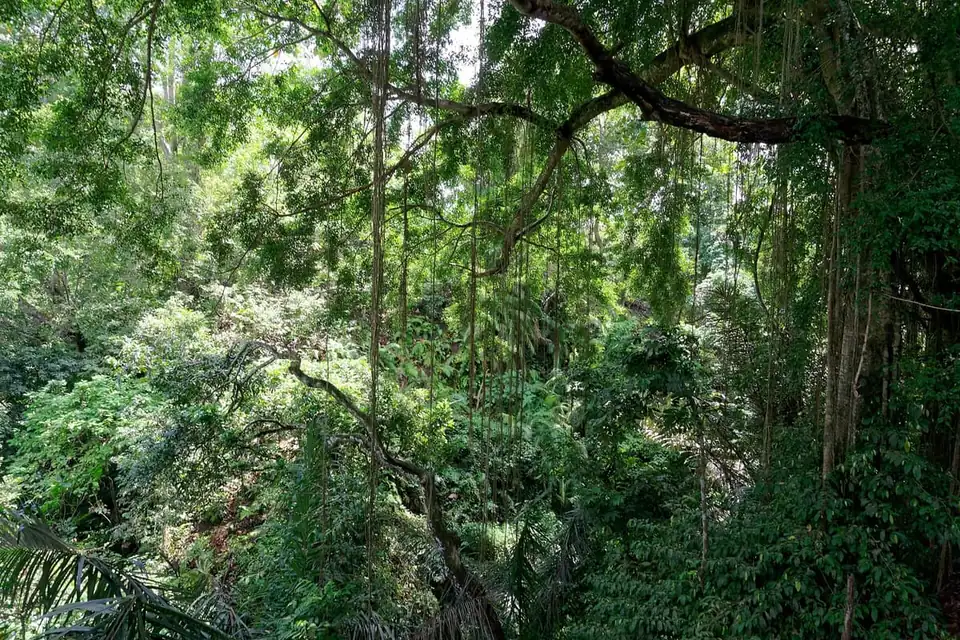
The Monkey Forest is not a zoo or a park run by the regency. It is a sacred forest of about 12.5 hectares at the bottom of Jalan Monkey Forest, owned by the village of Padangtegal, with village members on its governing council. Its Balinese name is Mandala Suci Wenara Wana.
It is also one of the busiest sights on Bali. About 1.3 million people went through the gates in 2017, which is worth knowing before you picture a quiet stroll in the jungle.
A thousand monkeys in seven territories
The sanctuary counts approximately 1,054 long-tailed macaques, split into seven troops named after the parts of the forest they hold: Cemetery, Central, Michelin, East, Temple, South and New Forest. Each troop has somewhere between 140 and 171 animals. The New Forest troop lives in a section planted in the 1990s because the population was outgrowing the original woodland.
The troops do not get on. In the dry season some of them have to cross a neighbour’s ground to reach the stream, and fights over territory, females, food and rank are a normal part of the day. You see all of it at close range: grooming, mothers with infants, fights, and monkeys sitting right beside you on the path.
Keepers feed the monkeys sweet potato at least nine times a day, topped up with banana, papaya leaf, corn, cucumber and coconut. Visitors are not allowed to feed them anything. Bananas were once sold at the gate for that purpose, until the monkeys became obese and the sale was stopped.
The temples you can only look at
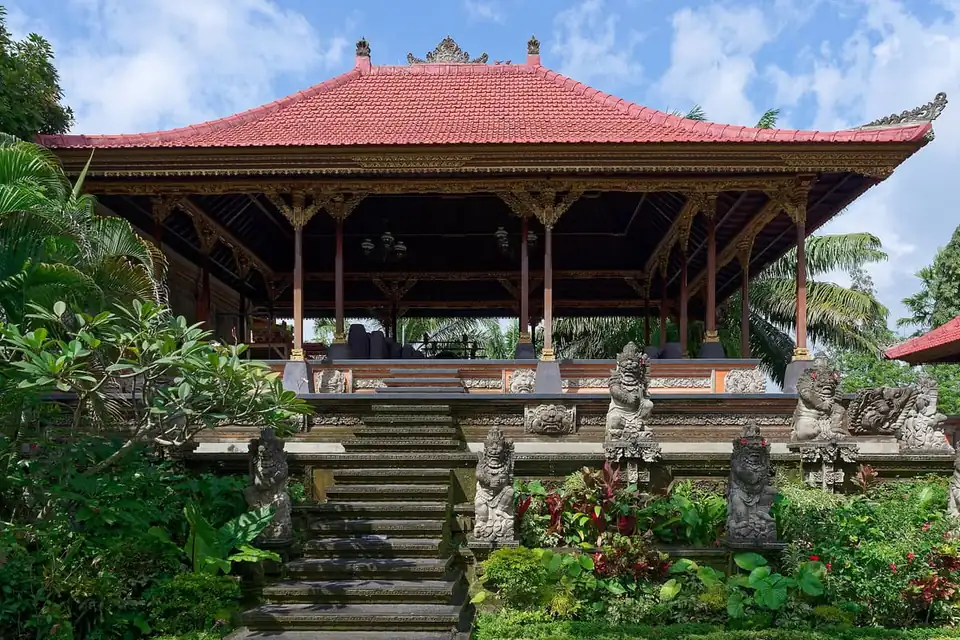
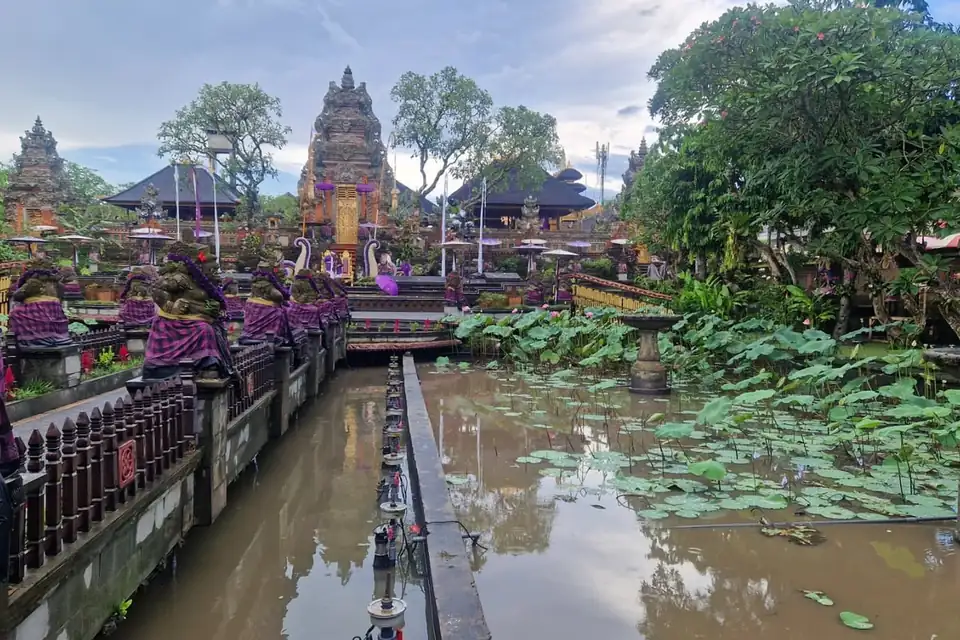
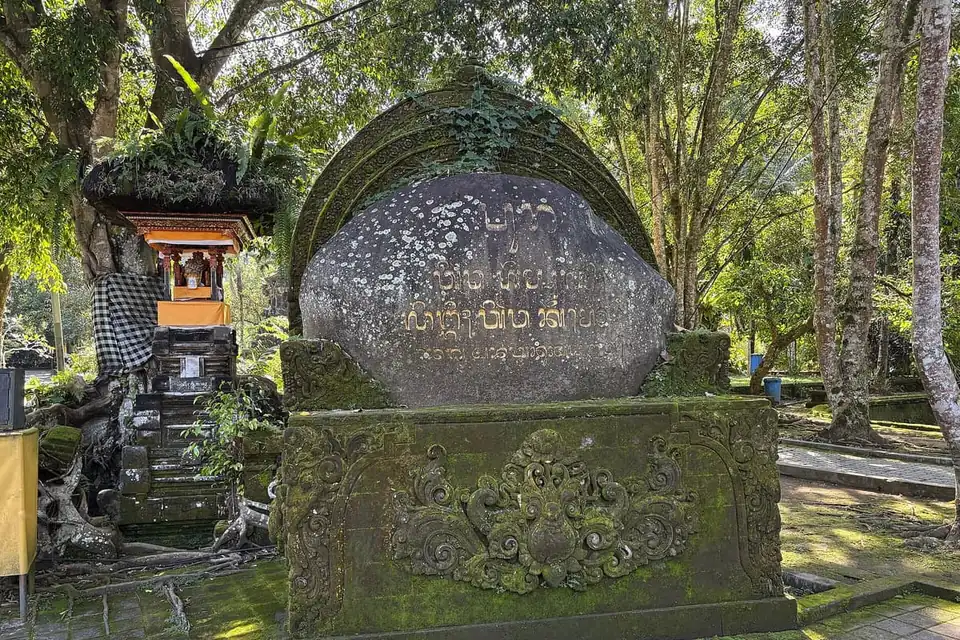
Three temples stand in the forest, dated by the sanctuary’s own palm-leaf records to around the middle of the 14th century. Pura Dalem Agung Padangtegal, the main temple in the southwest, is dedicated to Shiva. Pura Beji in the northwest is the holy spring temple, used for purification before ceremonies. Pura Prajapati in the northeast sits beside the village cemetery, where the dead are buried temporarily until the mass cremation the village holds every five years.
All three are for prayer only, in traditional dress. What you get from the paths is the gates, the carved guardians and the stairways, plus the moss and the big banyan at the central point, which the staff say is at least 100 years old. Dress with your shoulders covered; the sanctuary discourages revealing clothing.
Bags, food and the bite rule
The rules are short and they are enforced. No food or drink goes in, and no plastic bags: there are lockers in the lobby. Jewellery, beads, small toys, sunglasses and wallets all attract attention, so keep them out of sight. The monkeys have lost their fear of people and will open bags and go through pockets looking for food.
Do not stare a monkey in the eyes, which it reads as a threat. If one jumps on you, stand still, then walk slowly away; it will usually drop off. Children need holding on to. Staff carry slingshots to warn off aggressive animals and will step in if you ask.
There is a paid monkey selfie with staff supervision, at Rp 50,000. It is the only sanctioned way to get a photo with a monkey on you.
From the palace crossroads to the gate
From the palace crossroads, Jalan Monkey Forest runs south through the town to the forest gate, a walk of under twenty minutes. If you are coming from Denpasar, the Trans Metro Dewata bus route 4 runs from Terminal Ubung to the Monkey Forest central car park, and the ticket lobby is right there. Card or QR payment only on the bus.
Go at 9am, when the gates open. On Saturdays and Sundays there is Balinese dance on the open stage at 11am and 4pm. Combine the forest with Ubud Palace at the top of the same road, and see the full list of things to do in Ubud for the rest of the day.