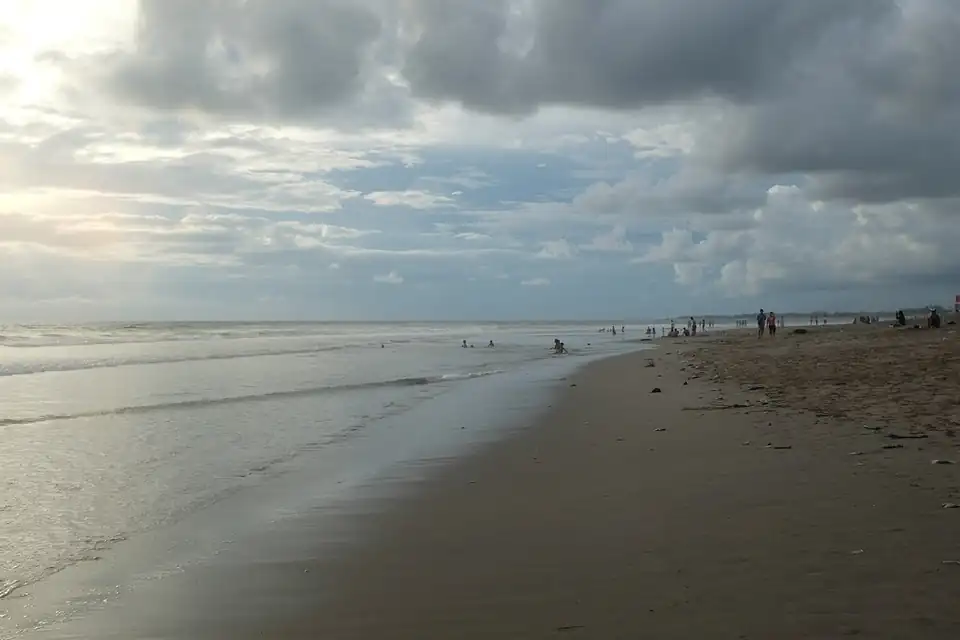
Seminyak Beach, also called Pantai Dhyanapura, is the stretch of the southwest coast in Seminyak, in the Kuta district of Badung, north of Kuta and bordered by Petitenget to the north. It runs for about 3 km, from near Double Six up to Petitenget and Batu Belig, and the sections merge so you can walk from one end to the other in under an hour. To the south the same sand continues as Legian Beach and Kuta Beach. It has the same feel as Kuta but, being further from the centre, fewer people.
Seminyak was once a separate village and something of a backwater. Its neighbour Legian was a farming village, where only a few people lived from fishing even though it sat on the coast. When Kuta overflowed with visitors, the crowds spread north to Legian and Seminyak, and building has since swallowed the green space that separated them, so it is now hard to tell where Seminyak ends and Petitenget and Kerobokan begin.
The sand and the surf
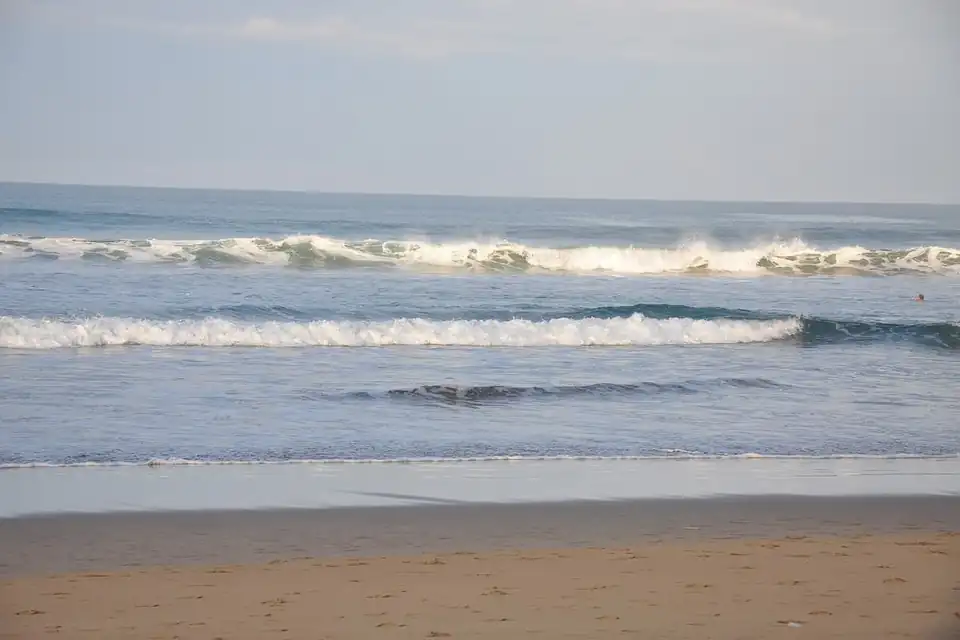
The sand is soft and slopes gently into the water. Seminyak is known for fairly stable waves, which makes it a common choice for beginner and intermediate surfers. The breaks are over sand, not reef, and surf schools and board hire work along the beach, with more of them around Double Six, a five-minute walk south. Early mornings and late afternoons are the best times to surf, when the wind is lighter. Mornings are also calmer for families with children.
Swimming: flags and lifeguards
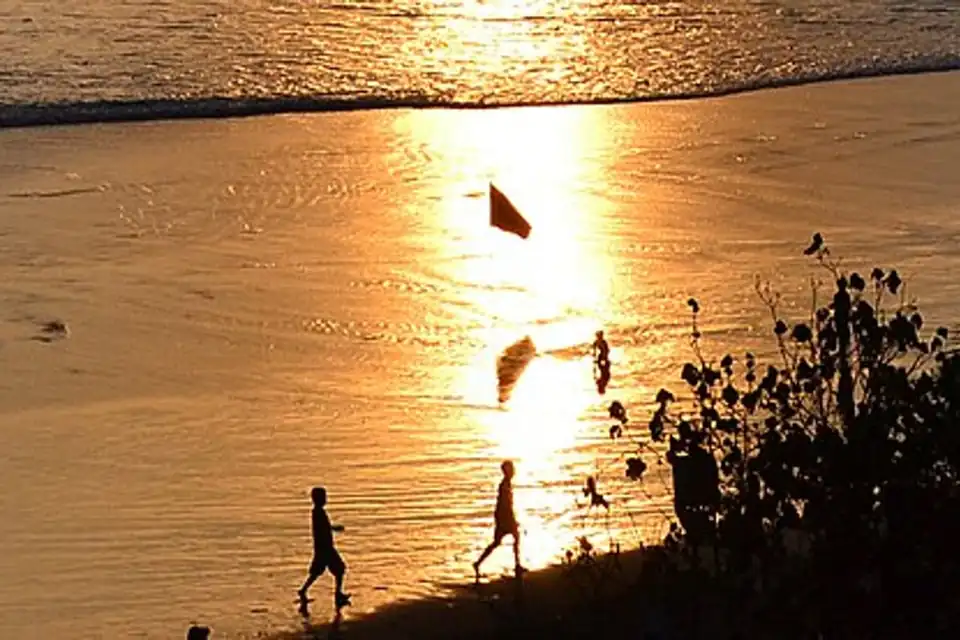
Badung police recorded 10 sea accidents on the regency’s coast in 2025, with 12 dead, five of them foreign nationals, most of them in bad weather. The police work with Balawista, the beach lifeguard service, to put red flags at danger spots and ask visitors to obey them. Swimming after sunset is not recommended.
Beach clubs and sunset
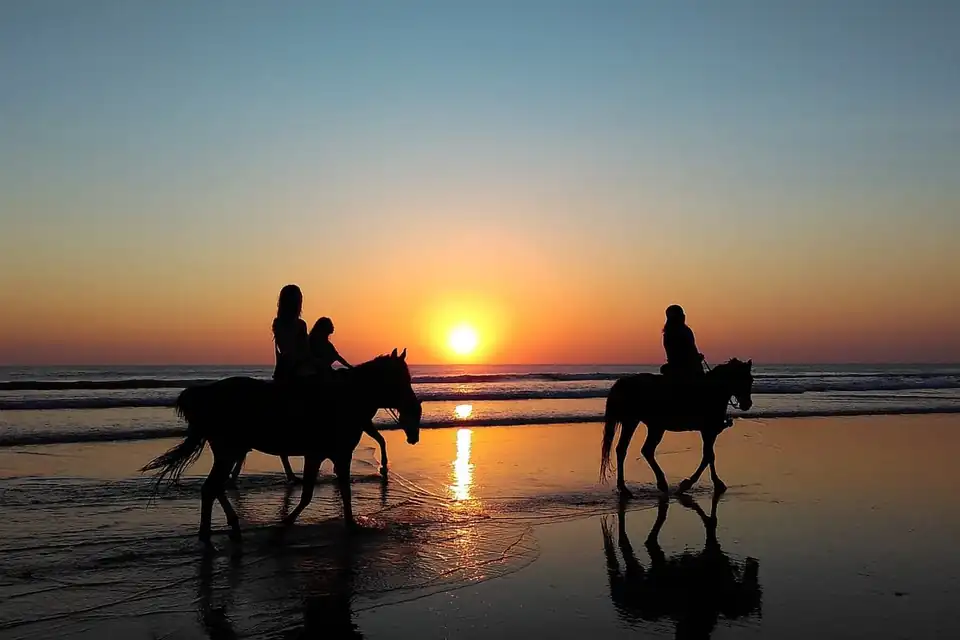
The beach faces west, and the late afternoon is the busy time. Beach clubs such as Ku De Ta and the beanbag bar La Plancha fill up for sunset, and the sand turns into a long line of beanbags, music and cocktails. Simple beach warungs sell cold drinks and dishes such as nasi goreng and satay, and women offer massages on the sand for around Rp 100,000 an hour. Most of the crowd leaves by 19:00 or 20:00.
Behind the beach is Seminyak itself, a district of high-end shops, spas and restaurants where land and accommodation prices are among the highest in Bali. The main road, Jalan Raya Seminyak, usually called Jalan Legian, runs parallel to the beach.
A beach under repair
The shoreline is eroding. Along 5.3 km of the Kuta to Seminyak coast the shore has been retreating by an average of 2 metres a year, and in February 2025 high waves wrecked 27 metres of the beachfront path at Double Six. The response is the Bali Beach Conservation Project Phase II, run by the Bali-Penida river basin authority under the Ministry of Public Works. It includes five new breakwaters, a sea wall to protect the path and sand refeeding along Kuta, Legian and Seminyak. In May 2026 a Badung councillor said the central government had allocated Rp 1.27 trillion, with Japanese loan support, and that completion was targeted for the end of 2026, though bad weather had slowed the work. Expect machinery and fenced sections on parts of the beach until then.
Litter is a recurring problem after big nights. After New Year’s Eve 2026, the Badung cleaning agency collected about 3.5 tonnes of waste from the Seminyak, Legian and Kuta beaches, about 1 tonne of it at Seminyak.
At the north end of the sand is Petitenget Temple, and beyond it the quieter Batu Belig Beach. For the rest of the area, see our guide to Seminyak, the list of things to do in Seminyak and where to stay in Seminyak.