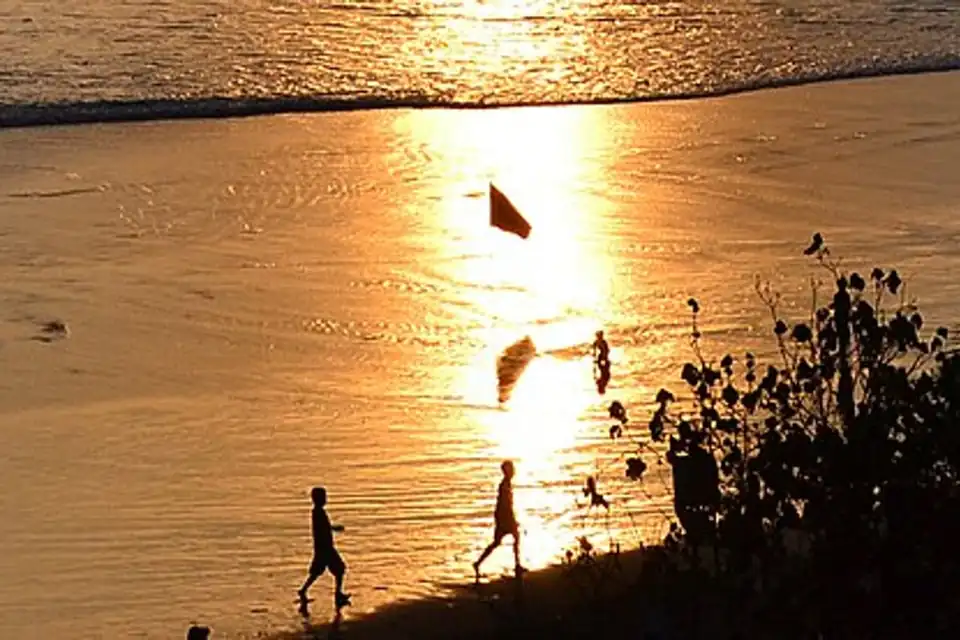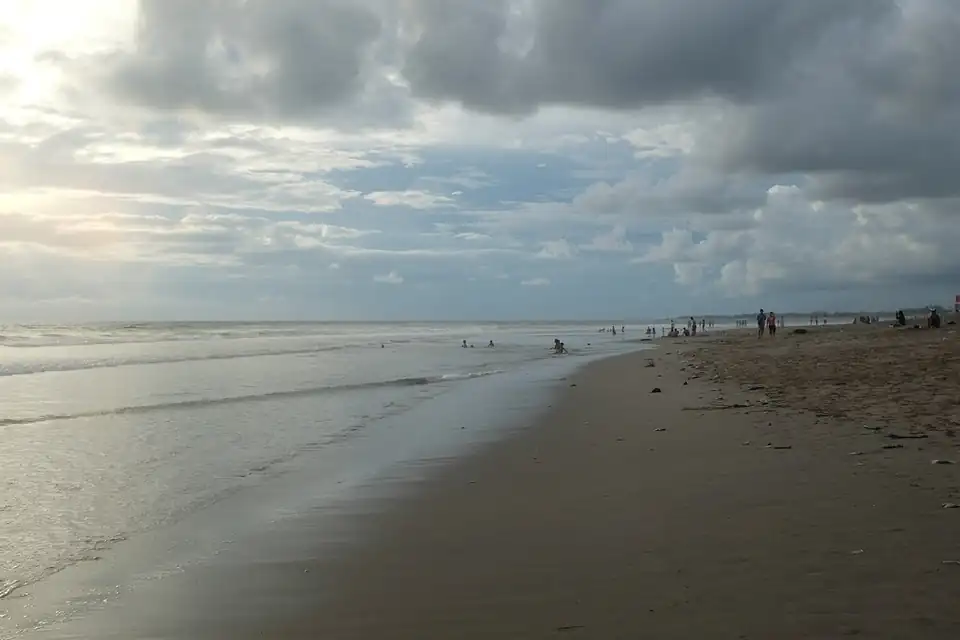
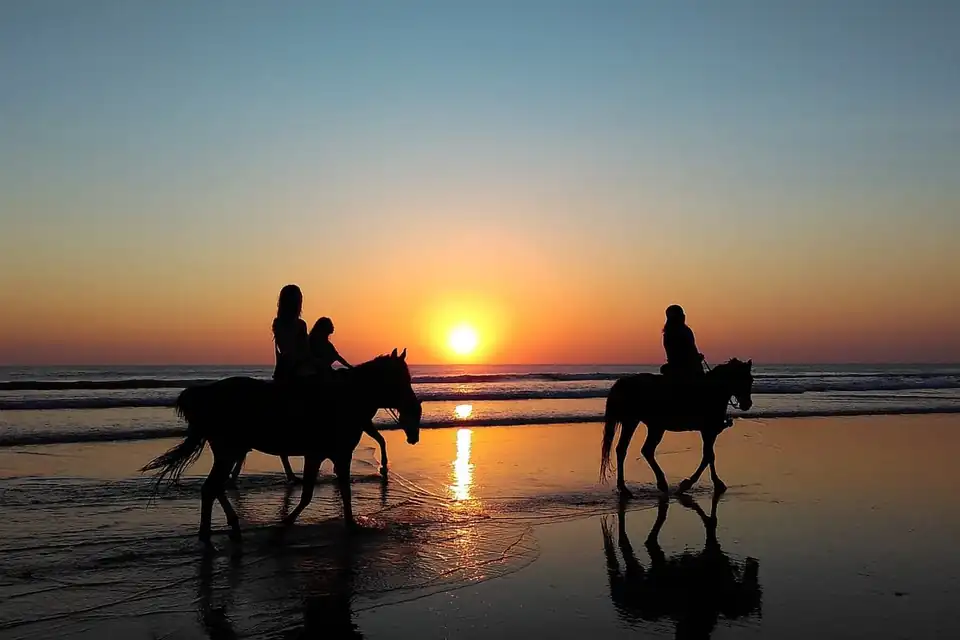
Double Six Beach is the southern end of the Seminyak shoreline, in the Seminyak ward of the Kuta district, between Seminyak and Legian. It is a busy beach. Families, surfers and visitors spend the day here, games of football and beach volleyball run on the sand, and the bars fill up for sunset. The sand is dark gold, and the beach continues north as Seminyak Beach and south as Legian Beach.
Where the name comes from
The beach is named after a nightclub. Club 66, also called Double Six, stood right on the beach with an open layout and ran from 6pm to 6am, which gave it its name. For years it was one of Bali’s best-known clubs, playing host to international DJs such as Tiesto and Pete Tong. It closed in 2011 with a last night that used 60 DJs and six stages; guests were still arriving at 4am and paying a Rp 100,000 cover charge. The site was redeveloped as a resort. The road to the beach, Jalan Arjuna, is still widely called Jalan Double Six or Jalan 66.
A different story says the beach was named after a plane crash on 21 April 1970 and that there is a monument to the victims here. That is wrong: there is no such monument, and the crash it refers to happened tens of kilometres away.
Surf and swimming
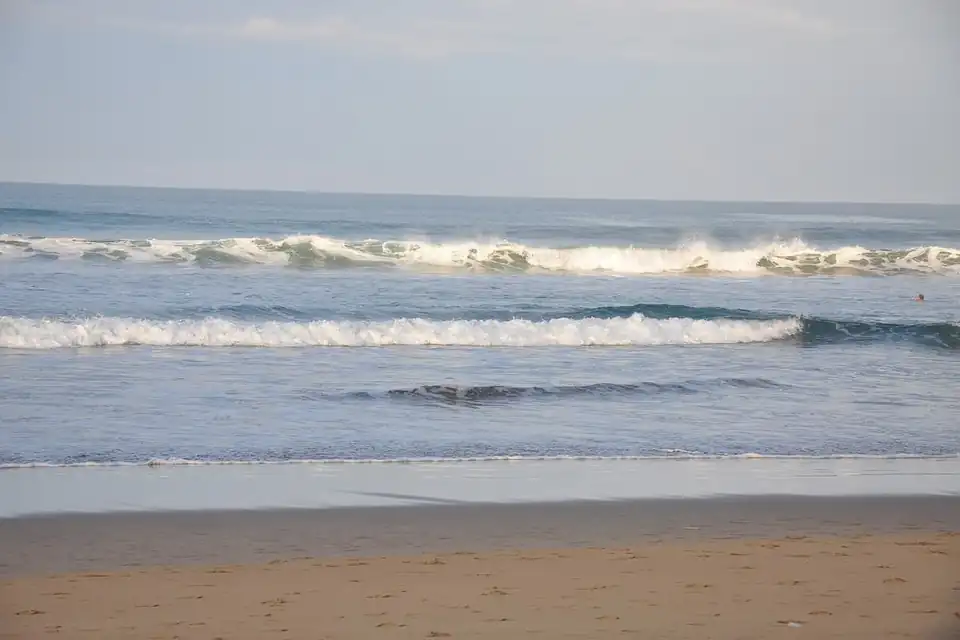
Double Six is a beach break, so the waves break over sand, not reef, and it is one of the places where beginners learn. Surf schools, board rental and private coaches work along the beach, and you can hire a board without booking. Longboarders and beginners do best from mid to high tide. If you want to get in the water without a board, low tide is better.
Children should not be left alone near the water, though the shallows at low tide suit them. In the wet season, changes in the currents can bring rubbish onto the beach, so the dry season is the better time to visit.
Beanbags, the path and the erosion
The beach bars put out beanbags and umbrellas on the sand. A lounger is about Rp 50,000, but if you order something, even a coconut, you can usually use the beanbags without a separate charge. Parking costs about Rp 5,000 per vehicle on the street or at the beach car park, and it is hard to find in the peak months of June to August and December. Getting in or out by car after sunset is slow, so a scooter, taxi or walk is easier.
A paved beachfront path, the pedestrian, runs from Kuta Beach through Legian to Seminyak. Walking north along the sand, you can reach Petitenget at the far end of Seminyak Beach in under an hour, and the stretch from Double Six to Petitenget is about 3 km. On 7 February 2025 high waves flattened 27 metres of it at Double Six, the first serious damage there; the Badung public works department rebuilt it using 500 geobags. Officials said in February 2025 that the sand here had been eroding for the past two years, and the Bali Beach Conservation Project Phase II is adding breakwaters and pumping sand back onto the beaches of Kuta, Legian and Seminyak, with completion targeted for the end of 2026. In April 2026 the river basin agency said the aim at Kuta was a flat beach about 15 metres wide, so expect machinery and fenced sections along this coast while the work goes on.
For the temple at the far end of the sand, see Petitenget Temple. For the rest of the area, see our guide to Seminyak, the list of things to do in Seminyak and where to stay in Seminyak.