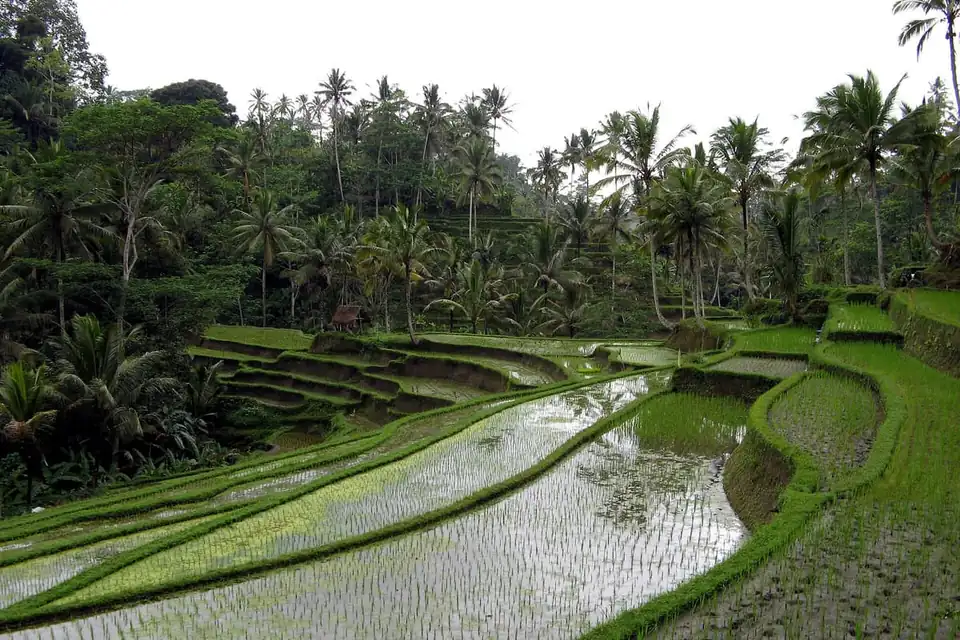
Canggu has no single rice-field attraction with a ticket gate. What it has is the paddies left between the villas, still farmed and crossed by the raised bunds and concrete paths that farmers use to reach them. Canggu was mostly rice fields until about 2010. When an international surf contest first brought tourism here in 1990, the area was paddy fields and coconut groves; by 2024 development had replaced much of the farmland with villas, hotels and other buildings for visitors.
Where the fields are
The best known stretch is the Canggu shortcut, a narrow lane between Batu Bolong and Berawa with fields on both sides for most of its length. It takes about 20 minutes on foot and gives a fair picture of what the whole area once looked like. It is also a road: cars may only use it one way, from Canggu towards Berawa, and it is often jammed.
For larger fields, go north. Pererenan, the next village up the coast, still has broad paddies behind the beach, with the mountains visible on a clear morning. Cemagi and Kedungu, 10 to 20 minutes further on, are farming villages with subak channels between the plots, small shrines at the corners of the fields and very few visitors.
One cycling route from central Canggu runs along Jalan Batu Mejan onto Jalan Padang Linjong, then left onto Jalan Pura Blulang Yeh, a narrow, broken dirt lane. From there, turn right onto Jalan Sempol for sloping fields, or follow the lanes to Jalan Pantai Pererenan towards the beach. The small roads off Jalan Babadan, inland from Echo Beach, are another good starting point.
How the fields work
These are not decorative terraces. They are managed by subak, Bali’s cooperative irrigation system, which dates from the 9th century. Water temples, canals and weirs share water between farmers, and the farmers time their planting together, so whole areas lie fallow at once and pests lose their habitat. As of 2019 there were an estimated 1,559 subak on the island. In 2012 the subak system was listed by UNESCO as a World Heritage Site. Over the rice cycle the fields change from flooded plots to green rice to cut stubble, so what you see depends on the month.
In Subak Uma Desa, in the middle of Desa Canggu, the fields were designated protected farmland (LP2B) in December 2021, which means farmers cannot sell them for building. Villas, restaurants and a padel academy now press against them on the north and east. One farmer there told the citizen-news site BaleBengong that the subak covered 87 hectares in 2016 and about 70 now, and that four months of rice from 40 are of land earns him about Rp 16 million, against Rp 6 million in costs. Farmers, he said, stay on largely for the view the villas sell.
The pressure is the same next door. In Subak Munggu in Mengwi district, the farmers’ leader said in September 2026 that the subak had shrunk from about 235 to about 201 hectares, much of it lost to villas, and that a developer had covered 250 metres of irrigation channel with concrete to make an access road. On 2 December 2025 Governor Wayan Koster issued Instruction No. 5 of 2025, which tells every regency in Bali to refuse all permits to convert farmland, including protected LP2B land, until a permanent provincial regulation is passed.
Walking the fields
Go early. Between 06:30 and 08:00 the light is low, the farmers are working, ducks are herded along the channels and the air is cool; by nine the fields are bright and hot. The hour before sunset is the second window. Many lanes have no lights, so do not get caught out after dark.
On the paths, step aside for farmers and for motorbikes, which use the bunds as roads. Do not walk on the field edges when the rice is young, and ask before photographing people at work. Now and then a farmer may ask for a few thousand rupiah to cross their land. Some guesthouses rent bicycles, which are the easiest way to reach the fields north of Batu Bolong.
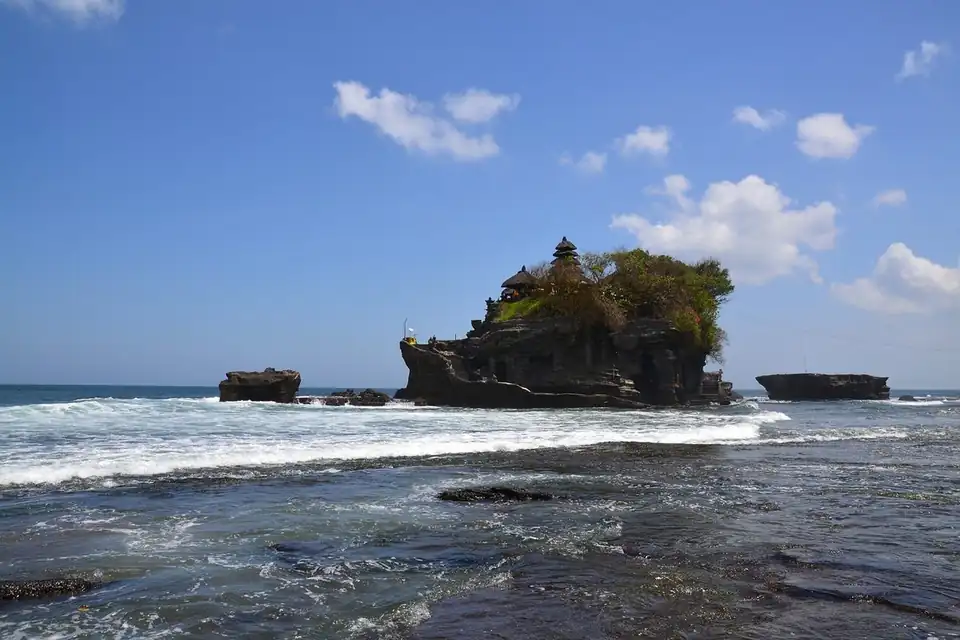
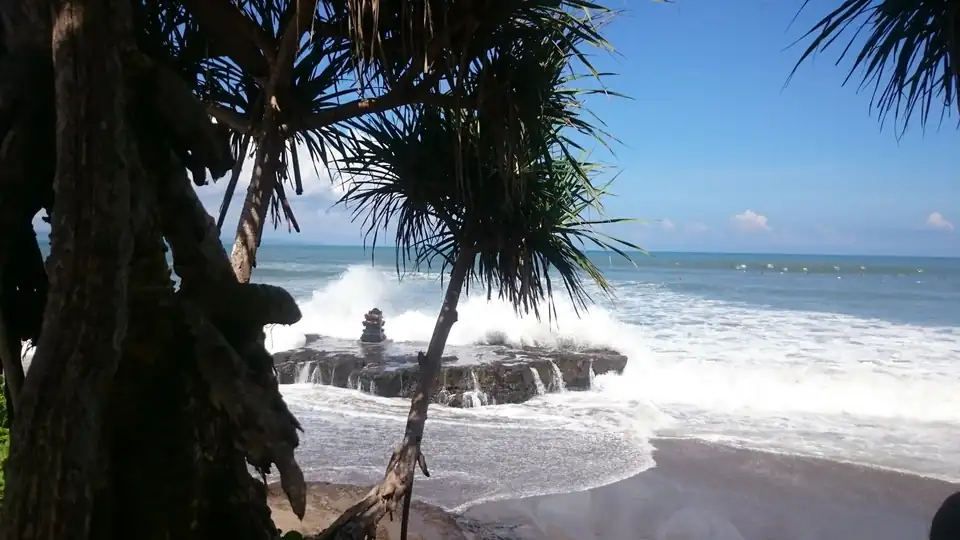
Finish at the coast at Pura Batu Bolong, or continue north towards Tanah Lot. For the rest of the area, see our guide to Canggu, the list of things to do in Canggu and where to stay in Canggu. For rice terraces on a larger scale, see the Tegallalang rice terraces near Ubud.