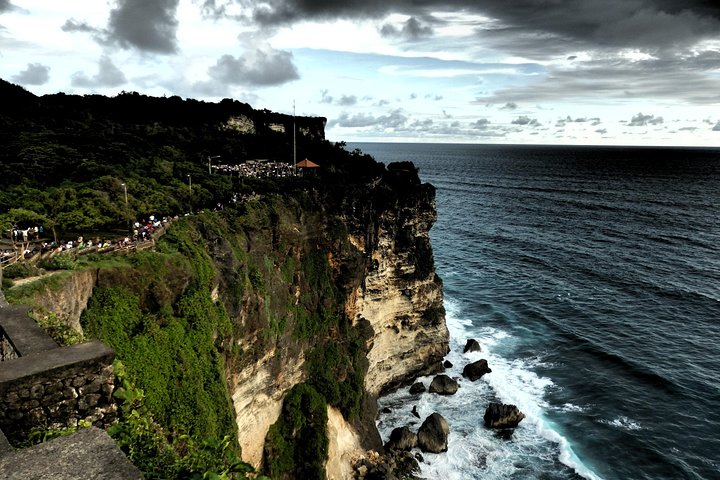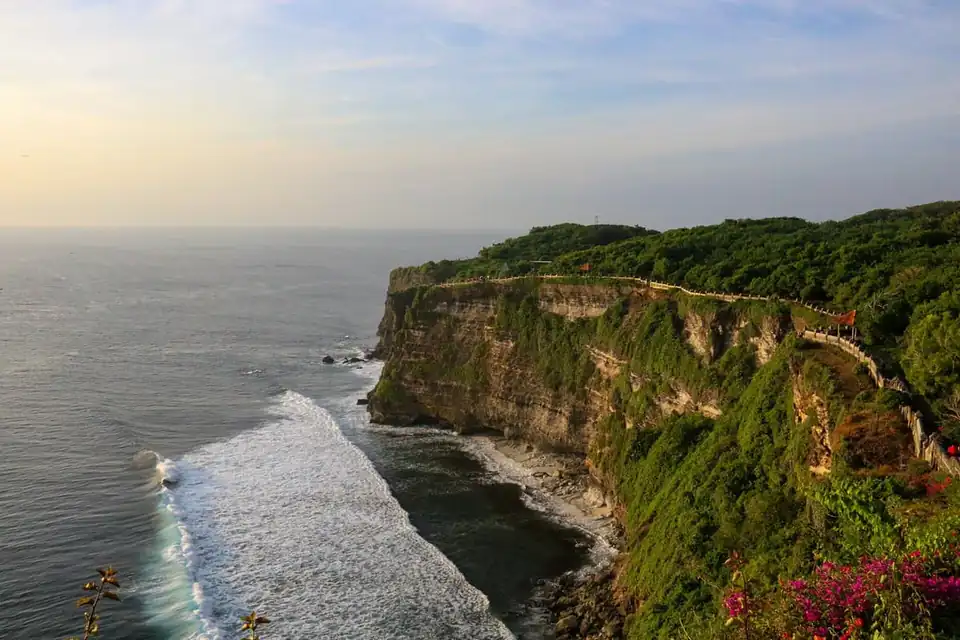
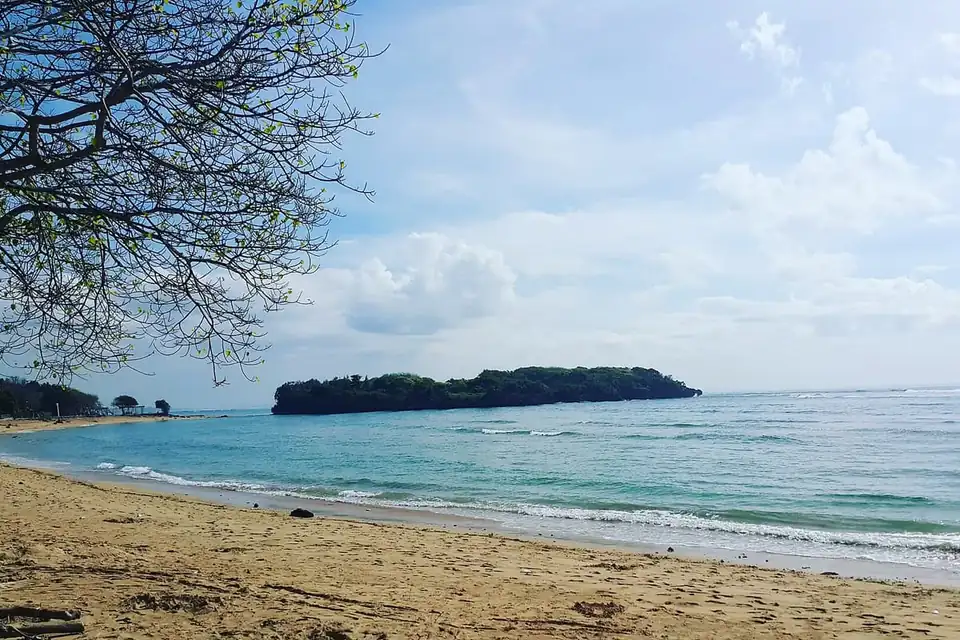
Padang Padang is a 110-metre strip of fine white sand in Pecatu, on the west coast of the Bukit Peninsula, closed in by tall cliffs at both ends. Locals call it Labuan Sait. It is small, it is reached through a gap in the rock, and it sits in front of one of the most famous waves in Bali, which together explain why it is so often full.
Down the steps and through the gap
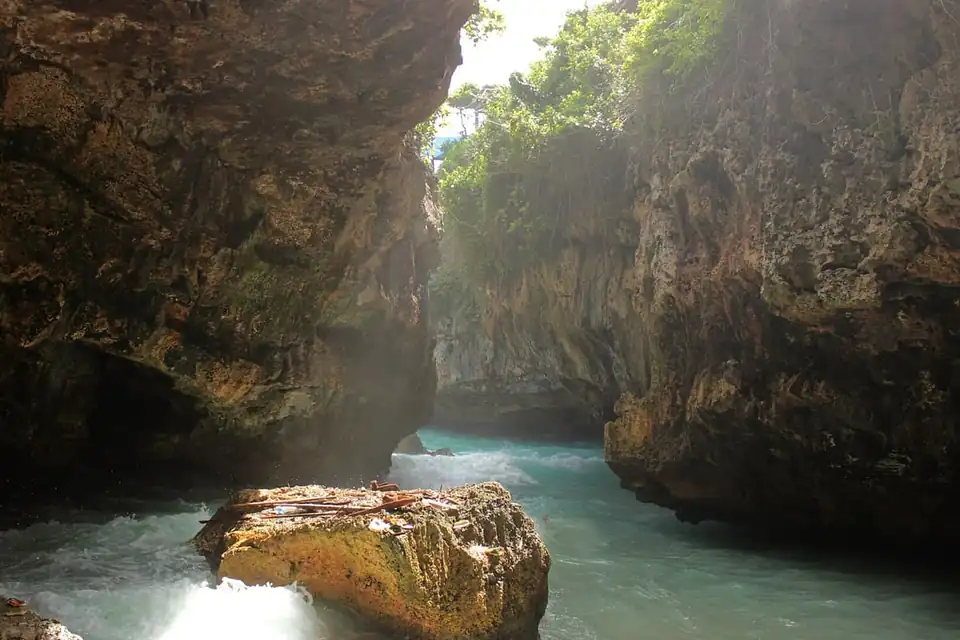
The way in is the first thing people remember. From the road you go down about 120 steps and then along a path squeezed between a fallen rock and the cliff, a cleft in the coral rock with cement stairs leading to a stretch of shore sheltered by the cliffs. Below the gap the path splits in two, and the left-hand branch runs through a rock passage to the open part of the beach.
The longer approach from the parking area is a walk of roughly 500 metres downhill past souvenir kiosks before you reach the gap, so it is worth travelling light: a towel, water and cash cover most needs.
There is an entrance fee: Rp 15,000 for foreign adults and Rp 10,000 for children aged 3 to 10, with lower prices for Indonesian visitors. It is cash only, and so is everything else on the sand, from surfboard hire to lessons. The other thing to watch at the top is the monkeys, which are known here for stealing people’s belongings. Keep bags zipped and do not leave anything lying on the steps.
The Balinese Pipeline
Padang Padang is a serious surf spot first and a beach second. The famous break is Padang Padang Left, nicknamed the Balinese Pipeline, and on the right day it ranks among the top five surf spots in the world. Each year it hosts the Rip Curl Cup, a contest that brings some of the world’s best tube riders to this reef.
The right day is not every day. The wave is inconsistent and needs a groundswell from the south-west with wind from the south-east, and it works best around mid tide. The season is the dry months from May to October. When it is working it gets crowded, and the rocks are a hazard. Boards can be hired on the beach for Rp 100,000 an hour and a one-hour lesson costs Rp 400,000, but the main left is for experienced surfers only; everyone else is better off watching from the sand.
For swimmers, the tide tables matter. The beach shrinks at high tide, and timing a visit around low water is the way to see the sand at its widest and the water at its calmest.
Eat Pray Love and the crowds that followed
Padang Padang was one of the filming locations for the 2010 film Eat Pray Love, starring Julia Roberts, and that gave it a reputation well beyond the surf world. It remains well known among surfers and is still described as a beach dominated by foreign visitors.
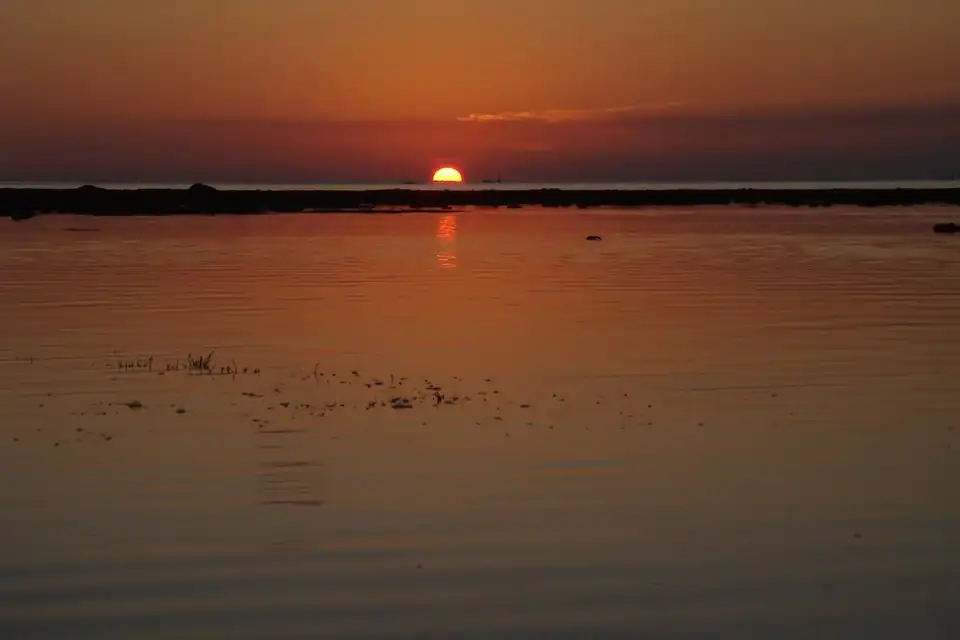
The result is a compact cove that fills quickly. Mornings are quieter, and the afternoon is the time for sunset if you are willing to share it. Bring small notes for the gate, water for the climb back up, and something to cover up with, as the cliffs only shade part of the sand.
By road or by boat
Padang Padang is about an hour’s drive from Denpasar and 45 to 60 minutes from Ngurah Rai airport; from Kuta, Seminyak or Legian it is usually 30 to 45 minutes. It is also the Uluwatu terminal for the GoBoat fast boat, which links the peninsula with Nelayan Beach in Canggu in 35 minutes.
Within the peninsula, it is about a 15-minute scooter ride from Uluwatu Temple, and it pairs well with the cave beach at Suluban Beach. Bingin Beach, about 3 km away along the same west coast, is the other obvious stop, with its own reef break. For the rest of the area, see our guide to Uluwatu, the list of things to do in Uluwatu and where to stay in Uluwatu.