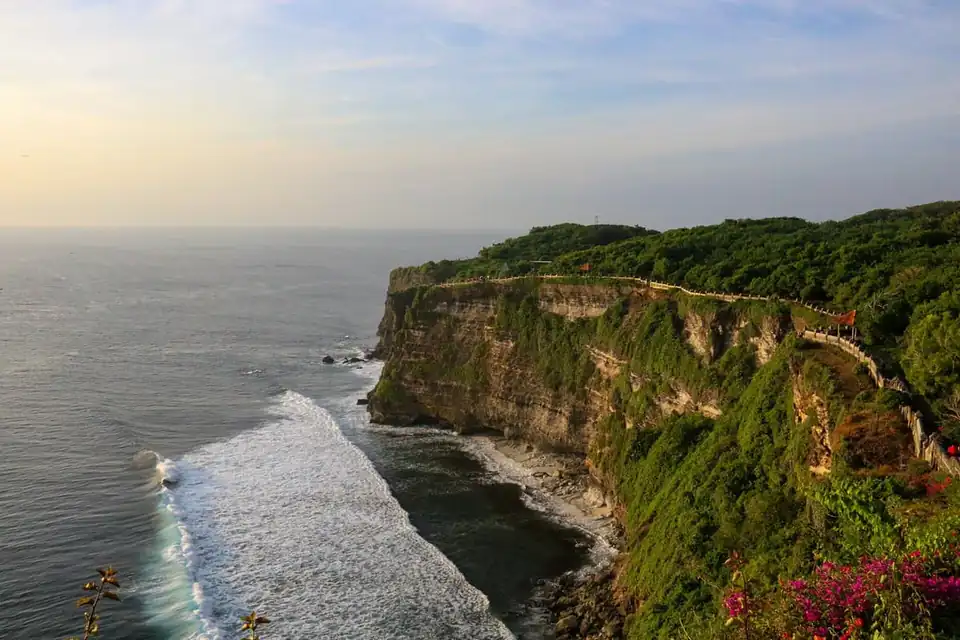
Pura Luhur Uluwatu stands on the south-western tip of the Bukit Peninsula, in Pecatu village, at the edge of a cliff about 70 metres high that drops straight into the Indian Ocean. The name describes the site: ulu is the edge, watu is the rock. It is a working Hindu temple first and a sunset viewpoint second, and a visit goes better if you keep that order in mind.
A priest who went up from this rock
A small temple may have stood here earlier, but the structure was significantly expanded in the 11th century by Empu Kuturan, a sage from Java. The more important figure is Dang Hyang Nirartha, a priest from East Java who came at the turn of the 16th century. He is credited with introducing the padmasana shrines, and tradition holds that he attained moksha on this spot, an event called ngeluhur, “to go up”. That is where the Luhur in the temple’s name comes from.
Uluwatu is one of the directional temples that Balinese Hindus believe protect the island, and it is the only sea temple that also holds that status. It is dedicated to Sang Hyang Widhi Wasa in his manifestation as Rudra. The temple anniversary, the piodalan, comes round every 210 days, on Selasa Kliwon of the week Medangsia, and is shared with associated temples nearby including Pura Bajurit, Pura Pererepan and Pura Kulat.
Visitors do not go inside. The innermost courtyard is kept for Hindus who come to pray, and everyone else walks the outer courtyards and the cliff paths, which is where the views are in any case. A small forest in front of the temple, the alas kekeran, acts as a buffer for its sanctity, and provincial rules set a protected core zone of up to 1 km around it.
The Kecak at six o’clock
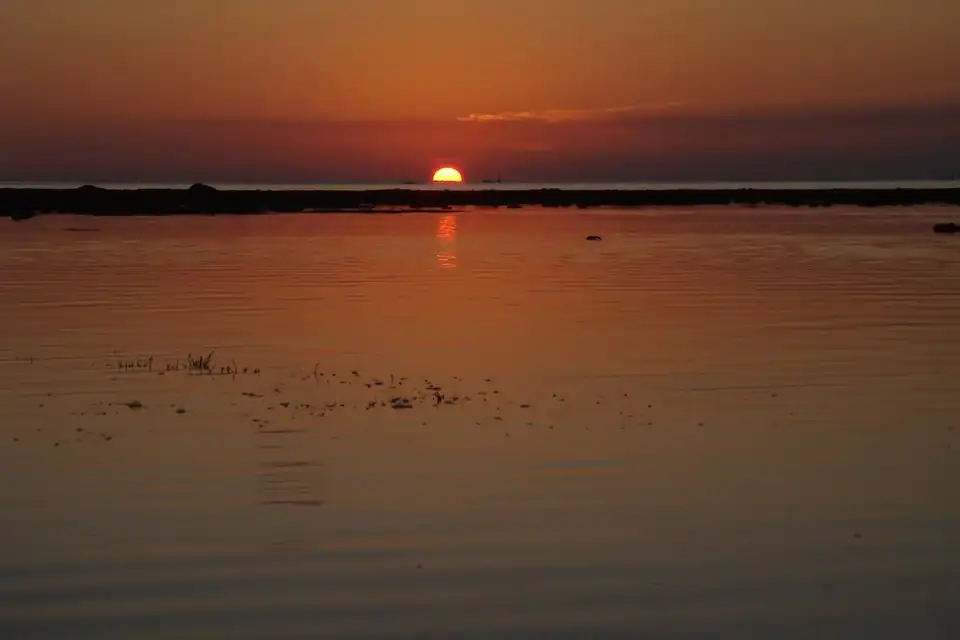
A Kecak dance based on the Ramayana is performed every day at 6pm on the cliffside, with the sunset as the backdrop. There is no gamelan. Around fifty to a hundred men sit in concentric circles chanting “chak” while dancers act out the story, and Hanuman’s fire scene closes the show. It lasts about an hour.
It helps to know what you are watching. Kecak grew out of sanghyang, a trance ritual, and in the 1930s the German painter Walter Spies, working with the dancer Wayan Limbak, adapted it as a Ramayana drama for Western tourist audiences. It has a long history of its own now, but it is a performance, not a temple ceremony.
Tickets are separate from temple entry and sold at a booth near the stage. The dance team lists Rp 150,000 for adults and Rp 75,000 for children aged 2 to 9, with the gate opening at 4pm, and says payment is generally cash only. The amphitheatre holds up to 1,200 people per show, and on busy evenings a second session runs from 7pm. There is no show on Nyepi or on Pengerupukan. Seats are stone, flash photography is discouraged and drones are not allowed.
Monkeys that trade
The temple grounds belong to a population of long-tailed macaques, and they have learned a business. They take flip-flops, cameras, sunglasses and phones, then give them back once staff offer fruit. A team that included Fany Brotcorne of the University of Liège studied this around the temple, and their 2017 paper in the journal Primates was the first scientific description of it. Robbing and bartering is absent in other macaque populations on Bali, and it was most frequent in the groups with most chances to interact with tourists, which points to a habit learned and passed on.
Temple management says there have been no reported rabies cases from its monkeys and that staff keep a close watch on their health. Its advice is to stay calm if one comes close, not to touch, feed or tease them, and to keep your belongings safe. In practice that means glasses, hats and phones in a zipped bag before you pass the gate.
Tickets, dress and the evening plan
Entry costs Rp 60,000 for foreign adults and Rp 40,000 for children aged 4 to 12, and the gates are open from 7am to 7pm. A sarong and sash are compulsory and are provided at the entrance. The temple is about an hour by road from Ngurah Rai airport.
The usual plan is to arrive in the late afternoon, walk the clifftop while the light softens, then take a seat for the 6pm Kecak. Allow two to three hours in all. The surf beaches below make an easy pairing: Suluban Beach sits under the main Uluwatu break, and Padang Padang Beach is about 15 minutes away by scooter. For the rest of the peninsula, see our guide to Uluwatu, the list of things to do in Uluwatu and where to stay in Uluwatu.