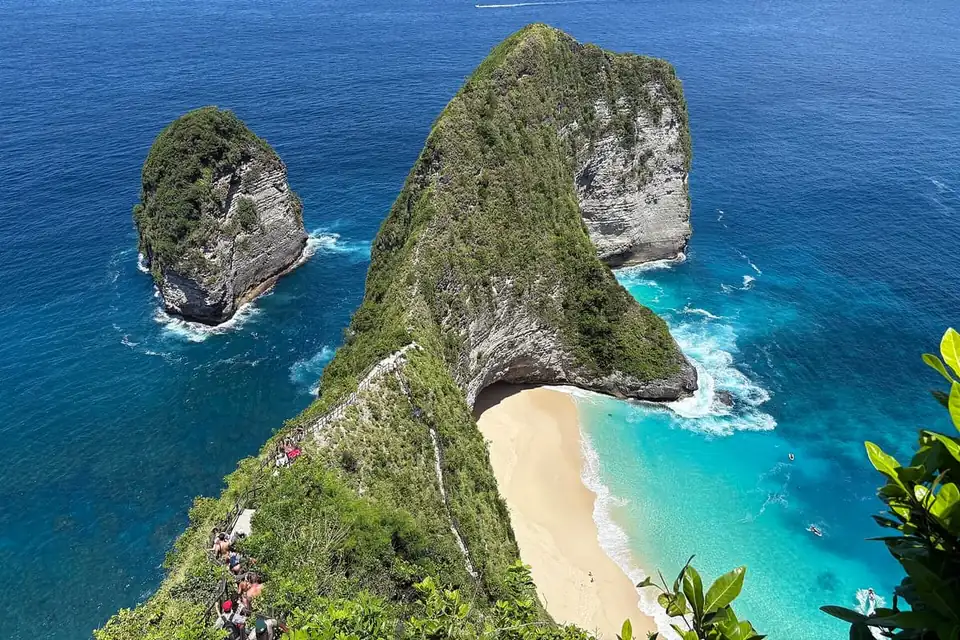
Diamond Beach is a cove of white sand at the foot of the limestone cliffs on Nusa Penida’s east coast, with a stairway cut down the rock face to reach it. The name comes from the shore’s coral rock, whose points look like chunks of diamond. Until 2018 nobody could get down to it; now it is one of the most photographed places on the island, and its main danger is the water at the bottom.
A stairway cut in 2018
Before 2018 the sand below was simply out of reach. The Balinese considered carving a way down too dangerous, so it was Javanese workers who cut the steep staircase into the limestone. The landowner now charges an entrance fee, and other landowners have since carved rival staircases a little further along the cliff.
The path is chiselled into the rock and fitted with rope handholds and steps. The upper part is easy to walk; the final section is steep, with a rope to help. The descent usually takes 15 to 25 minutes, with several hundred steps depending on how you count. Halfway down there is a drinks hut with a palm-tree swing and a giant woven bird’s nest set up for photographs. You do not have to go all the way to the sand for the picture: the view from the top of the staircase, with the carved steps, white sand and turquoise water in line, is the shot most people want.
Why there is a no-paddle rule
The water at Diamond Beach looks calm and is almost always clear. It is also where people keep dying. A strict no-swim, no-paddle rule is in place, because the waves are always higher and stronger than they look from the sand, the water gets deep surprisingly quickly, and the undercurrent is too strong for even good swimmers.
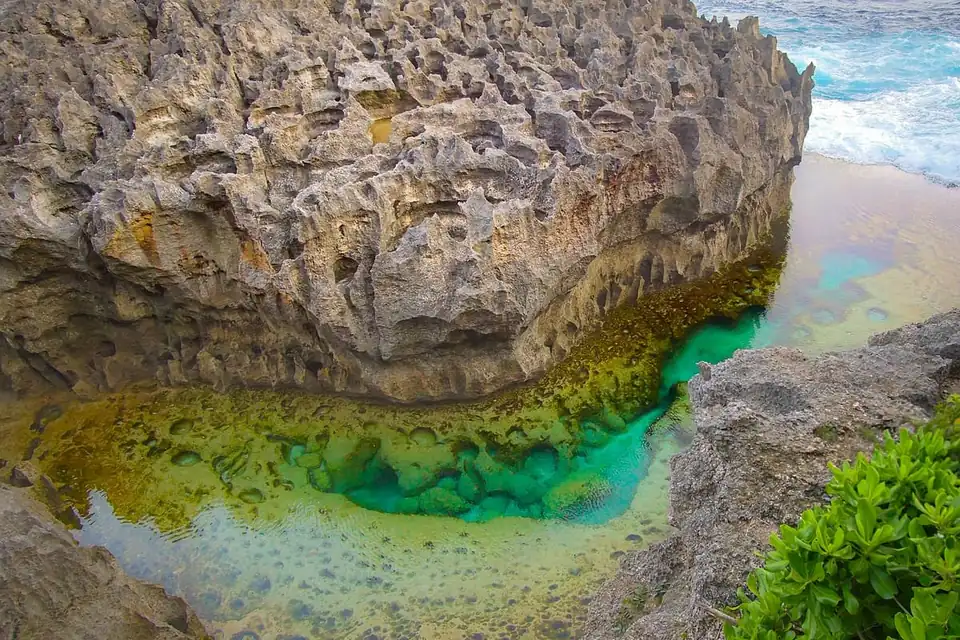
The ban was ordered at the end of January 2023 by the Klungkung regent, covering Diamond Beach, Kelingking and Angel’s Billabong. People still ignore it every month. Police on the island have asked visitors to check weather and wave reports and not to force a swim when conditions are unsafe.
Morning light, afternoon shade
Diamond Beach sits under a massive cliff and faces east, so the sand is in shade by the afternoon. Morning is the time to go, and sunrise is spectacular if you can arrive before 6am. At the southern end of the beach there are small caves and tide pools to look at once you are down.
The beach is about an hour by road from Toyapakeh harbour. Kelingking is 1 to 1.5 hours away on the west coast, so most people visit the two on different days, usually on an east-coast tour that adds Atuh Beach and the Rumah Pohon tree house above the bay. The entrance fee is listed at Rp 35,000 per person including parking, in cash. From 1 September 2026 Klungkung regency also charges Rp 25,000 per adult and Rp 15,000 per child at each tourist attraction, so ask at the gate what you are paying for.
Atuh Beach, the place to stay longer
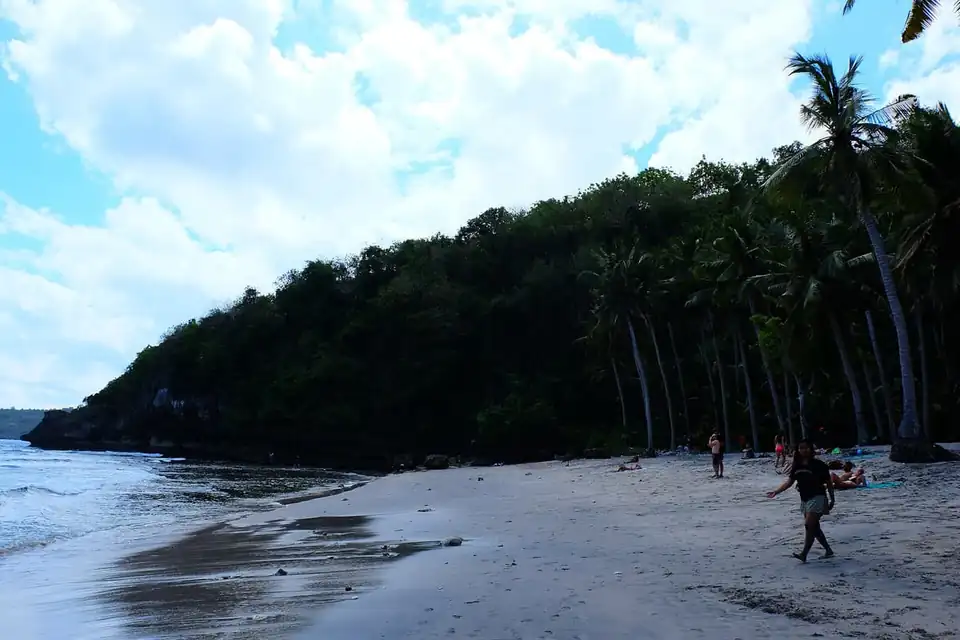
Atuh Beach is a few minutes away from the same car park and is the better place to spend the rest of the day. In 2016 local people built a concrete staircase down its right-hand side, now 166 steps; on the left a shorter stair reaches the top in under ten minutes. Atuh is not under a big cliff, so it keeps the sun all day, and it has parasols, deckchairs and warungs serving juice, grilled fish and Indonesian dishes. Care is still needed in the water, and at very low tide the bottom turns rocky. A sensible day is Diamond in the morning and Atuh in the afternoon.
If you also want a swim on the island, Crystal Bay on the west coast is the most popular swim-friendly beach. For the wider island, see our guide to Nusa Penida, the list of things to do in Nusa Penida and where to stay on Nusa Penida, or compare the cliff descent at Kelingking Beach.