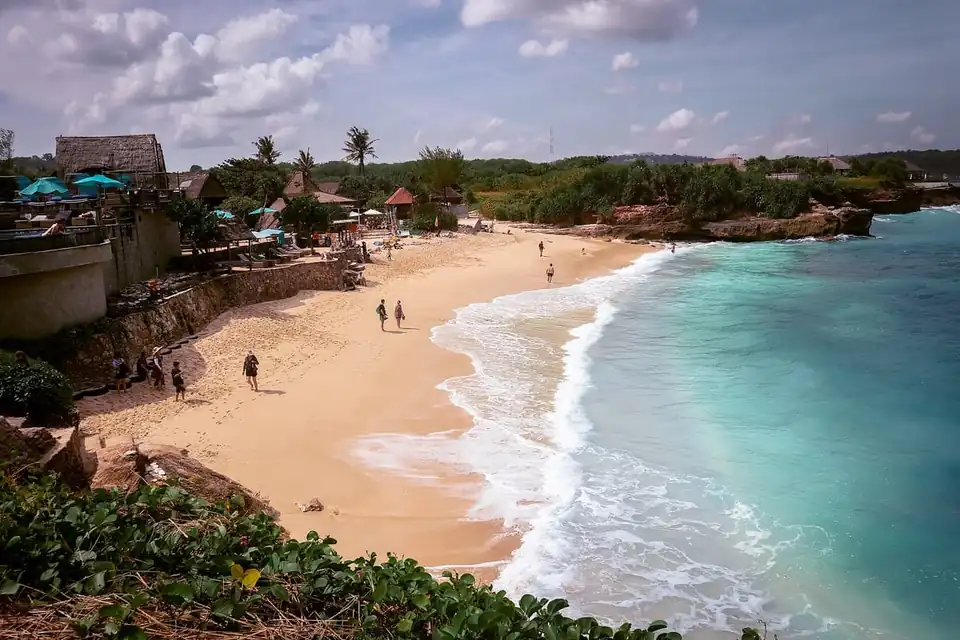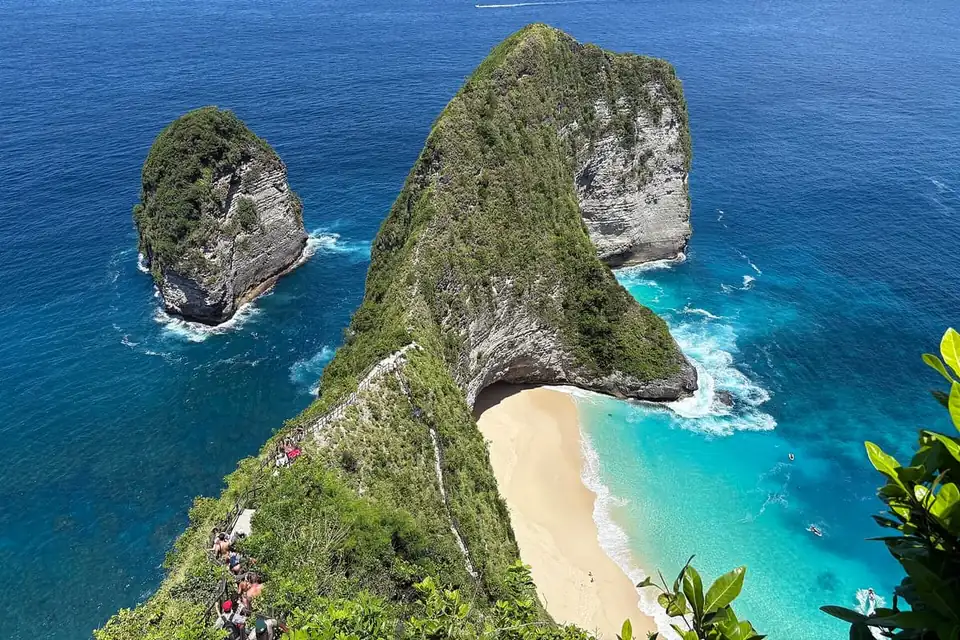
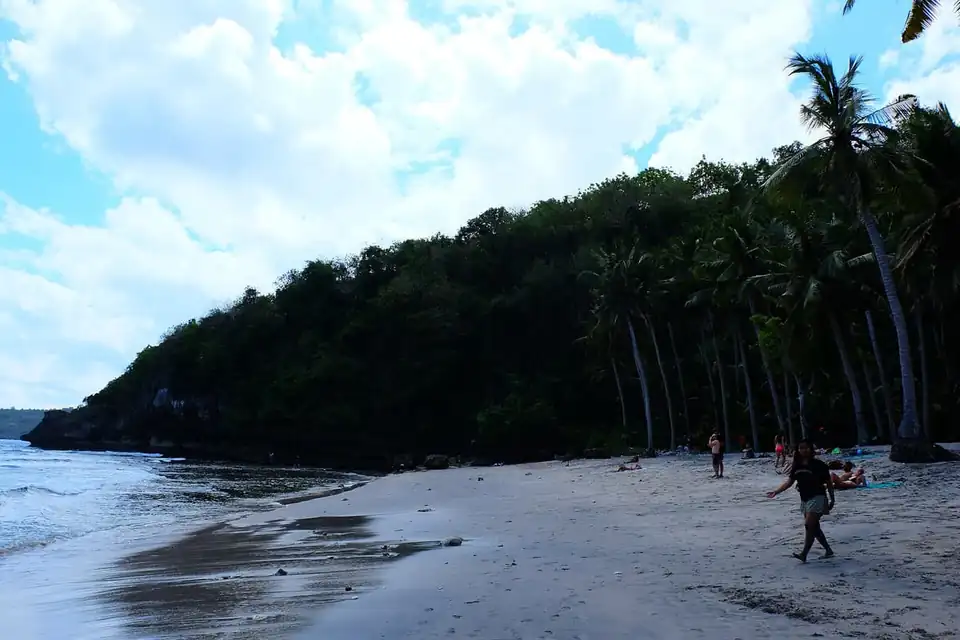
Crystal Bay is the beach on Nusa Penida where you can actually get in the water. Most of the island’s famous coast is cliffs and no-swim zones seen from above; this is a wide, palm-backed stretch of sand on the west coast with a sheltered bay, a reef close to shore and a rock island crowned by a small temple in the middle. It is the most popular swim-friendly beach on the island and the obvious place to end a day of viewpoints.
The one big beach you can swim from
The shore is a long sandy curve lined with palm trees, with small warungs selling drinks, coconuts and simple meals and renting out sunbeds and umbrellas. It is calm in the morning before the day-trip crowds arrive. The water is usually very clear, especially in the dry season, and the waves are small enough that local surfers only occasionally try the left-hand side.
The beach has a history with bulldozers. In 2016 the government cleared all the illegally built structures behind it, and construction of a large resort began in 2020 but has been on hold since. For now the beach itself is untouched.
Where the shelter ends
Masks, fins and snorkels can be hired at the warungs, and the reef in the sheltered part of the bay has turtles, reef fish and coral in good condition. The limits are the important part. Use the boats moored in the bay as your boundary and do not go beyond them, do not attempt the swim to the rock in the middle, and stay away from the right-hand side at low tide, where waves can push you onto the coral.
Mola season and the downcurrents
Crystal Bay is one of the best-known dive sites in Bali because it is among the most reliable places in the world to meet the oceanic sunfish, or mola mola. From July to October, sometimes earlier, cold nutrient-rich water rises, cleaner fish gather, and the sunfish follow them up from the deep to around 25 to 30 metres. They gather at cleaning stations near the second corner, on the deeper right-hand side of the bay towards the central islet. Even in peak season, a local dive guide puts the chance of a sighting on any single dive at roughly one in ten.
The site runs from about 5 to 40 metres. The left side is a shallow coral plateau, protected from the strongest currents and suited to beginner dives. The right side is more exposed and has strong lateral currents and sudden downcurrents, which local guides read from swirling “washing machine” patches on the surface; on an outgoing current they stay inside the bay. Crystal Bay was closed for a time in August 2012 after two divers died in the same week. For mola profiles, operators ask for Advanced Open Water certification and recent deep and current experience.
Sunset, Pandan Beach and the road in
The bay faces west, which is rare on Nusa Penida, so the sunset is visible from anywhere on the sand, usually from around 5.30pm. With luck the sun drops in line with the small rock arch in the middle of the bay. Climb the stairs at the west end of the beach for a higher view, and that same path leads down to Pandan Beach, a quieter cove with a small warung and the start of the two-hour hike to Broken Beach.
The road from Toyapakeh harbour has been fully renovated and takes about 15 minutes by scooter. Parking costs around Rp 5,000 for a scooter. Crystal Bay is also a departure point for snorkelling trips to Manta Bay. It fits easily at the end of a west-coast day with Kelingking Beach and Angel’s Billabong. For the wider island, see our guide to Nusa Penida, the list of things to do in Nusa Penida and where to stay on Nusa Penida.