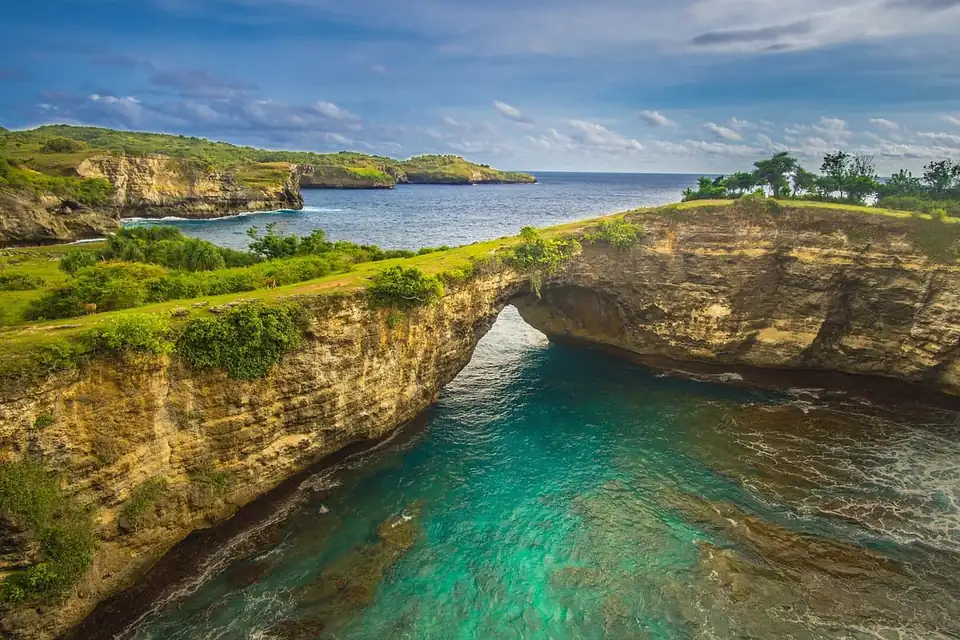
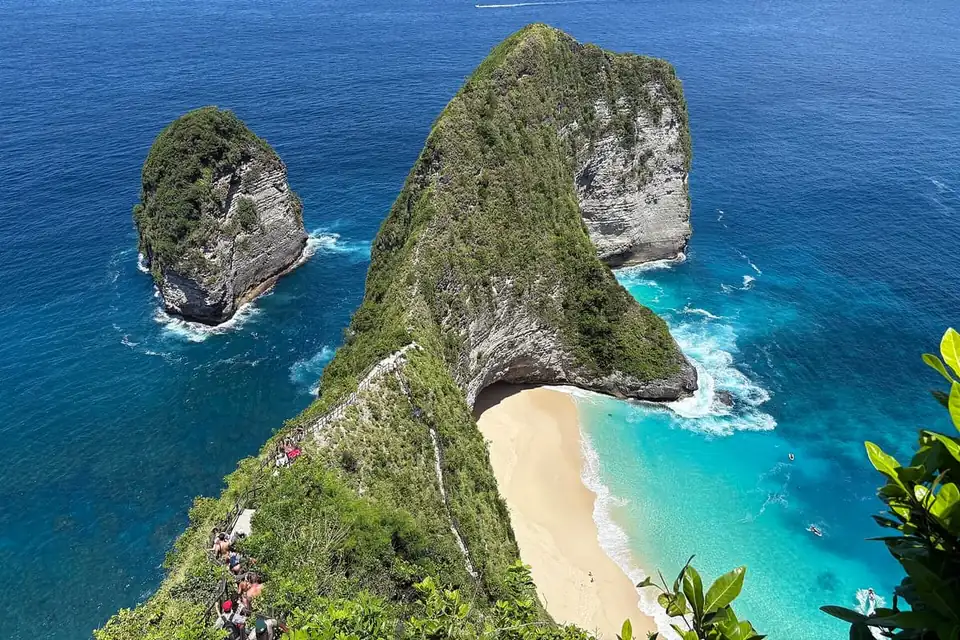
Kelingking Beach, Pasih Kelingking in Balinese, is the picture that sells Nusa Penida: a long limestone headland with a green ridge that juts out into the sea like a little finger, or, as most people see it, like the backbone of a T-Rex. It is in Bunga Mekar village on the island’s west coast. Most visitors come for the view from the lookout at the top of the cliff, about 180 metres above the sand, and that view is worth the trip on its own.
A finger, a dinosaur and an award
The name is literal. Kelingking means little finger, and the headland reaches out into open water with a cliff falling away on both sides. Google Maps and most drivers call it T-Rex Bay. The beach below is white to pink sand, and in the 2019 Travellers’ Choice awards it was voted the second-best beach in Asia.
The lookout is the main event. There are warungs along the clifftop selling coconuts, juice and simple dishes such as nasi goreng, and macaques work the same stretch. For quieter photographs, walk a little further along the cliff to the right as you face the sea.
The way down is a trail, not a staircase
From the top the descent looks like a staircase. It is not. There are 156 built concrete steps, and they stop at a landing about a third of the way down. Below that the route is a steep trail worn into the rock, with only a low bamboo handrail beside it, and the gradient in places is close to 70 to 80 degrees. Signs at the top say that going down is your own responsibility.
The descent takes roughly 20 to 30 minutes and the climb back up can take 30, with little shade on the way. The Bali Sun describes the path as treacherous and often overcrowded, with loose, gravelly sections and steps that call for a real leap. Bring water, wear proper shoes, and if you are unsure, go with a local guide.
At the bottom, lifeguards from the Balawista unit are posted on the beach, and the rule is simple: look, do not swim. The ban on swimming at Kelingking, Diamond Beach and Angel’s Billabong has been in force since the end of January 2023.
Why the lift is not running
Rising out of the cove is the concrete base and shaft of a 182-metre glass lift, built into the cliff to carry visitors down to the sand. The project, by PT Indonesia Kaishi Tourism Property Investment Development Group, had been under way for about 18 months when the provincial government suspended the works in late 2025. Governor Wayan Koster then ordered construction halted, citing violations of spatial planning, licensing, coastal management and culture-based tourism rules, and told the investor to demolish the structures within six months.
The investor took the province to court and on 3 September 2026 won its case at the Denpasar administrative court. The province is appealing, the permits are still missing, and no work has restarted. A bungee jump that once operated from the cliff was shut on 31 October 2025 by the same committee that halted the lift.
Timing, cost and getting there
Fast boats from Sanur reach Toya Pakeh harbour in 40 to 50 minutes, and the road from the harbour to Kelingking takes 45 to 60 minutes. There is no entrance fee for the viewpoint or the trail; parking is Rp 5,000 for a scooter and Rp 10,000 for a car. Separately, from 1 September 2026 Klungkung regency charges foreign visitors to Nusa Penida a levy of Rp 25,000 per adult and Rp 15,000 per child.
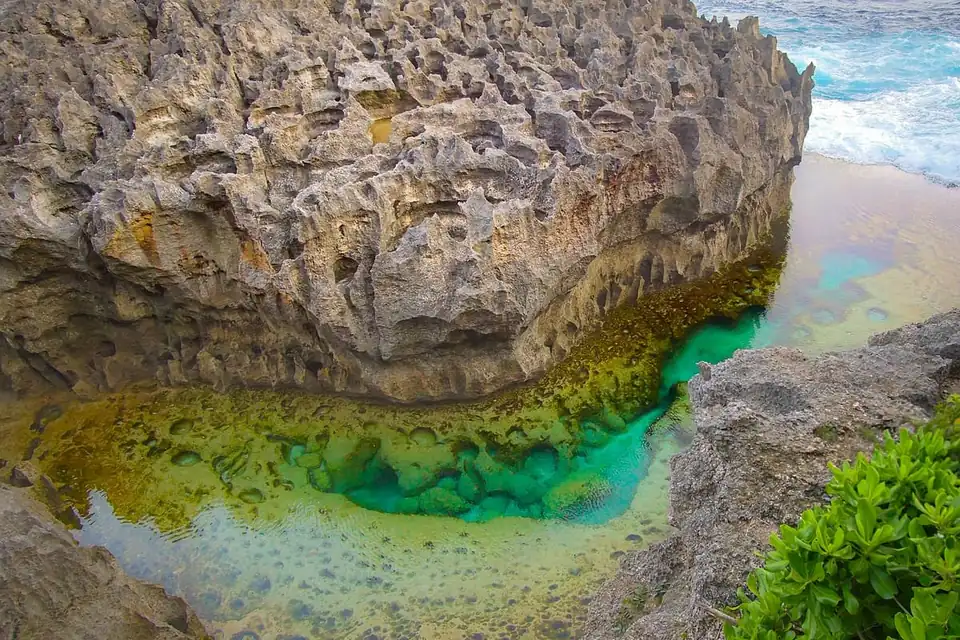
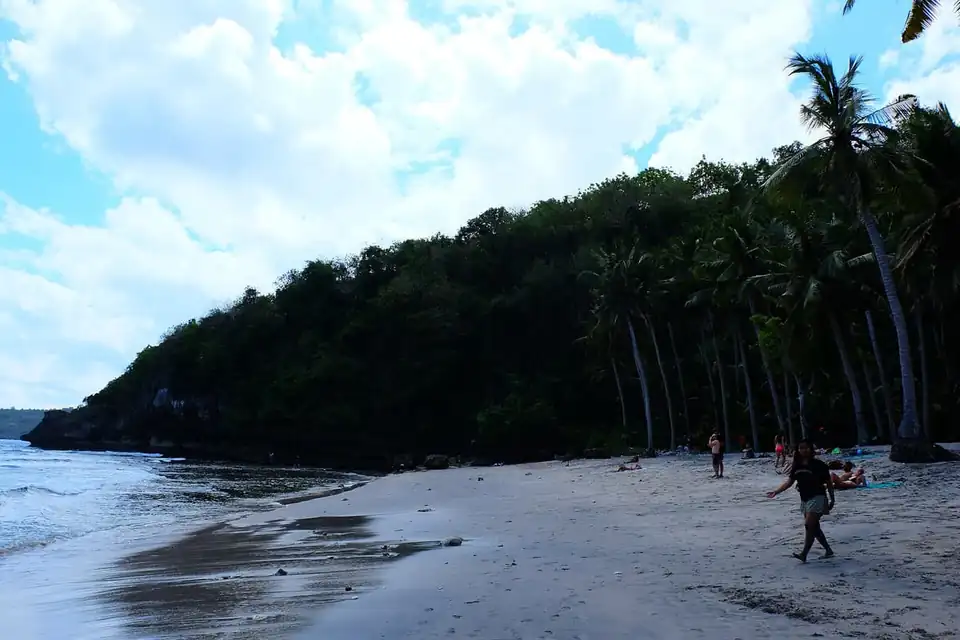
The busy period runs roughly from 11am to 3pm, when the day tours arrive. The beach is in the shadow of the cliff in the morning. Most west-coast tours combine Kelingking with Broken Beach and Angel’s Billabong, 20 to 30 minutes’ drive away, and end at Crystal Bay for a swim. For the wider island, see our guide to Nusa Penida, the list of things to do in Nusa Penida and where to stay on Nusa Penida.