
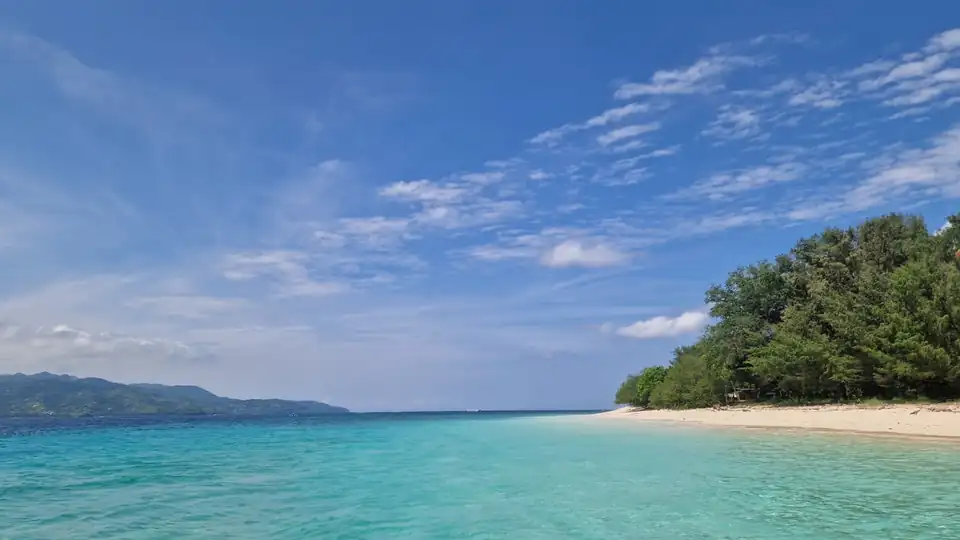
The Gili Islands are three small coral islands off the northwest coast of Lombok, an hour or two by fast boat from Bali’s east coast. They belong to the province next door rather than to Bali, and they feel different the moment you land: no cars, no motorbikes, sand tracks instead of roads, and water clear enough to see turtles from the surface. For a lot of visitors they are the easiest way to add a second island to a Bali trip without a flight.
What follows covers how to get across, which of the three to choose, what the snorkelling is actually like, and whether the whole thing is worth doing as a day trip.
Getting there by fast boat
Boats leave from four main points in Bali, and the one you pick matters more than the operator. Amed in the northeast is the shortest hop at around an hour, since it sits closest to Lombok. Padang Bai in the east is the busiest route, taking about 1.5 to 2 hours, with the widest choice of departures. Serangan and Sanur in the south take 2.5 hours or more, because the boat runs down the coast before it turns east. Return tickets generally fall between Rp 400,000 and Rp 900,000, and most include a shuttle from your hotel.
That shuttle is worth taking. Padang Bai is around two hours by road from Seminyak or Canggu, and the pickup times are early, which surprises people who booked on crossing time alone. Build the road leg into your plan and the day works; ignore it and you will spend the morning in traffic.
Which island to choose
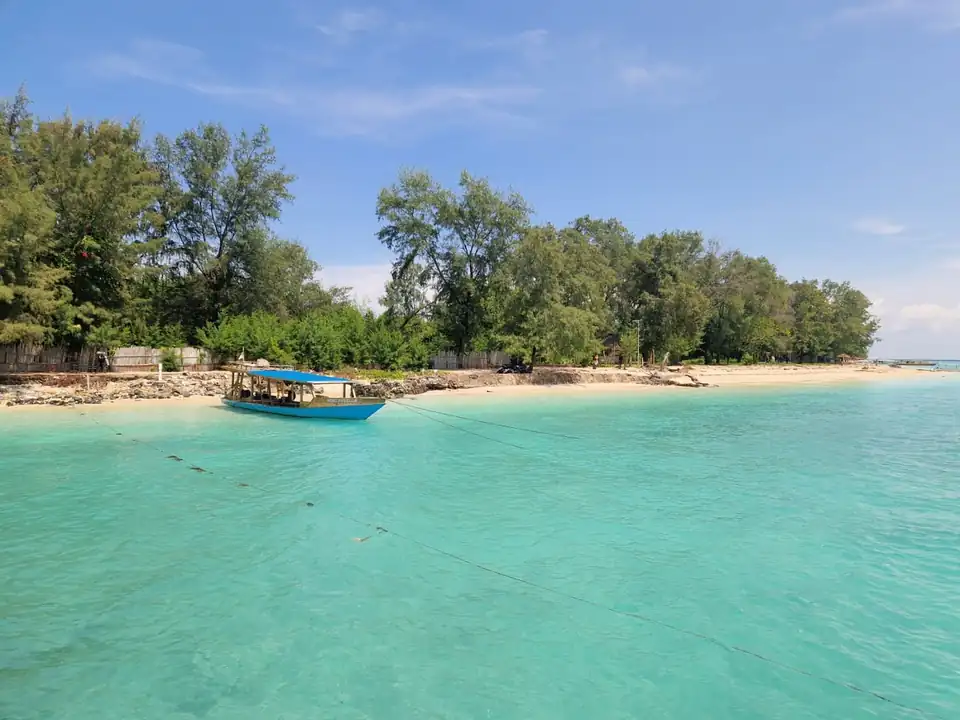
Gili Trawangan is the largest and the one most people have heard of. It has the widest range of accommodation, restaurants and dive schools, and it is the only one of the three with real nightlife. The east shore is developed end to end; the west and north are quieter, and the sunset over Bali is the reason people walk there in the late afternoon.
Gili Air sits between the two extremes. Cafes, dive shops and beach bars line the east side, but a village goes about its business behind them, which gives it a more grounded feel than Trawangan. It is a common choice for travellers who want somewhere to eat and drink without a party at the end of it.
Gili Meno is the quiet one. Fewer places to stay, fewer places to eat, a salt lake in the middle and the best turtle snorkelling of the three straight off the beach. Couples and anyone chasing a hammock end up here. If you want a bar at midnight, you are on the wrong island.
Snorkelling and turtles
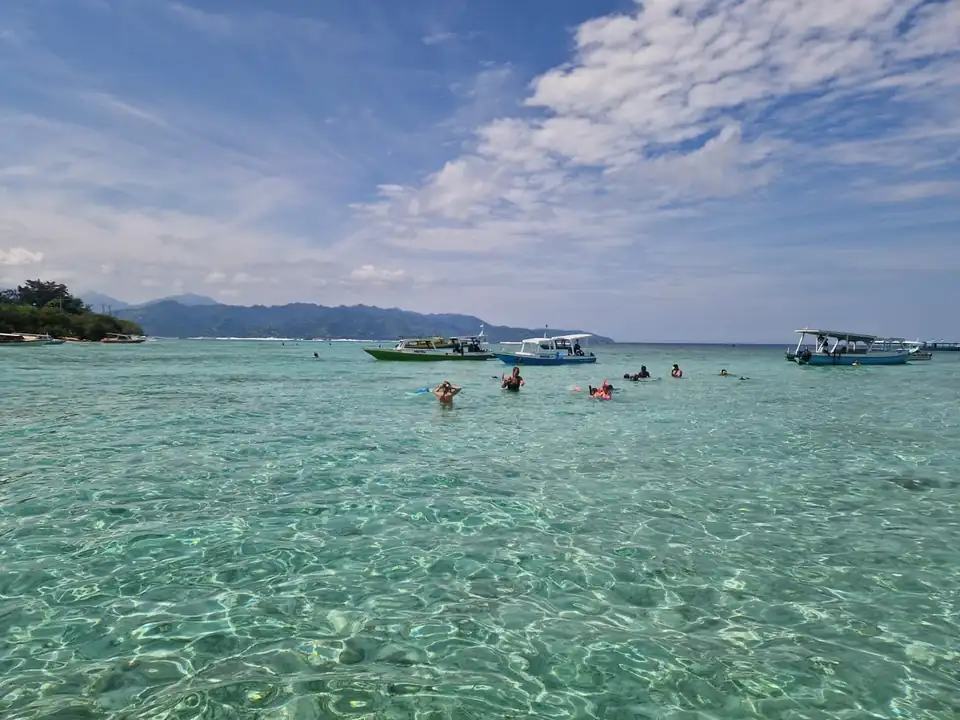
The reefs sit close in, and on all three islands you can walk off the beach and be over coral in a few minutes. Green turtles are common, particularly off Meno and the north of Trawangan, and seeing several in an hour is normal rather than lucky. Underwater sculptures off Meno have become a fixture of the boat-tour route, and both Meno and Trawangan run turtle hatcheries you can visit.
The standard island-hopping boat trip loops the three islands with three or four snorkel stops, runs about four hours and costs in the region of Rp 150,000 to Rp 250,000 per person on a shared boat. Currents between the islands can be strong, so stay with the boat’s guide rather than striking out, and be honest with yourself about your swimming.
Getting around once you land
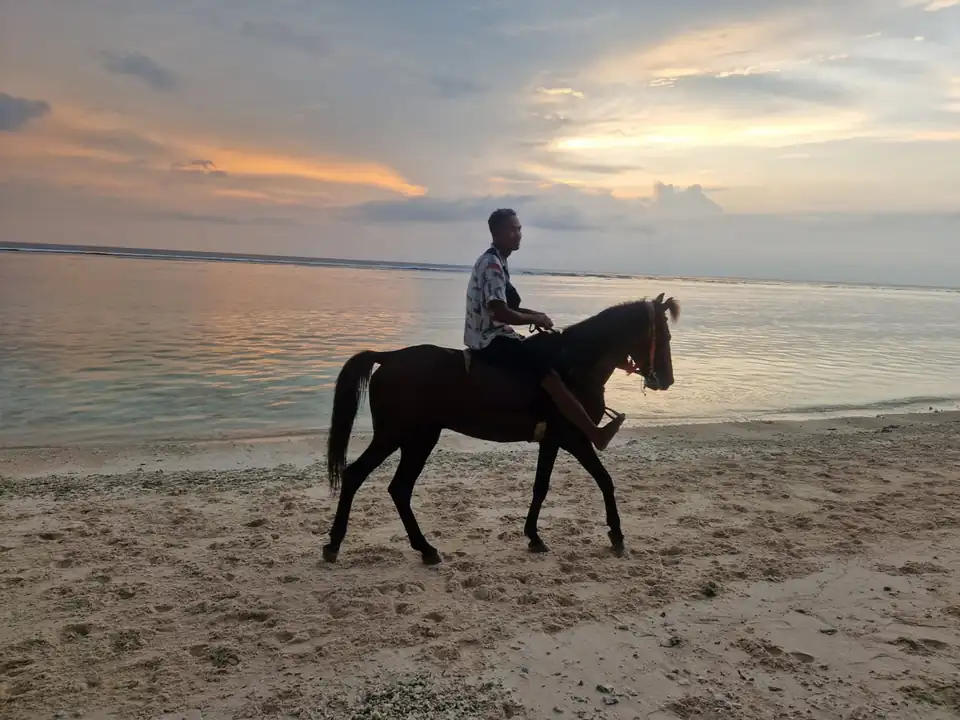
There are no cars and no motorbikes. Luggage moves by cidomo, the small pony carts that work the sand tracks, and everyone else walks or hires a bicycle. A circuit of Meno takes about an hour and a half on foot, Air about two hours, Trawangan a little more. Bicycles cost little for a day, though the soft sand on the back side of each island means pushing rather than riding in places.
Nothing is far, which is the point. It also means arriving without a plan is fine: walk until you find a stretch of beach you like, and that is the day sorted.
Day trip or stay
Operators sell the Gilis as a day trip from Bali, and from Amed or Padang Bai it holds up: an early start, a short crossing, five hours of snorkelling and swimming, and back by evening. From the south of the island the road legs make it a very long day for a short stay.
Two nights is the version most people come back happy from. It gives you a sunset, a morning on an empty beach before the day boats arrive, and enough time to visit a second island. Accommodation runs from simple beach bungalows to genuine resorts, with the widest choice on Trawangan and the least on Meno.
Practical things worth knowing
Bring cash. There are ATMs on Trawangan and Air, but they run dry and card acceptance is patchy, and there is no bank to sort it out. Electricity and water are ferried in, so power cuts happen and fresh water is precious. The islands are Muslim, and while beachwear is normal on the sand, covering up in the villages is the courteous choice, particularly during Ramadan.
There is no hospital. Clinics on Trawangan handle minor problems, and anything serious means a boat to Lombok, which is a slow business at night. That is worth weighing if you dive, and it is one more reason to take travel insurance that covers medical evacuation seriously.
Fitting the Gilis into a Bali trip
The Gilis sit naturally at the end of an east-coast leg. Diving at Amed and Tulamben, a couple of nights on the Gilis, then the boat back to Padang Bai makes a clean loop that avoids crossing the island twice. If your time is short and you want an island day rather than an island trip, a day trip to Nusa Penida or Nusa Lembongan is closer, cheaper to reach and easier to fold into a week.
For timing the trip as a whole, see when the crossings are calmest in our guide to the best time to visit Bali, and check the ferry and driving legs against our advice on getting around Bali.


