

Temples, rice country, surf beaches and offshore islands all sit within an area you can cross in half a day of driving. That makes Bali easy to plan and just as easy to overreach. Group the island into a few clear zones, give each one enough time, and the trip mostly arranges itself. What follows is a tested seven-day plan for a first visit, then longer versions at ten days and two weeks for anyone chasing the northern lakes, the eastern reefs and a slower pace.
Two ideas shape everything below. Base yourself in two or three places rather than commuting from a single hotel, because road speeds are slow and a long daily transfer swallows the day. And match the season to your plans: the dry months from May to October bring the calmest seas for the Nusa Penida crossing and the clearest mornings for a volcano hike.
The shape of a Bali trip
Think of the island in four broad parts. The centre, around Ubud, holds the rice terraces, craft villages, river gorges and the cluster of temples that define Balinese Hindu culture. The south, from Seminyak and Canggu down to the Uluwatu cliffs, is where the beaches, surf and nightlife sit, along with the airport. Offshore to the southeast lie the Nusa islands, reached by fast boat. The north and east, taking in Kintamani, Munduk and Amed, hold volcanoes, crater lakes, waterfalls and quiet diving coasts.
A first week usually covers the first three of those. The north or east earns a base of its own once you have ten days or more. With only five days, the 5-day itinerary sets out a two-base version day by day.
The 7-day itinerary
Days 1 to 3, Ubud and the centre. Land at Ngurah Rai and transfer straight up to Ubud, about one and a half hours by car. Spend the first afternoon settling in and walking the Campuhan Ridge in the cool of late day. Give the second day to the Tegallalang rice terraces, a craft village or two and the Sacred Monkey Forest, then book a Balinese cooking class for the evening. On the third day, hire a driver for a loop of temples and waterfalls north of town, or take a half-day trip out to Tirta Empul for the holy-spring ritual.
Day 4, transfer south with a stop. Move down to the south coast, breaking the drive at a temple such as Tanah Lot for a mid-afternoon look before the sunset crowds build. Check in around Seminyak or Canggu, both handy for the airport at the end of the trip.
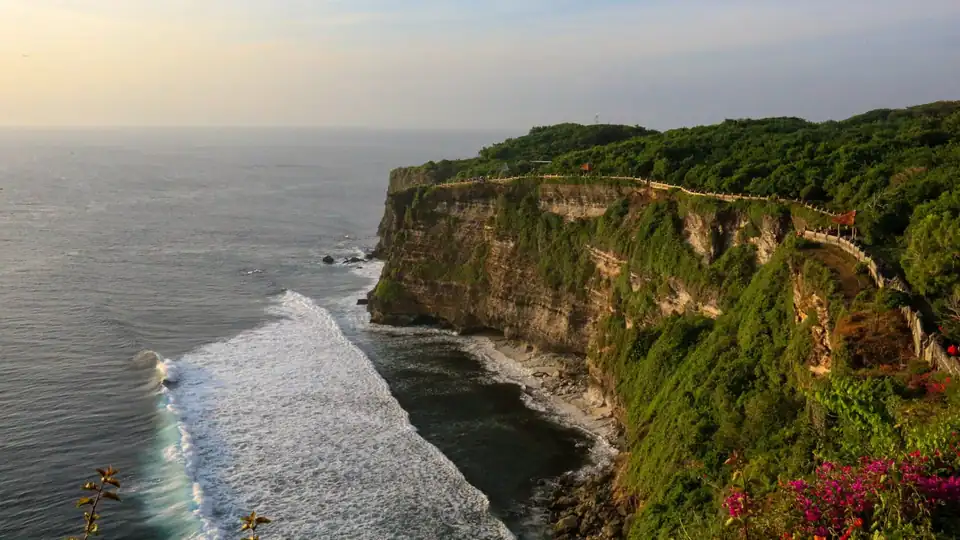
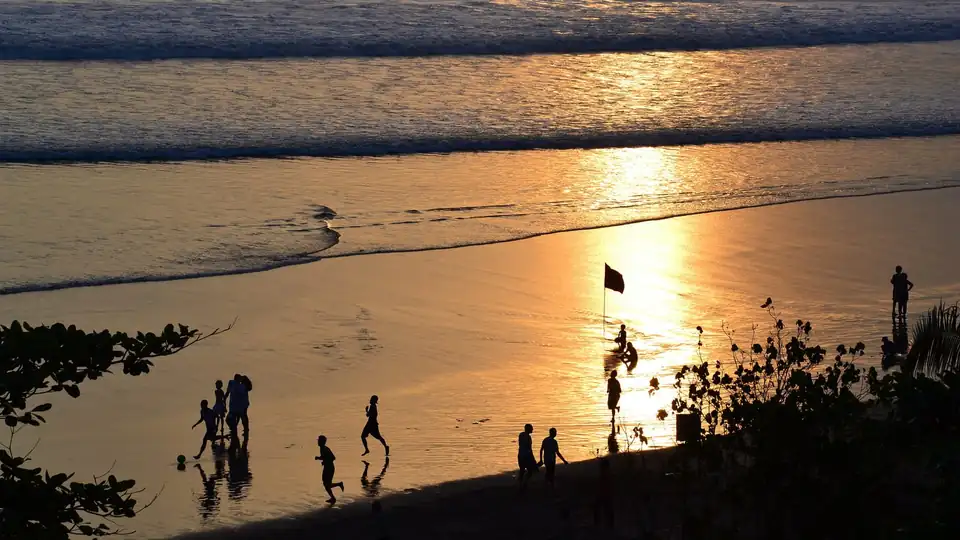
Days 5 and 6, the south coast. Use these days for the beaches and the surf. Beginners can take a lesson on the gentle beach break at Batu Bolong in Canggu or down at Kuta. Drive out to the Bukit peninsula for the Uluwatu cliffs, staying for the Kecak fire dance at sunset. Reserve part of a day for Jimbaran, where the beachfront grills serve fresh seafood after dark.
Day 7, Nusa Penida day trip. Take an early fast boat from Sanur across to Nusa Penida, then join a west-coast tour taking in Kelingking, Angel’s Billabong, Broken Beach and Crystal Bay. Return on an afternoon boat. Keep this on a dry-season day if you can, since rough seas cancel crossings.
The 10-day and two-week versions
With ten days, keep the seven-day core and add a two-night base in the north or east. The cleanest add-on is Munduk, in the hills near the twin crater lakes, where cool air, waterfalls and quiet walking trails make a change from the coast. Break the drive up from the south at a lakeside temple such as Ulun Danu Beratan.
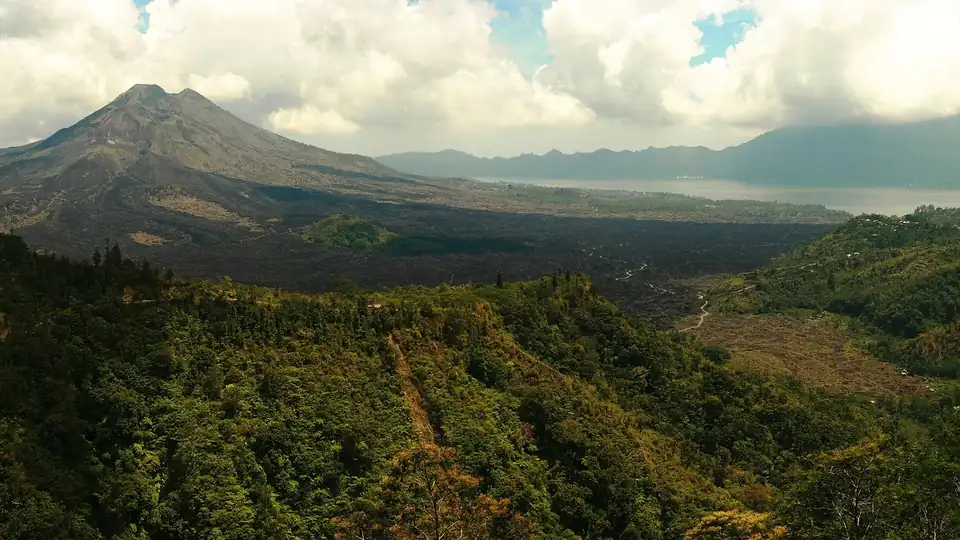
A two-week trip has room for both the north and the east. After Munduk, drop down to the coast at Amed for two or three nights of easy snorkelling and diving, including the Liberty shipwreck at nearby Tulamben. From Amed you are also within reach of a pre-dawn start for the Mount Batur sunrise trek, though many people prefer to do that from a base closer to Kintamani. If the trip continues east rather than looping back, the Gili Islands are about an hour by fast boat from this coast.

A sample two-week flow looks like this: three nights Ubud, three nights south coast with a Nusa Penida day trip, two nights Munduk, three nights Amed, then back to the south for the final two nights near the airport. That spreads the driving out and ends the trip somewhere calm before the flight home.
Where to base yourself in each zone
The base you pick within each zone sets the tone of your days as much as it saves driving time. Inland, Ubud town puts you within walking distance of the market, palace and restaurants, while the surrounding villages such as Tegallalang or the ridge above the Ayung river trade convenience for quiet and views. On the south coast, Seminyak suits anyone after beach clubs, dining and easy airport access. Canggu leans younger and more surf-focused, while the Bukit around Uluwatu is calmer and more scenic but further from everything. Families and light sleepers do well in Sanur, with its gentle, walkable seafront and the fast boats to the Nusa islands.
If you extend north or east, base your Munduk nights near the crater lakes for cool air and waterfall walks, and your Amed nights close to the dive shops at the north end of the bay. A Kintamani base makes the pre-dawn Mount Batur start far shorter, though the caldera villages are quieter in the evening than the coast.
Practical tips before you go
Carry cash in rupiah for warungs, temple fees, parking and drivers; cards work mainly at hotels, larger restaurants and supermarkets. A local eSIM, or a cheap prepaid SIM bought on arrival, keeps you on maps and the ride apps, which matter more here than most places when the street signs run sparse. Skip the tap water: stick to bottled or filtered, and refill where you can to cut plastic. Pack a sarong for the temples and reef-safe sunscreen for the beaches, and bring a light rain layer whatever the month, since highland stops such as Munduk and Kintamani run cooler and wetter than the coast.
Getting around and rough distances
No trains run anywhere on the island, so every overland journey is by road. A private driver for the day is the least stressful way to link sights that lie apart, and one can cover a whole loop of temples, terraces and waterfalls. Short trips in the south are easy and cheap with Grab or Gojek. Scooters are the local workhorse and give real freedom, though the traffic, sudden rain and unfamiliar road rules make them a considered choice rather than a casual one.
For planning, treat these as rough one-way drive times from the airport: 20 to 40 minutes to the southern beaches, one and a half hours to Ubud, two hours to Kintamani, two and a half to three hours to Munduk or Amed. Add the Sanur-to-Nusa-Penida fast boat at about 30 to 45 minutes each way. Afternoon traffic in the south routinely doubles these figures, so front-load long transfers into the morning.
When to go
The dry season from May to October is the safest window for this itinerary, above all for the Nusa Penida crossing and any volcano hike. July and August bring the biggest crowds and the highest room rates, so the shoulder months of April to June and September to October give the best balance. The wet season from November to March is warm and often sunny between showers, with lower prices, but afternoon rain and choppier seas make the boat trips less reliable. Whatever the month, pack a sarong for the temples, since Balinese Hindu sites ask every visitor to cover the shoulders and knees.


