
Bali works well with children if you choose the beach carefully and skip a few of its most photographed activities. Much of the west coast has surf and rip currents, while the east coast at Sanur has a reef that keeps the water shallow and gentle. This guide sorts the island by what suits a family, using our own sourced pages for each place and recent health advice from official bodies.
Where to base a family
Pick the base by the water, not by the nightlife. Our where to stay in Bali page says Sanur and Jimbaran are the two easiest for children, because both have water calm enough for young children to swim in, which most of the west coast does not. Sanur adds a level seafront path, which that page calls the single most useful thing on the island if you are pushing a buggy. Tuban at the southern end of Kuta is the third option, with family resorts and the water park close by.
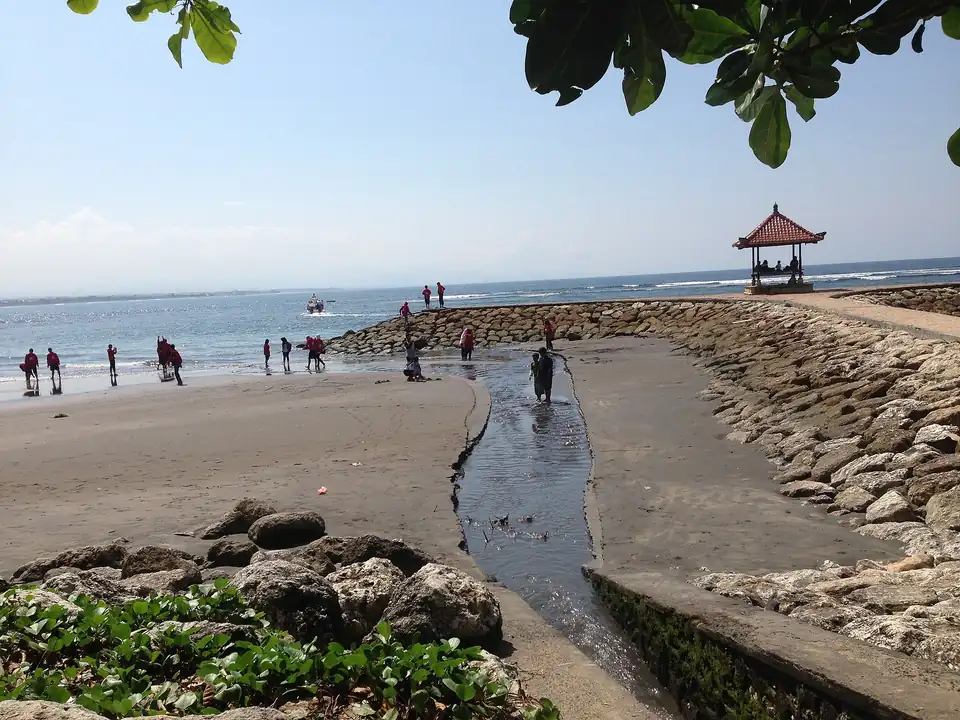
Sanur is the strongest choice if you want one base for the whole trip. It faces east across a lagoon sheltered by a coral reef, and our Sanur Beach page says families, beginners and paddleboarders use the shallow water. The Sanur destination guide and the where to stay in Sanur page list the hotels. Jimbaran Bay is sheltered by its curving shape and gentler than the surf beaches, according to the Jimbaran guide, though currents can still appear there.
Seminyak and Canggu suit adults who want restaurants and surf. The same where-to-stay page says neither has water you can casually swim in, which is the main reason to look elsewhere with small children.
Easy days that suit young children
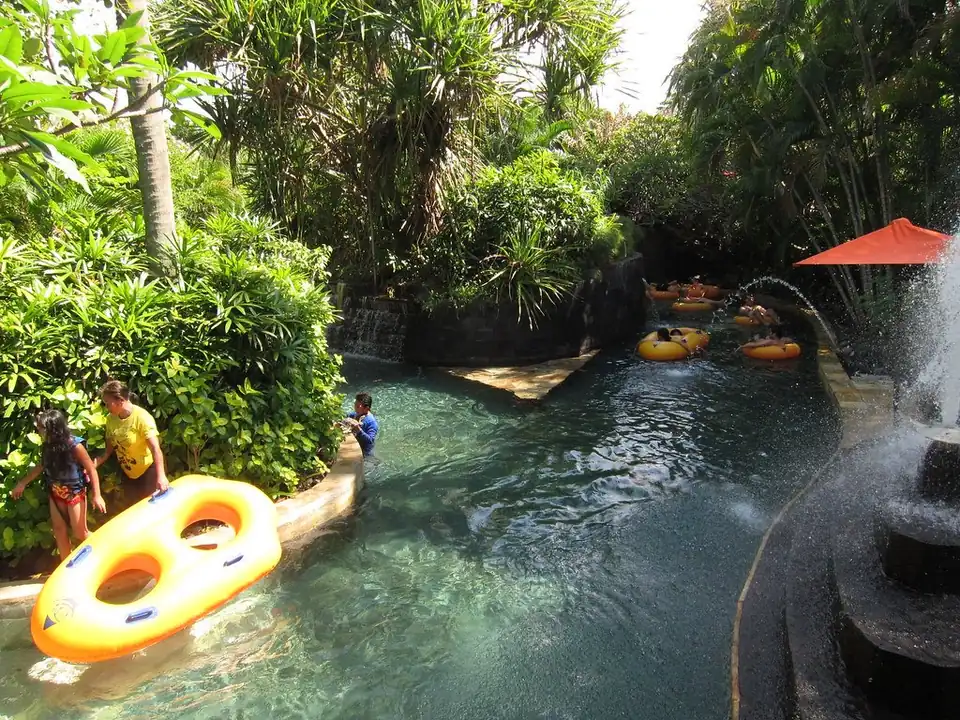
Waterbom is the obvious wet day out. The park in Kuta has been open since 1993, and our Waterbom Bali page says its Kids Area has no height minimum, while some of the bigger slides need a rider over 100 cm. Children aged 2 to 11 pay a lower official ticket price, and the park is cashless inside, so plan to load a wristband. Outside food is not allowed, and the page recommends arriving at opening time, before queues build on the big slides.
Sanur gives you the calmest family routine on the island. The Sanur Beach Walk is a paved, car-free path of about 5 km with warungs, benches and public toilets, and bicycles can be hired along it. Go around sunrise or late afternoon, bring water, and ride gently because pedestrians share the surface.
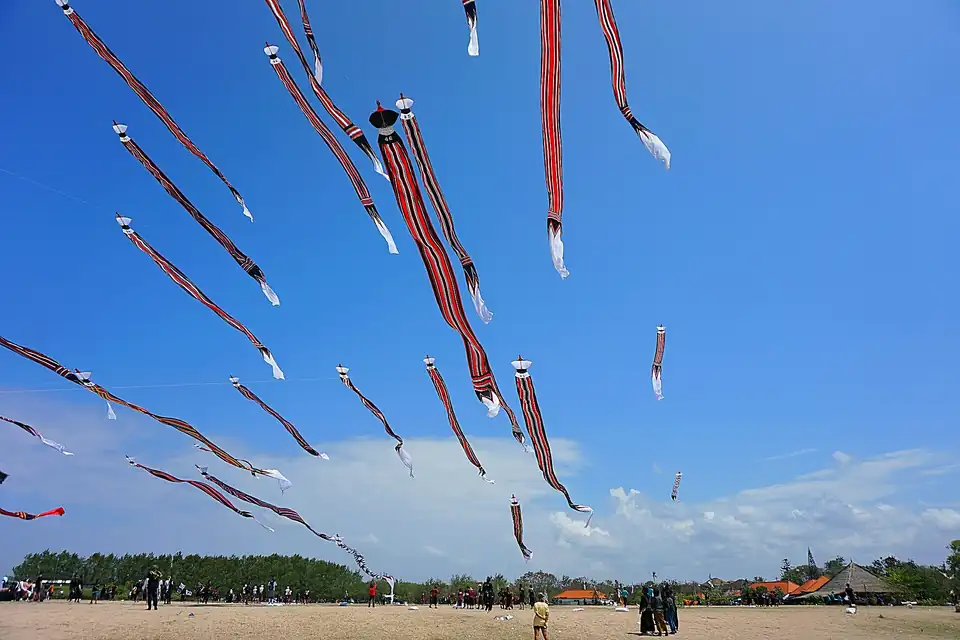
Mertasari is the quieter beach at the south end of that path. Our Mertasari Beach page describes shallow, reef-protected water that suits children, free entry and a large car park. It also warns that there are no lifeguards, so an adult should be in the water with each child, and that after heavy rain the water can carry in some rubbish. On weekend afternoons local families fly kites there, which children usually enjoy more than another hour on a sunbed.
The Monkey Forest in Ubud suits children old enough to follow rules. The Sacred Monkey Forest page says the macaques bite, usually when someone touches them, plays with them or holds out food. Visitors may not bring food, drink or plastic bags in, loose items such as sunglasses and small toys attract attention, and the page says plainly that children need holding on to. Keep a toddler in a carrier or by the hand, and go at opening time.

For something calmer in the water, Mushroom Bay on Nusa Lembongan is described in our snorkelling guide as calm and clear, with a reef close to the sand. Treat snorkelling as an activity for older children who swim well, and watch for boat wakes near the dock.
If your family wants the volcano sunrise, our Mount Batur guide says the jeep tour suits young children, because it stops at a parking area partway up and you watch the sunrise from a seat. A very young child is better off in the jeep than on the climb, though the pick-up is in the small hours, so decide whether your child will cope with that start.
Famous activities that are not for small children
The surf beaches are the first to skip for swimming. Our Legian Beach page records that a 23-year-old British visitor died in a rip current in September 2025, and the Seminyak Beach page records that a man drowned on 3 August 2025 while trying to save his child from the current. Both pages advise swimming only between the lifeguards’ flags and never at a red flag. With children, treat these beaches as places to watch sunset from the sand and swim in a hotel pool.
The jungle swings have their own limits. Alas Harum bars children under seven from its extreme rides, and heights vary a great deal between operators (see the Bali swing guide), so ask before you book.
White-water rafting depends on the river. The rafting guide says the Ayung accepts children from age nine, while most operators on the Telaga Waja set a minimum around twelve, and each company sets its own rule. Families with younger children are usually better off on the Ayung, where the water is calmer.
Quad biking is stricter again. The ATV guide found one listing that puts children aged nine to fifteen on a tandem seat with an adult and asks sixteen to ride alone, while another operator states no minimum age at all. Ask for the rule in writing and check how the insurance treats a passenger.
Health: heat, water, mosquitoes and animals
Sun comes first. The NHS says to keep babies under 6 months out of direct sunlight, and recommends a wide-brimmed hat that shades the face, neck and ears. In practice that means beach time early and late, shade in the middle of the day, and a hat on every child.
Water is simple. The UK Foreign Office says tap water is not safe to drink in Indonesia, so use bottled or filtered water for drinking and for brushing teeth, and ask hotels about ice and fruit washing.
Mosquitoes are the main illness risk to plan for. The NHS says dengue mosquitoes bite during the day, so evening-only protection is not enough. The US CDC lists Bali among the places where Zika cases have been reported in returning travellers, in a notice dated August 2026, and asks all travellers to Bali to prevent mosquito bites. Pregnant travellers should read that notice and speak to a doctor before booking. Loose long clothing, repellent suited to your child’s age and screened or air-conditioned rooms help.
Animals need the most attention with small children. The Foreign Office says there are many street dogs in Bali and monkeys around temples and tourist areas, and that rabies exists in wild and domestic animals. The CDC says anyone bitten, scratched or licked by a wild or unfamiliar animal should seek immediate medical attention. Small children are the least likely to keep their distance, so stay within reach of them near any animal. Tell your children not to touch any animal, and talk to a travel clinic well before departure about whether to vaccinate.
After heavy rain, the CDC advises avoiding swimming or wading in water that may be contaminated, because of leptospirosis, so skip muddy rivers and flooded streets in the wet season.
Planning around the practical limits
Keep days short and put the activity in the morning. Heat, traffic and a child’s patience all run out by mid-afternoon, and the south coast roads are slower than the distances suggest. Build rest into the day and book a hotel with a pool and shade, because the beach may be the only calm water for a day or two.
We could not find a dated official source on child car seats or on whether children pay the tourist levy, so check those with your hotel, driver and the airline before you travel. For the full list of sights, see our guide to the best things to do in Bali.