
The best of Bali comes from mixing its set-piece sights with a few slower experiences. What follows runs through the headline things to do and where each sits on the island. Some are famous for good reason, like the clifftop temple at Uluwatu or the rice terraces above Ubud. Others, such as shore diving at Amed or the Munduk waterfalls, take more effort to reach and pay it back with thinner crowds.
The island divides neatly into a cultural centre, a surf-and-beach south, a pair of offshore islands and a volcanic north and east. Grouping your days by zone keeps driving down and lets you pair sights that lie close together. What follows is arranged roughly that way, from the volcano at dawn to the seafood grills after dark.
Climb Mount Batur for sunrise
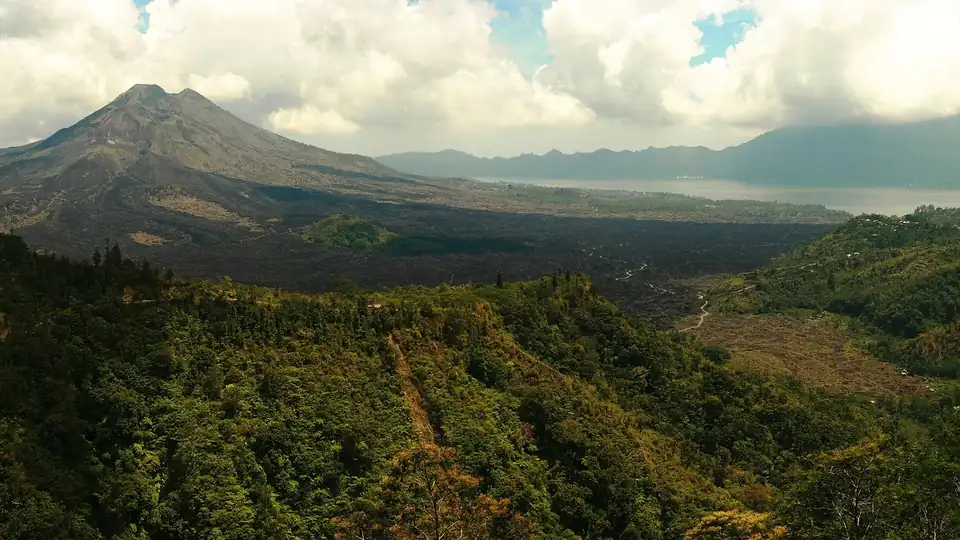
The pre-dawn trek up Mount Batur is the classic Bali adventure. Groups set off around 3am to 4am from the Kintamani area and climb for about two hours in the dark to reach the crater rim for first light. From the top the caldera opens below, with its lake and the cone of Mount Agung beyond, often above a layer of cloud. Guides are compulsory and the ground is loose in places, so decent shoes matter. Those who would rather not lose a night’s sleep can still enjoy the volcano and its lake from a warung terrace lower down.
Temples and the Kecak at Uluwatu
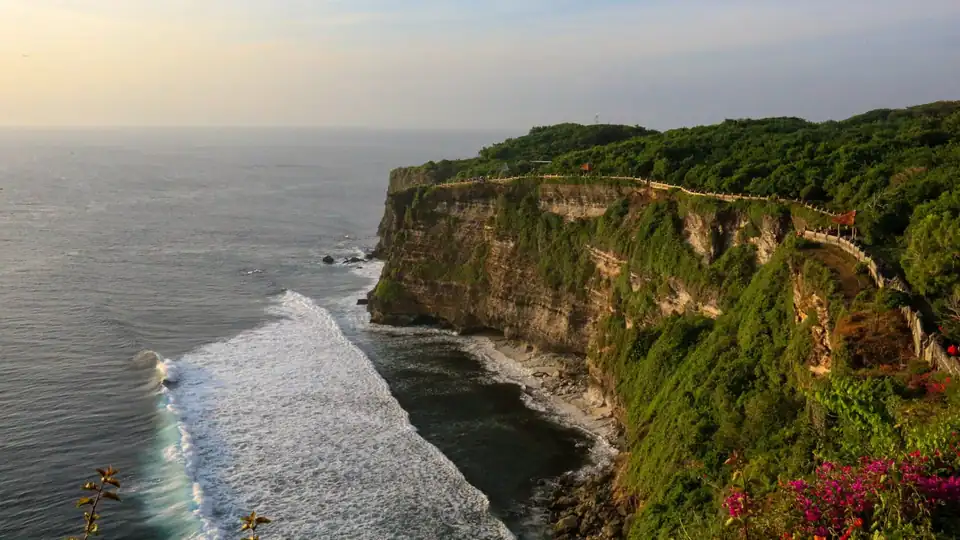
A Balinese Hindu temple belongs on any Bali trip, and Uluwatu gives you the most dramatic setting for one. The temple perches on a headland high above the Indian Ocean on the Bukit peninsula, its open-air amphitheatre hosting the Kecak fire dance each evening as the sun drops. The chanting chorus and the cliff-edge stage make it one of the island’s most memorable hours. Keep a firm hold on sunglasses and hats, since the temple monkeys are practised thieves, and wear the sarong provided at the gate.
Rice terraces and Ubud
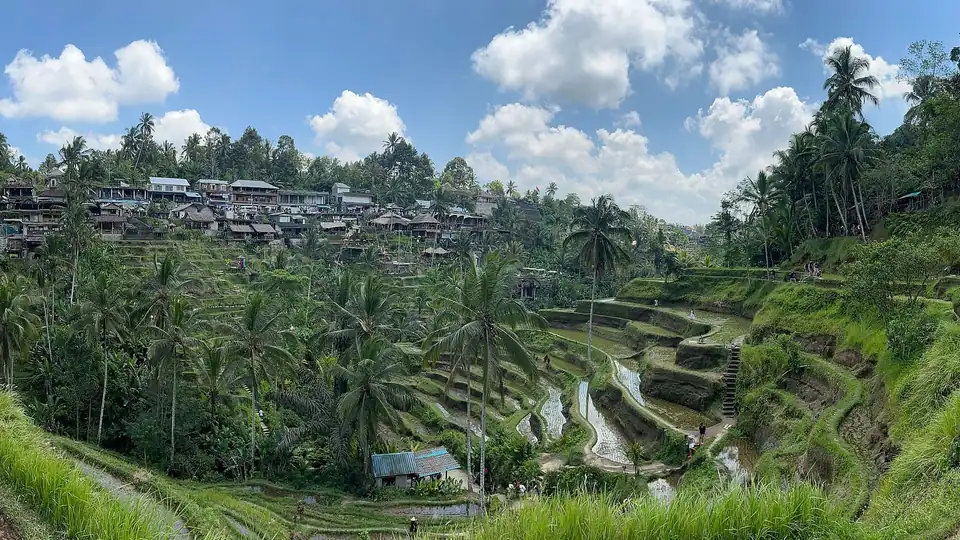
The centre of the island around Ubud is where Balinese culture is easiest to see up close. The Tegallalang rice terraces, cut into a valley just north of town, show the traditional subak irrigation system at work, and early morning is the time to walk them before the tour buses arrive. Ubud itself holds craft villages, the Sacred Monkey Forest, a royal palace and a nightly programme of Balinese dance. Give it a cooking class, a ridge walk and at least one temple, and the town starts to make sense as more than a shopping street.
A day at Nusa Penida
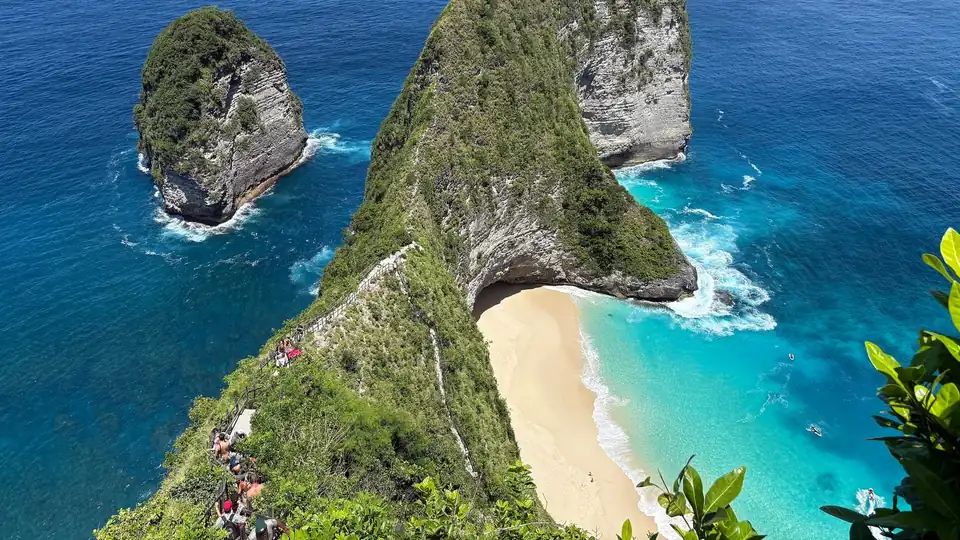
The island of Nusa Penida, reached by fast boat from Sanur, delivers the most-shared views in Bali. The T-Rex shaped headland at Kelingking Beach is the signature shot, and a west-coast tour usually pairs it with Angel’s Billabong, Broken Beach and a swim at Crystal Bay. Roads on the island are rough and journeys slow, so a day trip covers one coast well rather than both. Anyone chasing manta rays or the seasonal mola mola sunfish should book a dedicated snorkel or dive boat instead.
Surf the south and dive the east
Surfing is woven into Bali’s identity. Beginners find gentle beach breaks at Canggu and Kuta, where the sand bottom is forgiving and lessons are cheap. Stronger surfers head for the reef breaks of the Bukit, including Uluwatu, Padang Padang and Bingin, which work best in the dry season. On the other coast, Amed is the base for easy shore snorkelling over coral gardens, and nearby Tulamben holds the USAT Liberty shipwreck, shallow enough that snorkellers can see it from the surface while divers explore below.
Waterfalls, sunsets and seafood
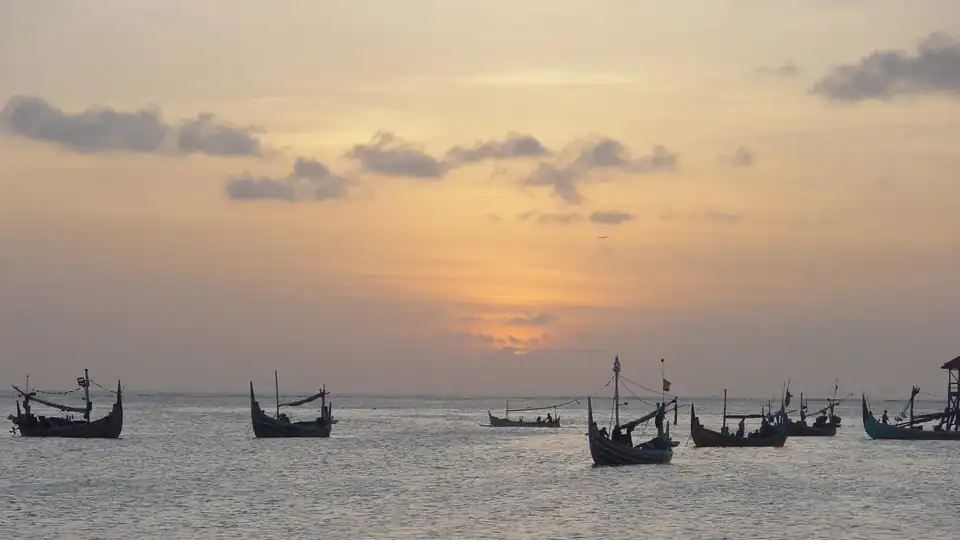
For a change of scene, the hills around Munduk hide a string of waterfalls set in cool forest, reached on short walks that make a break from the coastal heat, with the Handara Gate on the road between them. Closer to Ubud, Tegenungan is the one fall you can fit into a half day, and Alas Harum is where the swings and terrace pools are. Back on the flat, Tanah Lot draws crowds at sunset for its temple set on a rock just offshore, best seen a little before the peak hour to keep ahead of the buses. End a day in Jimbaran, where the beachfront grills cook the day’s catch over coconut husks and you eat with your feet almost in the sand. Between them, these three cover the softer, slower side of the island that balances the early starts and long drives elsewhere.
Culture, food and slower days
Not every day needs a dawn start or a boat. A Balinese cooking class is one of the most popular half-days on the island, usually beginning with a market walk before you learn to make dishes such as satay lilit and base gede, the spice paste at the heart of the local kitchen. Coffee lovers can visit a hillside plantation to taste the range, including the curiosity that is luwak coffee. Ubud runs a nightly programme of Balinese dance, from the legong to the barong, staged in temple courtyards and the palace. Wellness is woven through the island too, with yoga studios, spas and retreats concentrated inland around the rice fields. A spa afternoon here costs a fraction of what it would at home, and the flower bath that ends most treatments is worth booking for its own sake.
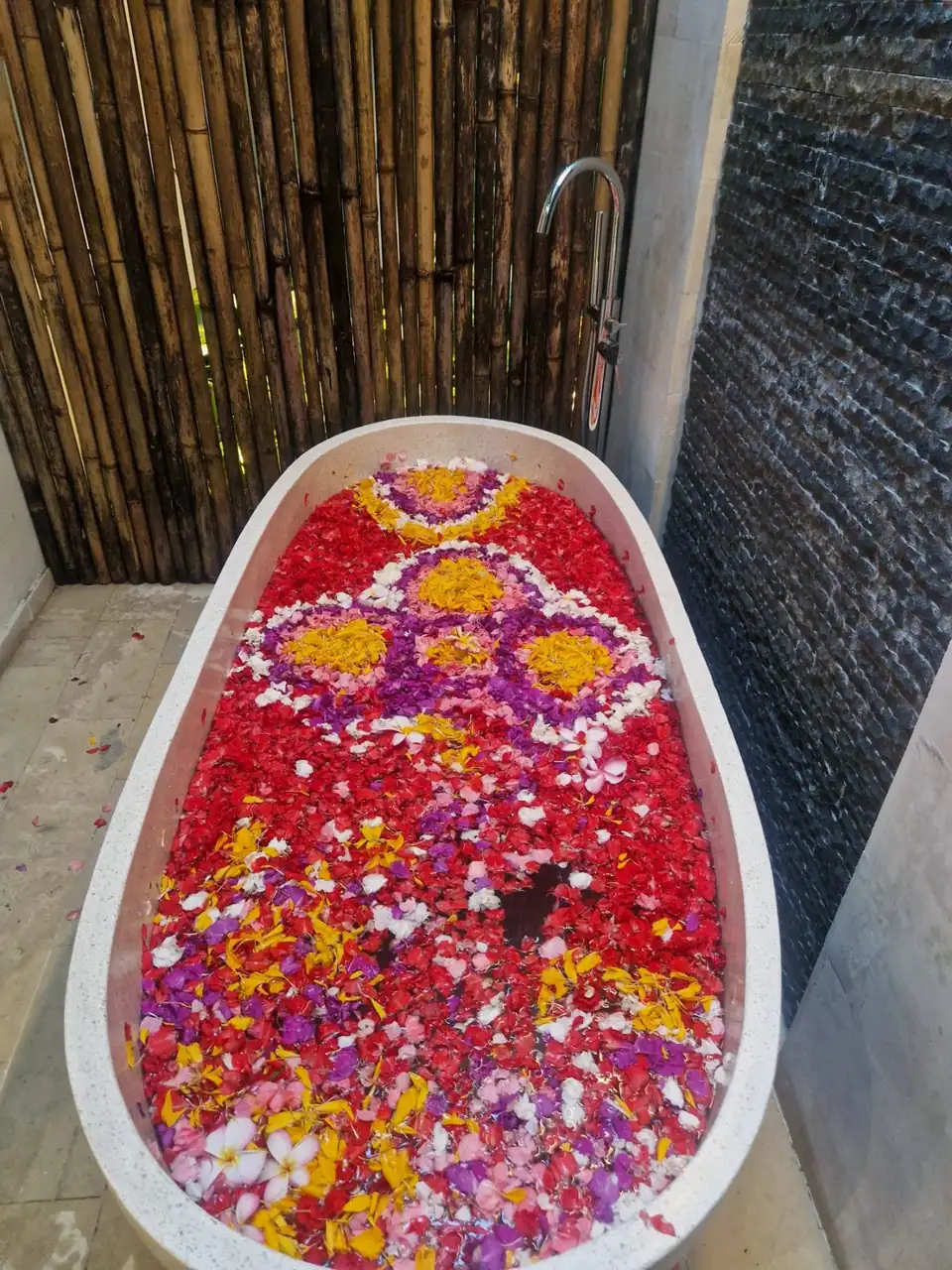
Slow mornings deserve the same attention. Ubud and Canggu have built a cafe culture that rivals any city, and a long breakfast over good coffee is a legitimate plan for a day that has nothing else in it.

The volcanic north around Kintamani
Beyond the Mount Batur trek, the Kintamani highlands reward a slower visit. The caldera holds a lake and hot springs, and the rim villages look out over the whole volcanic bowl from cafes built for the view. Nearby, the terraced slopes and the Ulun Danu Batur temple show how closely Balinese life is tied to the mountain. Because the air is cool and the drive is long, many people fold Kintamani into a day that starts with the sunrise climb and winds back through a coffee plantation and a waterfall on the way south.
Making the most of your time
Group these experiences by area to keep driving down: the volcano and highland temples in the north, culture and rice terraces in the centre, surf and cliffs in the south, and the reefs offshore. Book the fixed-departure activities ahead, above all the Mount Batur trek and the Nusa Penida boat, then leave the temples and beaches as flexible fill. Come in the dry season if you can, carry cash for entrance fees and warungs, and keep a sarong to hand so a temple never has to be skipped. Balanced this way, a week delivers the headline sights and still leaves room for a slow afternoon or two.


