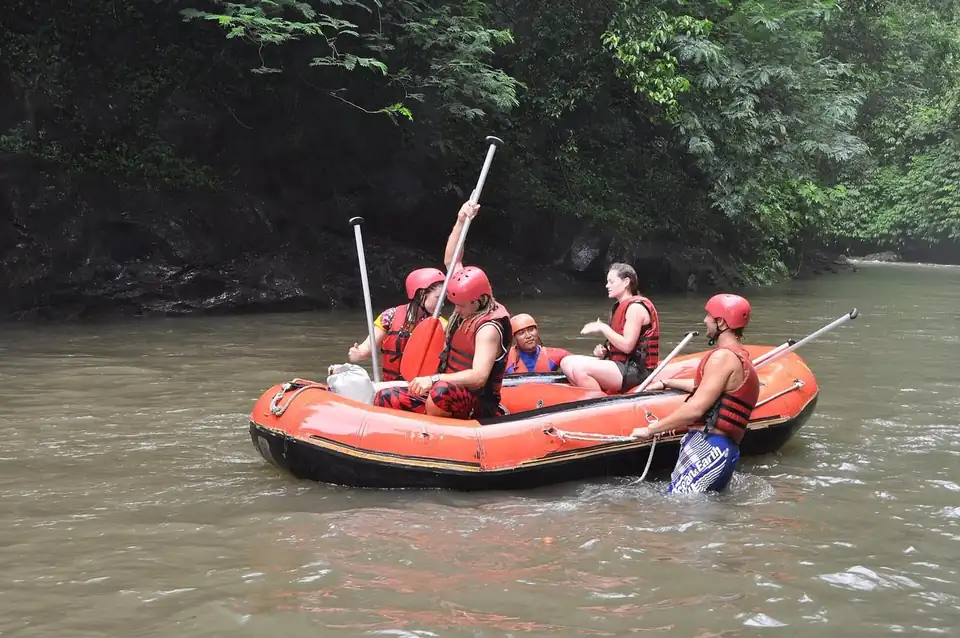
White water rafting is one of the most popular half-day activities near Ubud, and it is easier than it sounds. Most visitors run the Ayung River, which is graded for beginners in the dry season, finish with a meal and are back at their hotel by mid-afternoon. A second river, the Telaga Waja in the east, is the choice for people who want bigger water. This guide explains how the two compare, what the river grades mean, what to expect on the stairs, who can go, and how to read the tour table below.
The two rivers sold in Bali
Rafting in Bali happens mainly on two rivers. The Ayung is the widest and longest river on the island, and the section used for rafting is at Kedewatan, just outside Ubud. Indonesia’s tourism board puts it about 20 minutes’ drive from Ubud, which is why almost every operator in the town sells it. A trail of about 10 kilometres takes 1.5 to 2 hours, with lush forest, rice fields, carved stone walls and small waterfalls along the banks.
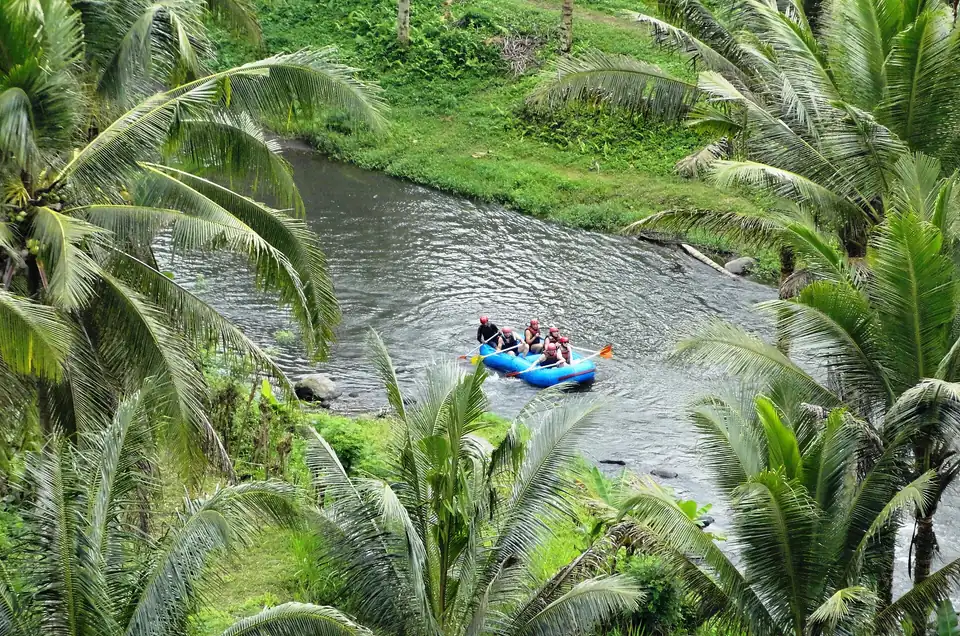
The Telaga Waja is in Karangasem, East Bali. It is described as more challenging than the Ayung, with rapids that sit above the beginner level, and a drive of 1 to 1.5 hours from most hotels in the south. Trips there run about 2 to 3 hours on the water, and a full day usually lasts around 6 to 8 hours once you add travel and lunch.
All the tours in the table below are on the Ayung. If you want the Telaga Waja, you will need to book it directly with an East Bali operator or through a hotel desk, and plan a longer day.
River grades and what they mean for beginners
Rafting rivers are rated on an international scale of six grades, which describes the strength of the current, the size of the waves, the rocks and the drops. In the dry season the Ayung is classed as class II and III. That means some rough water, a few rocks and small drops, but no considerable danger, and basic paddling skill is enough. Each raft carries a guide, and you get a short lesson on basic manoeuvres before you start.
The Telaga Waja is graded 3 to 4, which is above beginner level. Guides adjust the pace to the group, so most first-timers manage, but you should listen closely to the briefing. If you have never rafted and are nervous about water, the Ayung is the gentler start. Some fitness helps on the stronger rapids of either river.
Steps down and up
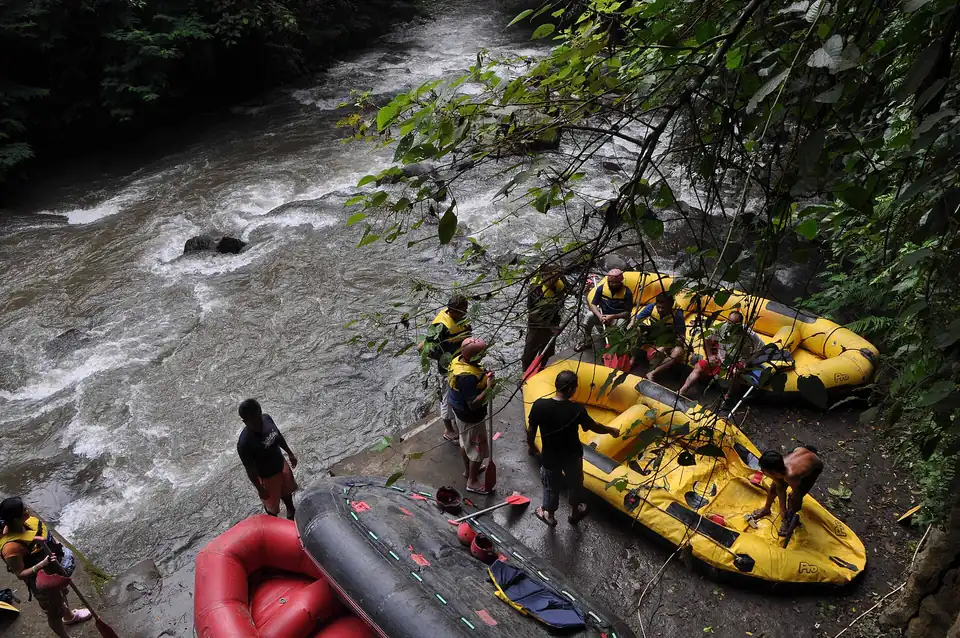
The one part of a rafting day that surprises people is the stairs. The Ayung runs in a deep gorge, so you walk down a long flight of steps to the put-in, and after the finish you climb back up to the restaurant or the changing rooms. The size of the climb depends on the operator and the start point. One recent review counted around 394 steps at the end, but another count will differ, and different companies use different start and finish points.
Minimum ages
Age rules depend on the operator, so check the exact tour. For the Ayung, Indonesia’s tourism board says children as young as age 9 up to a maximum of 65 years can take part, while advising you to read each company’s own terms. For the Telaga Waja, most operators set a minimum age around 12 years old, and some set a maximum age for safety reasons. Families with young children are usually better off on the Ayung, where the water is calmer and many companies take younger riders. Everyone, including children, wears a helmet and life jacket.
Wet season and dry season
The seasons change the river more than the weather. In the dry season, the Ayung is calm enough for beginners, with the gentler class II and III rapids described above. When the rains arrive and the water level rises, the Ayung is classed as class IV, with medium large waves, and the sharp bends take more skill. After rain the Telaga Waja also gets stronger, which suits thrill-seekers.
Neither season is bad. Choose the dry months for a relaxed, scenic run with time to look around, and the wet months if you want a rougher ride and are happy with wet, grey skies. If heavy rain has pushed the river up, an operator may cancel or shorten a trip, so book a date with a spare day behind it.
What is included, safety and insurance
Typical Ayung packages include hotel pickup and return, rafting equipment (a helmet, life jacket and paddle), a safety briefing from the guide, bottled water, a buffet lunch and insurance. Telaga Waja packages usually include a guide, safety gear and lunch, with transfers on most. Check the listing for each of these rather than assuming, and check the excess and exclusions in the insurance wording, because the policy is the operator’s and rules vary by company.
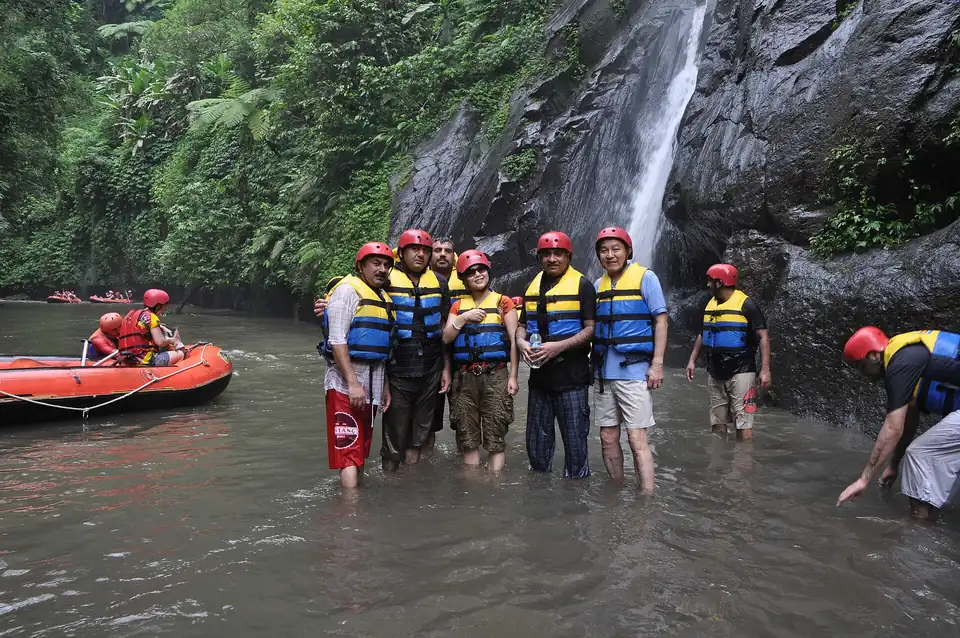
Safety comes down to a few habits. Listen to the briefing, keep your feet in the boat’s foot loops where shown, follow the guide’s paddle commands and do not stand up in the raft. Tell the guide about heart, back or pregnancy concerns before you start. Wear a secure strap on any glasses and leave jewellery and anything fragile behind.
Combining rafting with an ATV ride
A popular option is a combined day. Operators near Ubud sell a quad bike ride of about 2 hours through rice fields, bamboo forests and village tracks, then lunch and Ayung rafting, with a coffee plantation stop on some versions. Expect to get both dirty and wet, so bring a spare set of clothes. Some combo tours are priced to compare well against booking two separate activities, and they save you arranging two pickups. The table below compares the tours, combos included.
Planning your day in Ubud
Most Ayung trips start in the morning and finish with lunch, so you can book a second activity for the afternoon or simply rest. Wear swimwear or quick-drying shorts and a top you do not mind getting wet, and leave valuables at the hotel or in the operator’s locker. Sunscreen and a hat help on the stretches where the gorge opens out. Photographs are usually taken by the guides or a photographer at the rapids and sold afterwards, so there is no need to carry a camera on the raft.
Rafting fits neatly around a morning or afternoon of sightseeing. Browse the Ubud tours for other activities, or pair a morning run with a visit to the Tegallalang rice terraces, the Tegenungan waterfall or the Sacred Monkey Forest. Book early in the day if you can, because the light is better for photographs on the river, and keep your evening free to recover from the stairs.


