
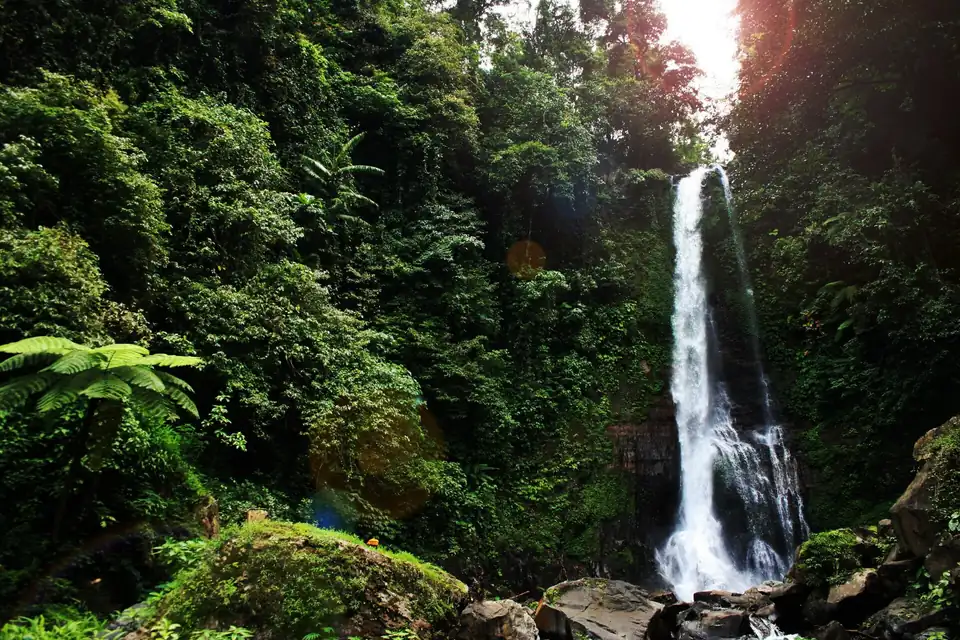
Bali’s waterfalls fall into three groups, and the group you choose decides the shape of your day. Around Ubud there are four falls that can be visited in a morning. In the Munduk highlands there are two more, set among clove and coffee plantations. On the north coast, Sekumpul and Gitgit are a long drive away but are the biggest of the lot. This guide goes through each fall in turn: what it looks like, how hard the walk is, whether you can swim, and what you pay at the gate. The table below compares the guided waterfall tours if you would rather not drive yourself.
Waterfalls near Ubud
The falls in the Gianyar lowlands are the easiest to reach, and most visitors base themselves in Ubud for them. You can see two or three in a morning, and the Ubud tours page lists organised days that do exactly that.
Tegenungan is the closest, in Kemenuh village south of Ubud. Our Tegenungan Waterfall page has the detail: the fall is about 15 metres high, on a river with a strong flow, and it is reached down a long staircase. Entry was Rp 20,000 in 2023, and the site opens from 6.30am to 6.30pm. Treat swimming here with caution. Two people drowned under the fall in 2017, and the advice is to paddle only at the edges and never walk into the falling water.
Tibumana is the one most people picture when they search for Bali waterfalls: a curtain of water falling over a mossy rock face into a pool, with a path through rainforest and over bamboo bridges. A guide updated in February 2026 gives the fee as 20,000 IDR, with lockers for a little extra, and opening hours of 7 am to 6 pm. The walk down is about ten minutes. The pool at the base is around waist deep, so swimming is possible, and the same guide recommends arriving before 9 am to beat the crowds.
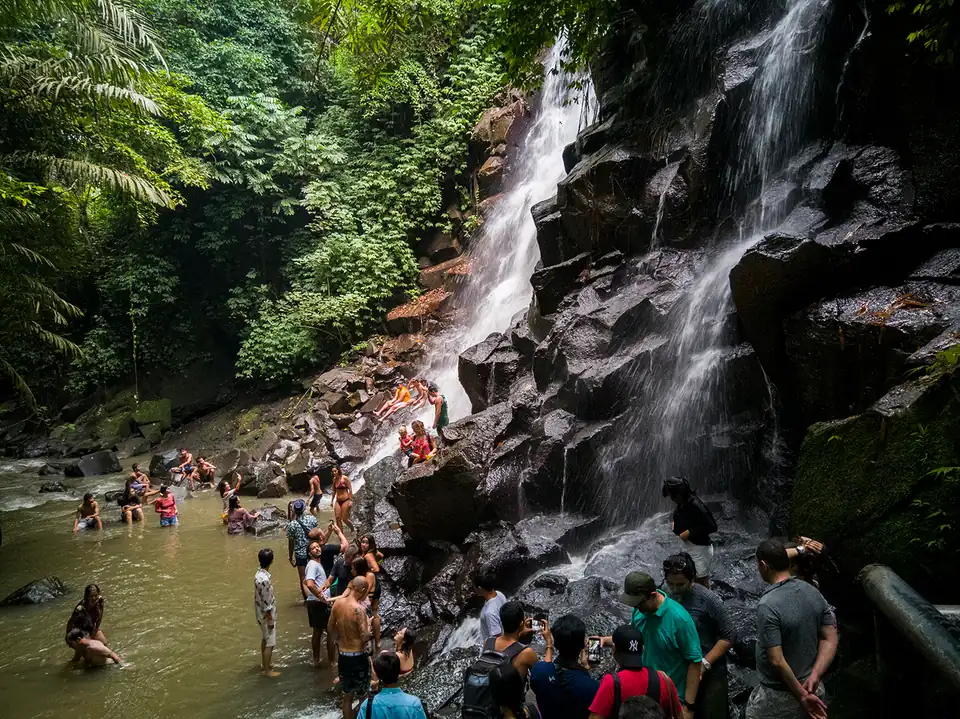
Kanto Lampo is a different kind of fall: a wide, stepped cascade over dark rock, where visitors wade up the stream to stand in the flow. A guide updated in September 2026 puts the ticket at IDR 25,000, with the site open from 6:30 AM to 5:30 PM, and describes it as about 30 minutes southeast of Ubud by car. The walk from the car park is 5 to 7 minutes, mostly on stairs. It is not a swimming spot, because the water is ankle to knee deep. The rocks are slippery, so wear sandals with grip. Crowds build between 10:00 AM and 1:00 PM, so go early.
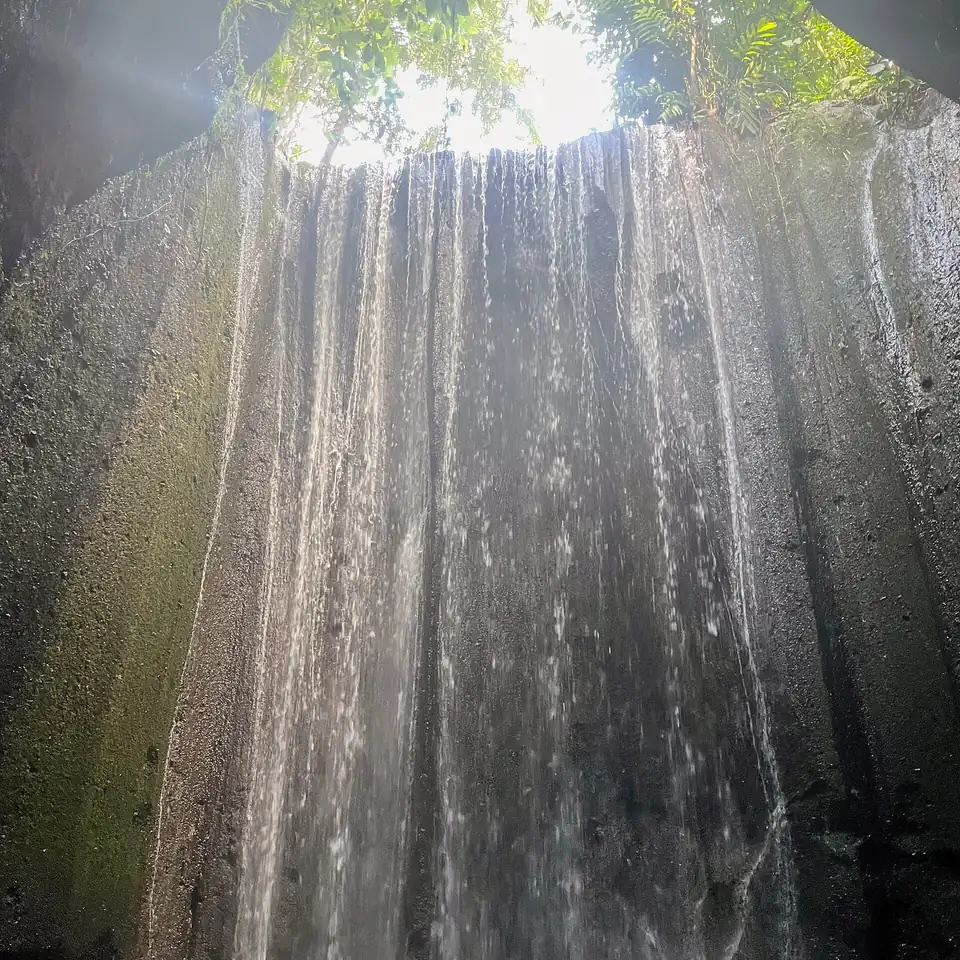
Tukad Cepung sits inside a narrow canyon, and the draw is the shafts of sunlight that come through the cave opening. The same September 2026 source lists the entrance fee as IDR 30,000, paid in cash, with the site open from 7:00 AM to 6:00 PM. The hike is about 20 minutes, mostly down steep stone steps, and the climb back is the hard part. The water is shallow, for wading rather than swimming. For the light beams, go between 9:00 AM and 11:00 AM.
The Munduk highlands
Munduk is the mountain village in the north-central highlands, in Buleleng, and its falls are cooler, wetter and greener than the ones around Ubud. See our guide to Munduk for where to stay and what else is nearby.
Banyumala is the better of the two for swimming. Our Banyumala Twin Waterfall page describes a main fall of about 36 metres plus a smaller second fall, in a shaded canyon. The ticket is Rp 50,000, and children under 10 go in free. The walk down is 10 to 15 minutes and about 1 km, mostly on concrete steps with muddy sections. The pool is cold and about waist deep, chest deep at its deepest, and the calmer second fall suits swimming best. It is open from 8am to 6pm, and the busiest hours are 12pm to 2pm, so aim for before 10am.
Munduk and Melanting are two falls on a shared trail near Munduk village. Our Munduk Waterfall page covers them: Munduk Waterfall is about 25 metres tall, with heavy spray and a small pool, and Melanting is reached down a stepped path with handrails in about 15 minutes. An April 2026 guide lists Rp 20,000 at the shared trailhead. Note that maps use the name Munduk Waterfall for two different falls, so follow the signs. Together the two take about two hours.
Banyumala and Munduk are 8.5 km apart, which makes them a natural pair. From Ubud the drive to Banyumala is about 56 km and 1.5 hours, so this is a day trip with an early start, or an overnight stay in the highlands.
The north: Sekumpul and Gitgit
Both falls are in Buleleng, on the north side of the island, and neither belongs to a region on this site, so plan them as day trips from Ubud or as part of a night in the highlands.
Sekumpul is the one people travel for. It is a cluster of falls dropping down moss-covered cliffs in a valley, and it is the biggest and most photographed in Bali. A guide updated in September 2026 gives three ticket levels at the village entrance: a viewpoint only for 20,000 IDR, a medium trek of 125,000 to 150,000 IDR taking 2 to 3 hours, and a long trek of 200,000 to 250,000 IDR taking 4 to 5 hours. The treks include a mandatory local guide, and the entrance is open from 8 AM to 5 PM. A second guide describes the walk back to the car park as a 30 to 40 minute climb up what feels like a never-ending flight of steps, and says the base is very slippery in the wet season.
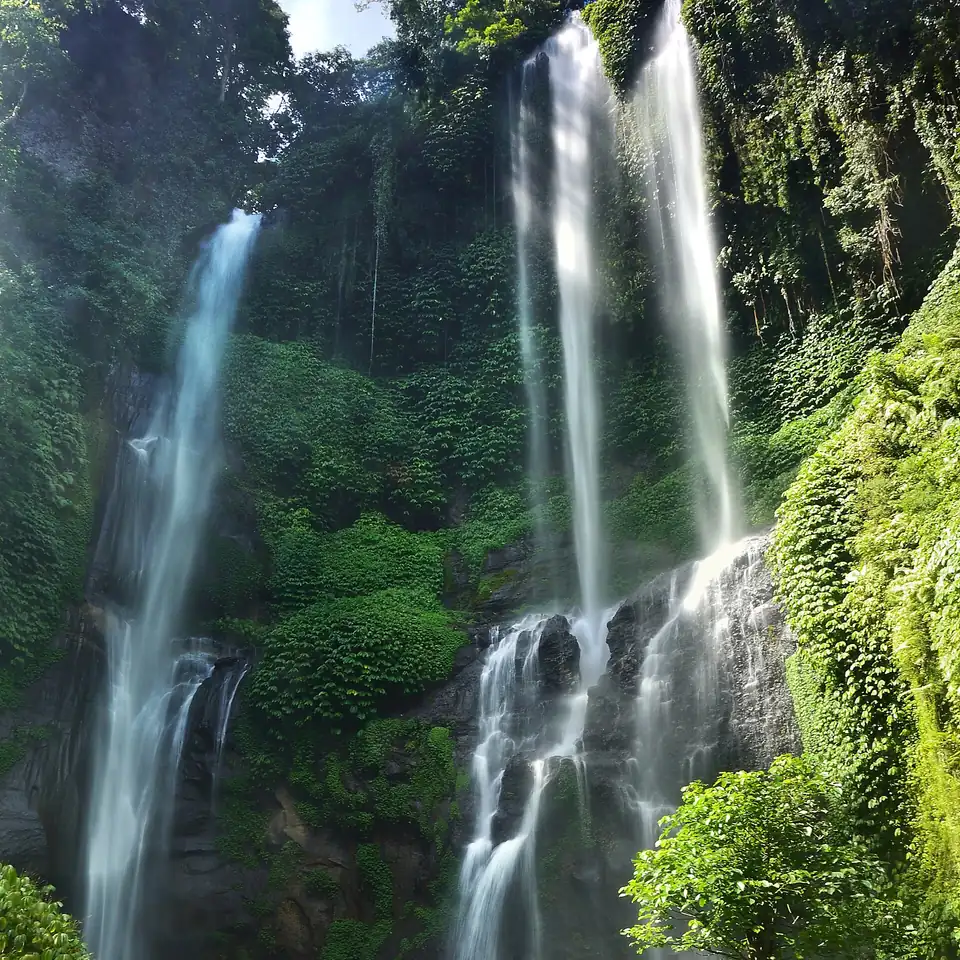
The drive is the real cost. That September 2026 guide gives 2.5 to 3 hours from Ubud. Only pay at the official entrance near the “Welcome to Sekumpul” sign, because the same guide reports fake checkpoints on the road that try to sell guides at inflated prices.
Gitgit is a much easier stop, on the main Bedugul to Singaraja road. It is about 35 metres high, and a guide describes the walk down as about 15 to 20 minutes and not too difficult, with a hired guide optional. The fee in that guide is cheap, in the same range as Kanto Lampo, but the page is undated, so check the price at the gate. It is a good stop on the way down from the highlands to the north coast.
How to plan a waterfall day
Drive times. From Ubud, the Gianyar falls are around half an hour away, Banyumala is about 1.5 hours, and Sekumpul is 2.5 to 3 hours. Roads are slow, so allow more than the maps suggest. Do not try to combine the lowland falls and the north in a single day: pick one cluster.
Start early. Almost every guide above says the same thing: the falls are quietest in the first hours, and most gates open between 6:30 and 8 in the morning. Early light is also better for photographs, and by midday the tour buses arrive.
Steps. Every fall here involves a staircase, and the climb back is harder than the walk down. Wear shoes with grip, not flip-flops, and carry water. Tegenungan and Sekumpul have the toughest climbs back, while Kanto Lampo is the easiest.
Swimming rules. Treat the pool at the foot of a fall as a place to cool off, not a swimming pool. The force of falling water is the danger, as the Tegenungan deaths show. Stay at the edges, avoid jumping from rocks, and do not enter the water if the stream has turned brown.
The wet season. From November to March the flow is heavier and the steps are slippery. A September 2026 guide to Tukad Cepung warns that water levels at the base can rise quickly after heavy rain, and the same advice applies to every canyon fall on this list. In the wet season, go early, check the weather before you set off, and leave the canyon falls alone after rain. Our best time to visit Bali page has the season in more detail, and the weather guide covers the rain.
Tours or a driver. A hired driver lets you combine falls on your own timetable, and the guided tours in the table below handle transport and tickets. For the wider picture of things to do, see our Bali itinerary guide.


