
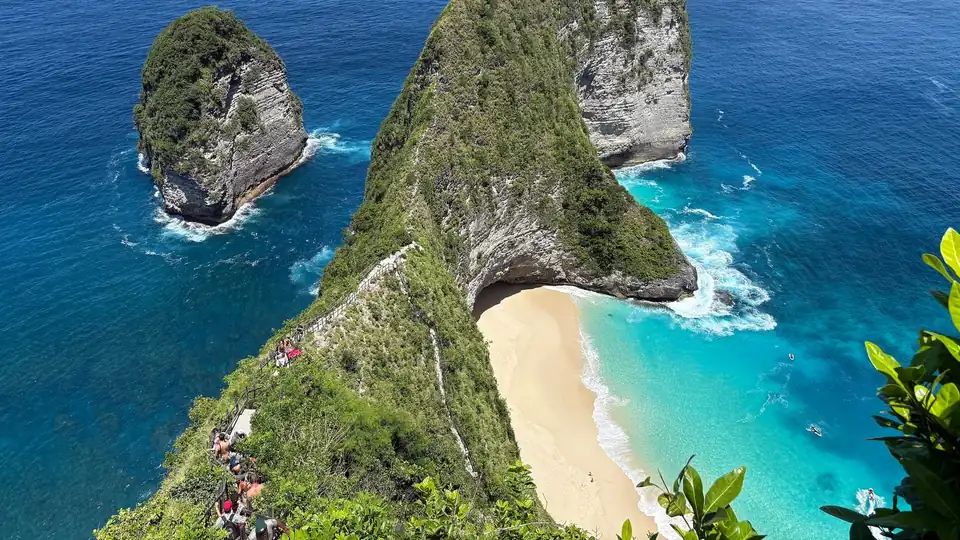
Bali’s coastline changes character every few kilometres, from the wide golden sand of the southwest to the black volcanic shores of the east and the limestone cliffs of the offshore islands. That variety is the point of this guide: rather than rank beaches against each other, it groups them by area and by what each does best, so you can match a morning or an afternoon to the right stretch of coast.
Distance matters here, because road speeds are slow and the coasts pull in different directions. The southwest beaches sit close together and near the airport, while the Bukit coves run down a single peninsula. The Nusa islands need a fast boat, and the eastern snorkelling coast is a two to three hour drive away. Plan by cluster and you will spend less time in traffic and more on the sand.
Seminyak, Double Six and the southwest
The long, straight beaches from Seminyak north through Double Six set the template for Bali’s beach-club culture. The sand is broad and golden, the surf is steady rather than fierce, and the sunset draws a crowd to the bars and daybeds each evening. This is a coast for lounging, cocktails and people-watching more than for calm swimming, since rip currents run along it. Lifeguards patrol the busier sections, so keep between the flags and heed the coloured warnings.
Canggu: Batu Bolong and Echo Beach
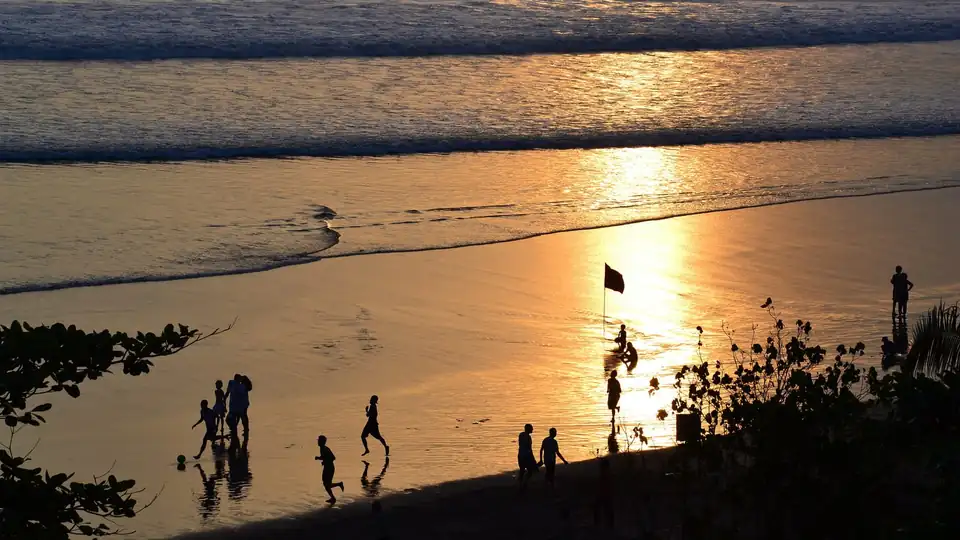
Just north, Canggu trades polish for a surf-town feel. Batu Bolong is the beginner-friendly heart of it, with a gentle beach break, board hire and a wall of cafes behind the sand. Echo Beach, a short way on, has a punchier reef break for stronger surfers and a rockier shore. The sand here is darker and coarser than Seminyak’s, and the mood is younger. Sunset brings everyone down to the beach bars, making it one of the liveliest evening stretches on the island.
The Bukit: Padang Padang, Bingin, Suluban and Balangan
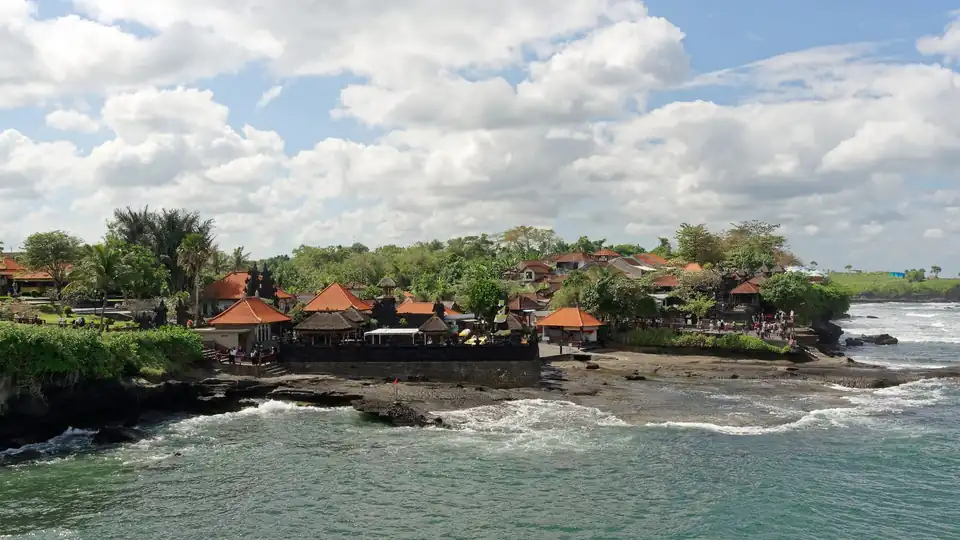
The Bukit peninsula in the far south is where the coastline turns dramatic. Cliffs drop to a string of small coves reached by steps, each with its own character. Padang Padang is a compact, photogenic bay beside a famous reef break. Bingin stacks its warungs up the cliff above a reef that empties at low tide. Below the Uluwatu temple, Suluban is a cave-mouth beach that surfers cross to reach the break, and Balangan, longer and more open, is the one to keep for a sundowner. These are surf and scenery beaches first, and the reef and currents make swimming a careful business.
Nusa Penida and Nusa Lembongan
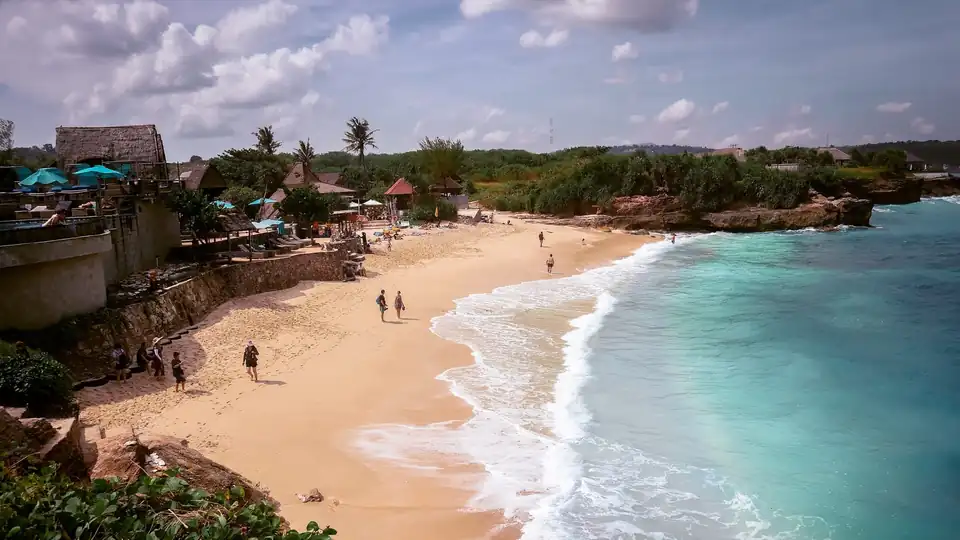
The offshore islands hold the clearest water and the boldest scenery. On Nusa Penida, the headland above Kelingking Beach is the island’s signature view, with a steep stairway down to a white-sand bay. Crystal Bay is the easiest place for a swim and a snorkel, and Diamond Beach on the east coast is another cliff-backed showpiece. Neighbouring Nusa Lembongan is smaller and gentler, with Dream Beach for surf and sunset and the sheltered Mushroom Bay for calm swimming. Both islands are reached by fast boat from Sanur.
Sanur for calm water and sunrise
On the southeast coast, Sanur is the antidote to the surf beaches. A reef offshore keeps the water flat, which makes it the island’s most reliable swimming beach and a favourite with families. A paved path runs for kilometres behind the sand, good for an early cycle, and because the coast faces east, Sanur is a sunrise beach rather than a sunset one. It is also the departure point for the Nusa islands, so it works well as a first or last base.
Amed for snorkelling and Jimbaran for seafood
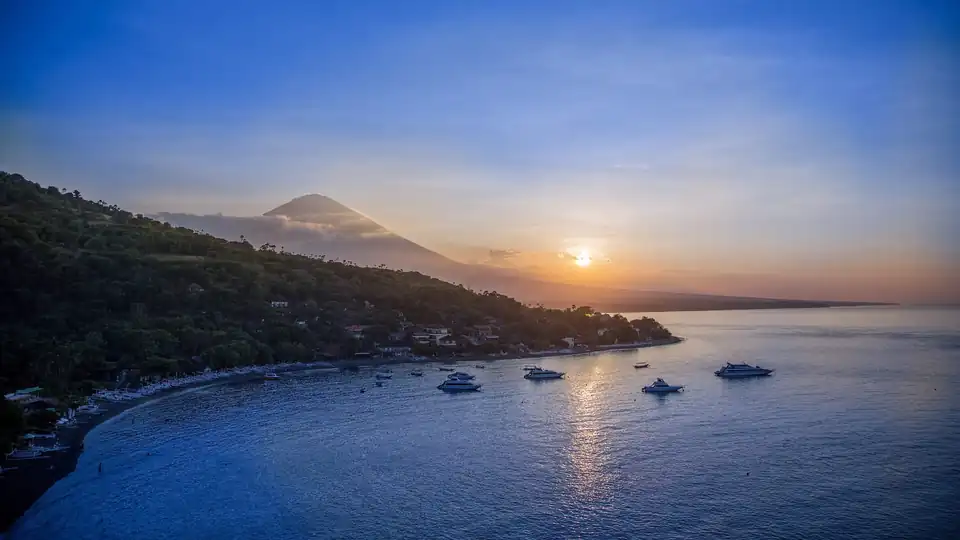
Two more beaches round out the island’s range. Amed, on the far east coast, has black volcanic sand and some of Bali’s easiest shore snorkelling, with coral gardens and a sunken statue garden a short swim out, plus the shallow Liberty shipwreck at nearby Tulamben. Jimbaran, back in the south, is a wide calm bay best known for its evening seafood grills, where the day’s catch is cooked over coconut husks at tables set on the sand.
Kuta, Legian and the family-friendly stretches
The long strip from Kuta through Legian is where Bali’s beach tourism began, and it still suits first-timers and families. The sand is broad and golden, the surf is gentle enough for learners, and the beach is backed by a wall of hotels, board hire and warungs. It is busy and built-up rather than scenic, but the sunsets are wide open and the swimming is manageable near the lifeguard flags. Further round the coast, Nusa Dua on the southern tip has calm, reef-protected water and manicured resort beaches, which appeal to travellers who want easy swimming and shade over character.
Beach safety and reading the conditions
Bali’s west and south coasts carry real surf and rip currents, and drownings happen every year among visitors who underestimate them. Swim between the red-and-yellow flags where lifeguards operate, and take the coloured warning flags seriously: a red flag means stay out. If you are caught in a rip, do not fight it head-on; signal for help, stay afloat, and swim across the current towards the breaking waves rather than straight back to shore. On the reef beaches of the Bukit and the Nusa islands, the tide changes the water entirely through the day, exposing sharp coral at low water, so footwear and a tide check are worth the trouble.
Planning a beach day
Chase calm water and snorkelling early, tackle the exposed coves and islands through the middle of the day, and finish on the west coast for sunset. Carry cash for parking and loungers, since many beaches charge a small fee, and buy a drink or meal at a warung to claim a shaded seat for the afternoon. Reef-safe sunscreen, water and something on your feet cover most eventualities. Group beaches by cluster to cut driving, and let the tide and the wind, not just the name, decide which stretch of sand you head for.


