
Bali earned its place in surfing history for good reason: warm water year round, a coastline that catches swell from almost every direction, and waves for every level within an hour or two of each other. What follows sorts the island’s surf by ability and by season, so you know where to paddle out as a first-timer, where to test yourself on the reefs, and how the winds decide which coast is working on any given week.
The single most useful thing to understand is the seasonal switch. In the dry months the west coast turns on; in the wet months the action moves east. Layer the right break for your level on top of that, and you can chase good waves in Bali at any time of year.
Learning to surf: the beach breaks
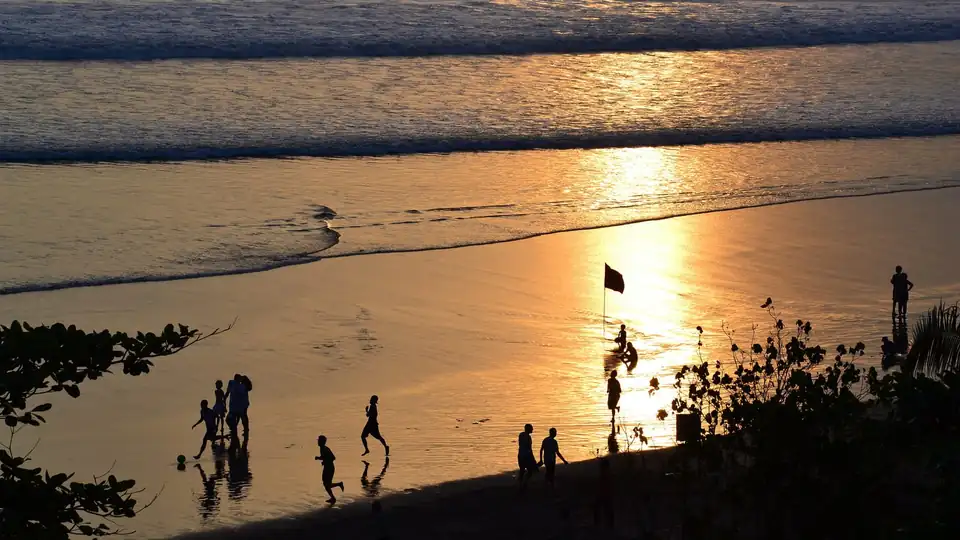
First-timers should head for the sand-bottomed beach breaks of the southwest. Kuta and neighbouring Legian have long been the island’s learn-to-surf nursery, with gentle, rolling waves, a forgiving sandy bottom and a wall of surf schools offering cheap lessons and board hire. A little north, Canggu has become the modern hub, and Batu Bolong is its beginner-friendly heart, with a mellow wave and board hire lined up behind the beach. Take a lesson before you paddle out alone, stay inside the flagged areas, and go early, before the wind turns onshore and the line-up fills up.
The Bukit: Bali’s world-class reef breaks
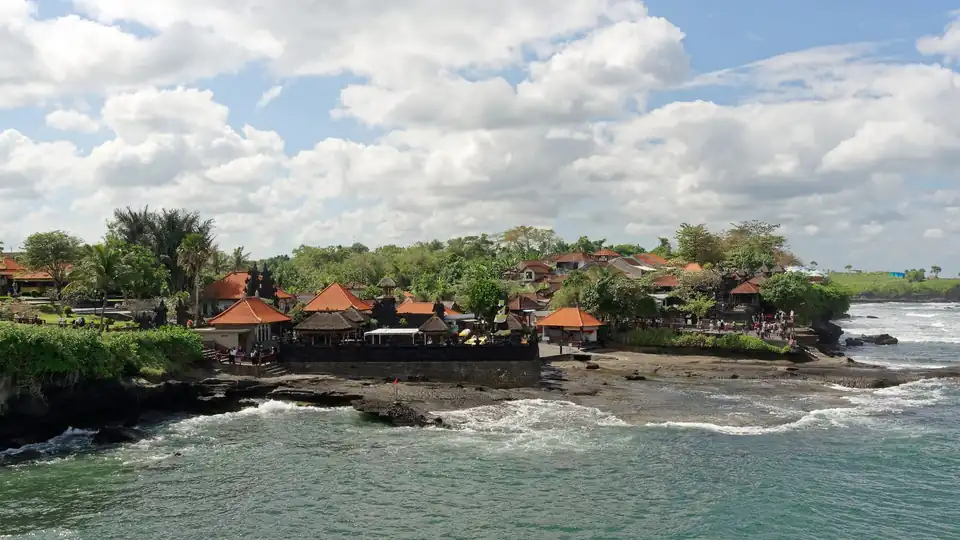
The Bukit peninsula in the far south is where Bali’s reputation was made. Uluwatu is the headline act, a long, powerful left that peels below the clifftop temple and holds swell all through the dry season. Padang Padang, sometimes called the Balinese Pipeline, is a heavy, hollow barrel that draws experts when it breaks. Bingin, Impossibles and Balangan complete the run, each a reef break with its own moods and tides. These are not beginner waves: they break over sharp, shallow coral, and the paddle-outs and exits demand local knowledge. Watch a session from the warungs on the cliff before deciding whether it is your day.

An intermediate surfer stepping up from the beach breaks has plenty of options between the two extremes. Balangan and the mellower days at Bingin give a taste of reef riding without the intensity of Uluwatu on a big swell. Dreamland and Nyang Nyang, further along the peninsula, add variety. Match the spot to the day and the tide, because the same reef can be a friendly wall on a small mid-tide morning and a serious barrel on a big low-tide swell. Ask at the surf shops and read the forecast before you commit to a break.
Medewi, Keramas and the outer breaks
Away from the Bukit, a few breaks reward the traveller who ranges further. Medewi, on the west coast northwest of the airport, is a long, slow-breaking left point over rock and cobble that longboarders love for its mellow rides. On the east coast, Keramas is a high-performance right that comes alive in the wet season and hosts professional contests, best surfed early before the onshore wind. Offshore, Nusa Lembongan has a cluster of reef breaks reached by boat from the beach, a good day trip for intermediates looking to escape the southern crowds.

Seasons, swell and wind
Bali sits in the path of consistent groundswell from the Indian Ocean, so the deciding factor is usually the wind rather than the surf itself. From April to October, the dry-season southeast trades blow offshore on the west coast, grooming the Bukit reefs and the southwest beach breaks. From November to March, those winds swing around and the west turns messy, while the east coast breaks such as Keramas and the Nusa Lembongan reefs come into their own. Tides matter too: many reef breaks are unsafe or unrideable at low water, so check a tide chart before you commit to the drive.
Boards, lessons and getting to the waves
You do not need to bring anything. Board hire is cheap and everywhere in the surf towns, from soft-tops for learners to performance shortboards and longboards, and buying a used board to resell later is easy if you are staying a while. Lessons are inexpensive and plentiful around Kuta and Canggu. The one logistical point to plan for is transport: the Bukit breaks are spread down a peninsula, so you will need a scooter or a driver to reach them, and a board rack or strap for the scooter if you carry your own. Sort the ride, match the coast to the season, and Bali delivers surf for months on end.

Where to base a surf trip
Where you stay shapes how easy the surfing is. Canggu is the most popular base for a reason: beginner and intermediate waves on the doorstep, board hire everywhere, and a deep bench of cafes and repair shops. Kuta and Legian put you on the learner beach breaks with the cheapest lessons and the shortest walk to the water. Serious surfers often base on the Bukit near Uluwatu to be close to the reef breaks and beat the crowds with a dawn paddle-out, accepting that the peninsula is quieter and further from the airport. In the wet season, a stay near the east coast puts Keramas within reach on the mornings it turns on.
A realistic surf day
The daily pattern is set by the wind. Line-ups are cleanest and least crowded around dawn, before the sea breeze turns onshore and the numbers build, so committed surfers are in the water at first light and done by mid-morning. Afternoons can clean up again as the wind drops towards sunset. Between sessions, the surf towns make it easy to rest, eat and fix dings, and a driver or scooter links the spots if the wind swings and you want to chase a cleaner coast. Plan around the tide as much as the clock, carry water and reef protection, and treat the ocean and the locals who ride it with respect. Do that, and Bali rewards a surf trip like few places on earth.


