
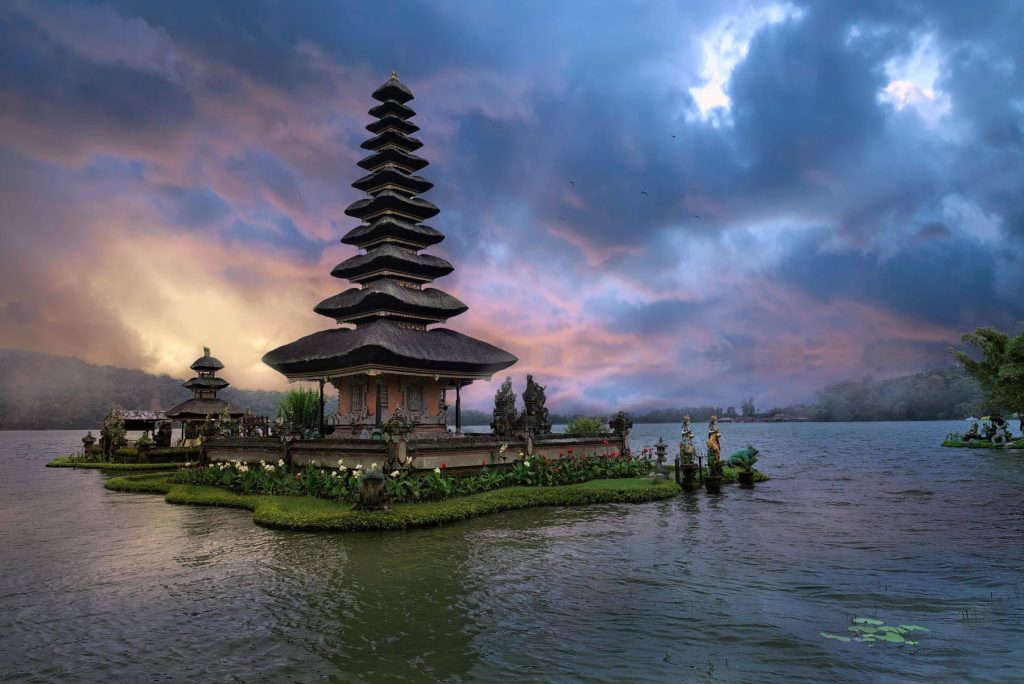

Pura Ulun Danu Bratan is the temple you have already seen, even if you have never set foot in Bali. Its tiered shrine stands on a small island in Lake Bratan, up in the cool Bedugul highlands of central Bali, and when the water is high it seems to float clear of the shore. The image is on the 50,000 rupiah note and on a thousand postcards. What the postcards leave out is that this is a working water temple, not a photo backdrop, and that the version most visitors meet is a landscaped lakeside garden with a ticket gate.
Is Pura Ulun Danu Bratan worth visiting?
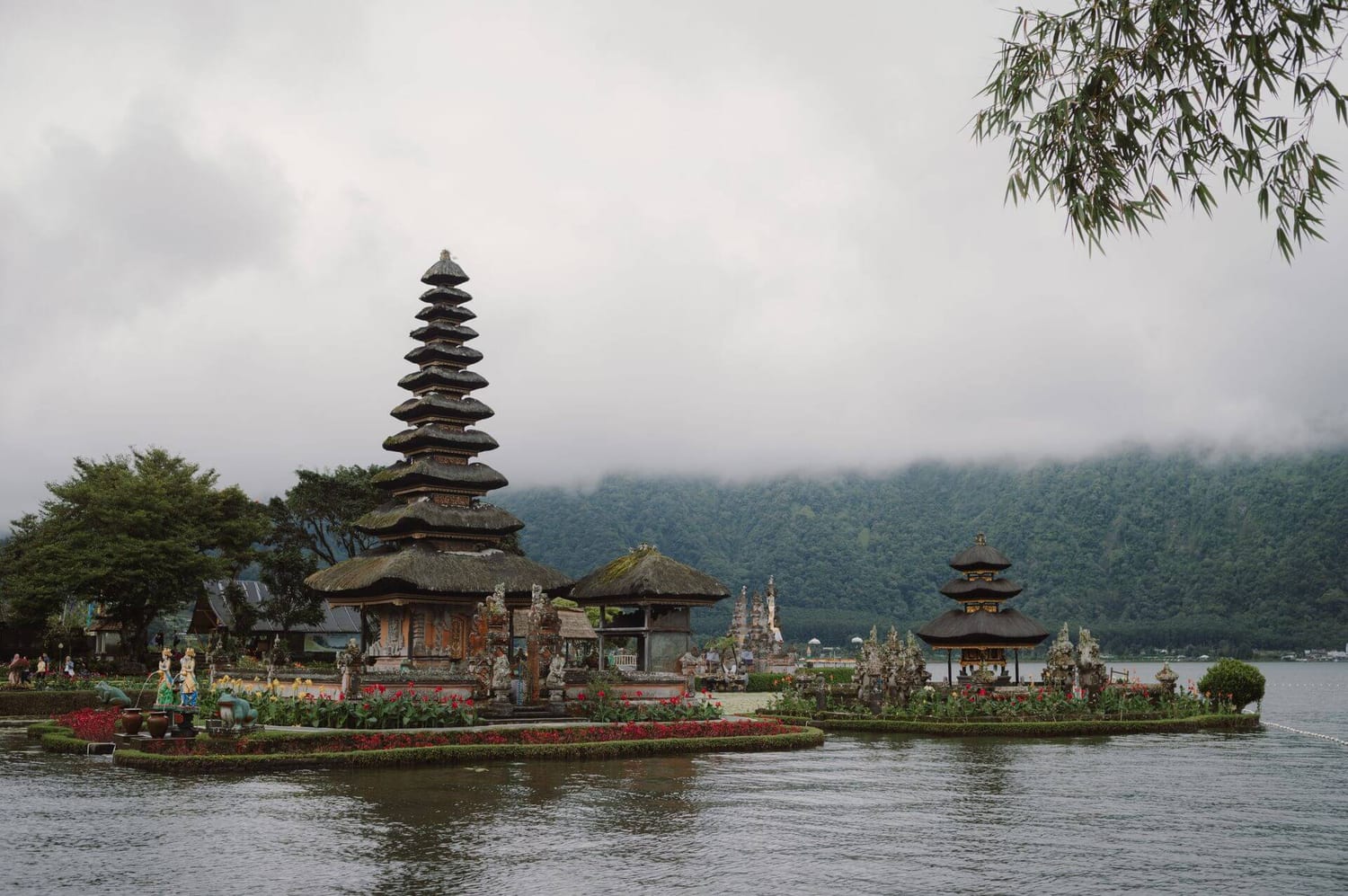
Yes, with one honest caveat. The setting is genuinely lovely: a highland lake ringed by forested hills that are often wrapped in cloud, cool enough that you might want a layer, and a temple silhouette that earns its fame. The caveat is that you are visiting a manicured complex built around the shrine, not a quiet temple you stumble upon. By late morning the car park fills with coaches and the garden paths get busy.
Arrive early, treat it as the centrepiece of a day in the highlands rather than a quick photo stop, and understand what you are looking at, and it rewards the drive. Leap out, shoot the meru and leave, and it will feel like the crowded garden it has become.
What you are actually looking at
The temple honours Dewi Danu, the goddess of the lake and of the water that flows from it, and that dedication is not decoration. Lake Bratan sits near the top of central Bali’s watershed, and its temple is one of the spiritual anchors of the subak, the thousand-year-old network of farmers’ councils that shares irrigation water field by field down the slopes. The shrine on the water is, in a real sense, where much of the island’s rice begins.
The structure that floats in every photograph is a meru, a multi-tiered shrine whose stacked thatched roofs rise in odd numbers to mark its rank. The temple was founded in the 1630s by the ruler of the Mengwi kingdom. Look closely among the Hindu shrines and you will also find a Buddhist stupa, a quiet reminder that the two traditions have long sat side by side here.
Best time to visit
Come early. The first hour after the gates open is the one worth setting an alarm for: the lake is at its stillest, the reflection cleanest, the highland mist still sitting on the hills, and the coach tours have not yet climbed up from the south. Light cloud is normal at this altitude and is no reason to stay away; it is part of the mood, and it keeps the heat off. A weekday beats a weekend, and the drier months from around April to October give the steadiest conditions.
Getting to Pura Ulun Danu Bratan
The temple sits inland and uphill at Bedugul, well away from the beach towns, so getting there is part of the commitment. There are two sensible ways to do it.
Private driverThe easy option. Roughly 1.5 hours from Ubud, longer from Seminyak or Canggu. Most drivers will fold it into a highland day with the nearby lakes and waterfalls.
ScooterFine for confident riders, but it is a long, winding climb that turns cold and wet in cloud. Pack a jacket and watch the afternoon rain.
No useful public transportThere is no practical bus for visitors. If you do not ride, a driver is the way.
Dress and temple etiquette
Most of what you walk through is garden, and you will see plenty of visitors in shorts among the flowerbeds. The shrines themselves are still sacred, though, and a little respect costs nothing.
Visiting respectfully
Cover your shoulders and knees if you go near the shrines, and carry a sarong just in case. Do not climb on the merus or step over the small palm-leaf offerings you will see placed on the ground. Keep back from anyone praying, and follow any sign that asks you to stay out of an area. The island shrines that appear to float are roped off and viewed from the shore, not entered.
Tickets and tours
Entry is a single paid ticket bought at the gate. Keep your expectations general on the price and check the current rate before you go, as it changes. Many visitors fold the temple into a guided highland day that also takes in the twin lakes, a waterfall or two and the photogenic gate nearby, which spreads the long drive across several stops.
An easy way to do it
If you would rather not piece together a driver and a route yourself, a highland day tour from the south or from Ubud bundles the temple with the other Bedugul sights and the transport in one booking.
Pros and cons
Pros
- ✓ A genuinely beautiful highland-lake setting, cool and a relief from the coast
- ✓ One of Bali’s most recognisable temples, with real meaning behind the photo
- ✓ Easy to combine with the lakes, waterfalls and gardens nearby
Cons
- ✗ A landscaped, ticketed garden rather than a quiet shrine
- ✗ Coach crowds from mid-morning, worse at weekends
- ✗ A long drive from the beaches, and often cloudy or wet up top
Who is it best for?
Photographers and early risers
Anyone escaping the coastal heat
Highland day-trippers
It suits travellers who want to understand a place, not only photograph it, and anyone glad of a cool day inland. If temples blur together for you and you dislike a crowd around a ticket gate, a smaller village temple may serve you better. You can read more about how we research these guides if that honesty matters to you.
Common questions about Pura Ulun Danu Bratan
Is this the “floating temple”?
Yes. When Lake Bratan is high, the meru on its island appears to float just off the shore. In drier spells the water drops and you can see the grassy base it stands on. Either way you view it from the bank; the island shrines are not open to walk into.
How far is it from Ubud or the beaches?
Roughly an hour and a half by road from Ubud, and longer, often two hours or more, from Seminyak, Canggu or Kuta. It sits in the Bedugul highlands, so the drive climbs and winds the whole way.
What should I wear?
Cover your shoulders and knees near the shrines and bring a sarong to be safe. Bring a light layer too: at around 1,200 metres it is noticeably cooler than the coast, and cloud and drizzle are common.
When is the best time to go?
Early morning, for the stillest water, the cleanest reflection and the smallest crowds before the coaches arrive. Weekdays in the drier months are calmest.
Is it worth it compared with other Bali temples?
For setting, it is hard to beat, and the highland air is a bonus. If you want a temple that feels untouched and local, this is not it; its fame has turned it into a managed garden. Pair it with the quieter sights nearby and it earns its place on the trip.
Planning the rest of your trip?
We are building honest, researched guides to Bali’s temples, regions, beaches and the practical side of getting around. More are on the way.